
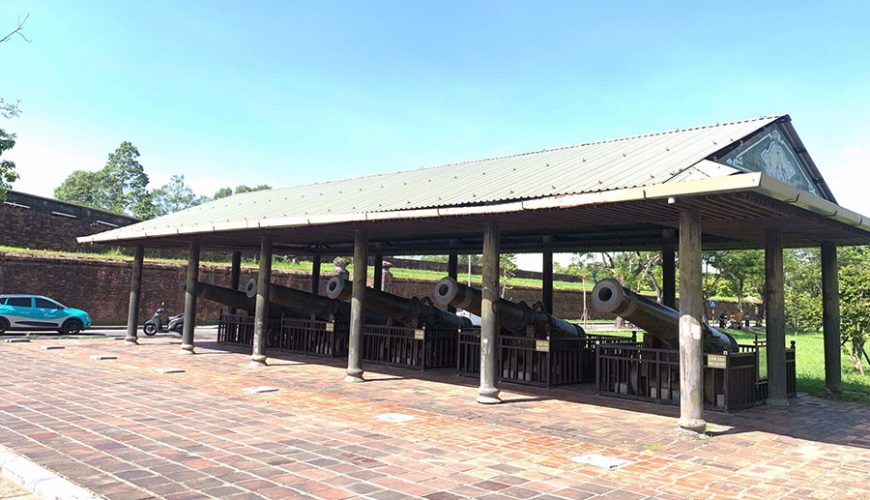
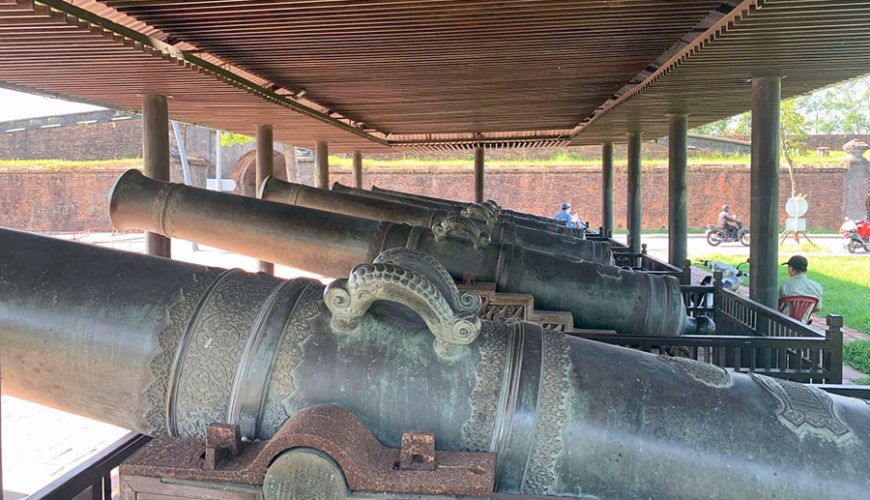
The “Nine Holy Cannons” (Vietnamese: Cửu Vị Thần Công) consist of nine massive bronze cannons, cast during the reign of Emperor Gia Long between 1803 and 1804. These artifacts are significant historical treasures of the Nguyen Dynasty, showcasing the sophisticated bronze-casting expertise of Vietnamese artisans in the early 19th century. Today, the cannons are preserved near the The Nhon and Quang Duc gates of the Hue Imperial Citadel.
History of the Nine Holy Cannons
After defeating the Tay Son Dynasty and establishing the Nguyen Dynasty in 1802, Emperor Gia Long ordered bronze weapons and objects belonging to the Tay Son regime to be melted down and recast into nine colossal cannons. The work was carried out in the capital, Phu Xuan (Hue), involving craftsmen from the Ministry of Public Works and soldiers from the infantry.
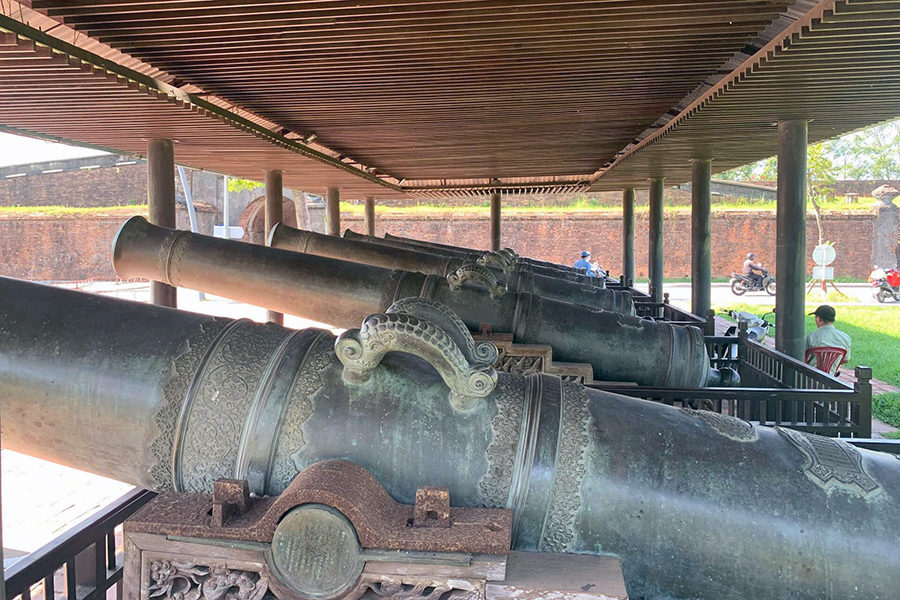
Unlike cannons intended for combat, the Nine Holy Cannons were crafted primarily to commemorate Emperor Gia Long’s victory and to symbolize the power and enduring legacy of the Nguyễn Dynasty.
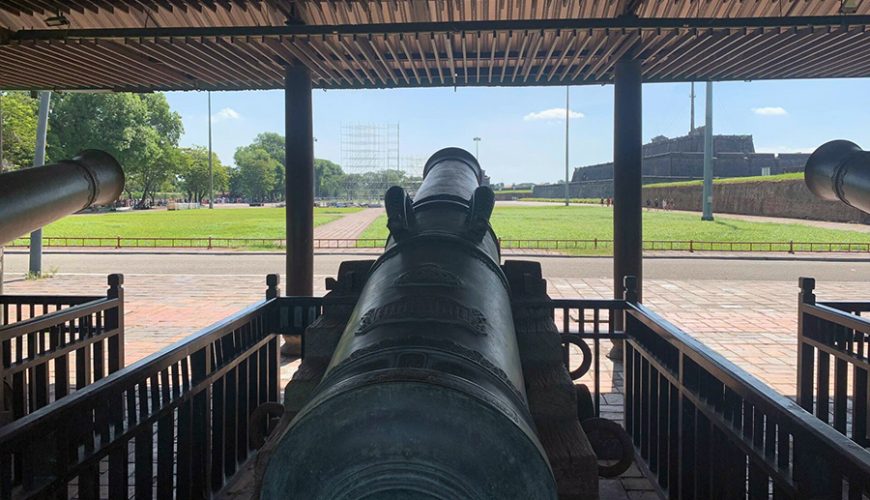
Initially, the nine cannons were positioned in two rows within the artillery workshops located in front of the Ngo Mon. During the reign of Emperor Khai Dinh, they were relocated to an area near the Flag Tower, behind the The Nhon and Quang Duc gates, where they remain preserved to this day.
Distinctive Features of the Nine Holy Cannons
The collection comprises nine cannons, named according to two categories that hold symbolic significance in Eastern culture:
- The Four Seasons: Spring, Summer, Autumn, and Winter, representing the four seasons of the year.
- The Five Elements: Metal, Wood, Water, Fire, and Earth, representing the five fundamental elements of nature.
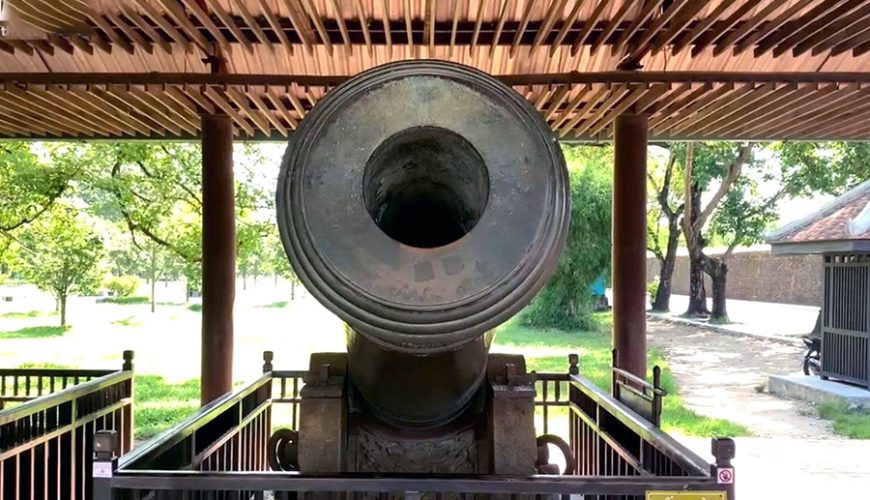
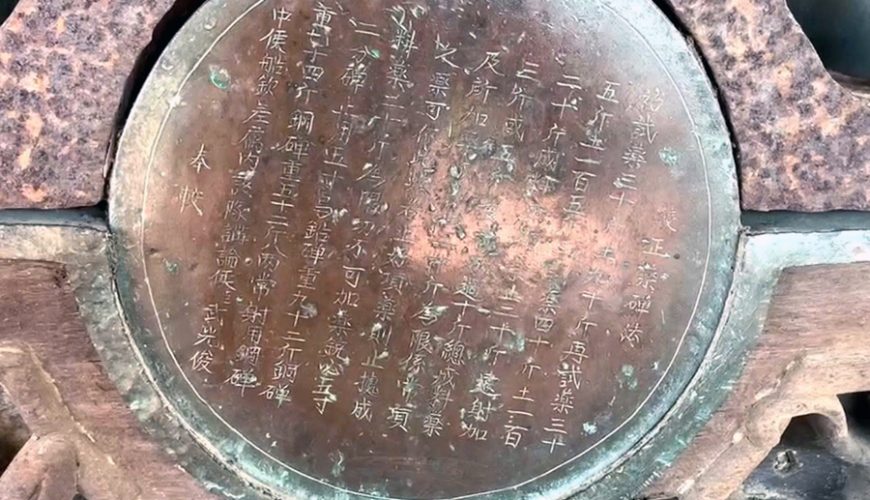
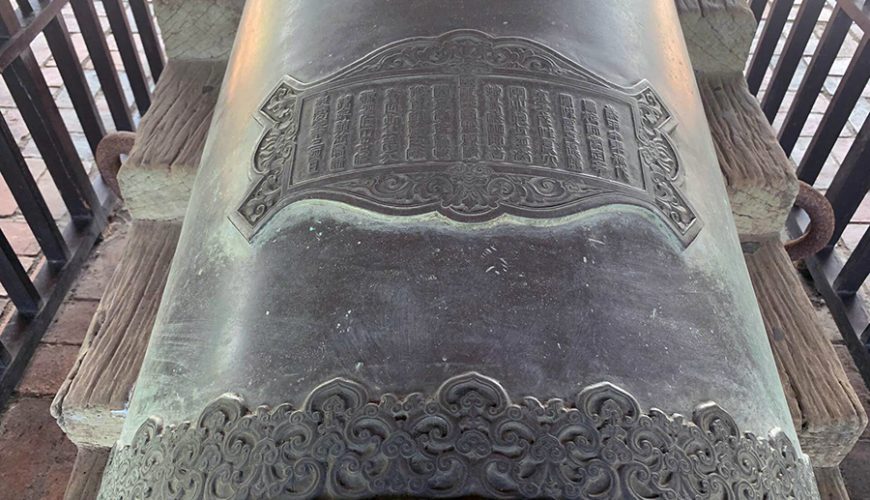
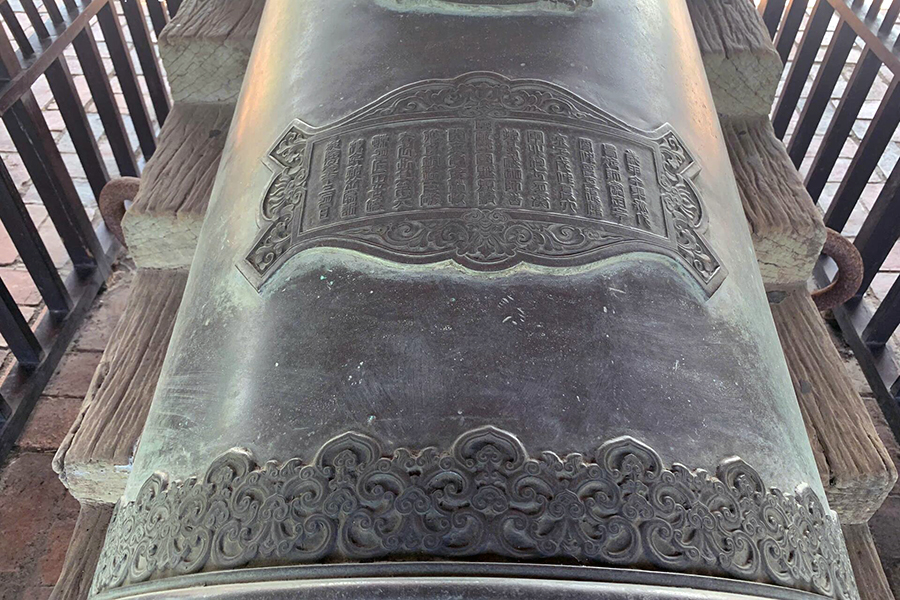
Each cannon is approximately 5.1 meters long, with an internal bore diameter of about 22.5 centimeters, and weighs over 10 tons. The barrels are cast in bronze and adorned with intricate patterns, featuring Chinese characters that record each piece’s name, rank, weight, and origin.
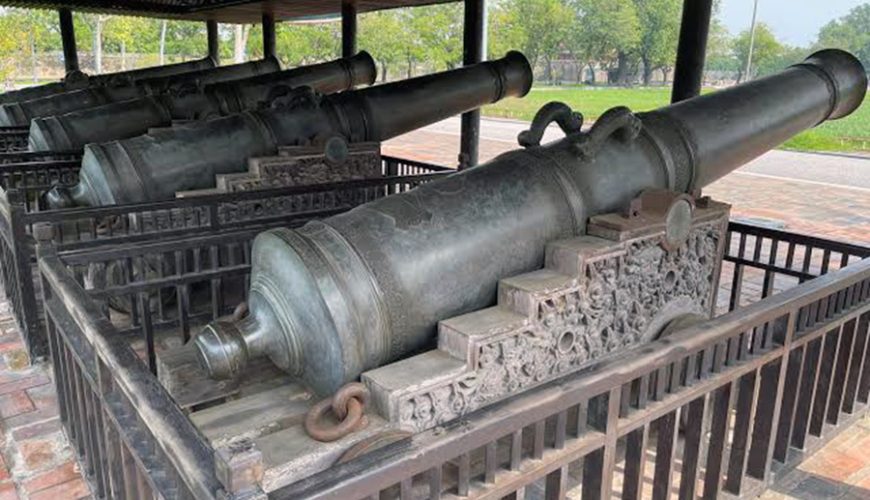
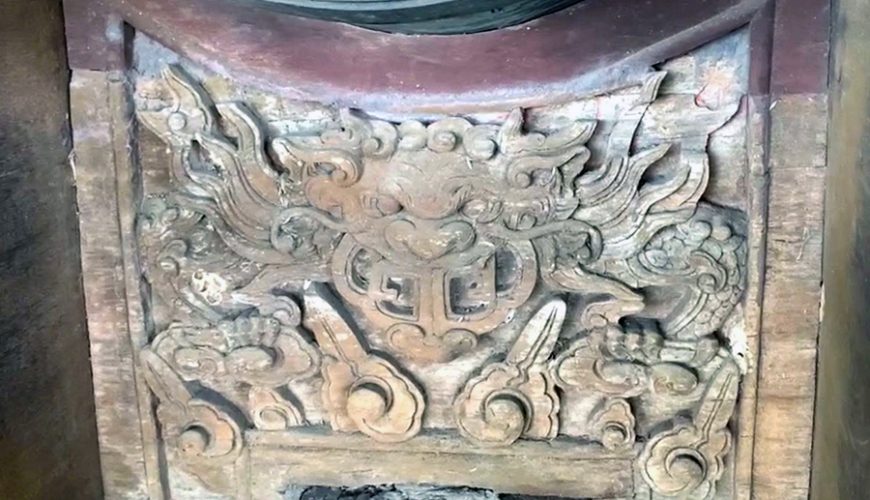
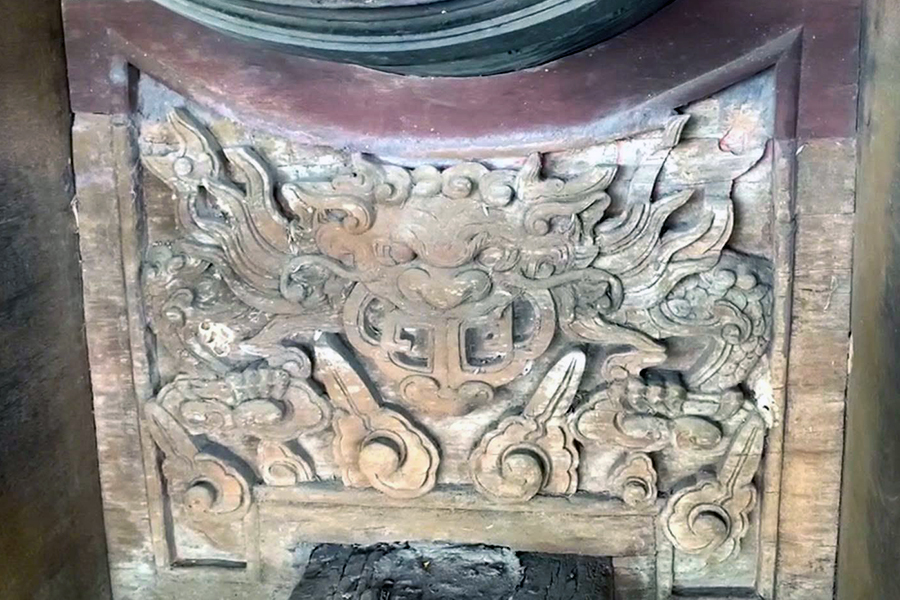
The cannons are mounted on wooden carriages with wheels carved with dragon and cloud motifs. Notably, in 1816, Emperor Gia Long bestowed the title “Supreme General of Divine Might and Invincibility” on all nine cannons, honoring them for their symbolic role in protecting the Imperial Citadel.
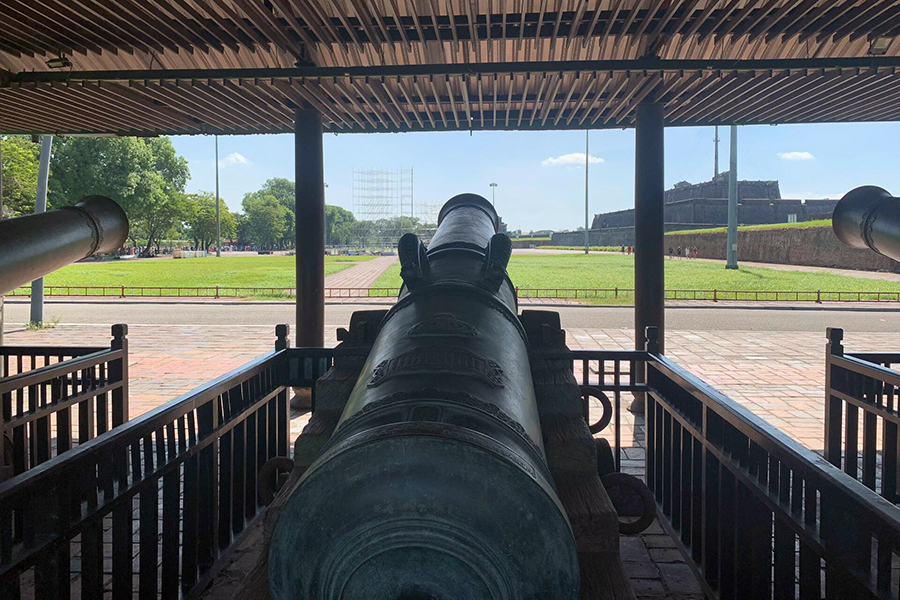
A unique aspect of the “Nine Holy Cannons” is that, despite being functional artillery, none were ever used in actual combat. They served primarily a symbolic purpose, regarded as guardian deities of the capital and as a testament to the authority of the Nguyen Dynasty.
Beyond their historical value, these cannons serve as a prime example of the metallurgical expertise, bronze-casting techniques, and decorative arts of the Nguyen era. Their massive scale and elaborate carvings make them a truly unique set of artifacts within Vietnam’s cultural heritage.
On October 1, 2012, the Nine Holy Cannons were officially designated as National Treasures, affirming their exceptional significance to the nation’s history and culture.
Today, the Nine Holy Cannons stand not only as a relic from the early Nguyen Dynasty but also as an integral part of the Hue Imperial Citadel heritage complex, offering future generations insight into the history, artistry, and metalworking craftsmanship of the Nguyen Dynasty.
Source: collected by Thien An
Follow us for the best deals on Vietnam package tours and visa services!
Comment (0)