
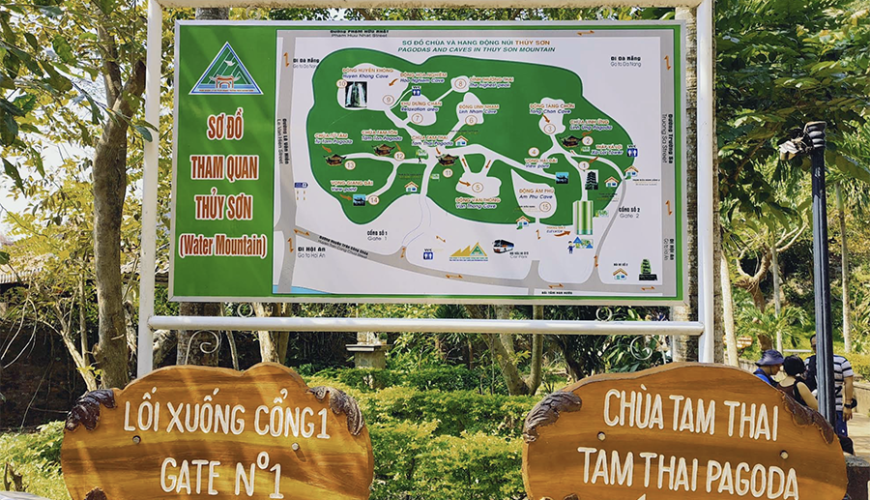
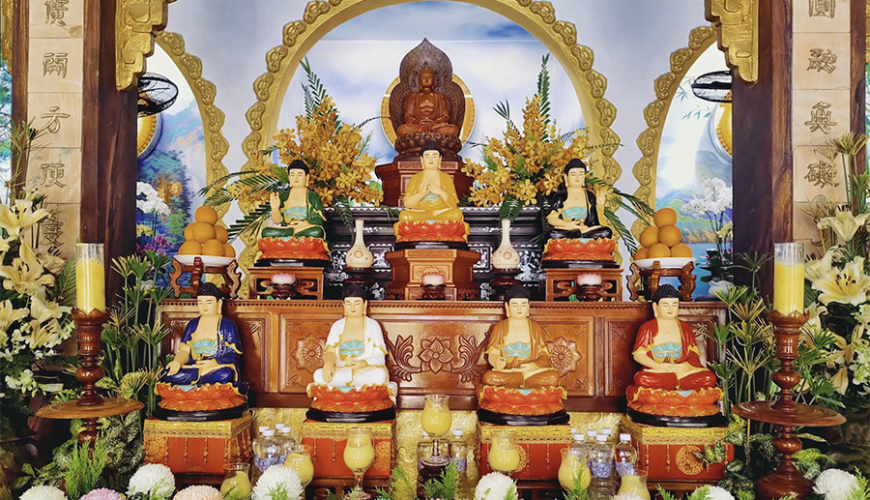
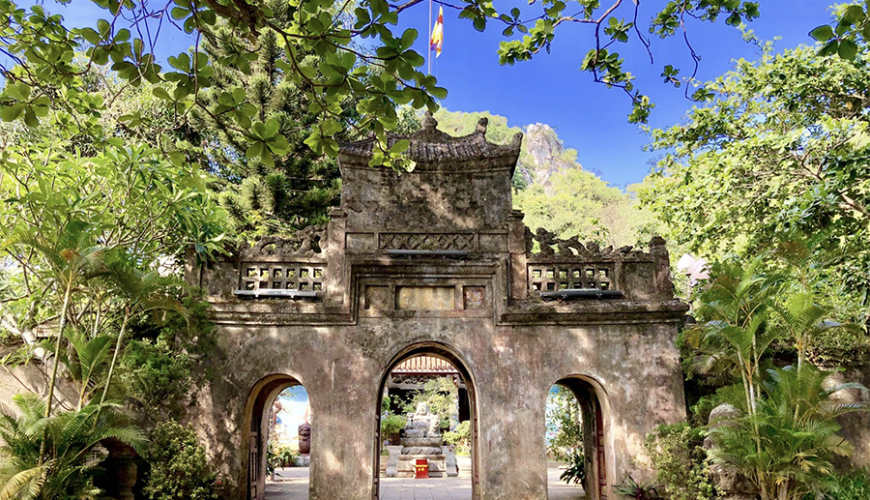
Tam Thai Pagoda is one of Da Nang’s renowned ancient pagodas, situated on Thuy Son (Water Mountain) within the Marble Mountains (Ngu Hanh Son) scenic complex. Together with Linh Ung Pagoda – Non Nuoc and the mountain’s cave system, it forms a long-history spiritual complex and serves as a key stop on the Thuy Son sightseeing route.
Overview of Tam Thai Pagoda
According to historical records regarding the Marble Mountains, Tam Thai Pagoda dates back to the 17th century. During the Nguyen Dynasty, the pagoda received special attention from the imperial court; in 1825, under the reign of Emperor Minh Mang, it underwent renovation and was granted an official name plaque. Due to this connection with the Nguyen royal family, Tam Thai holds not only religious significance but also preserves many historical traces of the Da Nang region.
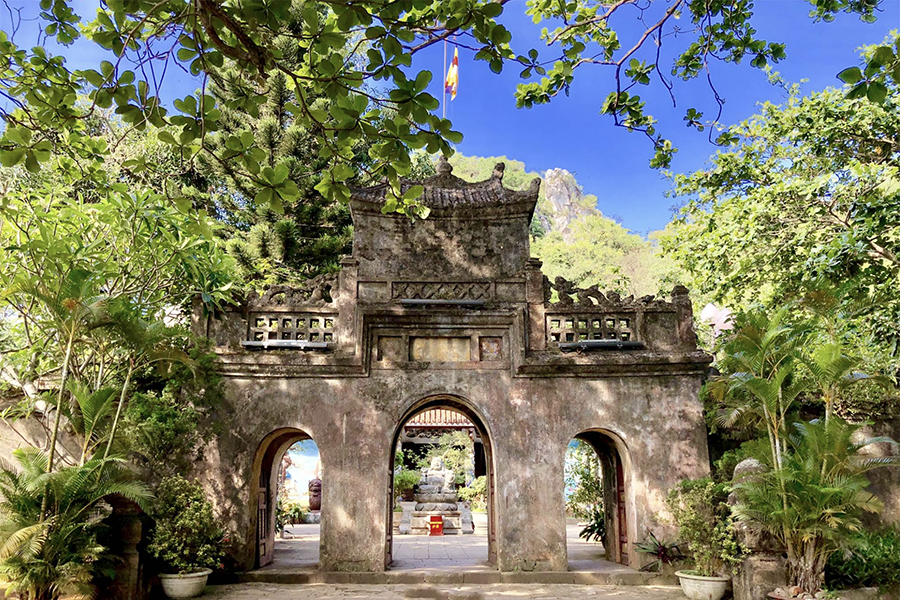
In Taoist belief, the name “Tam Thai” refers to three mountain peaks, symbolizing a realm of purity and sanctity. Historically, it was known as the “Inner Pagoda”, while the nearby Linh Ung Pagoda was referred to as the “Outer Pagoda”.
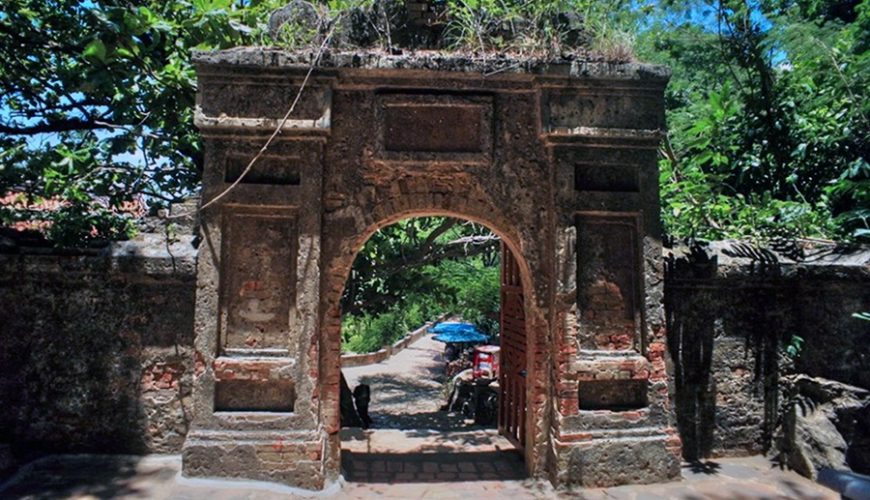
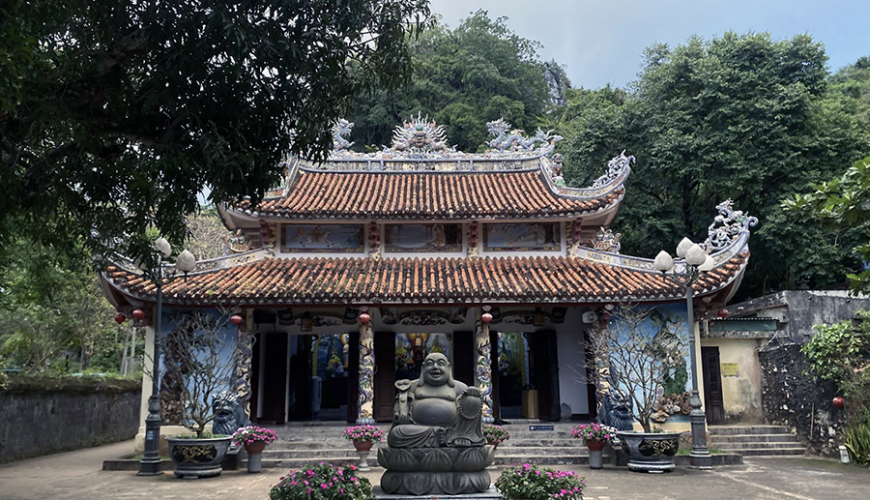
To reach the pagoda, visitors ascend 156 stone steps leading up the slope of Thuy Son. Amidst the rocky landscape and lush greenery, Tam Thai emerges with the solemn, serene air of an ancient temple. Its architecture reflects traditional Vietnamese styles, featuring tiled roofs, a courtyard, a three-entrance gate, and worship structures harmoniously integrated with the natural terrain.
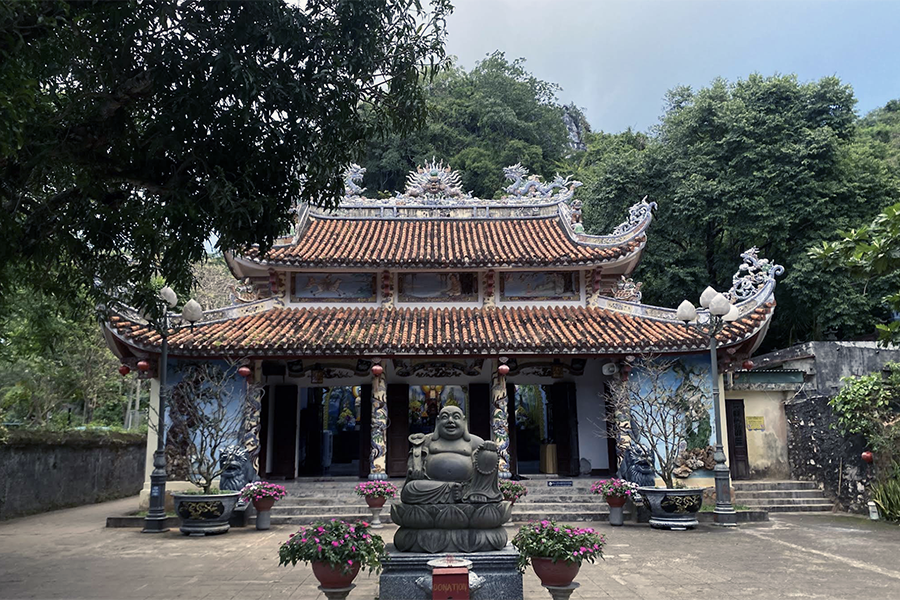
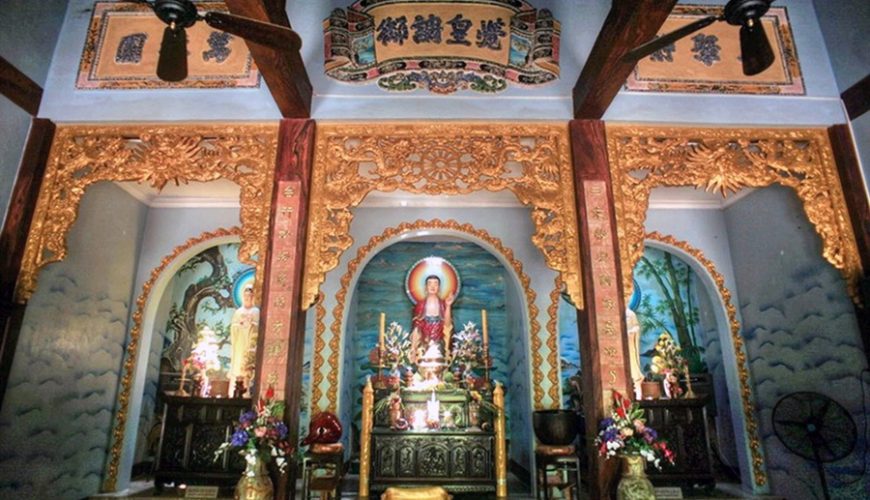
The worship space at Tam Thai is also distinctive; the Main Hall enshrines Amitabha Buddha, Avalokiteshvara, and Mahasthamaprapta Bodhisattva. Inside the Main Hall, a statue of Maitreya Buddha is enshrined, flanked by a statue of Guan Yu on the left and the Founding Patriarch on the right. Statues of the Dharma Protectors stand on either side of the Front Hall.
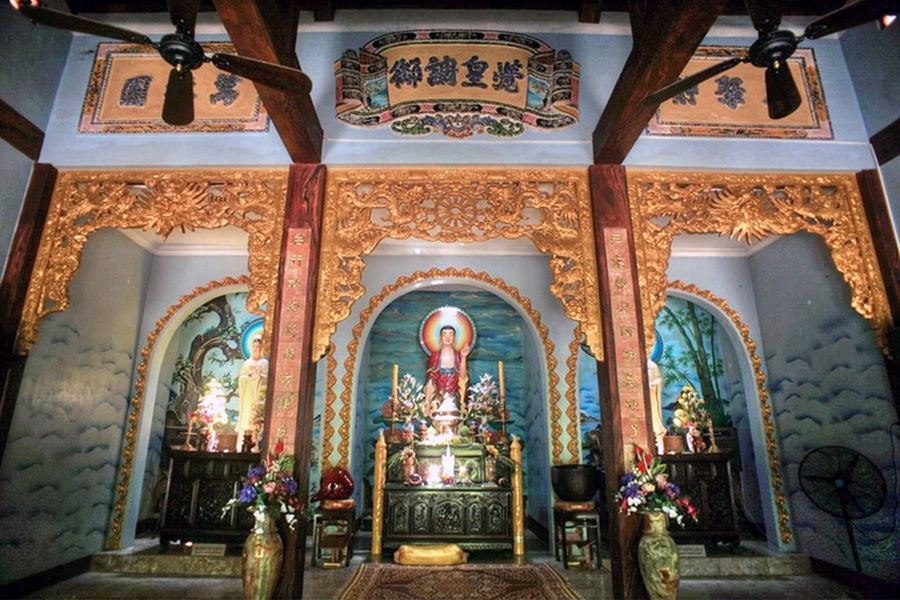
The temple follows the Pure Land school of Buddhism, emphasizing the recitation of the Buddha’s name to seek rebirth in the Pure Land. The temple’s tiled roofs feature a traditional double-layer “yin-yang” design, while the roof ridge is adorned with a “two dragons flanking the moon” sculpture, a hallmark of Nguyen Dynasty temple architecture. The columns in the front vestibule feature images of dragons arranged in a continuous, tail-to-head sequence.
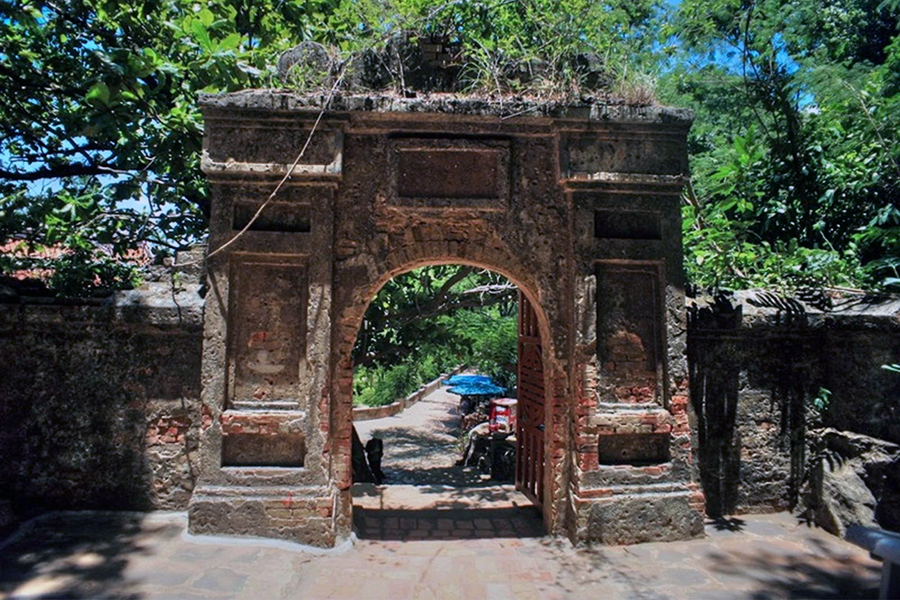
To the left of Tam Thai Pagoda lies Huyen Khong Cave. The cave features a high, spacious interior and cool air, along with beautiful stalactites. Adjacent to Huyen Khong Cave are Linh Nham Cave, Tang Chon Cave, and Linh Ung Pagoda.
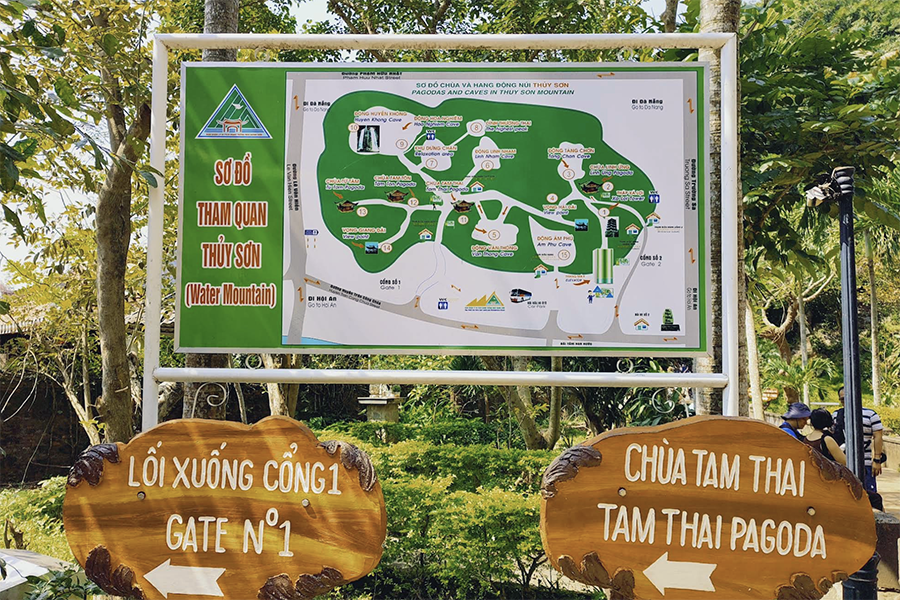
For visitors, Tam Thai Pagoda is an ideal place to learn about Vietnamese Buddhism, traditional temple architecture, and the history of the Nguyen Dynasty. Rather than a brief visit, travelers are encouraged to take the time to observe the architectural details, statues, and surrounding landscape to truly appreciate the atmosphere of this ancient temple nestled amidst the rocky mountains.
Tam Thai Pagoda
Source: collected by Thien An
Follow us for the best deals on Vietnam package tours and visa services!
Comment (0)