
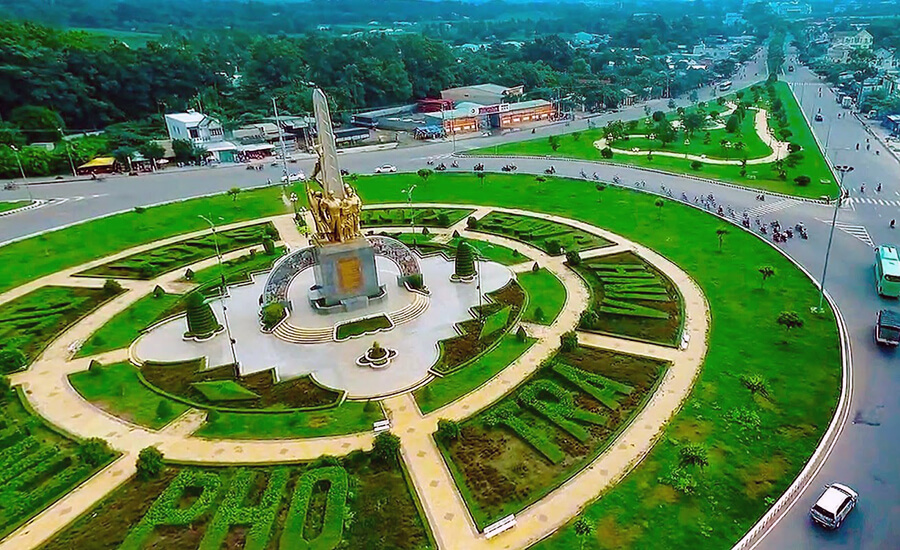
Tra Vinh is a former province (now merged into Vinh Long Province) in the Mekong Delta, bordering Dong Thap and Can Tho, between the Tien and Hau rivers. With a favorable location, many famous landmarks, cool climate, friendly people, and many delicious specialties, exploring Tra Vinh will certainly bring visitors many wonderful emotions.
General information about Tra Vinh
Tra Vinh has flat terrain and an equatorial climate with two distinct rainy and dry seasons. The average temperature in Tra Vinh is high, around 28 degrees Celsius, and hot year-round. The rainy season here usually lasts from May to November and the dry season from December to April of the following year.
Transportation in and out of Tra Vinh
If traveling by air, Tan Son Nhat Airport in Ho Chi Minh City and Can Tho are the closest destinations; from there, visitors take a bus to Tra Vinh area.
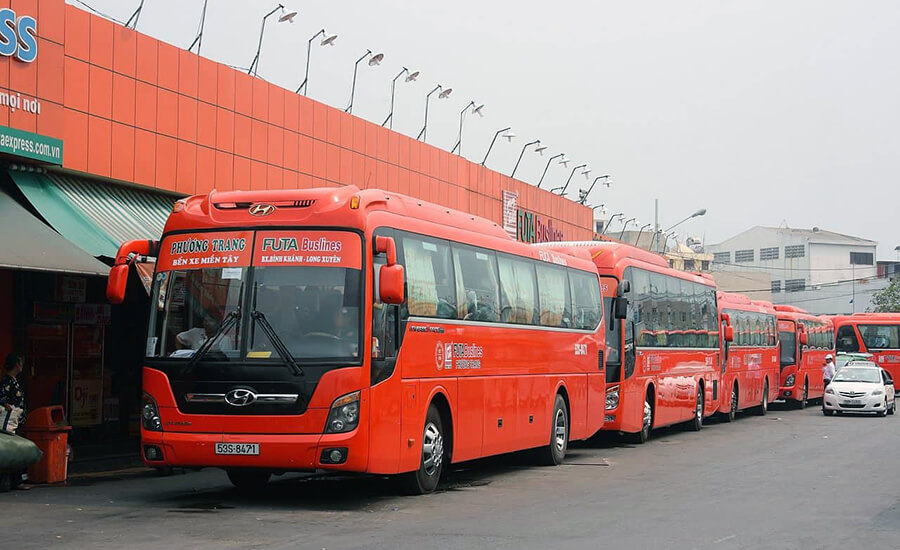
From Ho Chi Minh City, visitors should depart from Mien Tay bus station, travel time is about three hours. One-way bus fares range from 150,000 VND to 200,000 VND depending on the bus company, vehicle type, and destination. Suggested bus companies: Phuong Trang (Futa), Kim Hoang, Tan Thanh Thuy, Tan Phuoc Tai. Located nearly 130 km from Ho Chi Minh City, Tra Vinh area can also be reached by motorbike or private car.
For sightseeing, motorbikes, private cars, and taxis are flexible forms of transportation. Motorbike rental prices are around 100,000 – 150,000 VND per day (excluding fuel).
Accommodation
The province’s accommodation areas are mainly concentrated in old Tra Vinh, where visitors can choose hotels such as The Rose, Van Thai Binh, Tra Vinh Lodge, and Vilabasi Thap Co, with prices ranging from 500,000 VND to 1,000,000 VND per night. Motels and homestays such as Malis homestay, Huynh Yen, and Lucky range in price from 150,000 VND to 300,000 VND.
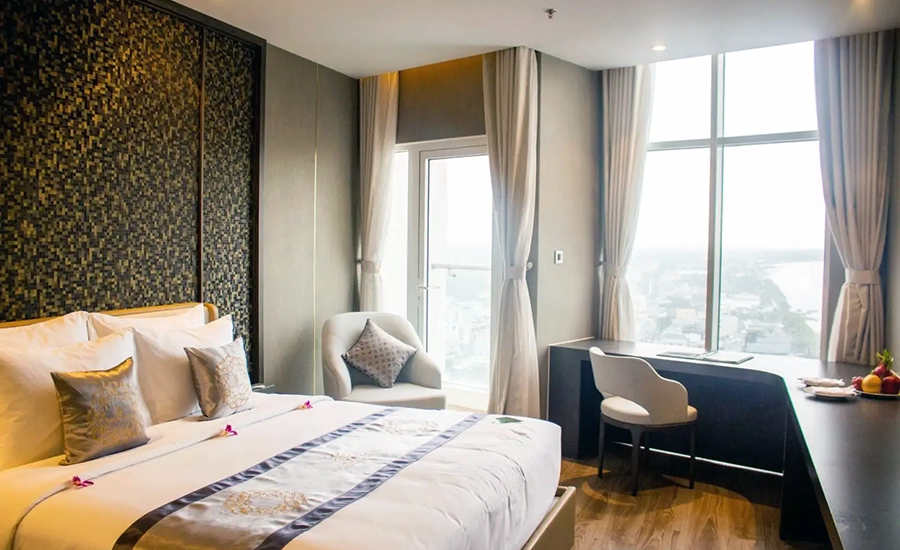
Hotels located in the center of Tra Vinh, on Hung Vuong, Ly Thuong Kiet, and Pham Thai Buong streets are places near the bustling center, where visitors can choose to stay and combine night culinary experiences.
Famous tourist destinations in the old Tra Vinh area
Ba Om Pond
Located in Nguyet Hoa Ward, Ba Om pond has been attracting a lot of visitors to old Tra Vinh. The pond is 500 m long and 300 m wide, and its water is always tranquil, clear, and blue. It is surrounded by hillocks and many old sao and dau whose roots emerge on the ground and form numerous odd shapes that create a unique beauty.
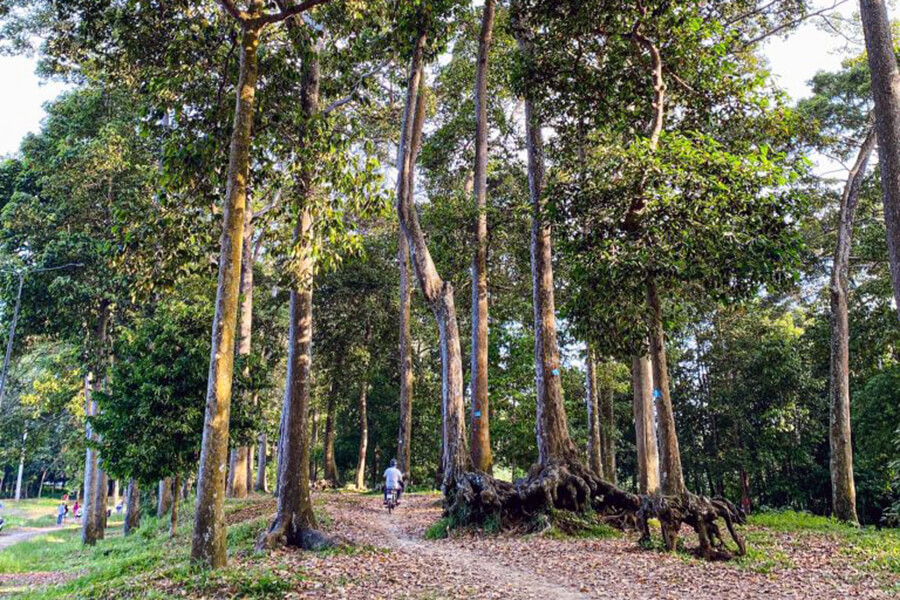
The atmosphere is cool and pure year-round. In the afternoon, flocks of birds perch in the trees, making this area exciting and noisy.
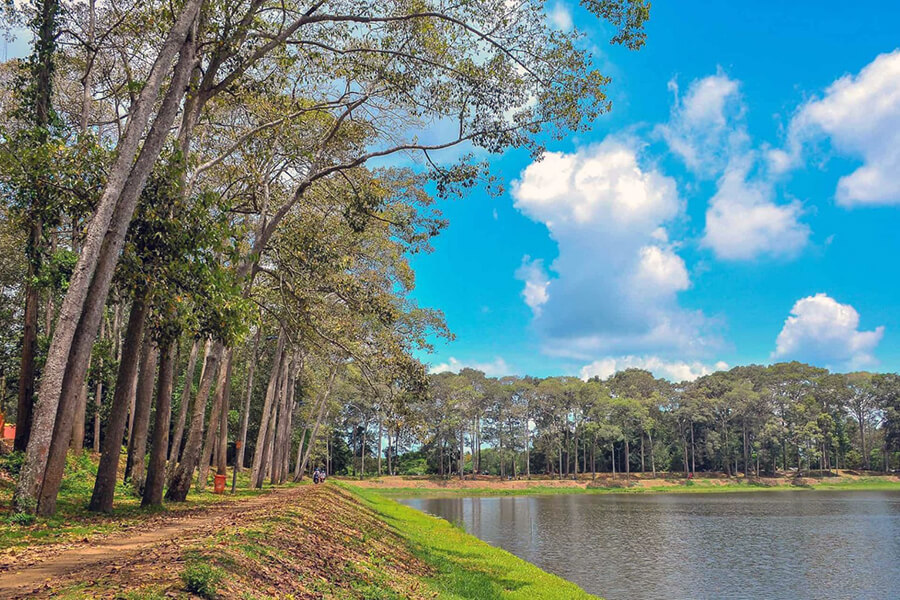
During annual holidays such as Oc Bom Boc, Ba Om Pond is a place for Khmer people to gather, dance, and release lanterns, attracting many tourists. Ba Om pond was recognized as a National Historical and Cultural Relic – a Scenic Landscape in 1996.
Ang Pagoda
Ang Pagoda in Khmer is Angkorajaborey Pagoda, located on Highway 53, in Hamlet 4, Nguyet Hoa Ward, about 5 km from the center. The pagoda was built in the 10th century and restored in 1842. This is one of the oldest pagodas in old Tra Vinh and new Vinh Long as well, represents the unique architecture of the Khmer pagoda system.
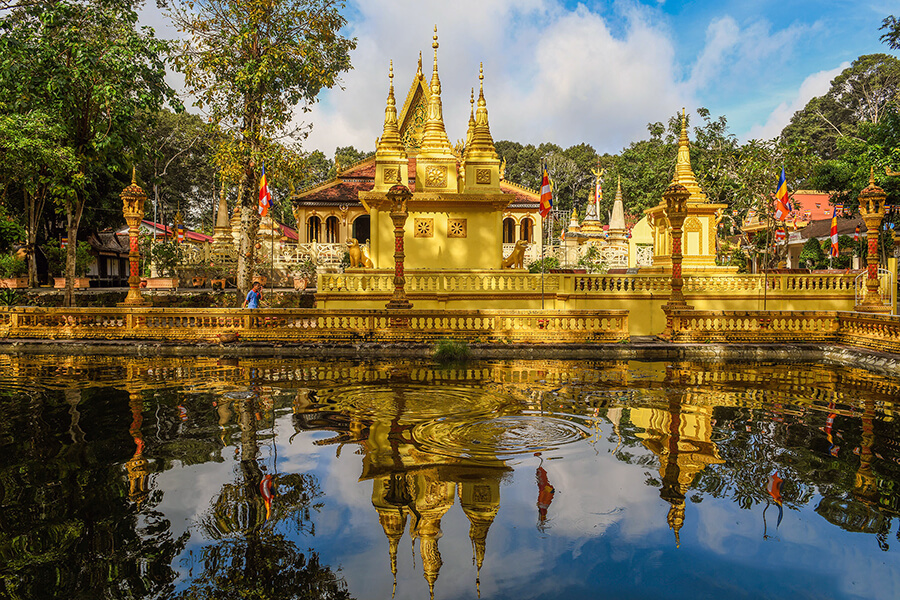
Ang Pagoda is a harmonious combination of the sophisticated decorative art of Khmer culture and the colorful design of Angkor culture. From the gate, the roof mound, the pagoda pillars, to the interior architecture, all are adorned with the symbolic motifs of bird heads, fairies, and the snake god Naga. The exterior of the pagoda stands out, with pillars adorned with numerous bird-headed statues and a curved roof.
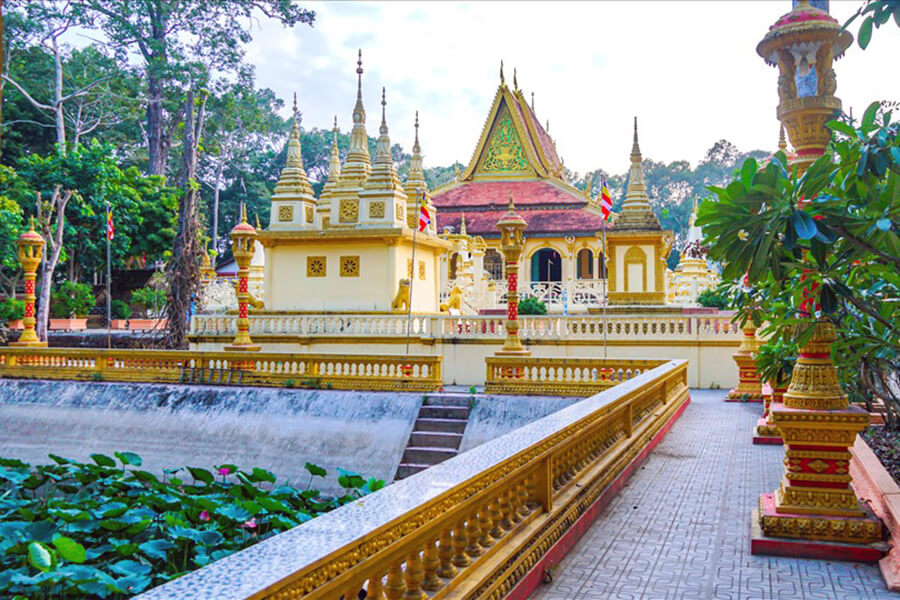
Ang Pagoda brings a feeling of closeness to nature with hundreds of old trees of Ba Om pond. The pagoda’s architecture is ancient and unique, and it was designated a National Heritage Site.
Hang Pagoda
Hang Pagoda or Kompong Chray is a Southern Buddhist pagoda located on Highway 54 in Chau Thanh Commune, 4 km from Tra Vinh Ward. It is called Hang Pagoda (in Vietnamese, Hang means cave) because the pagoda gate is built as a system of three caves side by side.
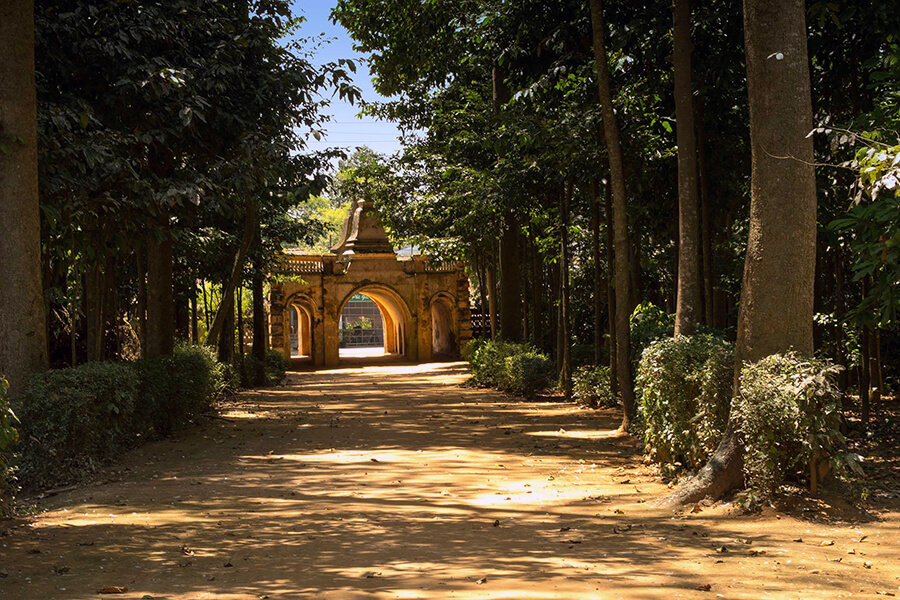
In which the main gate in the middle is a large cave, and the two gates on either side are two small caves. All three gates are solidly built with 12 m-thick walls, creating the feeling of standing inside the gate, as if in a cave.
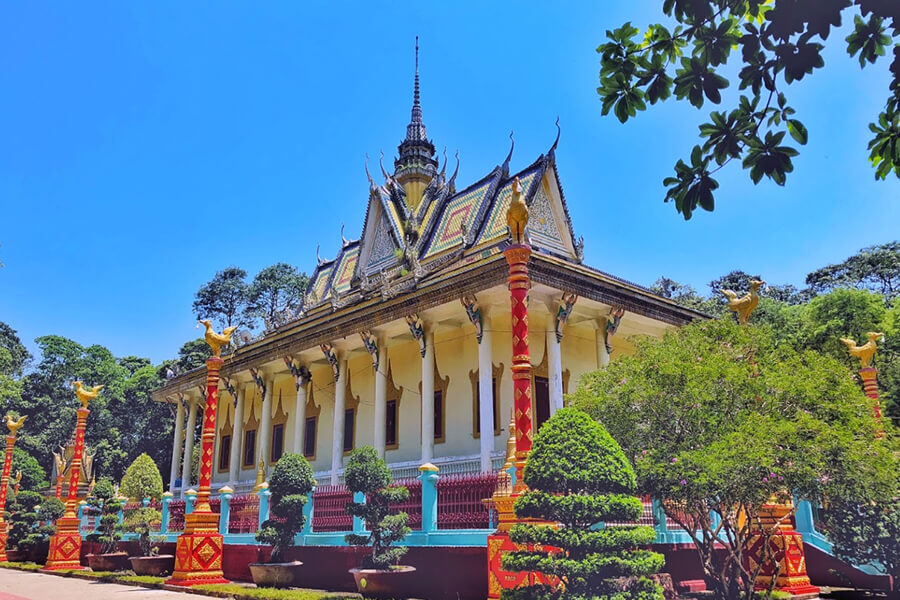
The pagoda, over 300 years old and bearing the mark of Khmer pagoda architecture, is located in the middle of a campus of more than 2 hectares of greenery, including sao and dau trees, which is home to many species of birds and bats. This is a place many tourists visit when coming to Tra Vinh for its fresh, quiet air.
Vam Ray Pagoda
Vam Ray Pagoda is about 35 km from Tra Vinh Ward, located in Vam Ray Hamlet, Ham Giang Commune. The pagoda was rebuilt in 2004 on the foundation of the old pagoda, which had been destroyed during the war. Vam Ray Pagoda is considered one of the most beautiful Khmer pagodas in the Mekong Delta.
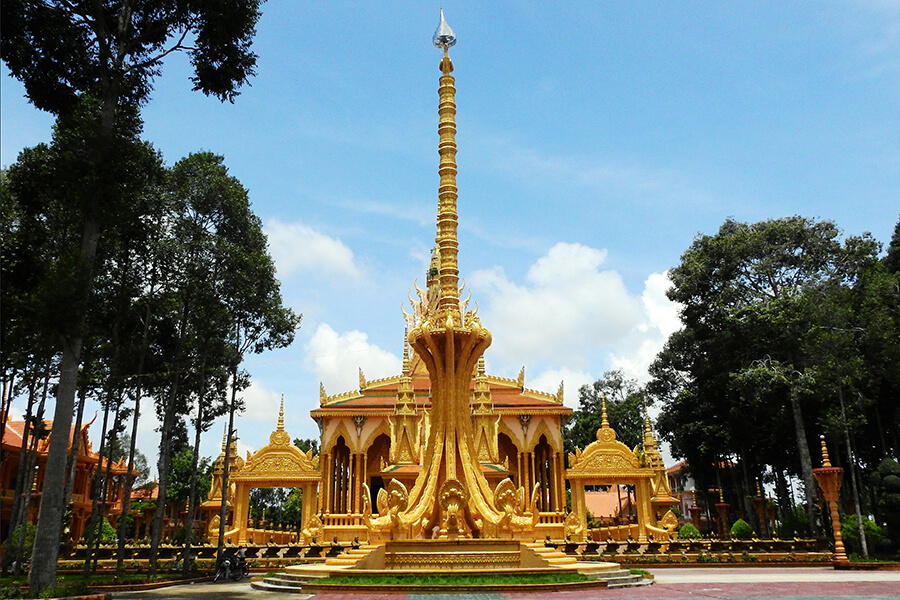
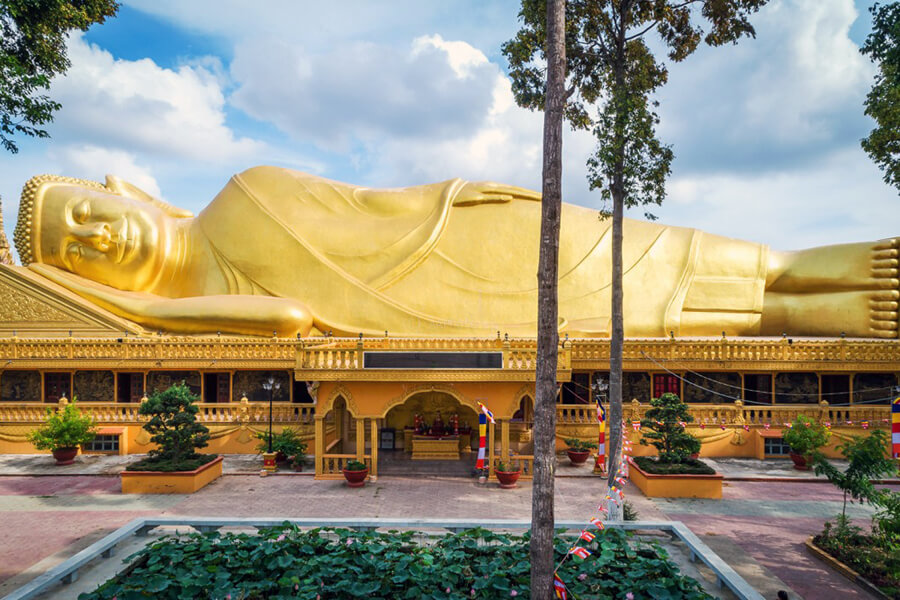
The pagoda has a palace-like architecture, painted in gold from the dome, walls, and columns to the decorative reliefs of the 4-faced saint Maraprum, the goddess Kayno in the shape of half-human and half-bird, the Yeak dragon, and the Marakrit bird god. In particular, the pagoda has a statue of Buddha entering nirvana, 54 m long, 20 m high, 16 m wide, painted with red lacquer and gilded with gold.
Ba Dong Beach
From the center of Tra Vinh, visitors travel about 55 km by motorbike. Visiting Ba Dong beach, visitors can, in addition to relaxing, take photos of the Wind Power project, which features 12 turbines facing Dan Thanh commune. Wind power has become a new check-in spot for young people when coming to Tra Vinh.
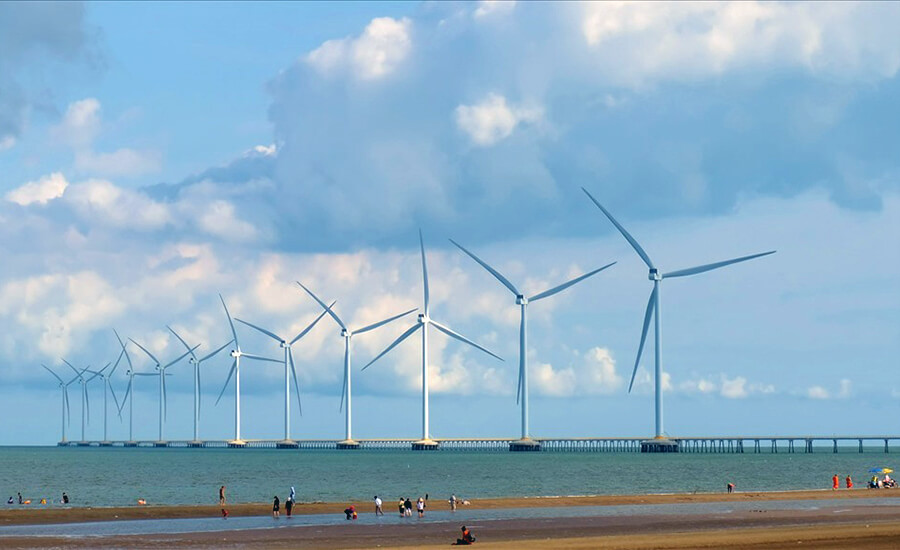
Ba Dong Beach has a long stretch of fine white sand, surrounded by rows of cool green coconut trees. The seawater is clear and cool, an ideal place for tourists to swim, have fun, and relax. In addition to swimming, visitors to Ba Dong Beach can enjoy other fun and recreational activities, such as fishing and visiting eco-tourism sites.
Rung Duoc (Mangrove Forest) Ecotourism Area
Just about 9 km from Ba Dong beach, Duyen Hai also has a mangrove forest stretching through Long Vinh, Dong Hai and Long Khanh communes. The forest in Long Khanh commune covers 882 hectares and features beautiful scenery, mangrove habitat, and brackish-water fish.
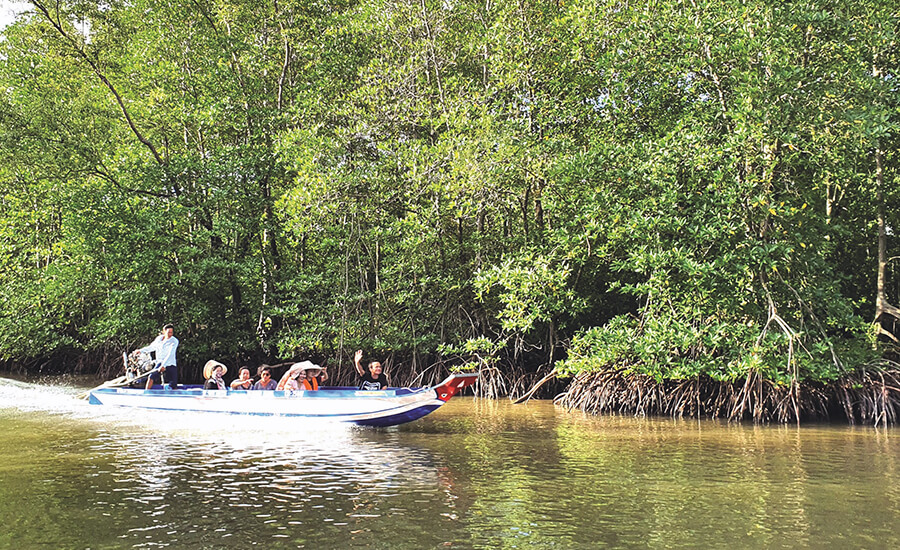
Visiting the mangrove ecological area, visitors can find homestays near the mangrove forest to stay and experience it, catch shrimp and crab with local people, and enjoy fresh seafood.
Tra Vinh Khmer Ethnic Culture Museum
Tra Vinh Khmer Ethnic Culture Museum is a famous cultural tourist destination. It attracts a large number of domestic and foreign tourists to visit and learn about the culture and history of the Khmer people.
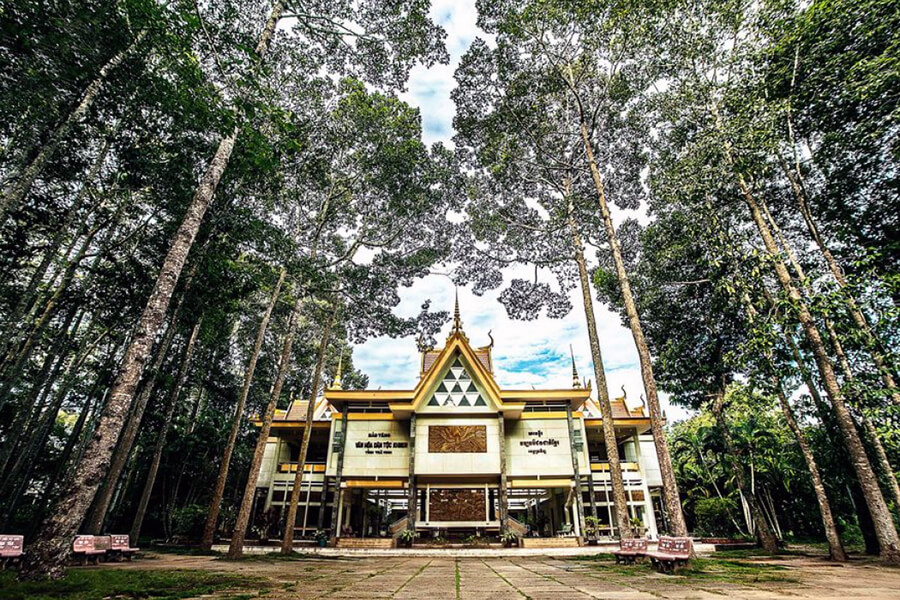
This attraction is located in Nguyet Hoa Ward, about 5km from the center. The museum is built in an architectural style that combines traditional and modern elements, with an area of over 1,700 m².
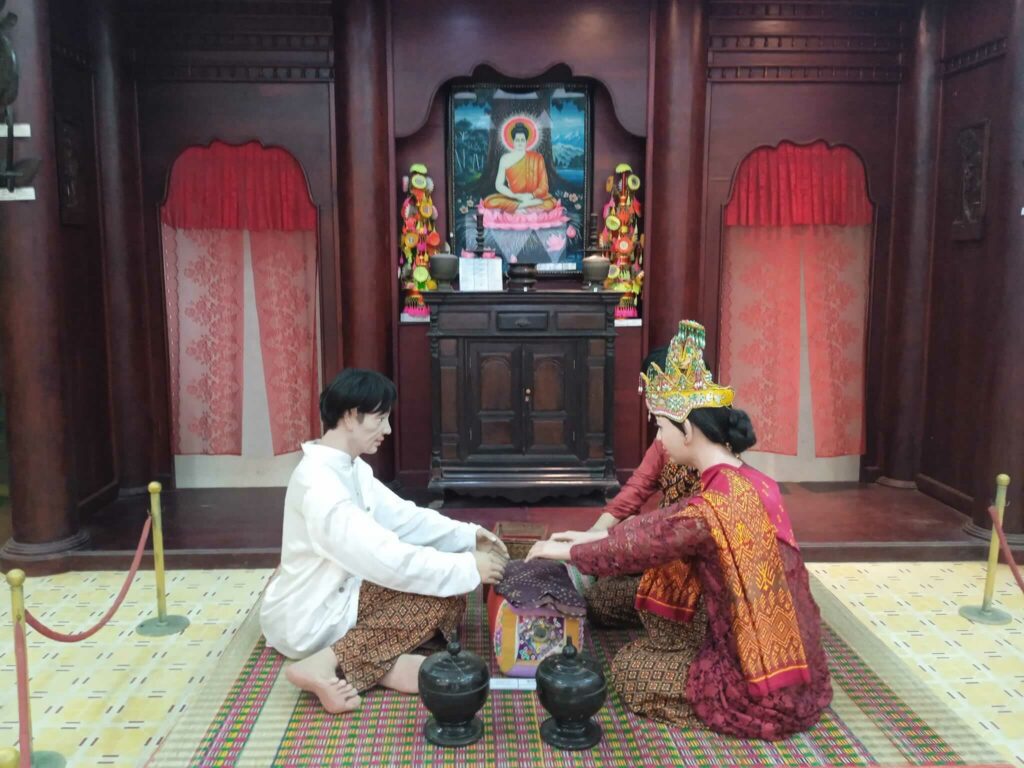
Currently, the museum is preserving and displaying more than 800 artifacts, images, documents…. reflecting the material and spiritual cultural life of the Khmer ethnic community in Tra Vinh from traditional to contemporary. The artifacts displayed at the museum are organized into several main categories, including material culture, spiritual culture, art, history, and modern life.
Tan Quy Islet
Tan Quy Islet is a small island located in the middle of the Hau River. It is divided into two parts: the majority lies in Tra On, Vinh Long province, and a small part lies in the Cau Ke area.
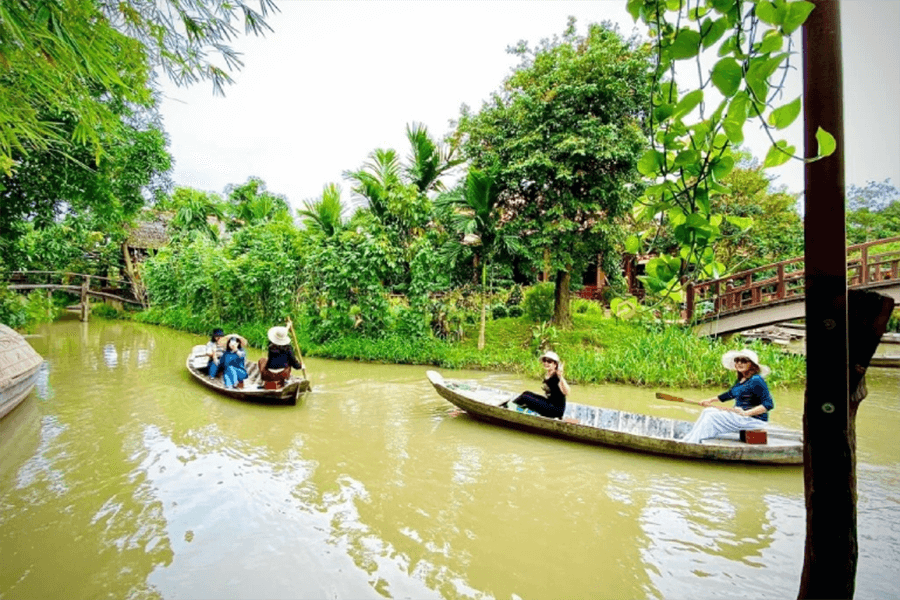
This place is famous for its fruit-laden orchards, including rambutan, longan, durian, and mangosteen. In particular, Tan Quy mangosteen is known as the “king of mangosteen” because of its high quality and delicious flavor.
Nodol Pagoda
Nodol Pagoda, also known as Co (Stork) Pagoda. It is a Khmer pagoda located in Giong Lon hamlet, Dai An commune. Built in 1677 and is one of the oldest Khmer pagodas in Vietnam.
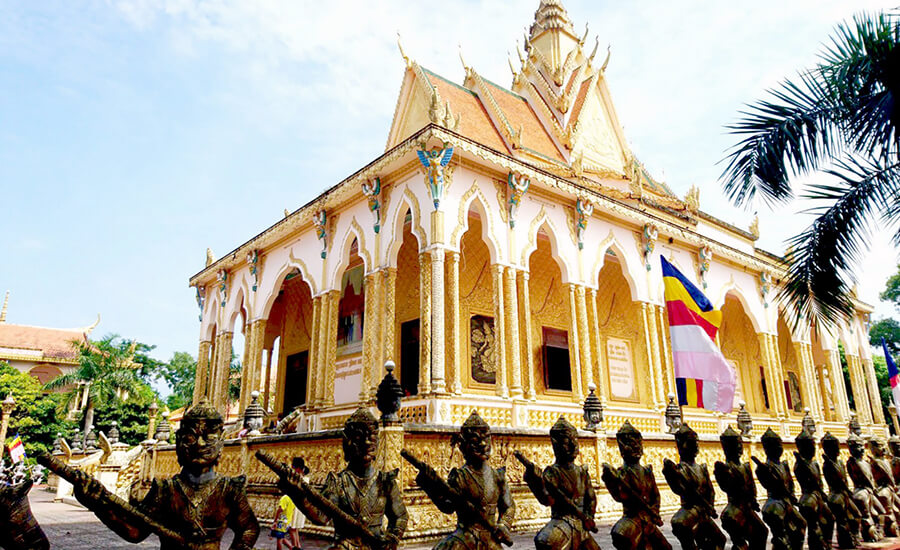
Nodol Pagoda was greatly influenced by Khmer architecture, with curved tiled roofs resembling a dragon’s tail. The pagoda is surrounded by bamboo and other plants.
The most special feature of Co Pagoda is the appearance of thousands of storks living in the pagoda grounds. Every day, flocks of white storks, ibises, pigeons, etc., fly over the tiled roofs, tree canopies, and tower tops. Creating an extremely unique and impressive scene.
Mac Bac church
Mac Bac church is one of the largest and most famous Catholic churches in the Mekong Delta region. Located in Tan Hoa Commune, the church was built in 1886, according to the drawings of architect J. Bourad. This is considered a miniature copy of the Saigon Notre Dame Cathedral.
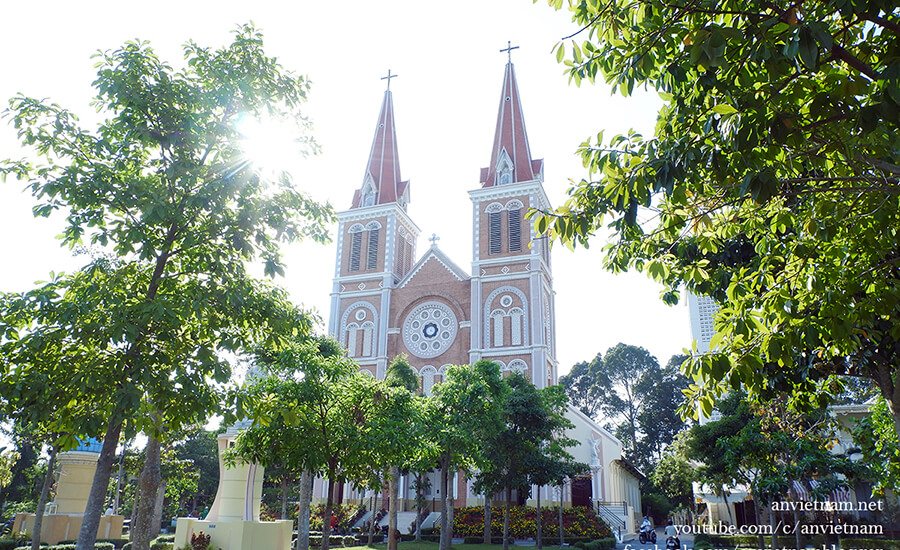
Mac Bac Cathedral features Gothic architecture, with soaring domes and colorful stained-glass windows, bearing the mark of Mekong Delta culture. The cathedral is 60m long, 24m wide, with a capacity of up to 2,000 people. Inside the cathedral, the architecture is solemnly decorated, with statues carved in elaborate detail.
Truc Lam Tra Vinh Zen Monastery
Truc Lam Tra Vinh Zen Monastery, also known as Truc Lam Pagoda. It is a Buddhist temple belonging to the Truc Lam Yen Tu Zen sect, located in Khoan Tieu hamlet, Truong Long Hoa Ward. The pagoda was built in 2016, following the traditional architectural style of Vietnamese Buddhism.
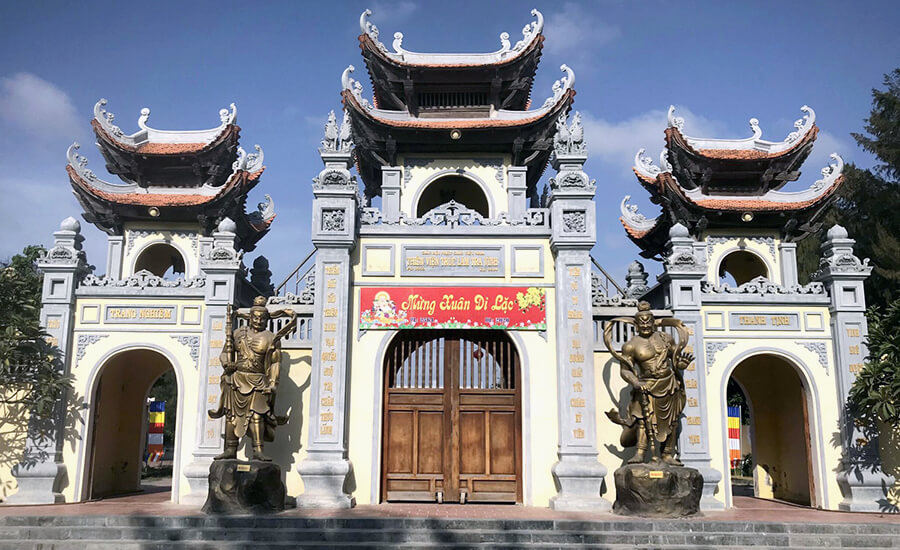
Truc Lam Tra Vinh Pagoda has an area of about 100 hectares, with many outstanding architectural items such as:
- Main hall: A place to worship Buddha Shakyamuni. Built in an ancient architectural style, with curved tiled roofs, and elaborately carved.
- Ancestor House: A place to worship the founders of the Truc Lam Zen sect.
- Bell tower, drum tower: A place to ring bells and drums to announce the time to chant sutras, recite Buddha’s name…
- Buddha Shakyamuni statue: This open-air statue is the largest Buddha statue in the Mekong Delta. Located on a high hill, overlooking the East Sea.
Phuoc Minh Cung
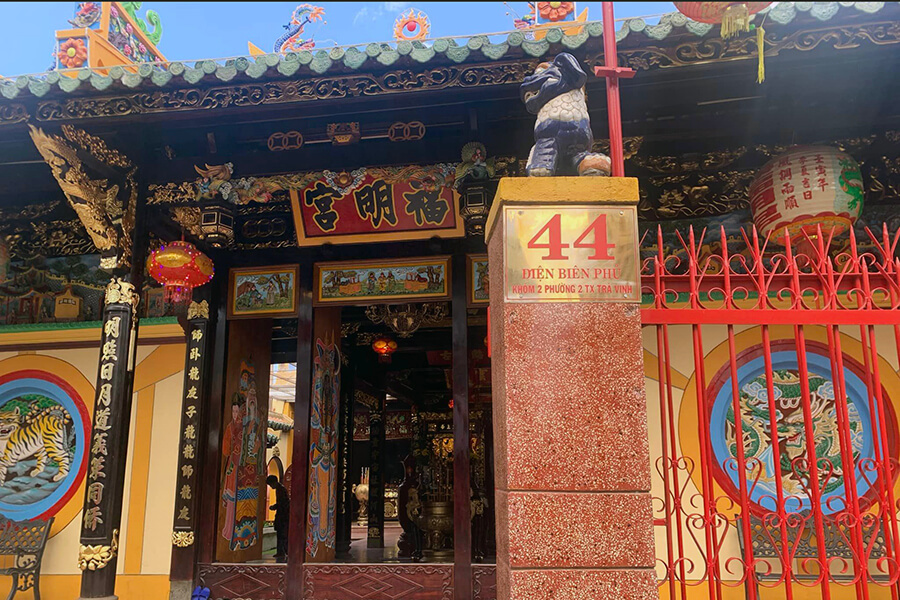
Phuoc Minh Palace is also known as Quan Thanh De Pagoda or Ong Pagoda, a Chinese religious establishment in Tra Vinh. As the name of Quan Thanh De Pagoda suggests, the deity worshiped at this tourist destination in Tra Vinh is Guan Yu, a Chinese military general who served under the warlord Liu Bei during the late Eastern Han dynasty.
Ong Met Pagoda
Ong Met Pagoda or Bodhisàlaraja Pagoda of Khmer Theravada Buddhism has extremely high artistic value. In 2009, Ong Met Pagoda was designated a national historical-cultural relic and an architectural art form by the Ministry of Culture, Sports and Tourism.
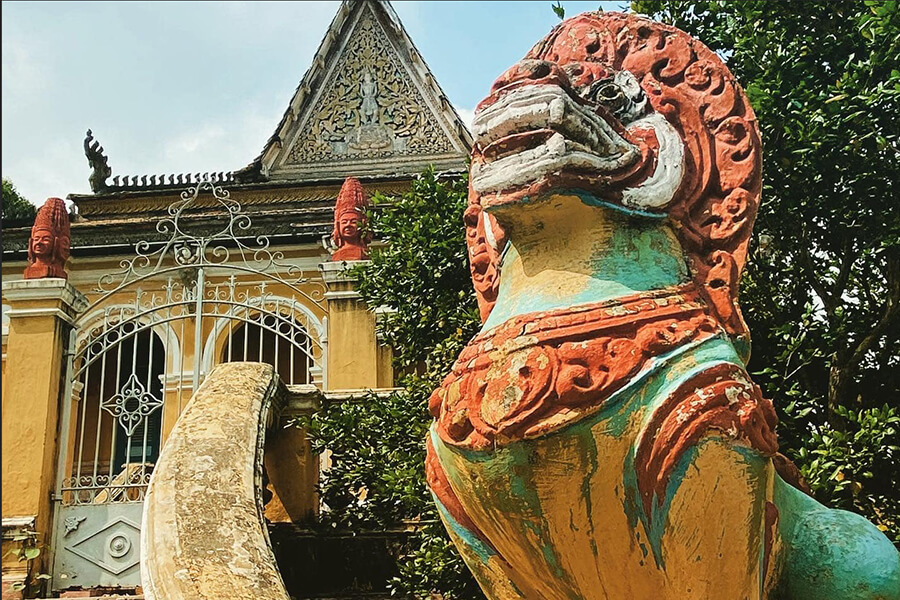
Inside the main hall of the pagoda, there are 32 pillars made of precious wood, arranged in 4 rows, and each column head with a horizontal crossbar is carved, painted red, and gilded with gold.
Tra Vinh specialties
Tra Vinh has a culinary fusion of three ethnic groups: Kinh, Khmer, and Hoa, creating typical dishes that attract tourists, such as bun nuoc leo, bun suong, and chao (porridge) am.
Bun nuoc leo
The main ingredient of this dish is bo hoc sauce, which is typical of Khmer cuisine. Bo hoc sauce is made by mixing and fermenting many types of fish, resulting in a fragrant, soft sauce. When cooking the broth, the fish sauce is carefully sifted, the bones are removed, and the broth is cooked with ingredients such as lemongrass, shredded snakehead fish, straw mushrooms, and pig’s blood.
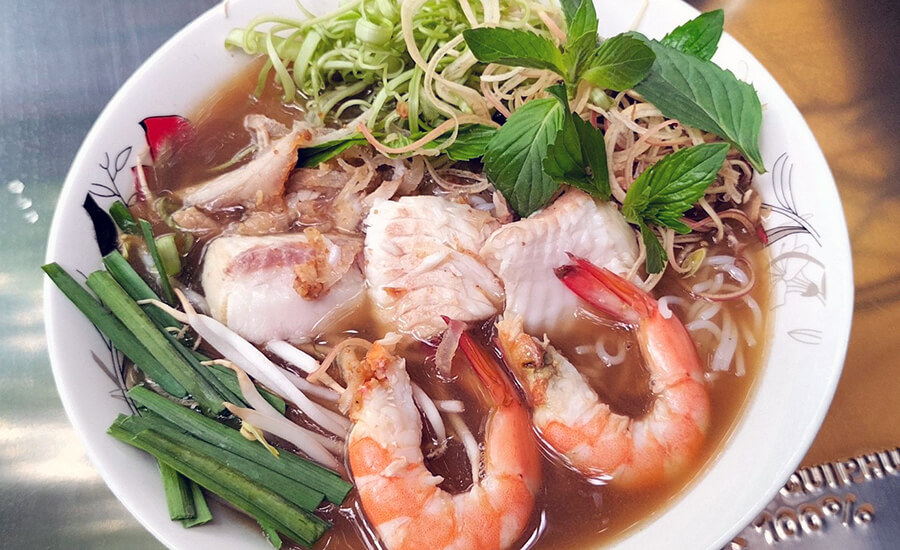
Bun nuoc leo is often eaten with spring rolls, cong cake, and roasted pork, depending on preference. To balance the taste of the fish sauce, customers add raw vegetables such as banana flowers, chopped lotus flowers, bean sprouts, and herbs.
Suong noodle soup
Suong noodle soup is a noodle dish served with shrimp cake. The fresh shrimp is marinated with spices, ground, and shaped into 3cm – 5cm long. To make the shrimp cake chewy, the cook must knead it many times. The patties are placed in the pot and boiled for another 5 – 10 minutes, until they float and turn yellow.
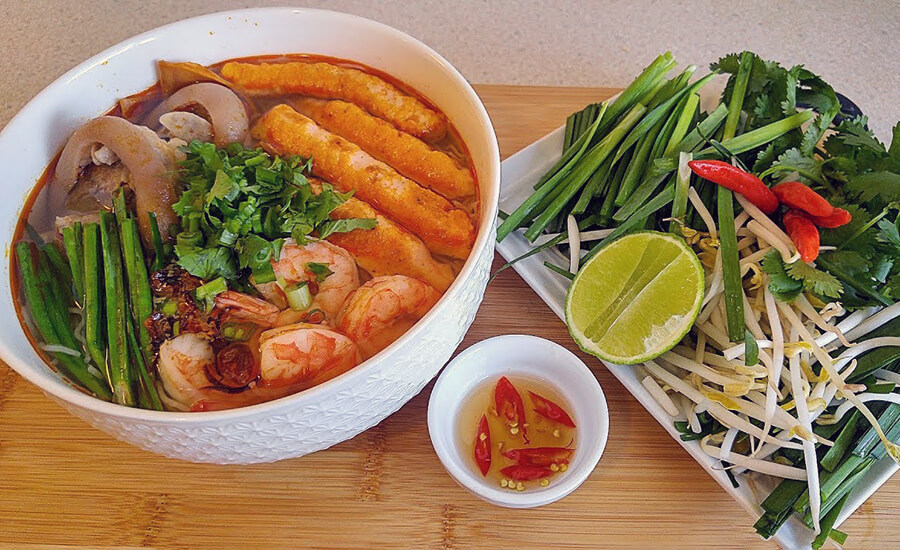
The broth is simmered with pork bones, soy sauce, and tamarind to develop depth of flavor and acidity. To make the noodle bowl more appealing, the cook adds boiled pork belly, blanched bean sprouts, lettuce, and serves it with shredded white cabbage. The dipping sauce is a mixture of ground soy sauce and chili.
Am porridge
Am porridge is made from snakehead fish. The cook chooses fresh fish, boils and removes the bones, then stir-fries with onions. The fish eggs are beaten until smooth and then added to the porridge pot, cooked in the fish broth. The accompanying ingredients include dried onions, dried shrimp, and dried squid.
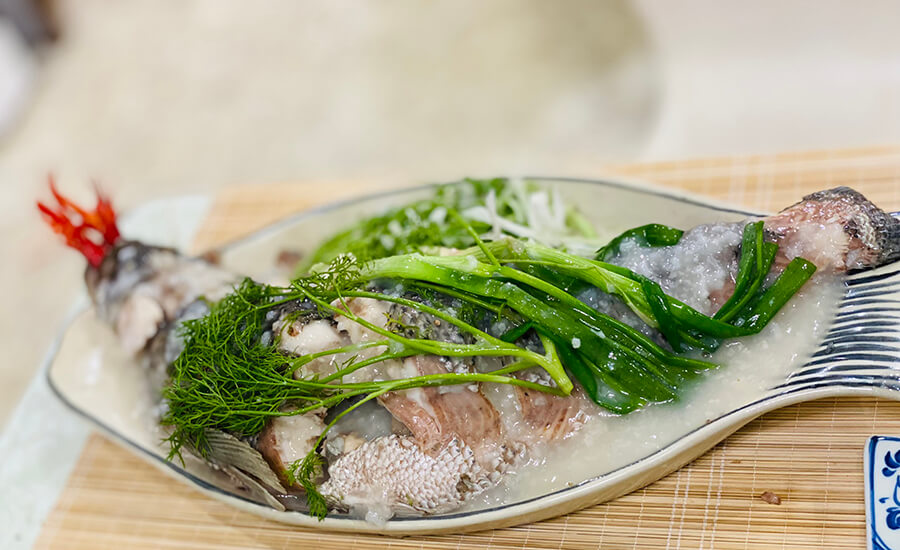
The porridge needs to be seasoned with fish sauce, crushed bean paste, minced chili, and stir-fried with garlic, ground pepper, and crushed roasted peanuts, until thick. The porridge is served with chopped raw vegetables, onions, cilantro, blanched bean sprouts, and crushed crispy toasted sesame rice paper.
Ben Co noodle soup
The noodle soup dish with broth simmered from pork bones ensures clarity. To do this, the cook must choose fresh marrow bones, while simmering, regularly skim off the foam. The noodle soup is often served with pork leg, lean meat, muscle meat, heart, liver, and intestines, depending on preference.
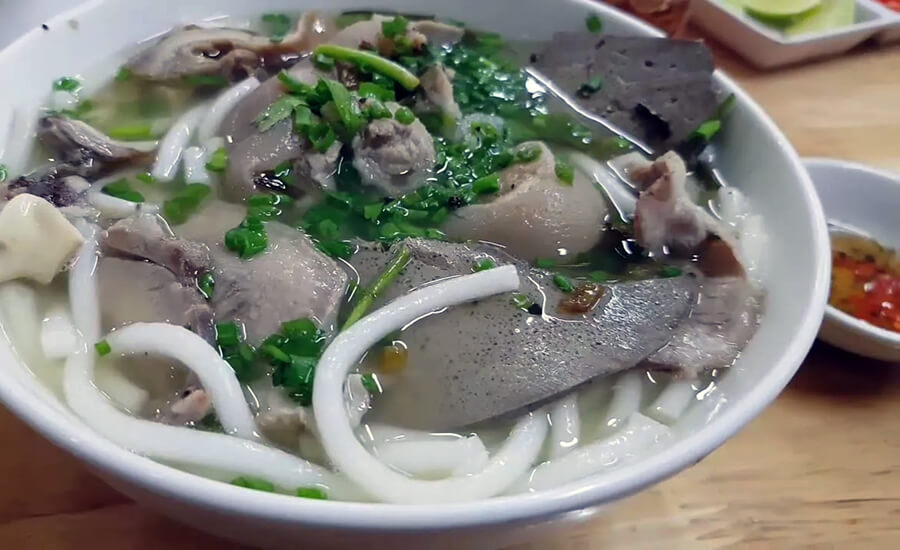
When serving customers, the restaurant adds green onions, fried onions, and pepper to make the dish more appealing. The noodle soup is not served with vegetables; customers mix fish sauce to dip the toppings according to their taste.
Tra Cuon Tet Cake
The name of the cake comes from Tra Cuon hamlet, Kim Hoa commune, a locality with a large Khmer population. Tra Cuon Tet cake is delicious thanks to its ingredients. The sticky rice chosen to wrap the cake is Long An waxy sticky rice, which is sticky and can be preserved for a long time.
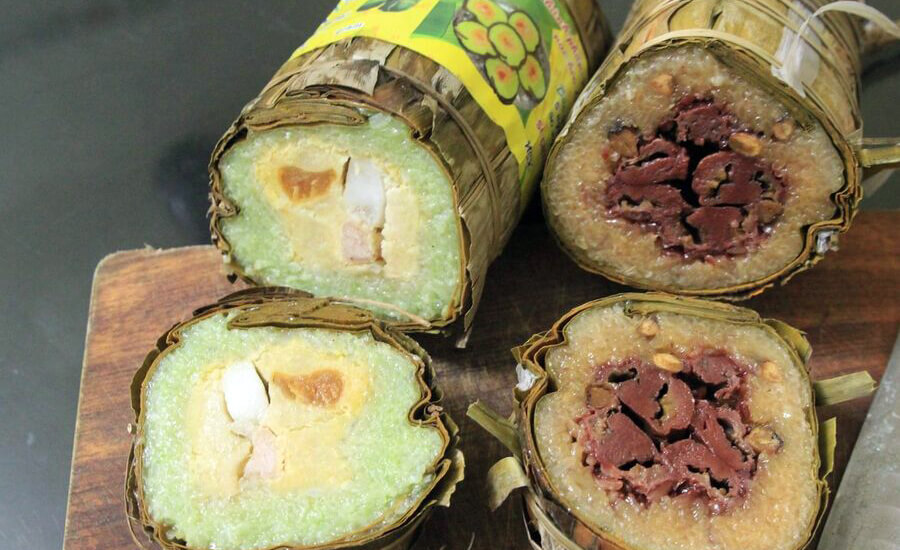
To give the cake a beautiful green color, the maker mixes the soaked and drained sticky rice with spinach juice. The filling consists of steamed and pureed green beans combined with seasoned pork. Many places also add salted eggs to the filling to make it more attractive. The cake is wrapped in banana leaves and cooked for about 10 hours.
In addition to the dishes that can be enjoyed on the spot, visitors who explore Tra Vinh can buy wax coconut, beef sauce, Vinh Kim dried shrimp, fish sauce, flat rice or souvenirs made of bamboo, coconut, and traditional Khmer masks as gifts.
Source: collected by An
Follow us for the best deals on Vietnam package tours and visa services!

Comment (0)