
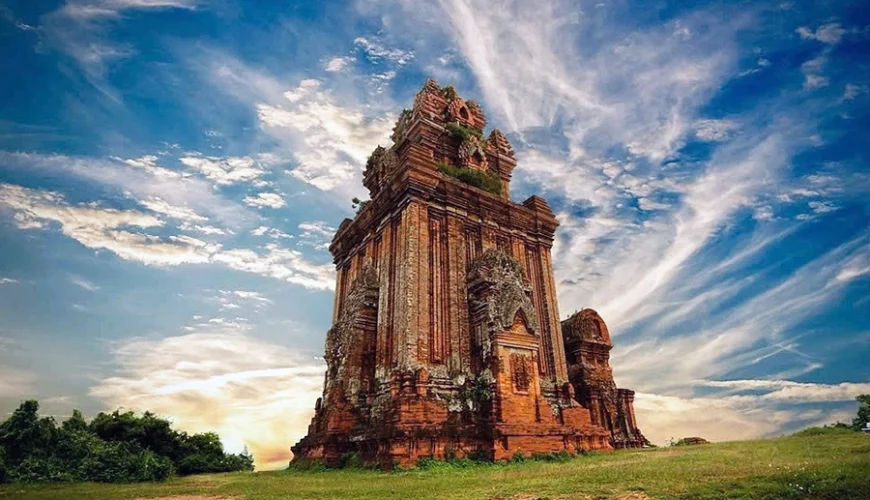
Banh It Tower is one of the prominent ancient Cham tower complexes in Central Vietnam, located in Gia Lai province (formerly part of Binh Dinh). With its unique architecture, long-standing historical value, and ancient beauty amid nature, it is not only a testament to the Cham civilization but also an attractive destination for those who love exploring culture, history, and ancient architecture.
Overview of Banh It Tower
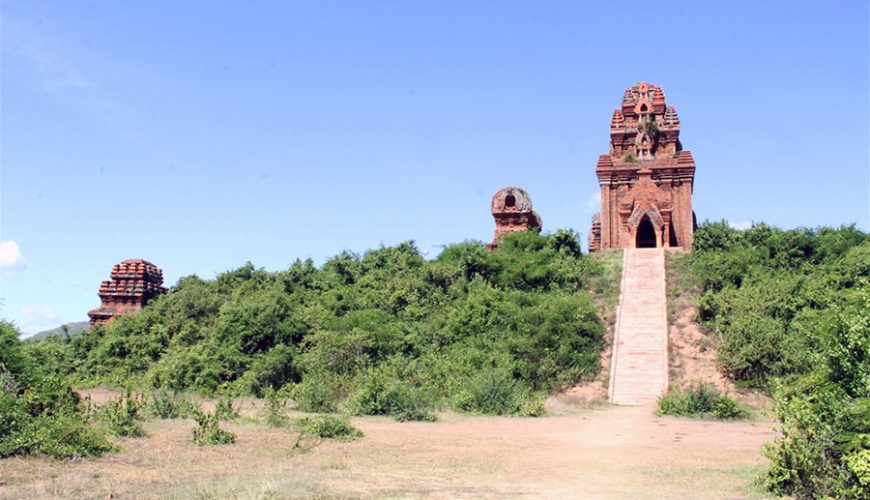
The Banh It Tower complex is located about 20 km from the center of Quy Nhon, on a 100-meter-high hill in Dai Le village, Tuy Phuoc Bac commune, between two branches of the Kon River.
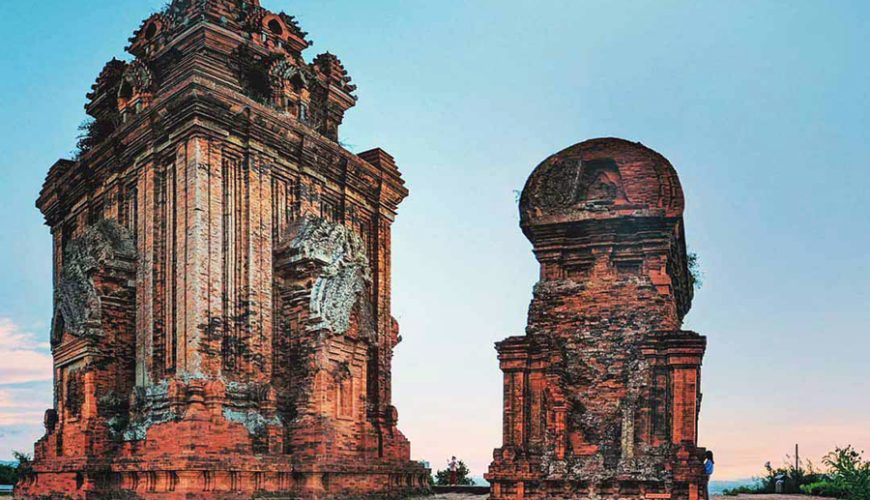
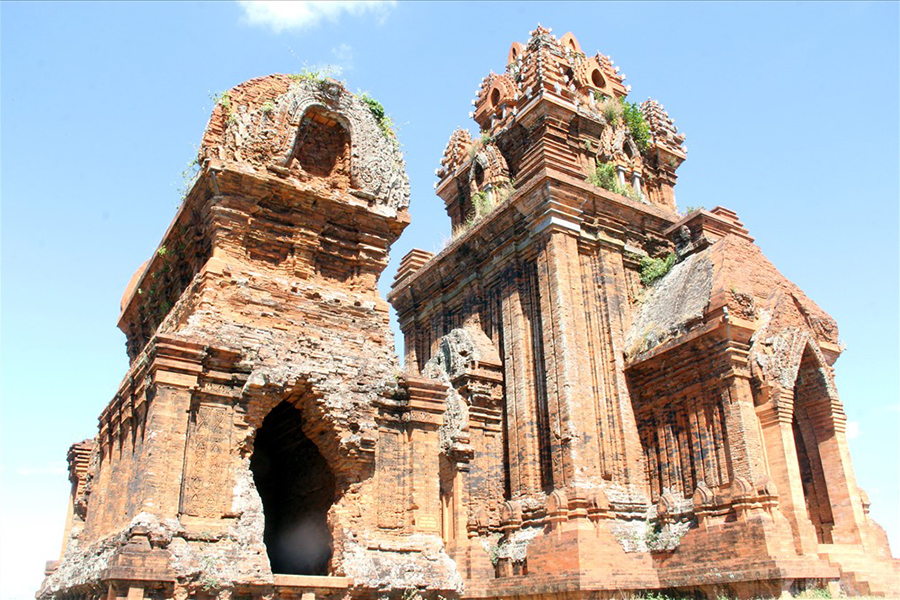
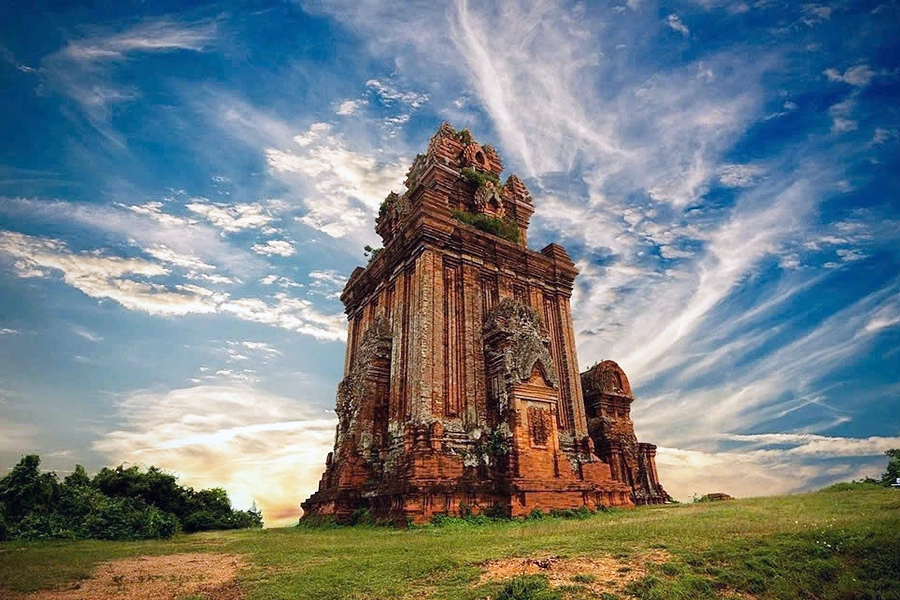
The structure was built in the late 11th and early 12th centuries and consists of four main towers: the Main Tower (Kalan), the Gate Tower (Gopura), the Fire Tower (Kosagrha), and the Bia Tower (Posah). It was once a major religious center of the ancient Vijaya region.
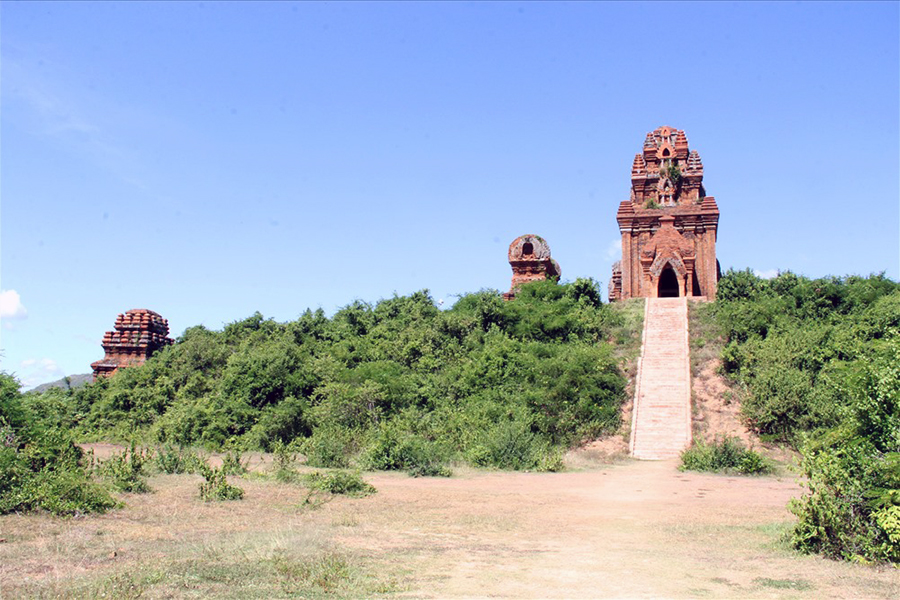
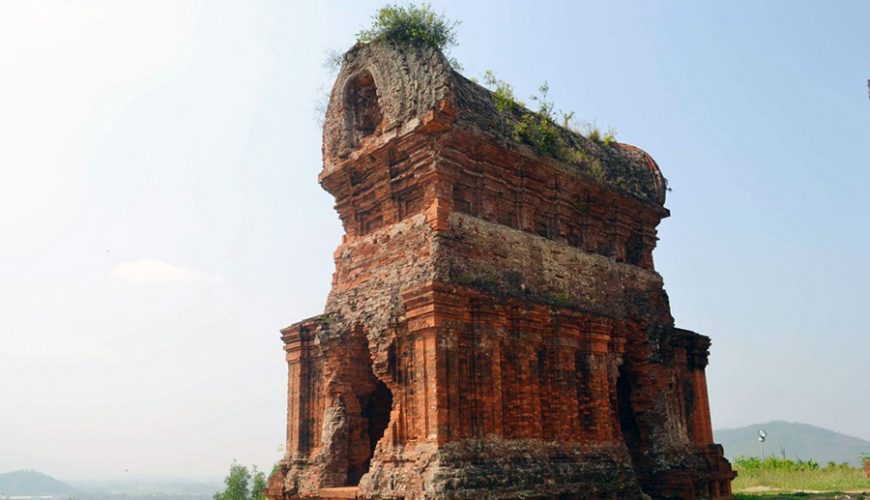
From a distance, the entire complex resembles a pyramidal sticky rice cake – a local specialty, hence the name Banh It (Vietnamese: Bánh Ít) Tower. It is also known as the Silver Tower, or in the J’rai language, YANG MTIAN. Each tower has its own unique architectural style and function.
The Banh It Tower is dedicated to Hindu deities such as Shiva, Vishnu, and Ganesha, along with elements of Cham folk beliefs and indigenous traditions.
In 1982, the complex was recognized as a National Architectural and Artistic Monument. In 2014, it was ranked among the top 10 most visited ancient towers by the Vietnam Record Organization.
A unique architectural feature of Banh It Tower
The thousand-year-old tower complex covers an area of over 7,000 m² and has the largest number and scale of towers among the eight remaining ancient Champa tower complexes in the former Binh Dinh province (currently merged into Gia Lai Province). It was constructed using sandstone, granite, and brick and faces east.
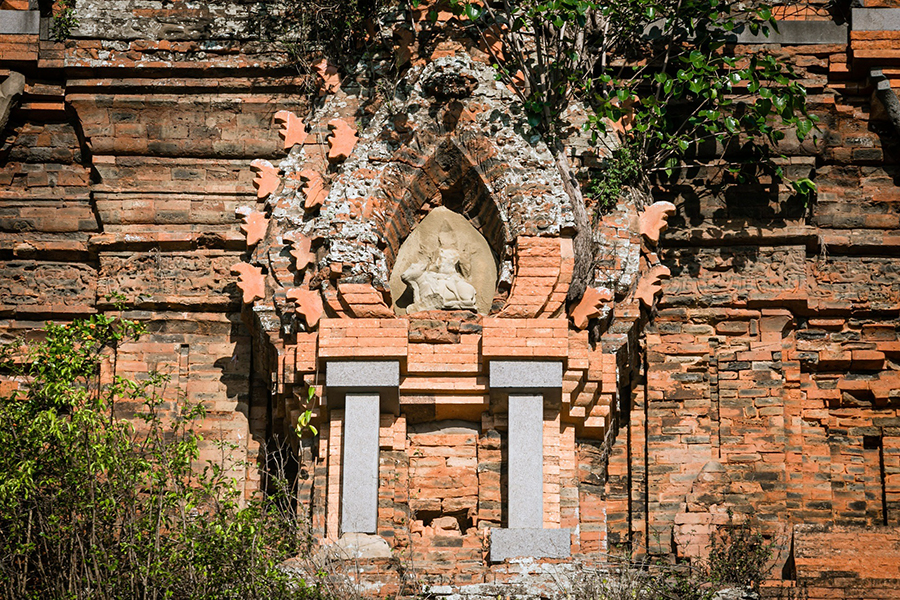
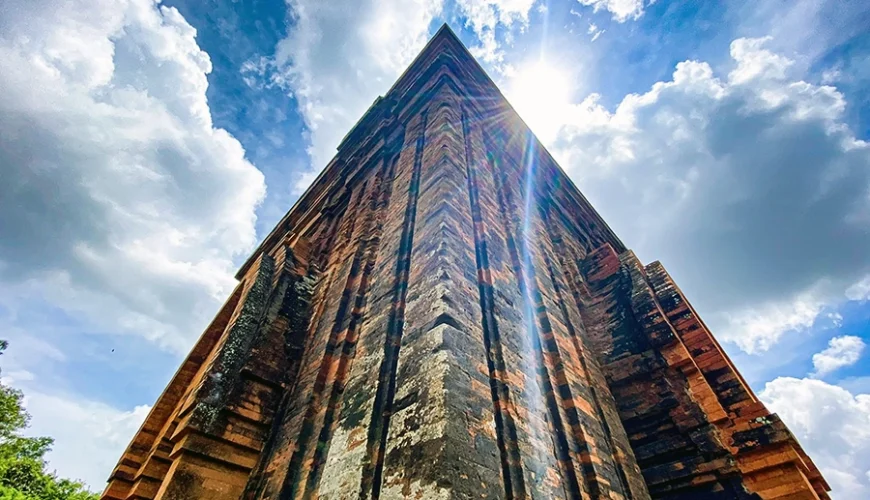
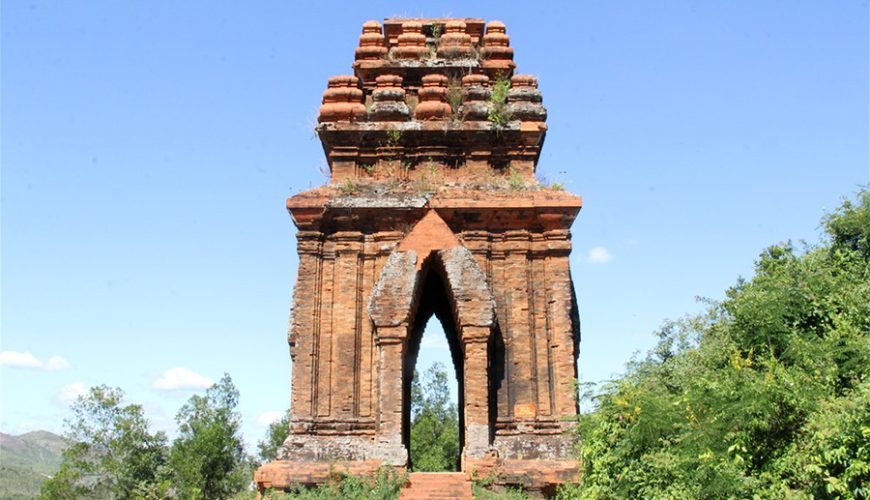
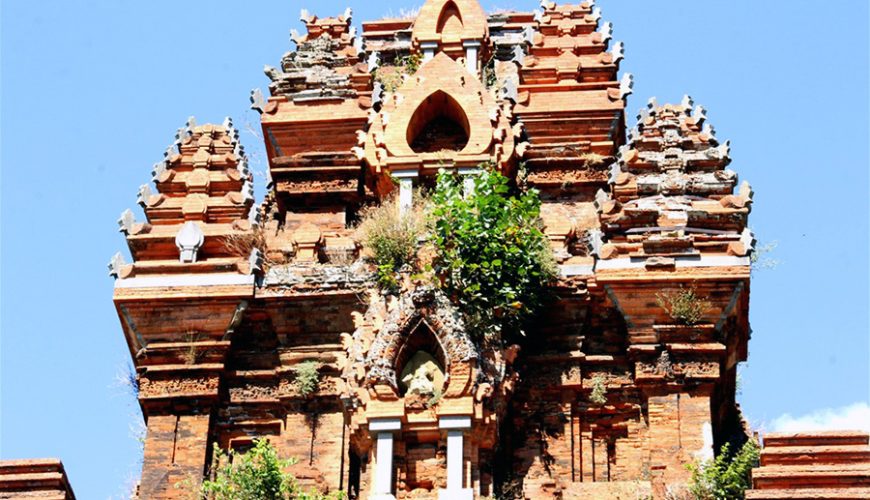
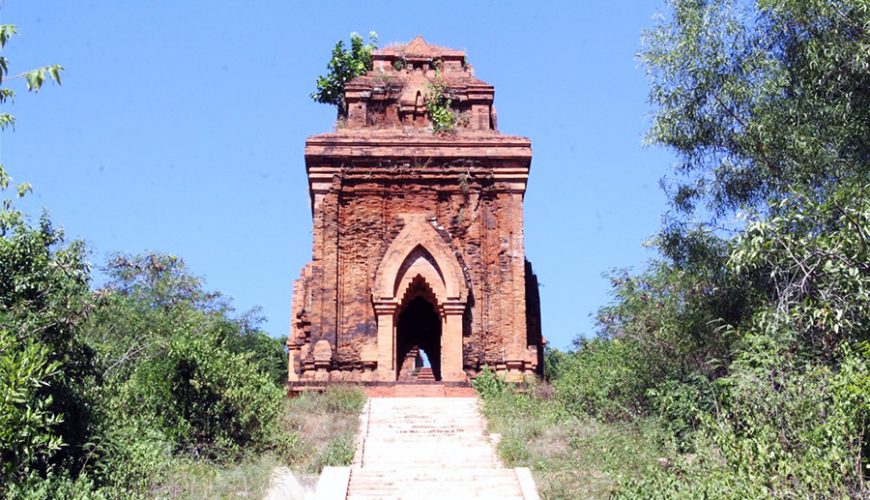
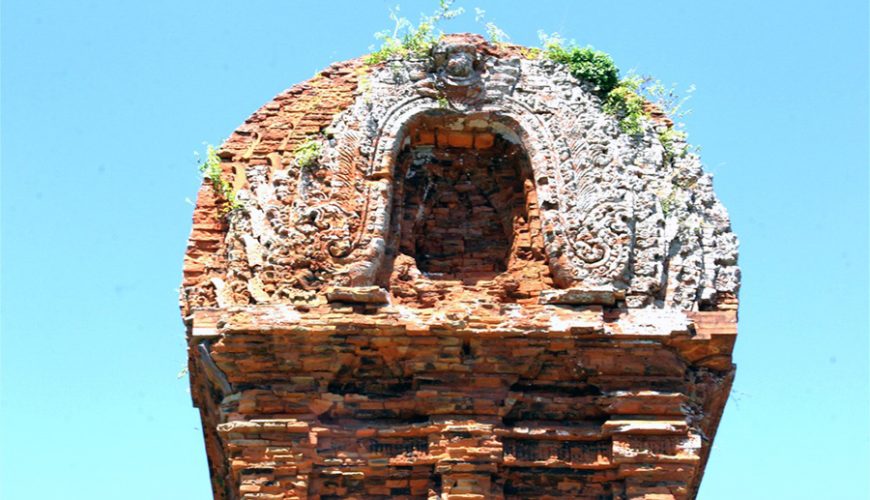
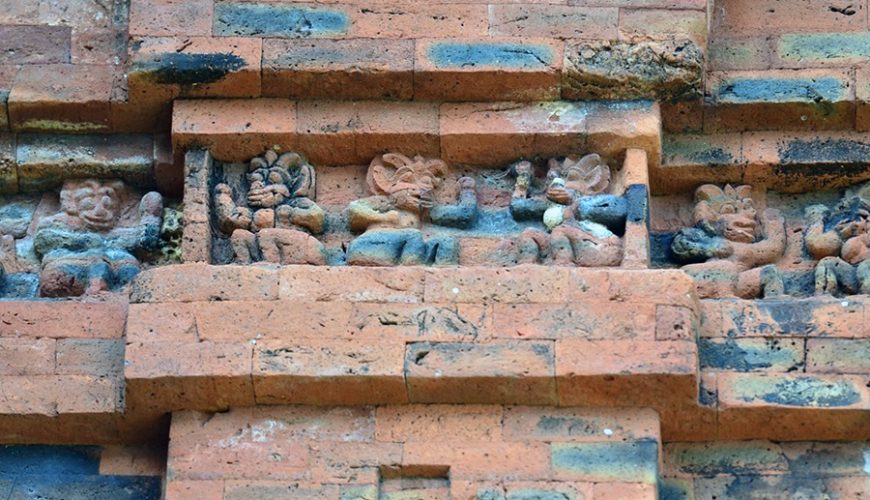
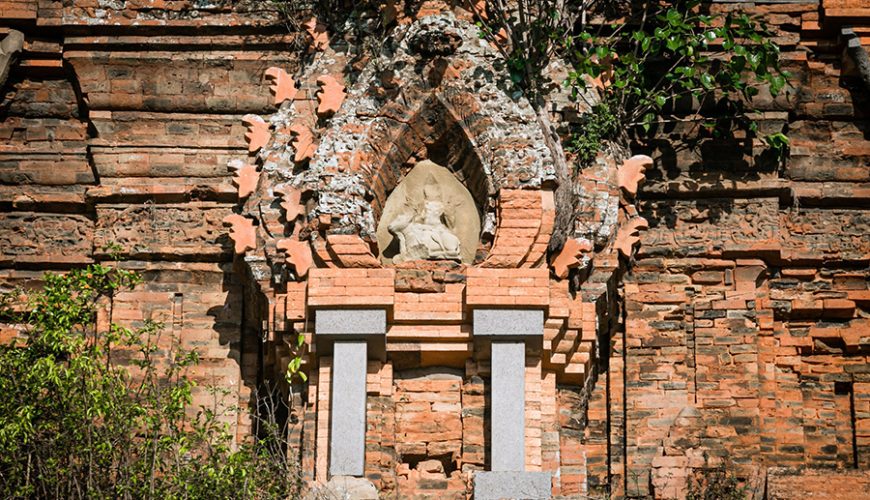
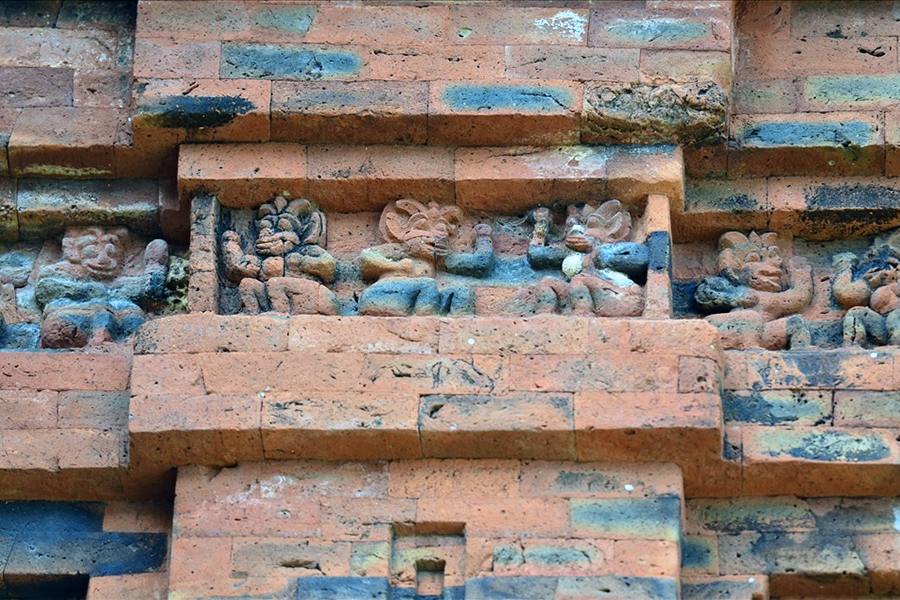
The main tower (Kalan) is located at the highest point on the hilltop, standing 29.6 meters tall. It has a square base, each side measuring 12 meters, with a main entrance facing east and three false entrances. The main entrance protrudes 2 meters, with a spearhead-shaped arch, and in the center is a relief of Kala’s face – a protective deity. The cornice features a dancing monkey god, Hanuman, while the false entrances are decorated with Gajasimha reliefs (elephant trunk, lion body).
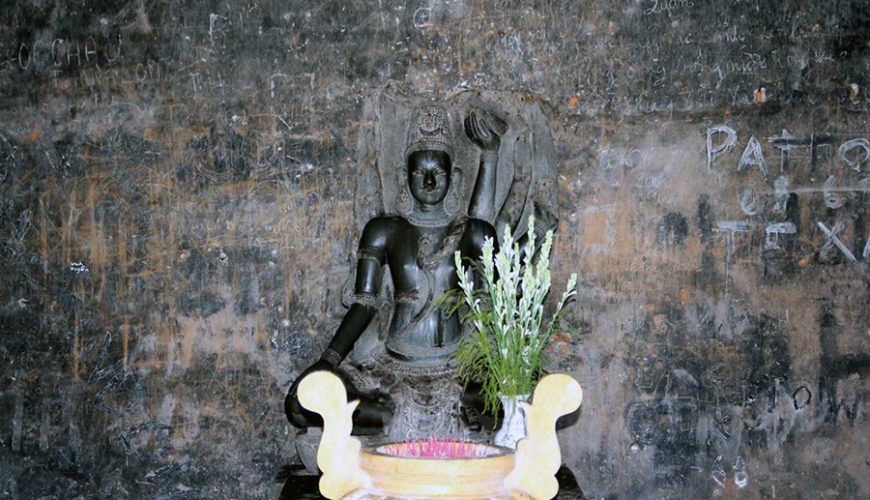
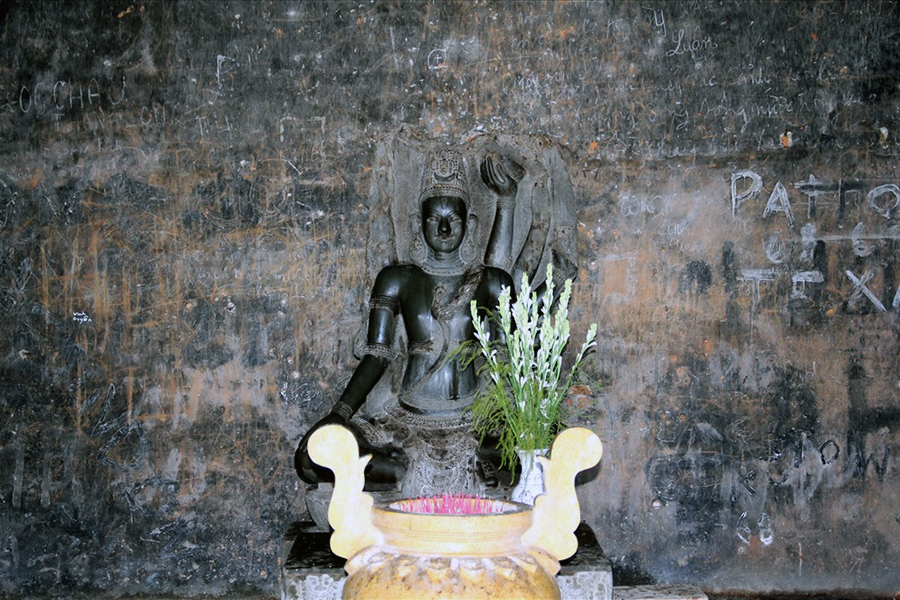
Inside, a replica of the Shiva statue is currently housed, while the original is kept at the Guimet Museum in France. According to Asian Art magazine, the statue was featured in the major exhibition “Trésors d’art du Vietnam: La Sculpture du Champa” at the Guimet Museum in 2005-2006, showcasing the most important Champa sculptures from Vietnam and France.
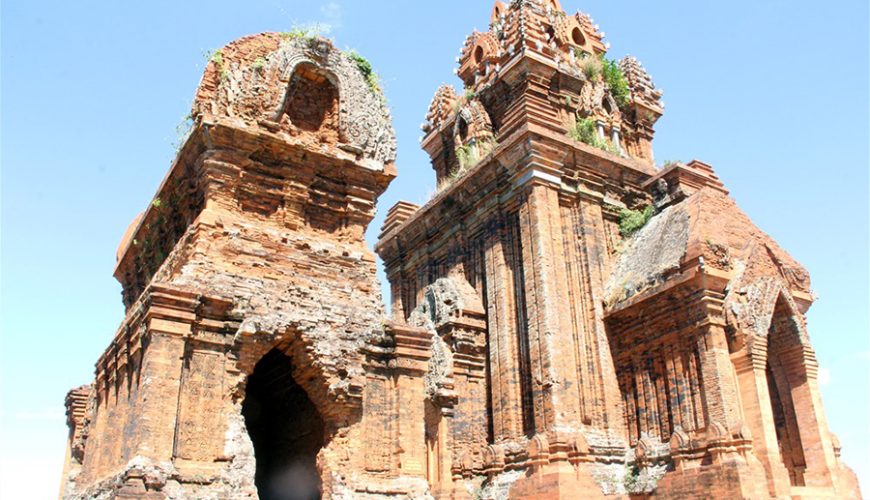
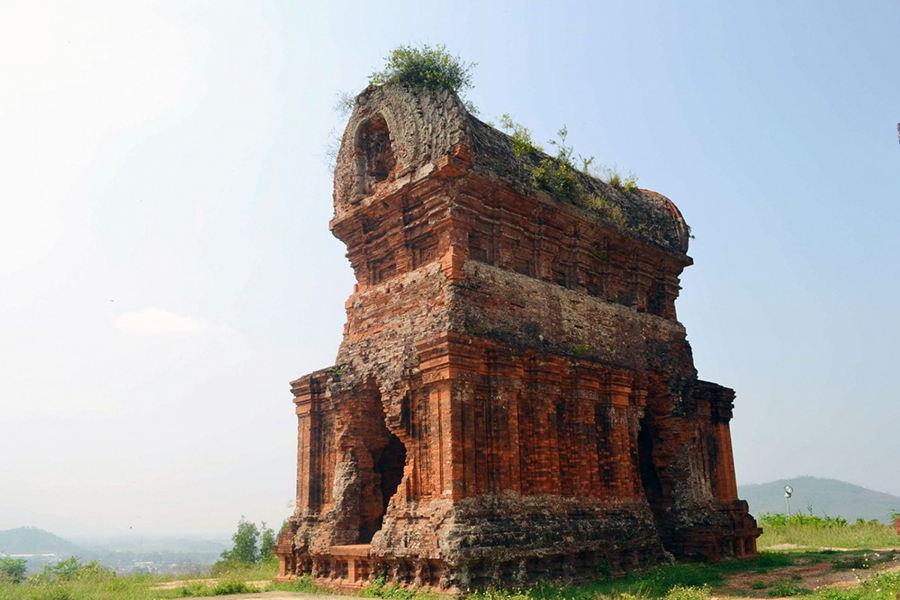
Next to the Main Tower is the Fire Tower (Kosagrha), a rectangular structure 10 meters high, 12 meters long, 5 meters wide, with walls 1.4 meters thick. This structure is also known as the Saddle Tower due to its curved roof, concave in the middle and resembling a saddle. This structure served as a warehouse where the ancient Champa people stored items used in rituals.
The Bia Tower (Posah) has a square structure and is located southeast of the Main Tower. Its four doors are interconnected, unlike most Champa temples in the area. The roof is carved with gourd-shaped blocks; hence, it is also called the Wine Gourd Tower.
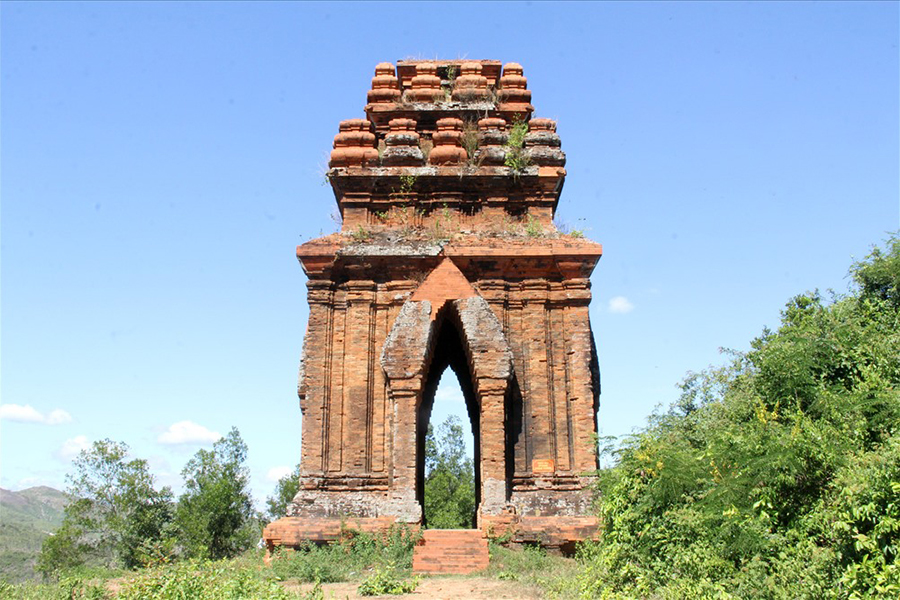
About 30 meters below the Main Tower is the Gate Tower (Gopura), approximately 12 meters high and square with sides of 7 meters. The Gate Tower’s architecture is similar to the Main Tower, demonstrating consistency in the overall design.
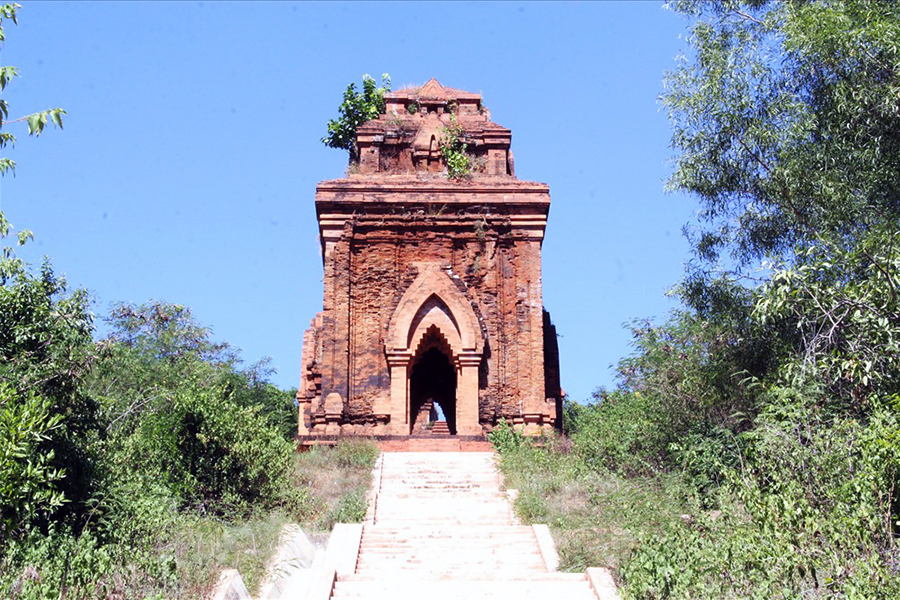
A unique feature is that the shape and structure of the Banh It Tower are found in only a few other structures, such as the My Son Towers B5, E7, and C3 (Da Nang City), and the Po Klong Tower in Gia Lai (Khanh Hoa). This is evidence of the unique development of Cham architectural art.
Many researchers believe that the Banh It Tower marks a transitional period from the Tra Kieu to the Binh Dinh style – a combination of gentle, curved lines with the robustness and grand scale characteristic of Cham architecture.
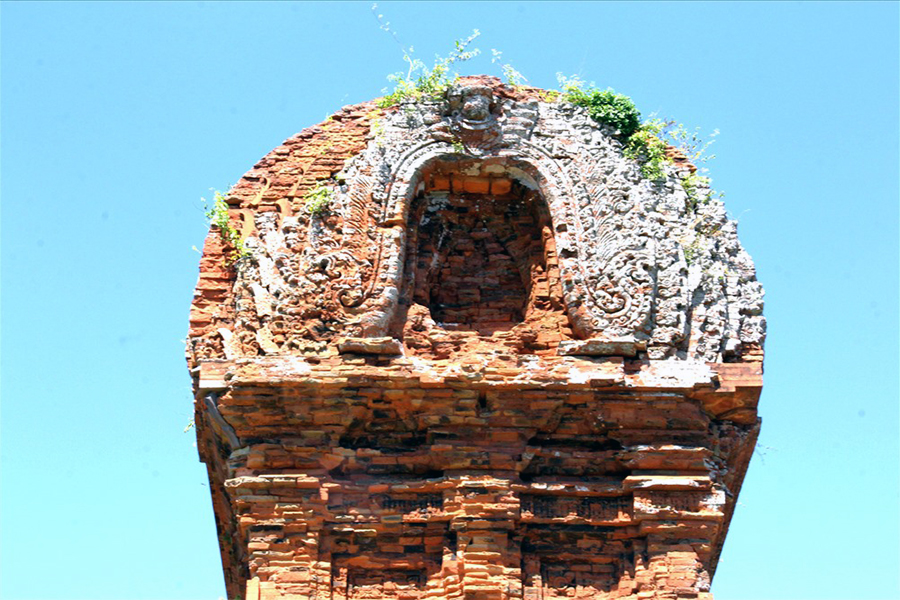
The complex also preserves many statues and reliefs with soft, sculpted forms, reflecting the distinctive features of Champa culture during this period. Images of elephants, tigers, and the mythical Garuda bird, from both real life and legend, appear frequently in the decorative system, increasing the expressive value of the structure.
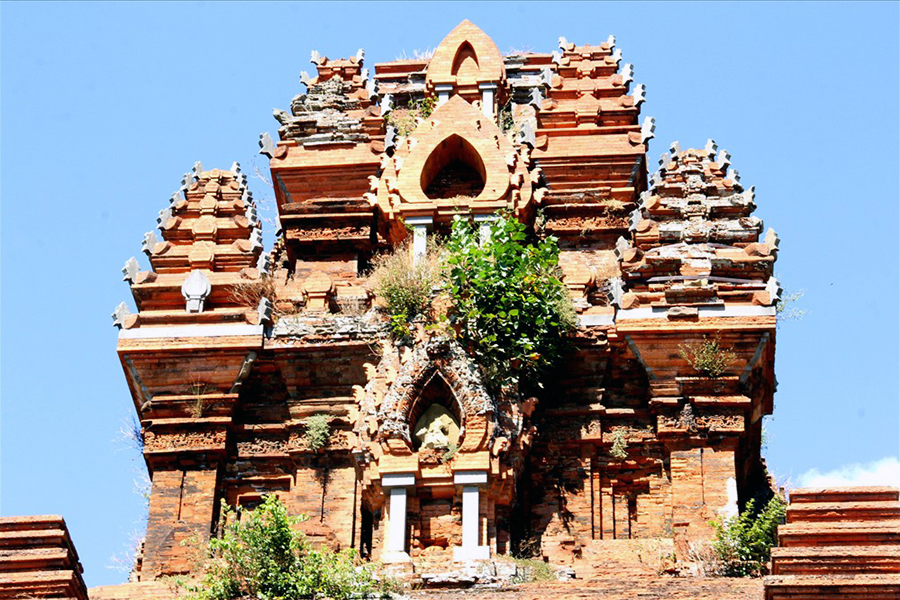
In addition, the Banh It Tower was once the site of traditional Cham rituals for centuries, especially during spring and autumn. The Kate festival is a large-scale event with both ceremonial and festive activities. Currently, the Cham community living around the tower has migrated to other localities such as Khanh Hoa, Lam Dong, and An Giang. Although the rituals are no longer regularly held at the tower, it still holds deep significance for the Cham community, as a symbol of cultural heritage and spiritual values left by their ancestors.
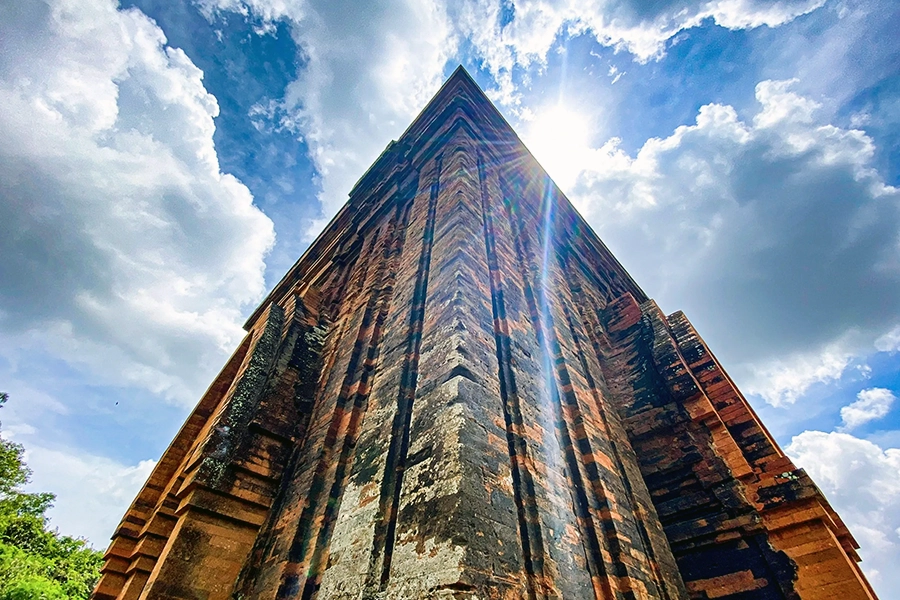
The Banh It Tower possesses the beauty of time, with moss-covered walls and a tranquil atmosphere that evokes the feeling of stepping into a forgotten world. Visitors often stop to admire the exquisitely carved reliefs and patterns before continuing their exploration of Gia Lai.
Banh It Tower
- Location: Dai Loc Village, Tuy Phuoc Bac Commune, Gia Lai Province.
- Best for: solo travelers, students
- Tourist spots nearby: Duong Long Tower, Do Ban Citadel, Quang Trung Museum…
Source: collected by An
Follow us for the best deals on Vietnam package tours and visa services!
Comment (0)