
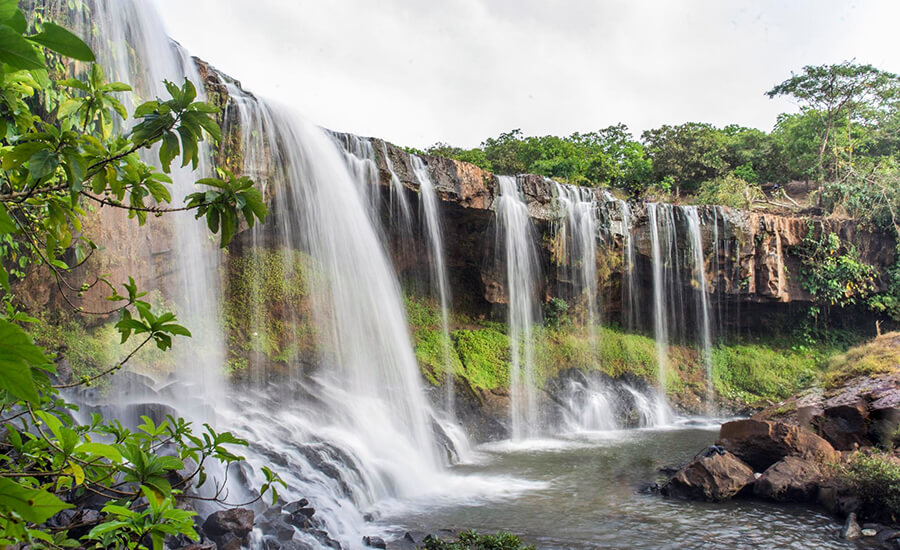
Gia Lai tourism has an irresistible appeal thanks to its long, pristine coastline, majestic natural landscapes, rich cultural heritage, and diverse cuisine. Therefore, Gia Lai has become an ideal destination for a vacation and entertainment trip.
General information about Gia Lai
After merging with Binh Dinh province, the new Gia Lai province has an area of over 21,000 km² and a population of about 3.5 million people. This is the second-largest province in the country (after Lam Dong), with tourism potential and strengths in its forests and seas.
Gia Lai borders Quang Ngai to the north, the sea to the east, Ratanakiri province (Cambodia) to the west, and Dak Lak to the south. The Provincial Administrative Center of Gia Lai is Quy Nhon. Tourist attractions in Gia Lai are mainly concentrated in Quy Nhon City, Pleiku, and neighboring areas within a 20-30 km radius.
What’s the best time to explore Gia Lai?
After merging with Binh Dinh Province, the terrain and climate of Gia Lai are distributed as follows:
The old Gia Lai area (in the northern Central Highlands) belongs to the tropical monsoon climate zone, with high humidity, heavy rainfall, no storms, and frost. The weather is divided into two distinct seasons: rainy season and dry season. The rainy season usually starts in May and ends in October. The dry season is from November to April of the following year.
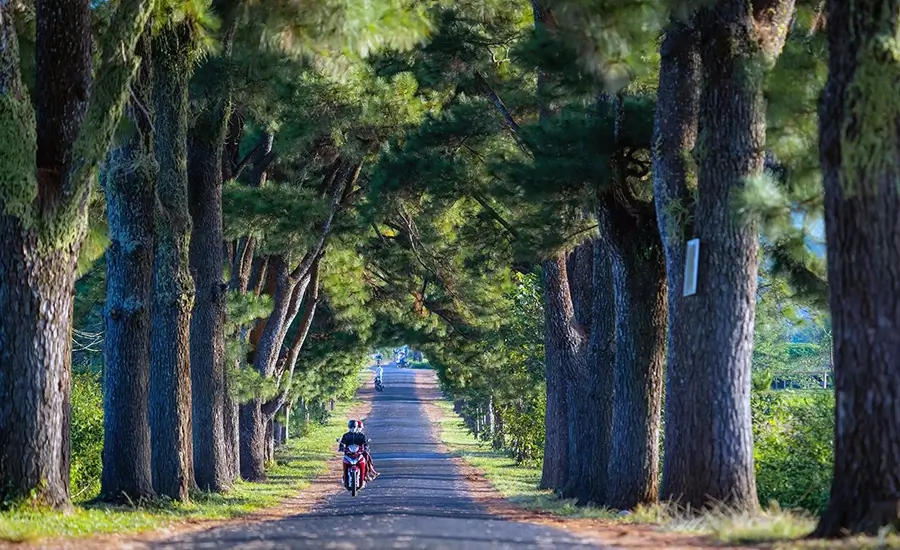
The average annual temperature ranges from 20 to 25 degrees Celsius. The average temperature across the province is about 27 degrees Celsius, with the lowest in the mountains and plateaus at about 20 degrees Celsius and the highest at sea at about 35-36 degrees Celsius.
However, the rainy season in the areas of the old Binh Dinh (coastal areas located in the north of the South Central Coast, Central region, now Gia Lai province) starts from September to December, while the mountainous areas often have rain from May to August, due to the influence of the Central Highlands rainy season.

The dry season lasts from January to August, during which the summer months are sunny but not hot and less affected by storms and rain, making it suitable for tourism.
Accommodation in Gia Lai
Hotels in Gia Lai are diverse but mainly concentrated in Pleiku, Quy Nhon, and the surrounding areas. In the Pleiku area, several homestays, including Sora, Moonlight, Tien Son Pleiku, and Gio, offer rooms at an average price of 300,000 VND per room.
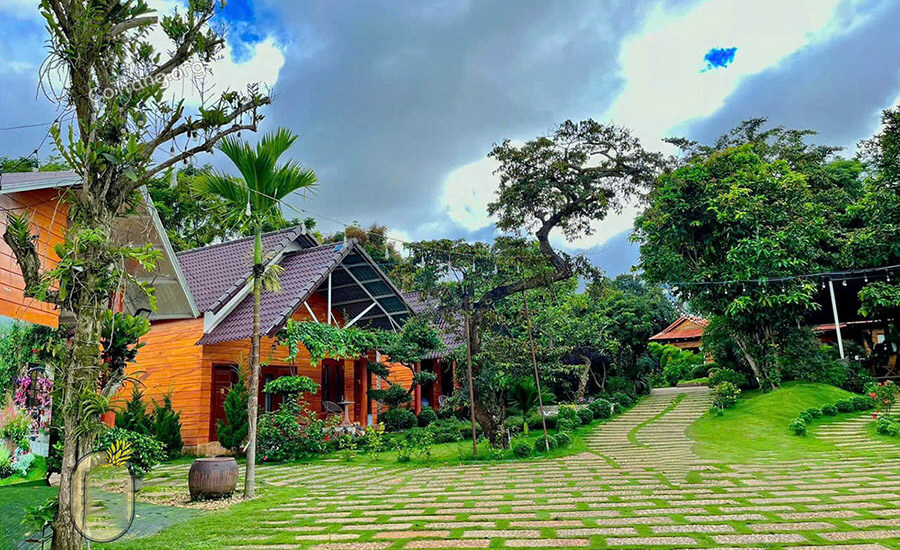
Mid-range hotels, ranging from 300,000 to 500,000 VND per night, include Cong Doan, Pleiku Hotel, Hoai Thuong Gia Lai, La MIA Lakeview, Tre Xanh, Khai Hoan, and Vinh Hoi. High-end hotels include Hoang Anh Gia Lai, Duc Long Gia Lai, and Boston Hotel, with prices ranging from 700,000 to 1 million VND per night.
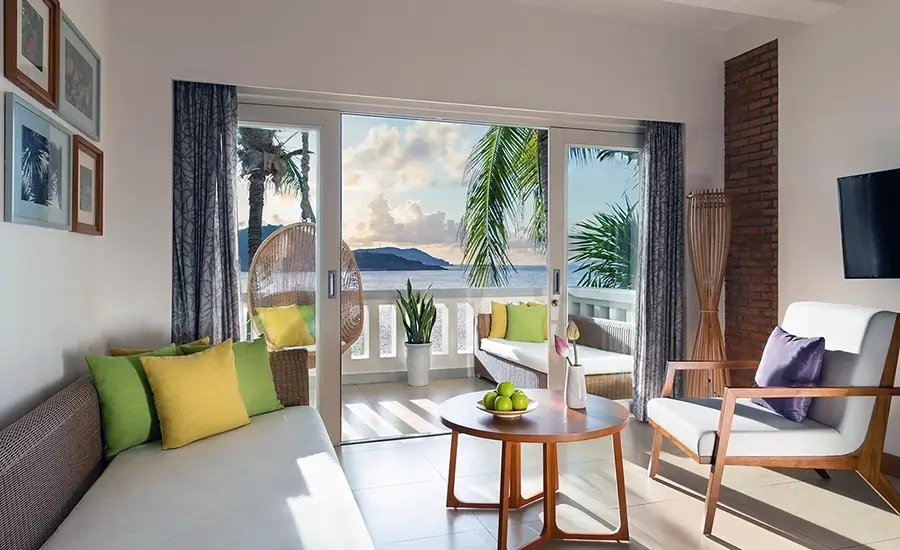
In Quy Nhon and the surrounding areas, tourists often choose resorts such as Anantara Quy Nhon Villas, Avani Quy Nhon Resort & Spa, Maia Resort Quy Nhon, Casa Marina Resort, Crown Retreat Quy Nhon, and FLC Resort Quy Nhon when on vacation. Room rates range from 2 million to about 8 million VND per night. These places are far from the city center.
How to get here?
It is easy to travel from many places in the country to Gia Lai by air, road, and rail. Gia Lai has the Quy Nhon seaport, which is a place for receiving goods, not for cruise ships participating in sea traffic.
Airway
Gia Lai has two airports: Phu Cat Airport, 35 km from the center of Quy Nhon, and Pleiku Airport, about 7 km from the center of Pleiku. Travel time by car is about 15 minutes.
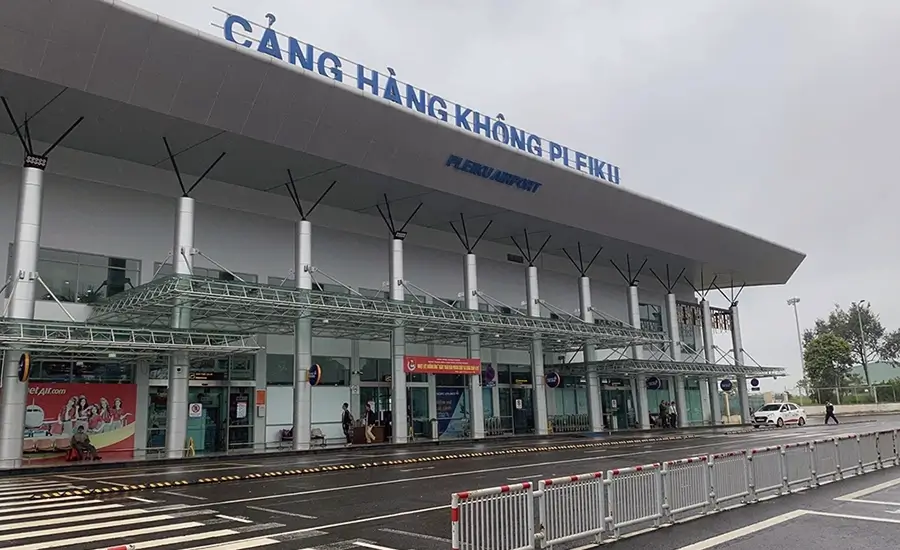
Vietnam Airlines and Vietjet Air both have flights from Hanoi and Ho Chi Minh City to Pleiku and Quy Nhon. Round-trip ticket prices range from 1.5 million VND to 3.5 million VND depending on departure point and flight time.
By roadway
Gia Lai has a fairly convenient road traffic infrastructure, so it is possible to travel from major cities such as Da Nang, Hanoi, and Ho Chi Minh City to Pleiku, Quy Nhon, and neighboring areas.
In Quy Nhon city and Pleiku, tourists can rent motorbikes for 100,000 to 150,000 VND per day, or taxis or private cars with a driver to reach farther destinations. If you only travel within the central streets and are in a group of about 10 people, you can choose an electric car or a bus.
Railway

The Thong Nhat train stops at Dieu Tri station in Tuy Phuoc, nearly 10 km from the Quy Nhon center. Round-trip fares (from Hanoi and Ho Chi Minh City) range from 850,000 VND to 2.6 million VND, depending on the departure point, train type, and bed type (seat).
Tourist attractions in Gia Lai
Cities and suburban areas
Quy Nhon
 Quy Nhon is the “heart” of the old Binh Dinh (currently Gia Lai Province), a destination that attracts many visitors every tourist season, and is convenient to travel to. Quy Nhon is famous for its long coastline, blue water, fine sand, and gently sloping beaches. There are also a large number of accommodation options across all segments, from budget to high-end. The food in Quy Nhon is delicious, with many “exclusive” dishes such as jumping shrimp pancakes, spring rolls, and seafood.
The number of visitors to Quy Nhon has increased about 10 times in the past 15 years, making it an emerging destination for domestic and foreign visitors.
Pleiku
Pleiku used to be a first-class urban area under the old Gia Lai Province, with many advantages in its natural environment and landscape, and has seen basic infrastructure investments in recent years to lay the foundation for developing tourism to a new level, attracting a large number of domestic and foreign tourists.

The “mountain town” of Pleiku has a very beautiful setting and a quite natural, romantic plateau. The residents here have a simple, harmonious, and hospitable lifestyle. Nature has endowed this urban area with traces of volcanoes that have been extinct for millions of years, including negative volcanoes such as Bien Ho (Big Lake) and positive volcanoes such as Ham Rong, which are very special in structure, shape, and landscape that not every place has, and are noticed, studied, and admired by many people.
The suburban area has many valleys, hills, and wide grasslands, making it an attractive high-class tourist and resort destination. The scenic cluster of Bien Ho – tea hills – hundred-year-old pine trees – Buu Minh pagoda is the most famous destination in Pleiku.
Tam Quan Town
 Nearly 100 km north of Quy Nhon, Tam Quan town in Hoai Nhon is home to endless coconut trees and tourist attractions such as Lo Dieu rock reef, Hoai Hai rock reef, Yen cave, and My Binh lake. When coming to Hoai Nhon, don’t forget to enjoy specialties such as sesame candy, Hoai Thanh rice cake, Bong Son spring rolls, and Hoai Duc pancakes.
To get to Tam Quan town from Quy Nhon, visitors travel along National Highway 1A through the Tuy Phuoc, An Nhon, Phu Cat, and Phu My areas, then to Hoai Nhon. From Phu Cat Airport, visitors can book a tour or travel independently by rental car or taxi to the 80 km distance. One-way taxi fares range from 700,000 VND to 800,000 VND.
The best beaches and bays
Ky Co Beach
Ky Co Beach is also located in Quy Nhon Dong commune, about 25 km northeast of Quy Nhon. Thanks to one side facing the sea and three sides surrounded by mountains, the landscape here is “beautiful”. Ky Co’s seawater is blue and clear. From about April to  September, the weather is nice, and the area is sheltered, making it the most suitable time to visit. To get to Ky Co Beach, a high-speed canoe is the most convenient means of transportation. Normally, visitors will buy a full-day tour that includes lunch and a drink, plus an entrance ticket to Ky Co, priced from 350,000 to 400,000 VND per person.
Visitors can also reach Ky Co by road, following the road around the mountain to the beach, starting from the Suoi Ca bridge and continuing along the Phuong Mai mountain slope to the south. However, this route is only suitable for people with good driving skills who should travel in groups to support one another.
Xanh Islet
About 30 minutes from Quy Nhon by canoe, Xanh Islet (also known as Van Phi Islet) is located off the coast of Xuan Dai Bay, between old Phu Yen and Binh Dinh provinces.
 With an area of 365 hectares and a sparse population, Xanh Islet is considered one of the most beautiful islets in the Central region. The seawater is blue and clean, and there are few tourists. People here mainly live in fishing villages on the south shore. The north of the islets is a mountain range with many strange shapes. When visiting Xanh Islet, you should choose the dry season (from March to September), when the weather is sunny, the sea is calm, and the water is clear.
Visitors go to Ham Tu wharf, located in the center of Quy Nhon, park their vehicles, and take a canoe to the islet. The journey takes about 30-40 minutes. The islet has many homestays, with average prices of 150,000-200,000 VND per person per night.
De Gi Beach
 De Gi Beach is located in De Gi commune, 50 km from the center of Quy Nhon. Known as the “sleeping princess”, De Gi is pristine and deserted, with blue beaches, white sand, and abundant marine life. Going deeper, De Gi is more bustling with boats carrying fish to neighboring provinces.
 For many years, De Gi has been famous for the consistent presence of whales, thanks to its marine environment, suitable temperatures, and abundant food sources.
The De Gi – Vung Boi tour is popular among trekkers for its unique exploration schedule, immersion in nature, and a sense of peace. Guests are mainly locals or people from nearby areas who come to “change the wind”.
On average, each tour has 10 to 20 people, and the price ranges from 550,000 to 1 million VND per person for the full-service package. The best seasons here are March-April and August-October.
Historical sites and ancient ruins
Quang Trung Museum
This museum is dedicated to Nguyen Hue, a national hero of the 18th century. The museum was built in his native village of Kien My at Khoi 1, Tay Son Commune. Nguyen Hue was one of the three brothers who led the Tay Son Insurrection. In 1788, he led his  troops from Phu Xuan (in Hue City) northward. It took them 35 days and nights to reach Thang Long (Hanoi), where they defeated 290,000 Chinese invaders, thereby liberating the royal capital. He declared himself Emperor Quang Trung the same year.
At the Quang Trung Museum, visitors can enjoy music and demonstrations of Kungfu Tay Son, a traditional martial art of Binh Dinh. A display of Emperor Quang Trung’s 9th-generation niece playing the 11 battle drums can also be seen. Quang Trung Museum is a place visited by researchers and domestic and foreign tourists when coming to Gia Lai.
Ancient stone stream in Van village
The ancient stone in Van village, Ia Ly commune, is called Jrai Pha by the local Jrai people (Jrai means waterfall; pha means pool).
 The stone beach has hundreds of hexagonal stone columns, arranged close together. Seen from above, this place looks like a giant stone “honeycomb”. According to geologists, the stone beach along the stream through Van village is similar in form to Da Dia Rapids, which is over 100 million years old.
This location lies between La Phi commune and Ia Ly commune; the stream flows through many Jrai villages before emptying into the reservoir of the Ialy Hydroelectric Plant. While the stream flows to Van village, a stone beach of about 2 hectares emerges.
Surrounding the ancient stone beach and the Da Dia stream is a vast expanse of green, with majestic mountains, creating a beautiful and rare natural landscape. Nowadays, the ancient stone fields in Gia Lai are becoming famous tourist destinations for check-ins and nature exploration.
Hoang De Citadel (Do Ban Citadel)
The Hoang De Citadel is located 27km north-west of Quy Nhon in An Nhon Ward. The citadel was built at the end of the 10th century during the reign of Emperor Yangpuku Vijaaya. This was the last capital of the Champa Kingdom, where the Cham Kings  lived between the 11th and the 15th centuries. Several pieces of stone walls, moats, and granite-tiled roads remain from the Citadel.
Inside the Citadel, there are ancient Cham remains, such as square wells and statues of small lions and elephants. Next to the back door is Thap Thap Hill (Ten Tower Hill), on which there are ten Cham Towers. Of note is the 20m-high Canh Tien tower, which features white-stone statues of a snake, two elephants, and monsters on the corners.
There are many artifacts and remains related to Cham culture and the Tay Son movement at Thap Thap Di Da Pagoda and Nhan Thap Pagoda, two ancient pagodas situated to the north and south of the citadel.
In 1778, Nguyen Nhac proclaimed himself the Central Emperor. He established the capital, which he named the Hoang De Citadel, expanded it eastward, and built many grand monuments. In 1799, the Nguyen Dynasty occupied the citadel and rebaptized it Binh Dinh Citadel. In 1814, the Nguyen Dynasty destroyed the old citadel and built a new one about 5km south of it.
Cham towers
The old Binh Dinh province (now Gia Lai province) has many architectural and sculptural works in the Champa style. After thousands of years, this tower system in many places remains almost intact, with a quiet, ancient look. After Quang Nam, Binh Dinh is home to many Cham towers, distributed in Quy Nhon, Tuy Phuoc, An Nhon, and Tay Son.
Duong Long Tower
The tower is located at Go Gang, Binh An Commune, 40km from the center of Quy Nhon and 270km from Danang City. Duong Long is one of the three biggest existing Cham towers. The highest tower, 35m high, is in the middle.
 This group, with a very beautiful architectural design, was built in the late 12th century. The tower’s body is built of bricks. The corners feature stone carvings of sacred animals, such as Garuda birds, elephants, and eagles. Its gate faces the east and is rather high (about 1.5m), and the gate’s frame is made of big stones. Its upper part is built of large stones that are skillfully superimposed on one another. Many large leaf-shaped embossments depicting monks, dancers, and singers are found on the walls. These figures with rather big heads wear corner hats. Especially, the top of the tower looks like a great lotus with its rising petals.
All the decorative motifs on the tower are very large and carved from sandstone. They are well-preserved. This tower complex is one of the most beautiful in central Vietnam.
Banh It tower
Located on a high hill in Dai Loc hamlet, Tuy Phuoc Bac Commune, 25km from Quy Nhon. The Banh It Tower site now includes 4 towers: the Main tower, the Nam (South) tower, the Cong (Gate) tower, and the Dong (East) tower.
 The Main tower is 22m in height. The architecture of Banh It towers bears the Binh Dinh sculptural style of the 12th century, with small, embossed lines on the walls. Leaf and flower-shaped motifs are only found on the edges of the roofs, and dancing scenes are found on false gates. Carvings of dancing girls and many valuable sculptures, such as the stone statue of Siva, the statue of Ganesa, the statue of goddess Uma, and the bronze statue of Bhahma, were discovered here during the French period of domination (and later brought to France). The Banh It tower has distinctive architectural characteristics and is one of the great temple towers of the Champa Dynasty, drawing the attention of researchers.
Canh Tien tower
The Canh Tien Tower is located where the Do Ban citadel once stood, in An Nhon Ward, 27km northwest of Quy Nhon. The structure stands approximately 20 meters tall, features a square base, and is constructed primarily of fired brick. Its tower-like body  rises vertically, gradually tapering as it ascends, creating an impression of elegance while maintaining a sense of solidity. Its most distinctive feature is the roof, composed of multiple stacked architectural tiers.
At the four corners, decorative elements curve outward and upward, resembling the wings of a bird in flight when viewed from a distance, a design characteristic that inspired the name “Cánh Tiên” (Fairy Wing). This is one of the towers of the typical Binh Dinh architectural style (dating back to the 12th century). Its structure consists of the front hall and shrine (the front hall has now collapsed). The outer walls are decorated with pilasters and vertical, protruding frames.
Doi Tower (Hung Thanh tower)
Located in Quy Nhon ward, 3km from the center, the Doi (Twin) Tower site was built between the late 12th and early 13th centuries. The complex consists of two towers standing side by side on a spacious site surrounded by greenery and lawns. Over the centuries, the structures have retained their ancient charm, becoming distinctive cultural symbols of the Binh Dinh region.
The two towers differ slightly in size; the larger one stands approximately 20 meters tall, while the smaller one is about 18 meters high. Both are constructed from red fired brick and feature square bases, robustly defined corners, and roofs that taper towards the top. A unique feature of the Twin Towers is their curved roof structure, which distinguishes them from many traditional Cham towers.
The tower exteriors preserve numerous exquisite decorative details, including images of the mythical bird Garuda, elephants, floral motifs, decorative borders, and patterns of spiritual significance. These carvings, combined with the hue of the ancient brickwork, create an aesthetic that is both powerful and refined, showcasing the architectural and artistic mastery of the ancient Cham people.
Nature and wildlife areas
T’Nung Lake
T’Nung Lake (or Sea Lake or Ea Nueng Lake) is a freshwater lake located in Bien Ho commune, 7 km north of Pleiku center. The lake is located in the Bien Ho – Chu Dang Ya eco-tourism complex, with a strip of land running to the middle of the lake, offering visitors a panoramic view of cool green pine forests. This is a famous place in Pleiku, a “must-see” place for tourists.
 The lake is located at an altitude of 800 m above sea level and covers nearly 300 hectares. This place consists of three interconnected craters; the lake shore is a high crater, so even from afar you can still see it clearly. Tet is the best time of year to see Bien Ho.
With a depth of 15-18m, it is a natural habitat for freshwater fish. The fishing industry provides hundreds of tons of fish for local consumption. The landscape around the lake is unique, as the area’s quiet tranquillity has been completely preserved. The already poetic scenery is enhanced by boats sailing on the lake shrouded in fog and mist.
Genh Rang
A wild land with green mountains and blue sea, Ghenh Rang is situated in the south of the poetic Quy Nhon, 3km from the downtown. A part of the Vung Chua mountain protrudes to the sea, creating a fantastic scenery. The path to Ghenh Rang is  treacherous, with wildflowers growing low, clinging to tourists; Trung (Egg) beach is a picture of rocks and sea waves. The beach is lined with scattered rocks; at low tide, it turns into a golden-sand beach. In the early 19th century, Queen Nam Phuong would bathe and relax there.
Rang Rapids is marvelous for its vermilion twilight and moonlit rights amid the vast water and sky. From Queen Beach to the garden of rock “animals” and strange rock eggs, there are many modest garden houses nestling amid the plants and trees.
The path to Ghenh Rang passes by the modest grave of poet Han Mac Tu. Looking at the dazzlingly yellow chrysanthemums, visitors may feel full of pity for the miserable life of this talented poet. The grave is drenched in sunlight, clouds, winds, moonlight, and the murmurs of the sea all year round.
Thi Nai Lagoon and Bridge
 Located 8 km northeast of Quy Nhon, Thi Nai is the largest lagoon in Gia Lai. The lagoon has an area of over 5,000 hectares of water surface, stretching over 10 km. This place has valuable resources, with diverse biology and a rich mangrove ecosystem. Historically, Thi Nai Lagoon was the naval base of the Tay Son dynasty, where naval battles were fought between the Tay Son and Nguyen Anh armies in the early 19th century.
Thi Nai Bridge is nearly 2,500 m long and was once the longest sea-crossing bridge in Vietnam before the Tan Vu – Lach Huyen Bridge (Hai Phong) was inaugurated with a length of more than 5,400 m. Thi Nai Bridge connects Quy Nhon city and the Nhon Hoi economic zone and is a highlight for tourists visiting Gia Lai.
Kon Ka Kinh National Park
 Kon Ka Kinh National Park is an ideal ecotourism destination with a cool climate year-round. The park is located in the northeast of Gia Lai province, 50 km from Pleiku. Kon Ka Kinh has been on the list of special-use forests in Vietnam since 1986, and it is home to rich flora and fauna.
The attraction of this National Park also lies in its system of rivers, streams, waterfalls, and natural rapids, such as Dak Pooc waterfall, Knia stream, and Dak Ko Bung, the most famous and beautiful waterfall, 95 m high, with a height of about 40 m. Kon Ka Kinh has the highest peak at 1,748 m above sea level; in addition, there are many mountain ranges with an average height of 1,200-1,500 m, which gradually decrease from north to south.
K50 Waterfall
 K50 Waterfall (also known as Hang En Waterfall) is located in Kon Chu Rang Nature Reserve, Son Lang commune, in the north of Gia Lai Province, about 150 km from Pleiku center. The best season to explore the waterfall is from March to June every year when the weather is sunny, there is no rain, and the waterfall flows smoothly.
Visitors can travel from Pleiku during the day, but according to many people’s advice, they should stay overnight in the surrounding area or camp in the reserve.
 The waterfall is called Hang En (Vietnamese: Én means swallow; hang means cave) because the stream of water behind it is home to many species of swallows. The name K50 refers to the waterfall’s height of 50 m. Previously, to reach the waterfall, visitors had to walk through the forest for about 8 hours, but now there are more concrete roads, allowing motorbikes to get close to the foot of the waterfall. After the concrete road, visitors walk for about 20 minutes. Visitors need to wear long-sleeved clothes, high socks, and a walking stick to avoid insects and snakes.
Ham Ho Ecotourism Area
The tourist area is located in Binh Phu commune, 5km from Quang Trung Museum. In the middle of the vast green forest at the foot of the majestic Truong Son mountain range. Ham Ho is a magnificent natural wonder, a miracle of creation, featuring the Troi Lap River and a diverse forest ecosystem.
 Coming to the Ham Ho Ecotourism Area, visitors feel as if they are returning to majestic nature, immersing themselves in a world of fairyland and feeling freed from all the worries of modern life. Ham Ho is known for its diverse ecosystem, from the cool, green primeval forests and the majestic rocks forming a spectacular cave system to the crystal-clear river. The majestic mountain and forest scenery, combined with the fresh air, creates a vivid natural picture, making anyone who comes here feel a rare sense of relaxation and tranquility. Most visitors, when coming here, explore nature on their own, such as trekking through the forest, water cycling, and kayaking.
The entrance fee is 20,000 VND per person; free for children under 1.2 m. Boat rental price: 100,000 VND for a 4-person boat, 45,000 VND for a personal boat.
Sacred temples and pagodas
Buu Minh Pagoda
Buu Minh is the oldest pagoda in Gia Lai, located in the middle of Bien Ho. The pagoda was built in 1936, originally named Buddhist Temple, then restored and renamed Buu Minh in 1961. The temple’s facade faces the West, looking towards T’Nung Lake, which “resting” on Tien Son Mountain. This is a good geographical and feng shui position for the pagoda’s spiritual flow and circulation.
 Buu Minh is also considered one of the pagodas with the highest peak in Vietnam. The roof of the pagoda, the soft roof of the tower, is like a dugout canoe; the architecture is made of reinforced concrete; the main hall is 520 m², more than 47 m high. The pagoda has a roof similar to that of the Central Highlands communal house, but also features architectural elements of Japanese and Korean pagodas.
On the right side of the temple yard is an open-air statue of Sakyamuni Buddha, over 3 meters high in a meditating position, and a statue of Sakyamuni Buddha in a lying position (11 meters long) with a serene, self-possessed face. These are two works of art made by the abbot himself and a number of craftsmen over many years.
Leading the way to the pagoda is a row of hundred-year-old pine trees, quiet all year round, leaning against the sacred temple roof. On major holidays, this place is quite crowded with local people who come to pray for peace.
Minh Thanh Pagoda
 Located on a hill 2 km from the center of Quy Nhon, Minh Thanh Pagoda was built in 1964 and has become a familiar place of pilgrimage and worship for local people. The pagoda covers 20,000 m², including many buildings with curved roofs and architecture similar to Japanese pagodas.
The statue of Bodhisattva Guanyin is placed in the middle of the entrance and decorated with green trees, stone pillars, and a symmetrical stone unicorn statue, which is elaborately carved, 7.5 m high, and weighs 40 tons. The temple yard is spacious and decorated with miniature landscapes, stone statues, and elaborately carved wooden materials. In addition, the temple has a green space designed by monks, featuring trees and miniature landscapes, creating a fresh, peaceful atmosphere.
Long Khanh Pagoda
Located in the center of Quy Nhon, Long Khanh Pagoda was built during the 18th century under the reign of Emperor Le Du Tong. During that time, Buddhism was preached there.
 The main hall was built majestically with large ironwood pillars, a quiet yin-yang-tiled roof, and walls decorated with reliefs and elaborate carvings imbued with Buddhist symbolism.
Inside the main hall, the atmosphere becomes extremely solemn and sacred. The most prominent is the 1.5-meter-high bronze statue of Amitabha Buddha, with a compassionate, peaceful face that exudes a sense of transcendence. Next to it are the statues of Bodhisattvas, Dharma Protectors, and Arhats arranged in balance and harmony; each statue has its own spirit, lively and inspiring. The soft light from the lanterns and the lingering incense further enhance the magical and tranquil atmosphere of the worship space.
Today, the pagoda still preserves two valuable objects from the reign of Emperor Gia Long: the Hong Thai bell cast in 1805, and a seal engraved with the words “Long Khanh” Pagoda in 1813.
Specialties of Gia Lai
Gia Lai is a culinary paradise with many delicious dishes, flavors that cannot be found elsewhere.
Soft thin vermicelli noodles with pork organs
Made from rice flour, soft, thin vermicelli noodles, or fine rice vermicelli, it is a variation of fresh vermicelli with many small strands stacked on top of each other, drizzled with a little oil and chopped chives. When ordering, the seller will bring out a plate of soft thin vermicelli noodles with pig intestines, including heart, liver, kidney, and sausage.

Diners will take a piece of soft thin vermicelli noodles with pig intestines, dip it in a little fish sauce mixed with chili, and enjoy it, served with raw vegetables. A full portion of the cake also has porridge. Porridge is usually cooked with blood stewed with minced lean meat, both sweet and fragrant.
Crispy pancake

Jumping shrimp pancake is a famous specialty of Binh Dinh people. The pancake has its own delicious taste and uniqueness. The shrimp used to make the pancake must be carefully selected, caught at night in the lagoon, and fresh. The pancake batter is completely hand-ground, so the batter is quite crispy. The accompanying fish sauce is also an indispensable part to make the dish more delicious.
The ingredients include pancake batter, crispy fried flour, shrimp, chicken eggs, cooking oil, lettuce, bean sprouts, spicy mustard greens, herbs, and rice paper.
First, thinly slice the meat and wash the vegetables. Then, dissolve the crispy fried flour and pancake batter in a large bowl and mix well with a few eggs. Place the pan on the stove, add a little cooking oil, and when the oil boils, add the shrimp. Scoop each ladle of batter into the pan and spread it thinly around the pan. Then add the bean sprouts and cover. Wait 2 minutes; when the pancake is golden and crispy, fold it in half and transfer it to a plate. The dish is served with fish sauce, rice paper and raw vegetables.
Sticky rice cake
Ingredients for sticky rice cake include ramie leaves (leaves with one green side, one silvery-white side, and a slightly rough texture), sticky rice flour, peanut oil, coconut, and green beans. Making the cake requires many steps, and the cake maker needs to be skillful.

Previously, sticky rice cake was made only on occasions of worship and death anniversaries for children and grandchildren to show filial piety to their deceased parents and ancestors, because, although it does not cost much, it is laborious. The finished cake has a black shell, covering the filling; when eaten, it feels chewy and smooth without sticking to the teeth. The cake has the sweetness of sugar, the aroma of sticky rice, the fat of oil, and the richness of beans.
Seafood
In addition to the above dishes, coming to Gia Lai without enjoying seafood is a mistake because the seafood here is fresh and delicious, notably lobster, king crab, and snails.
 Places to buy seafood directly include Ham Tu fishing port, Dam market, Quy Nhon zone 2 market, and Ong Giau warehouse. In addition, there are many seafood shops in the center of Quy Nhon city and coastal areas.
Grilled chicken with bamboo tube rice
When dining in Pleiku, diners will often be introduced to grilled chicken, especially chicken from Teng village (Tan Son commune). The owner named the restaurant after the village, and today it is called Plei Teng. The restaurant space is spacious and cool, with lots of trees, and diners sit on the floor on stilt houses. There are nearly 10 stilt houses, each with a capacity of about 20 people. The space in the middle of the restaurant is reserved for organizing group exchange programs.

The most typical dishes here are grilled chicken, grilled pork (skewers or whole), served with bamboo rice. Chickens chosen for grilling are usually free-range chickens with little fat and firm meat. Chickens are grilled directly over hot coals, with a skewer inserted into the body to rotate the chicken as it cooks evenly. Food is made on the spot; diners can wait and watch the dish gradually cook. When served, the meat is still hot, chewy, and delicious, with golden crispy skin. The price of a chicken is about 200,000 VND.
Other grilled chicken restaurants: Gia Lai Bazan (grilled chicken with bamboo rice), Ksor Hnao artisan restaurant, Ia Gui restaurant.
What to buy as gifts?
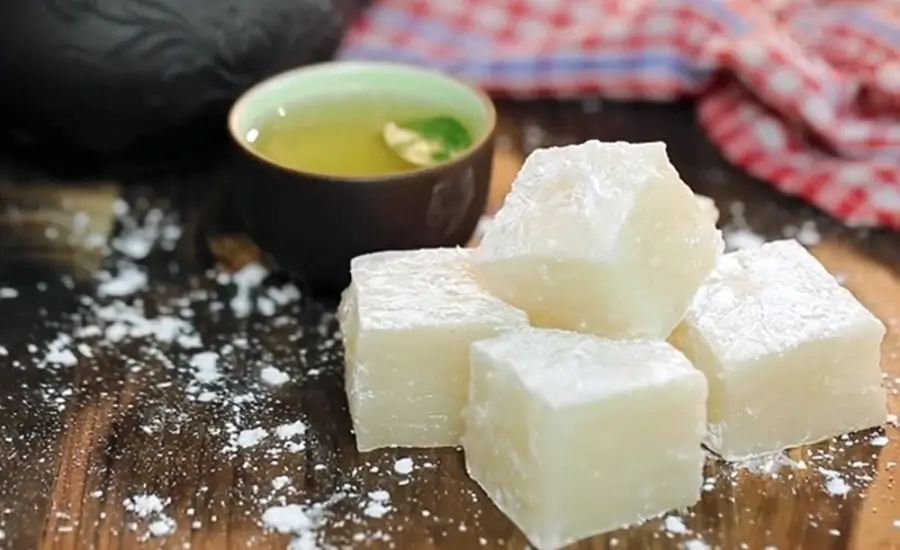
Pink cake and sticky rice cake are specialties that almost every visitor buys as gifts. In addition, there are a few other snacks and easy-to-make gifts that visitors should try in the old Binh Dinh area, such as: Bau Da rice wine, coconut water rice paper, Huyen market spring rolls, fish cakes, pink cake, squid with fish sauce and sugar.
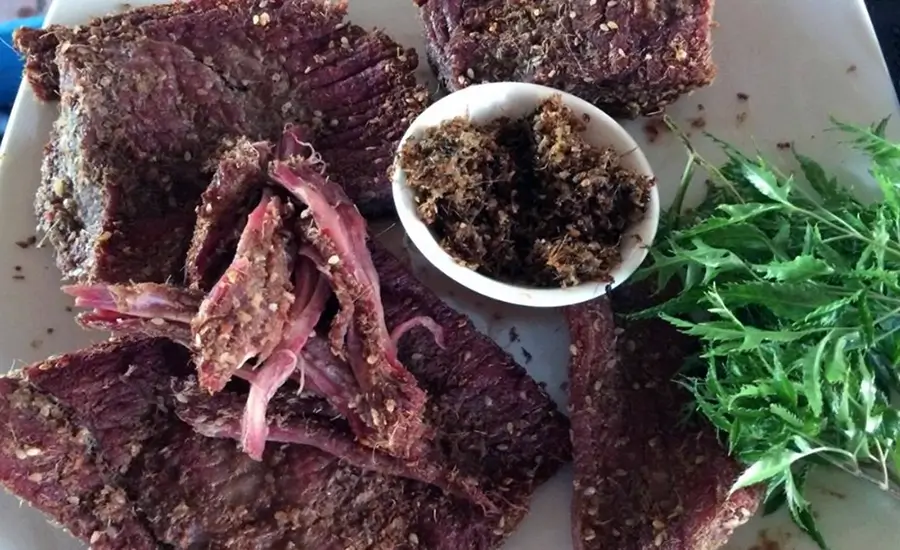
Beef in the sun and dew: cows in the Krong Pa highlands are raised naturally; when they are 5-7 years old, the meat meets the standards of beef in the sun and dew. Beef that has been dried in the sun and dew can be dipped in chili sauce, salt, pepper, and lemon, but the best is with yellow ant salt. This is a spice of the Ede people, roasted dry, pounded with chili, salt, Vietnamese coriander, and then len leaves.
Gia Lai is the province with the fourth-largest coffee-growing area in the country, and Pleiku is a famous coffee-drinking spot in the Central Highlands. The soil and climate of Pleiku produce premium-quality coffee. If you want to buy coffee as a gift, you can choose famous roasted coffee brands such as Thu Ha, Classic Coffee, and L’amant. Pleiku also has many famous, large, and beautiful coffee shops, including Omely, Maya, Cuoi Acoustic, Java Coffee, Pleiku Old Shop, and V7 Coffee.
Source: collected by An
Follow us for the best deals on Vietnam package tours and visa services!
Comment (0)