
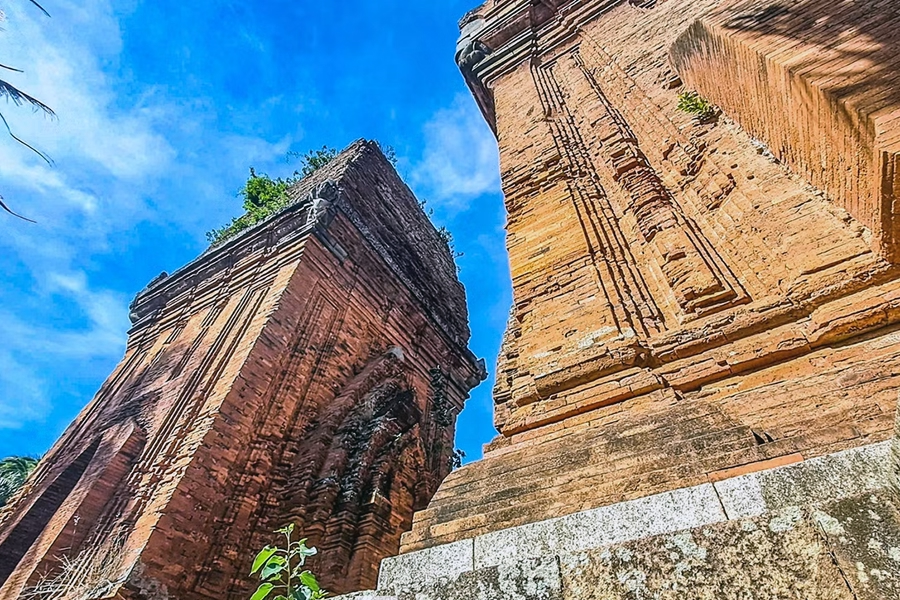
The Doi Tower is one of the most representative Cham architectural structures that remain almost intact in the heart of Quy Nhon, Dak Lak province. Not only do they possess centuries of historical value, but they are also a distinctive cultural symbol, reflecting the glorious development of the Champa kingdom during its prosperous period. With their ancient beauty, unique architecture, and convenient location in the city center, the Twin Towers have long been a must-see destination for those who love exploring history, culture, and ancient architectural art.
Overview of Doi Tower
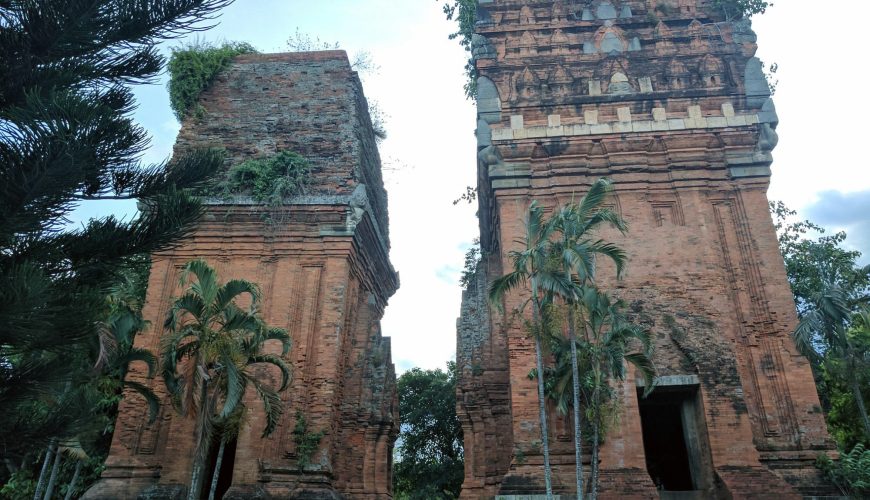
Built in the late 12th to early 13th centuries, the Doi Tower is also known as Hung Thanh Tower, after the ancient village where the structures are located. This is one of eight remaining Cham tower complexes in old Binh Dinh (currently merged into Gia Lai Province) – a region that was once the Vijaya capital of the Champa kingdom. Through many historical upheavals and the effects of time, only two parallel towers remain, giving rise to the familiar local name Doi (Vietnamese: Đôi, meaning Twin) Tower.
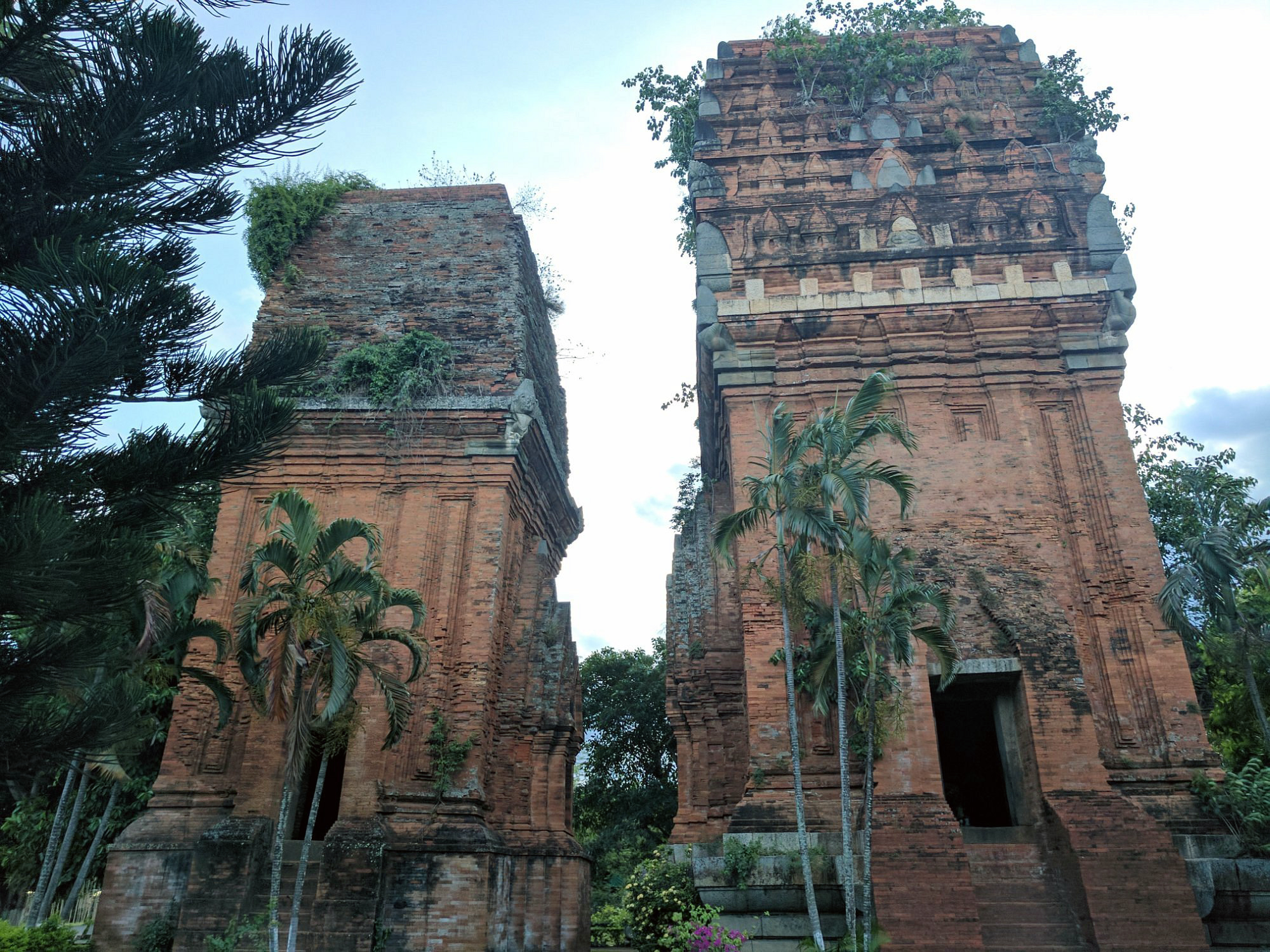
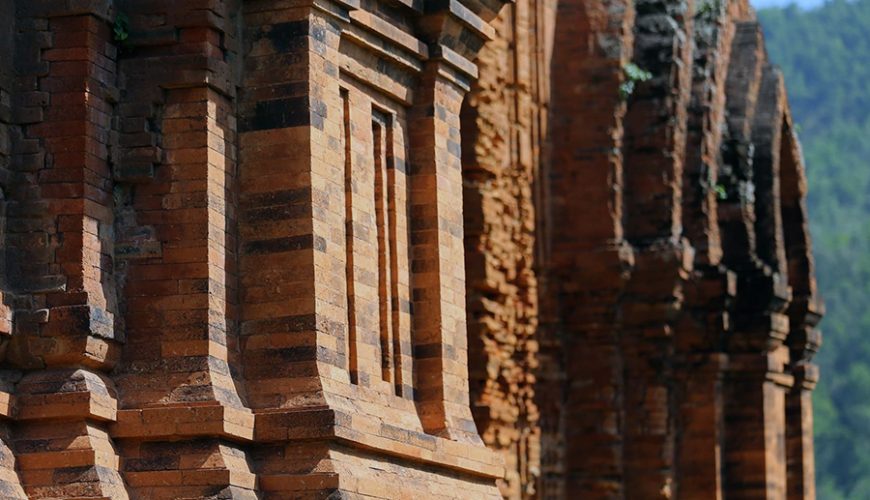
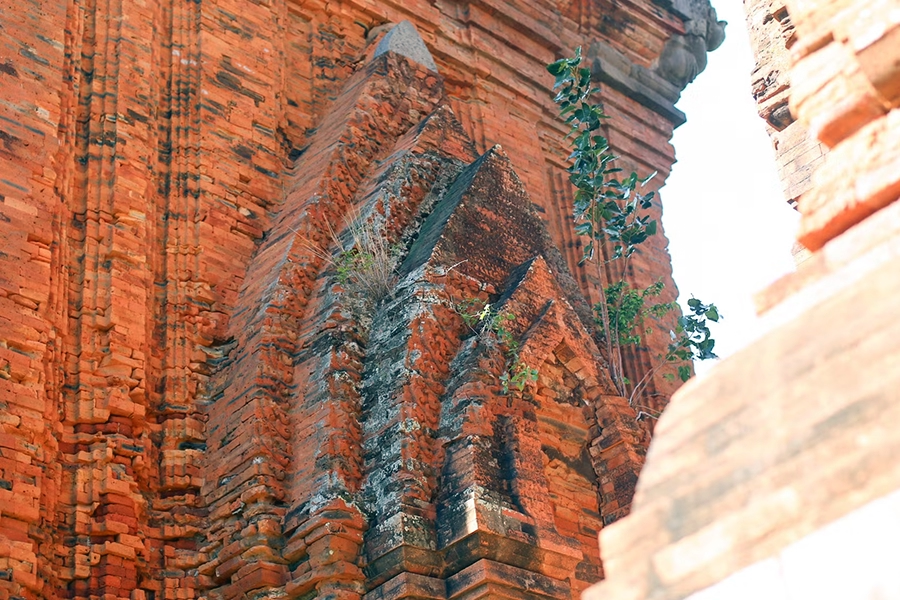
The most striking feature of the Doi Tower lies in their architecture, which differs significantly from many other Cham towers in Central Vietnam. The two towers, approximately 25 meters and 23 meters high respectively, are constructed of dark red fired bricks, tightly joined together using a unique Cham construction technique whose secrets remain largely unexplained.
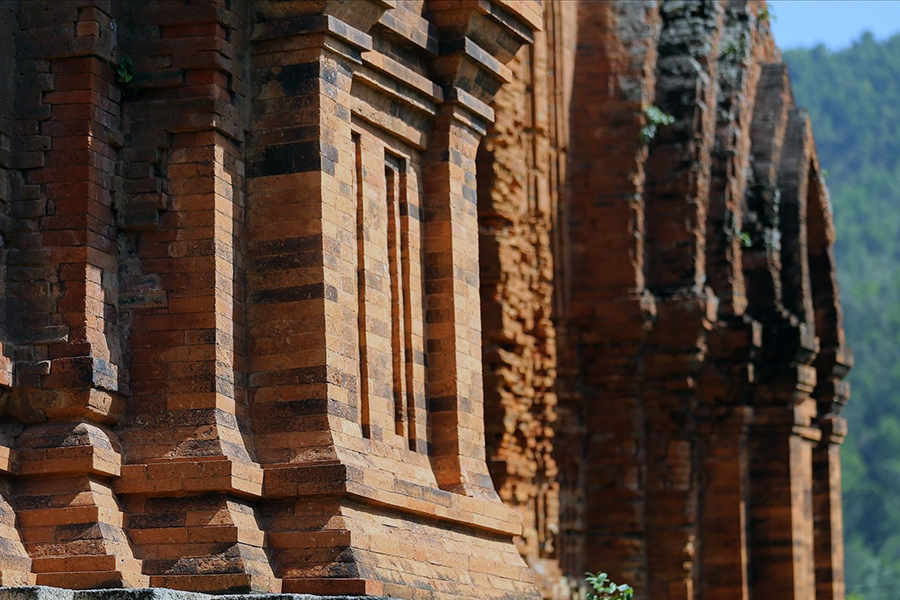
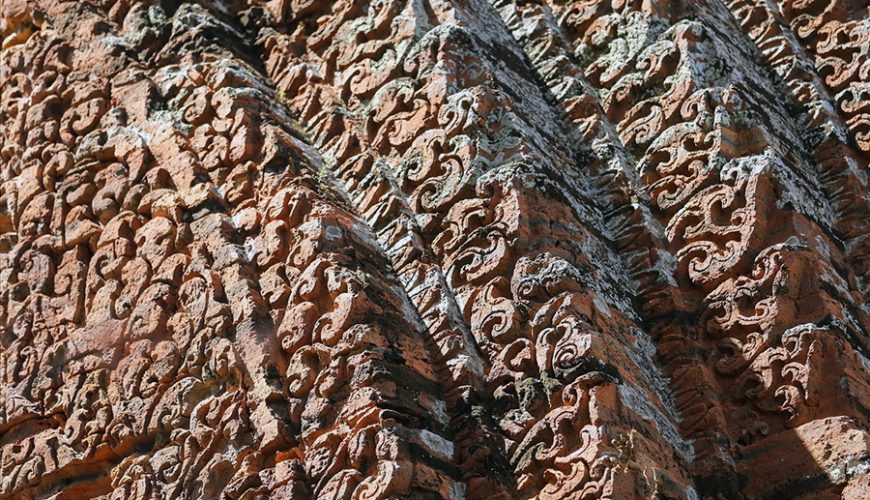
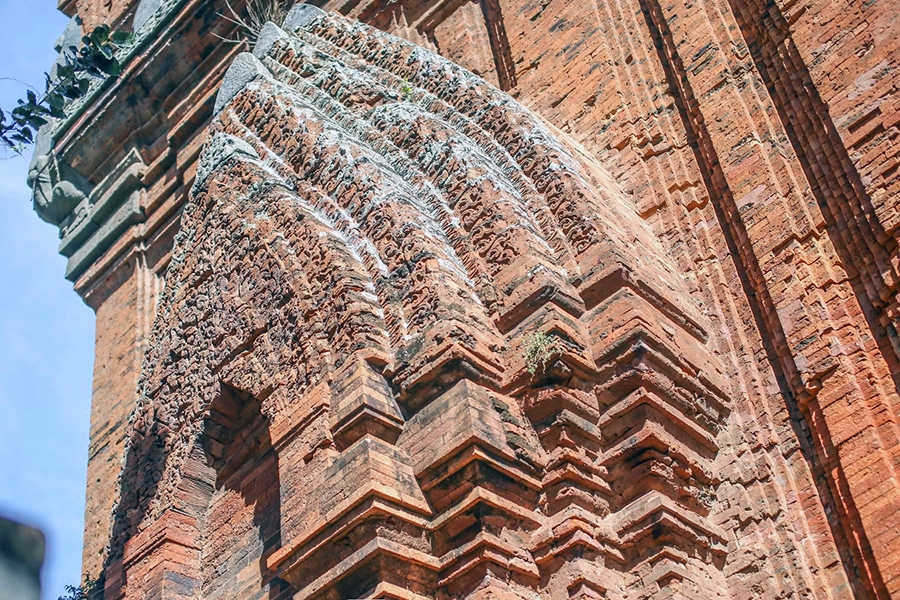
The towers are structured into three main parts: the base, a solid block of stone (larger tower), and a block of brick (smaller tower) stacked securely; the body, a square block; and the curved top, formed by tightly fitted fired bricks. The body of the towers features the characteristic square shape of Champa architecture, while the roof has softly curved corners, clearly influenced by Khmer art from the Angkor period.
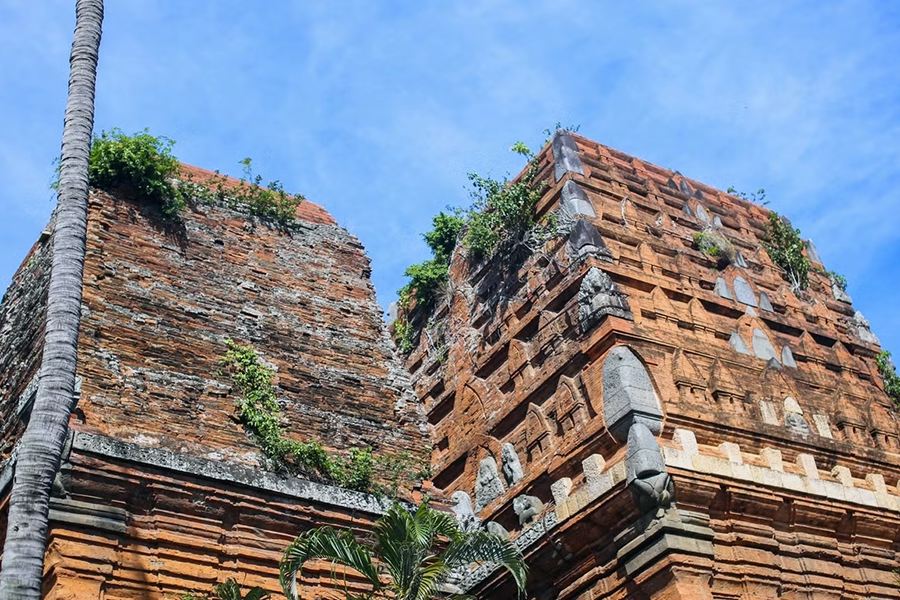
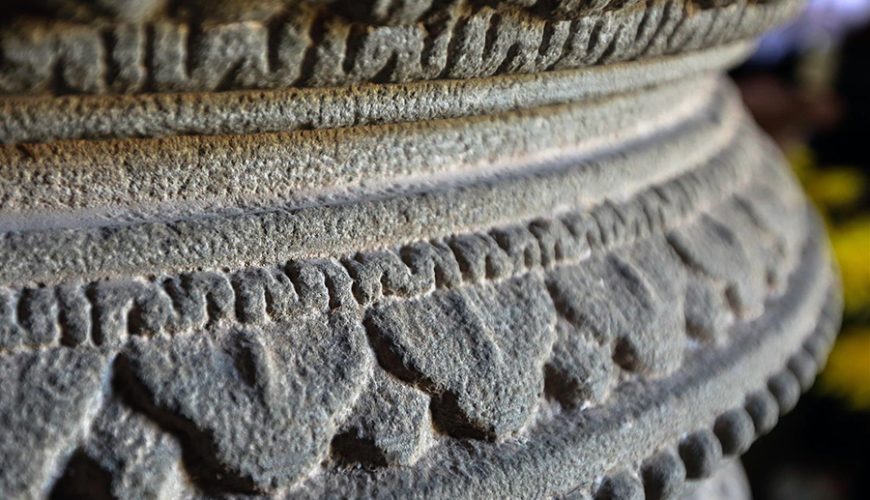
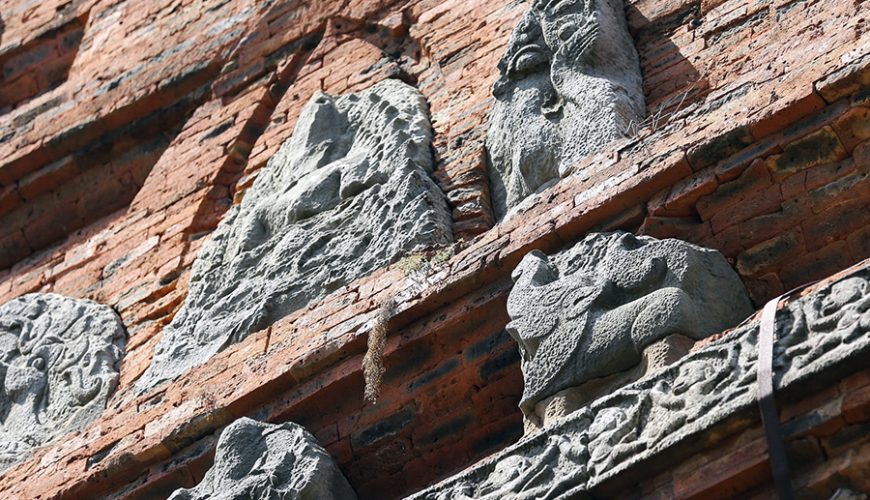
The northern tower’s base is entirely bound with large sandstone blocks, forming a giant lotus pedestal that supports the entire tower. Between the lotus petals are figures of elephants, lions, and dancing figures. At the four corners of the cornice are four colossal stone Garuda mythical birds, carved in the style and artistic model of the Khmer Angkor Wat period.
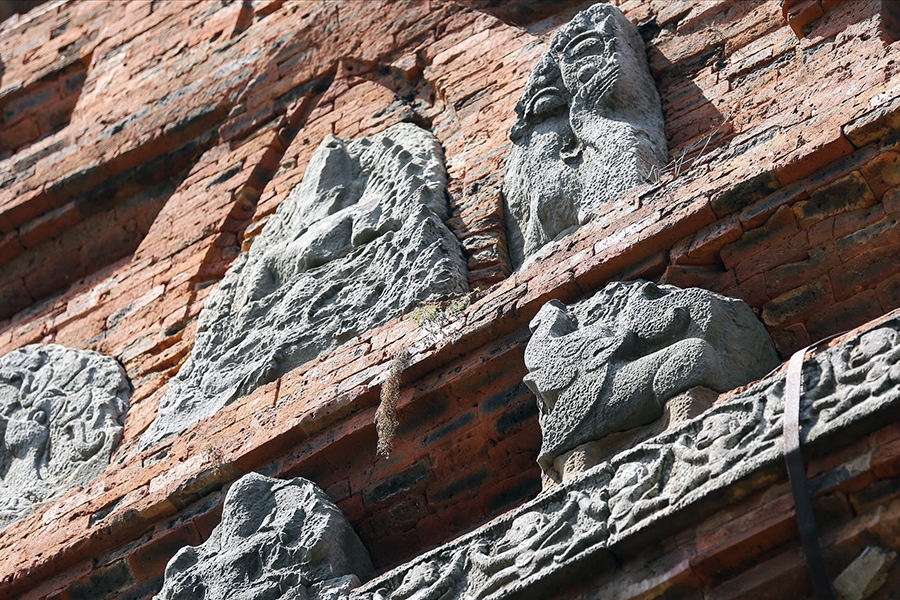
In the southern tower, although more damaged than the northern tower, some remaining stones prove that the southern tower once had a similar stone base system. Despite its greater damage, the false arches and decorative motifs on the upper levels of the tower are similar to those of the northern tower.
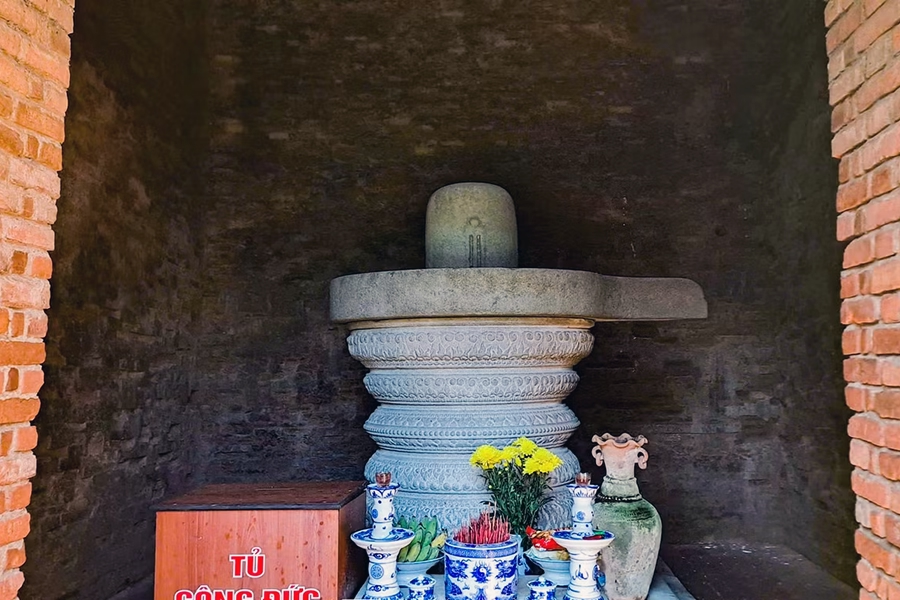
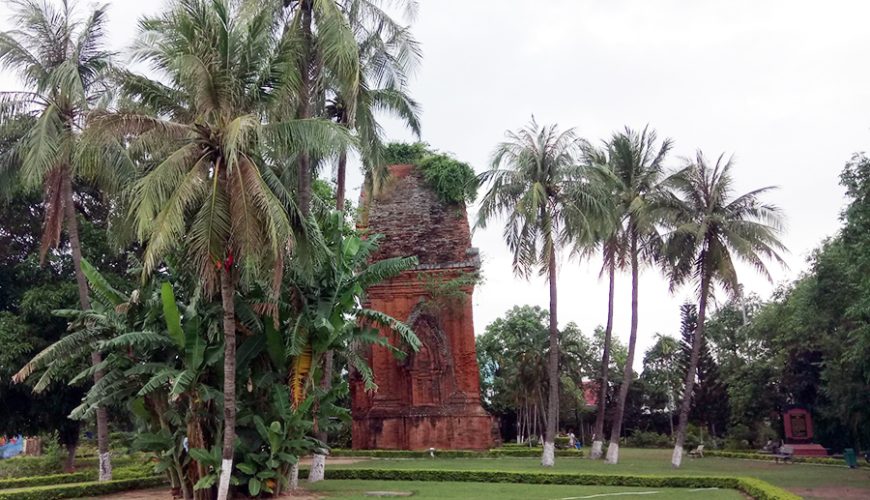
Unlike many Cham tower complexes often built on high hills or remote areas, the Doi Tower is situated on flat land right in the middle of Quy Nhon. The spacious grounds are shaded by rows of betel nut trees, coconut trees, and frangipani trees – species closely associated with Cham culture – creating a peaceful space amidst the urban hustle and bustle.
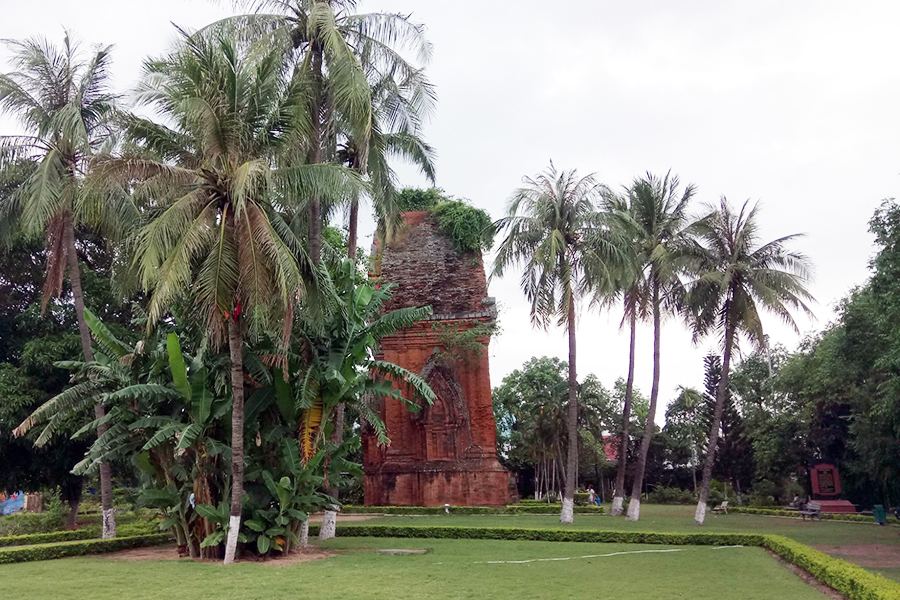
The combination of lush greenery and the ancient red hues of fired bricks makes this an ideal place to visit, take photos, and learn about local history.
Useful information about Doi Tower
- Location: Tran Hung Dao Street, Quy Nhon Ward, Gia Lai Province.
- Entrance fee for adults: 20,000 VND/ticket/person; Children under 1.2m tall are free.
- Opening hours: 7:00 AM to 18:00 PM every day of the week.
- Tourist spots nearby: Quang Trung Museum, Do Ban Citadel, Banh It Tower, Canh Tien Tower…
Source: collected by An
Follow us for the best deals on Vietnam package tours and visa services!
Comment (0)