
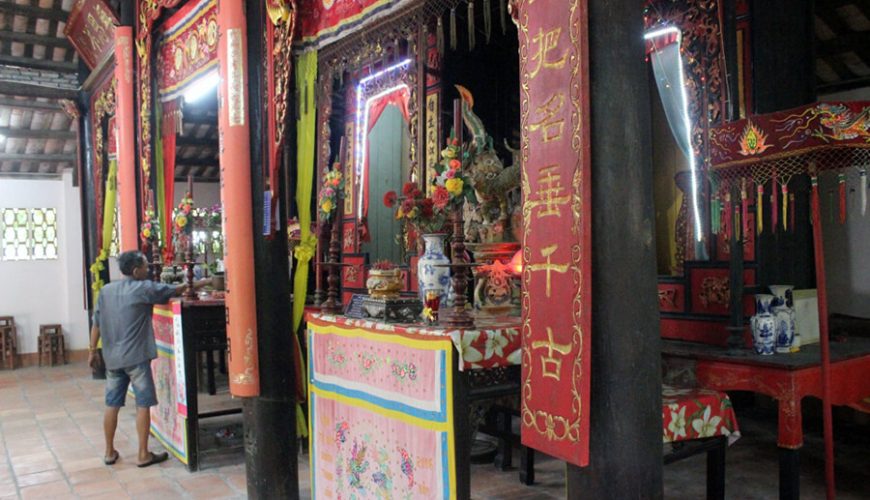
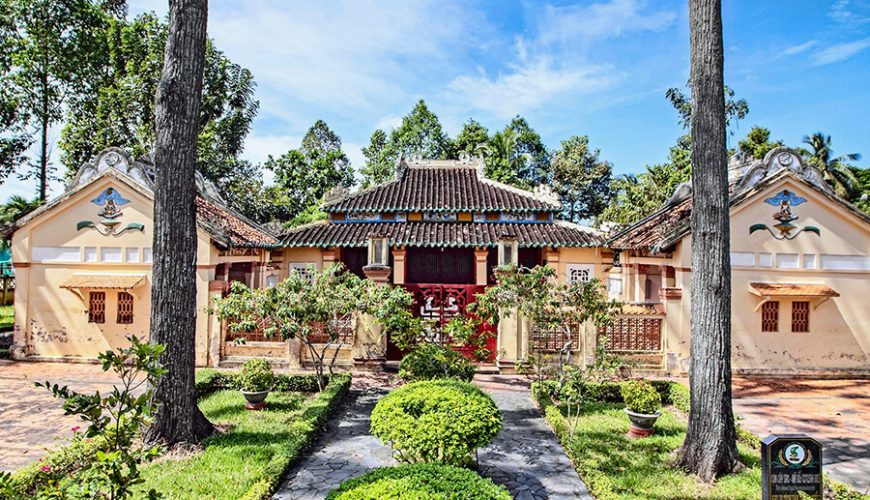
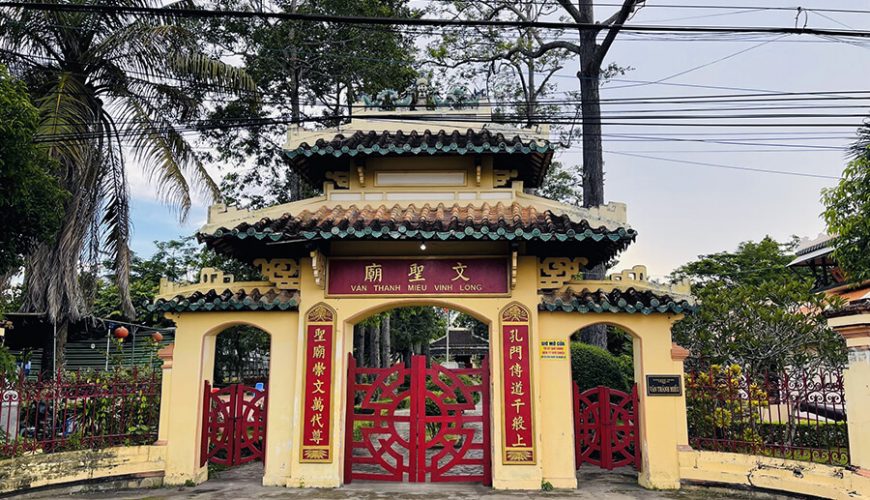
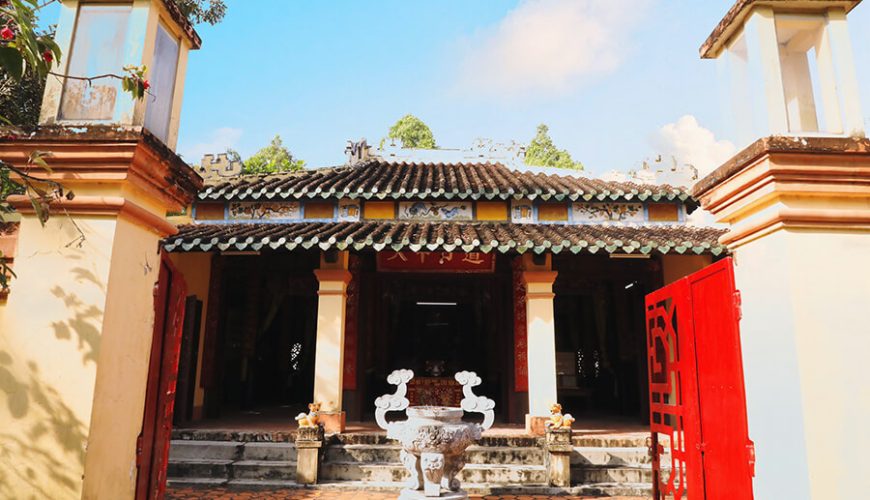
Coming to Vinh Long, a city on the banks of the romantic Co Chien River, visitors will visit many famous historical and cultural relics. One of them is Van Thanh Temple, a typical architectural work left over from the Nguyen Dynasty after the French army occupied Vinh Long citadel. This place is known as the “Temple of Literature of the South” and preserves many precious stories about the studious spirit of Vietnamese ancestors in ancient times.
Overview of Van Thanh Temple
Van Thanh Temple, also known as Temple of Literature, is located in Phuoc Hau Ward, Vinh Long province, southeast of Vinh Long Ward. When traveling to Vinh Long, if you want to visit the temple, from the center of Vinh Long city, follow Tran Phu Street along the Long Ho River for about 2km to get there. And from Ho Chi Minh City, the best way is to rent a private car to Vinh Long, as it takes more than 2 hours to get there.
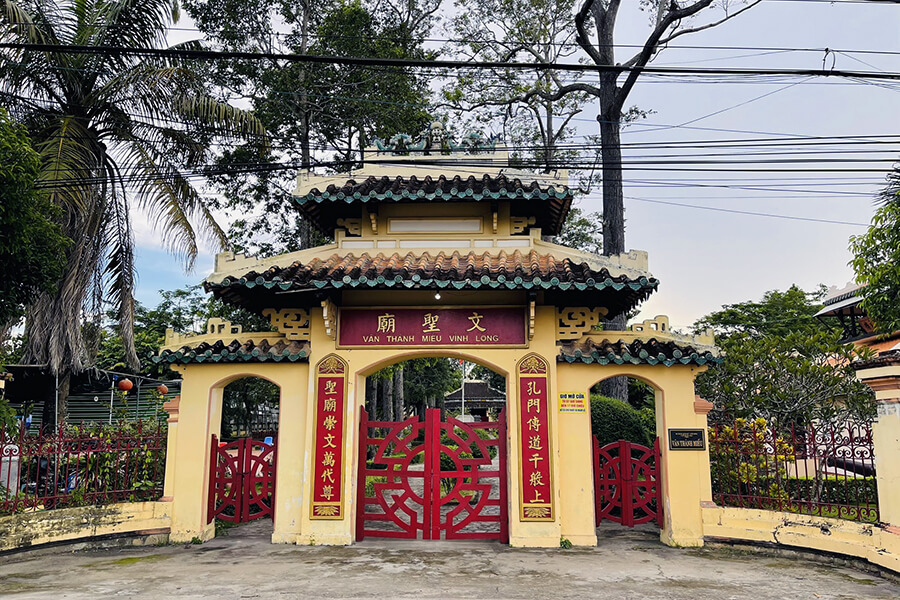
Van Thanh Temple in Vinh Long is one of the three Van Thanh Temples first built in the South. The other two Temples of Literature are located in Dong Nai City and the ancient Gia Dinh land (now Ho Chi Minh City). The project was started in 1864 and completed in 1866 by Mr. Nguyen Thong, worshiping Confucius and his students.
When the construction of Van Thanh Temple was completed. The Temple of Literature Association was established to oversee management and worship. This place became the cultural center of the southwestern region. Scholars and guests gathered here to discuss poetry and world affairs.
In 1867, after occupying Vinh Long, the French colonialists destroyed the cultural works left by the Nguyen Dynasty and intended to destroy the Temple of Literature. Implementing the teachings of Mr. Phan Thanh Gian, Mr. Truong Ngoc Lang took many measures to protect Van Thanh Temple, a cultural heritage site of Vinh Long.
After occupying Vinh Long, the French colonialists used the excuse of a lack of wood to build the Provincial Governor’s Palace, intending to destroy Van Thanh Temple. At that time, Mr. Truong Ngoc Lang was nominated by his compatriots to join the expeditionary force to retain this cultural work. From then until now, Van Thanh Temple in Vinh Long was renovated in 1872, 1903, 1914, 1933, 1963, 1994, 2006, and 2007.
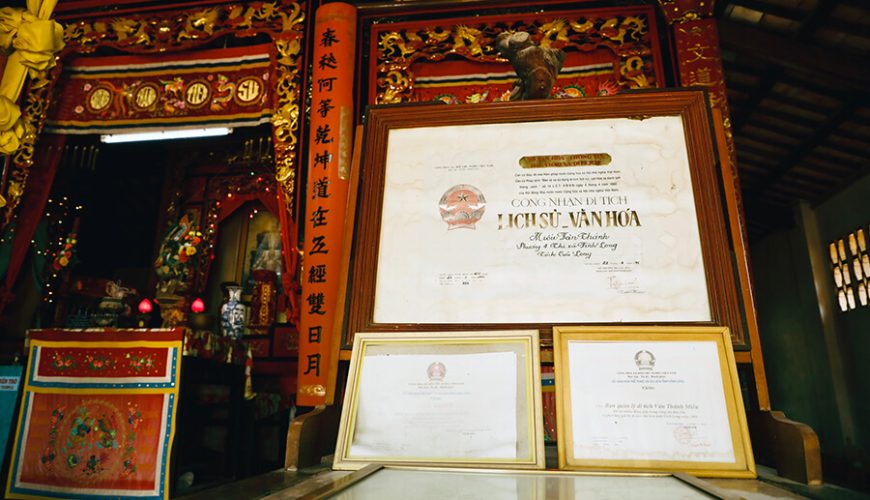
Having endured many historical events, the building has been restored and renovated many times but still retains its original architecture and was recognized as a national cultural relic in 1991.
Van Thanh Temple – A place to preserve the traditional beauty of the nation
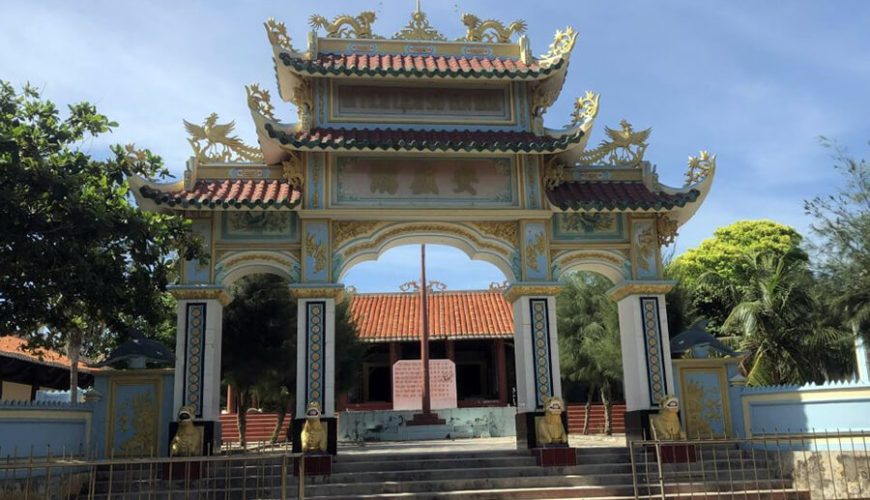
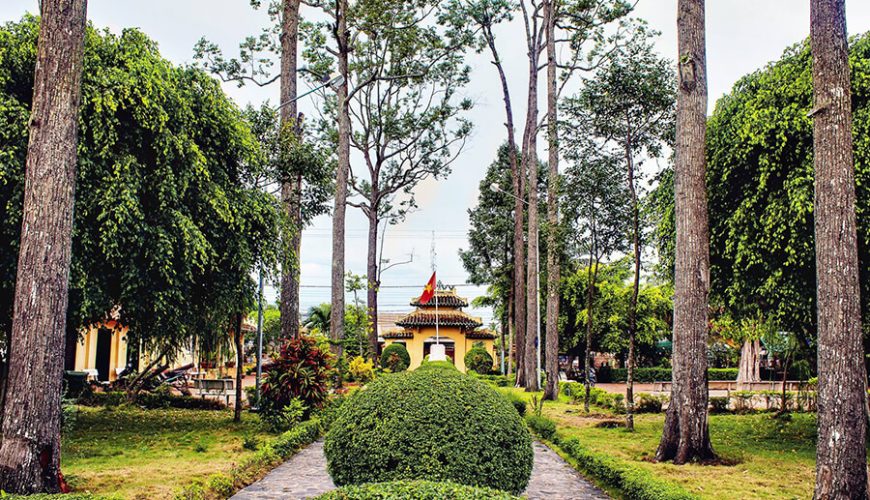
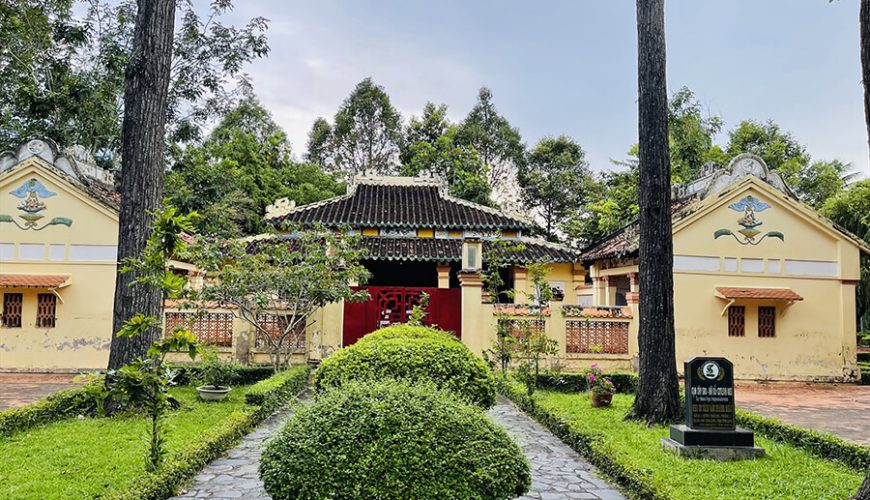
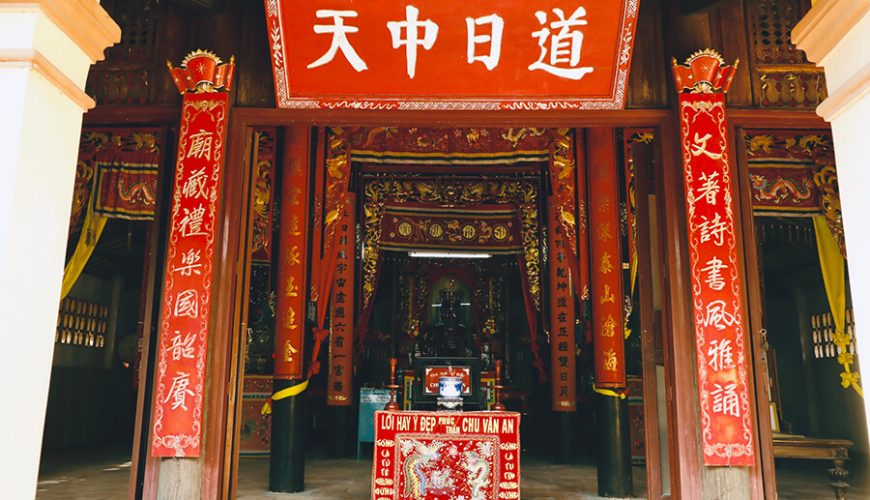
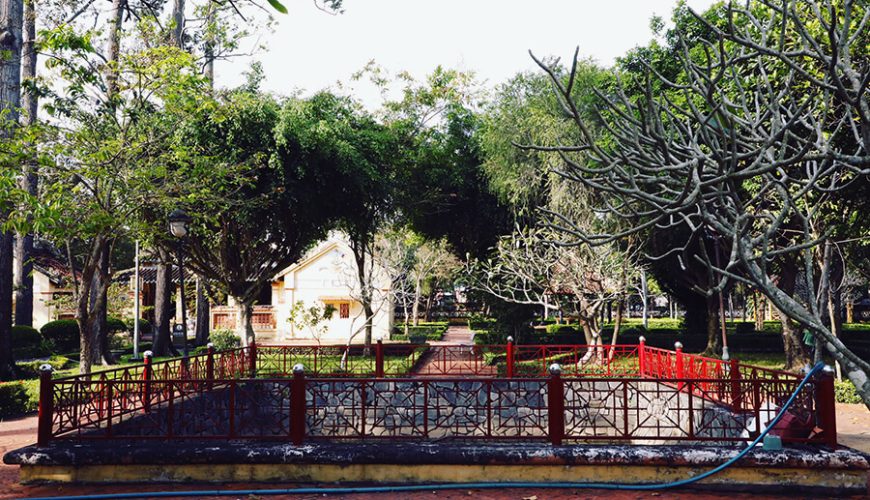
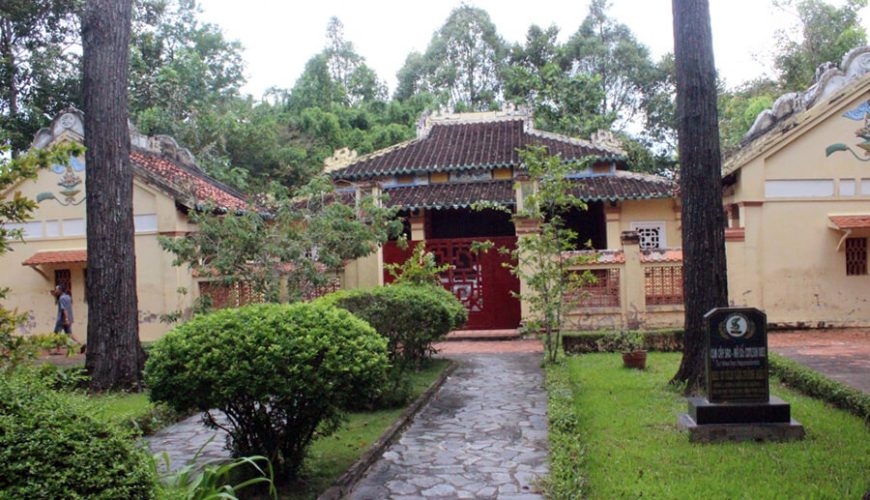
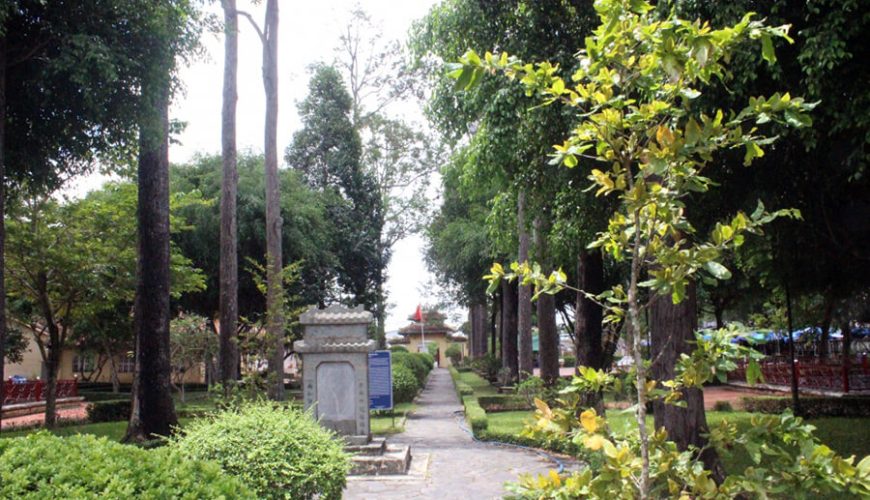
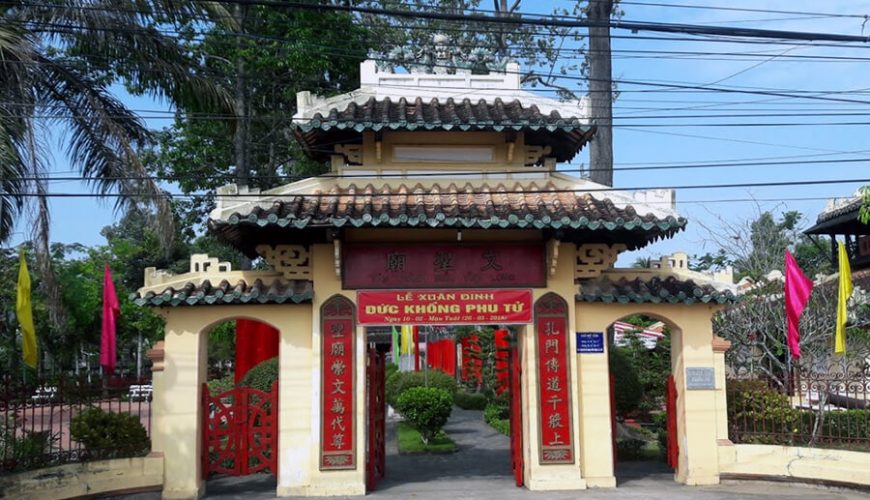
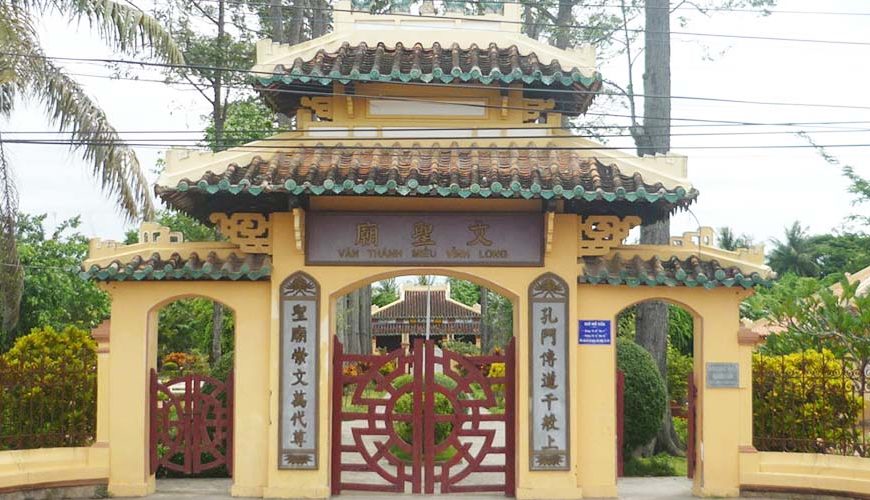
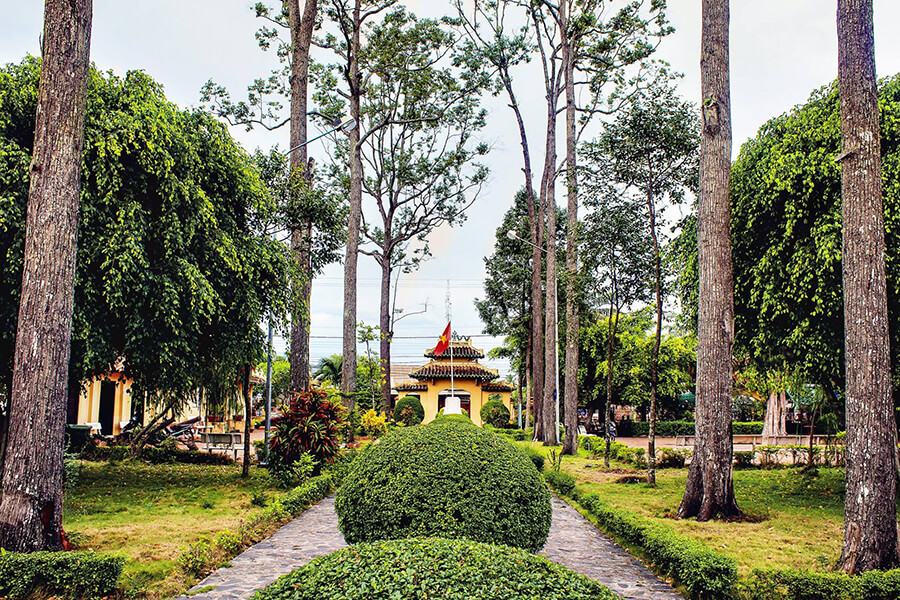
The majestic three-entrance gate faces the quiet river, built in the ancient style with a three-story roof, simple but artistic, with a carving on the two pillars. Behind the gate is a straight path leading to Dai Thanh Palace. On both sides are two rows of tall trees that may be the same age as the temple.
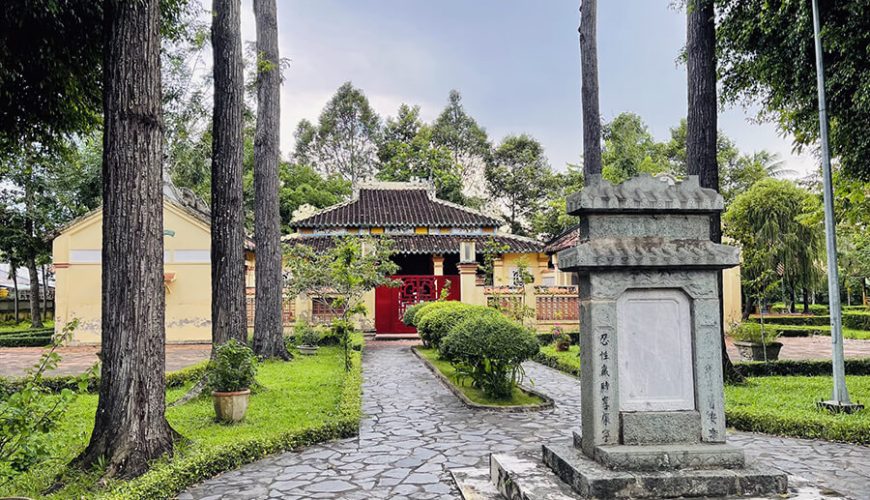
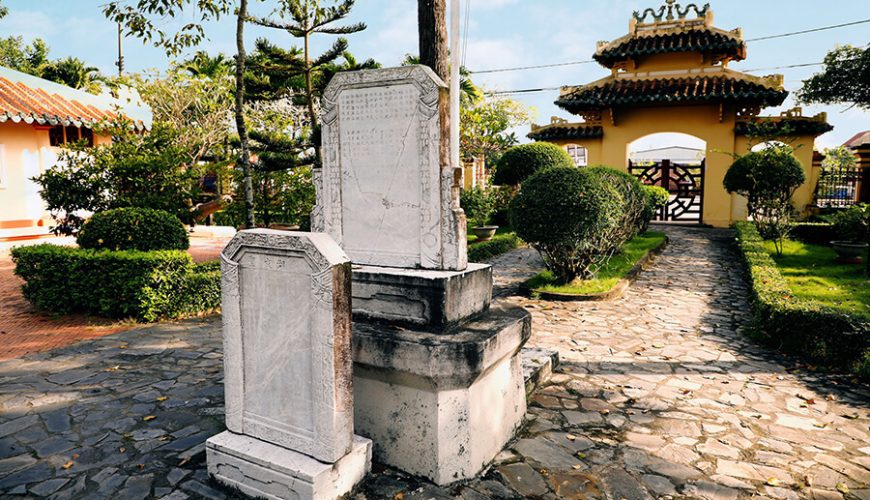
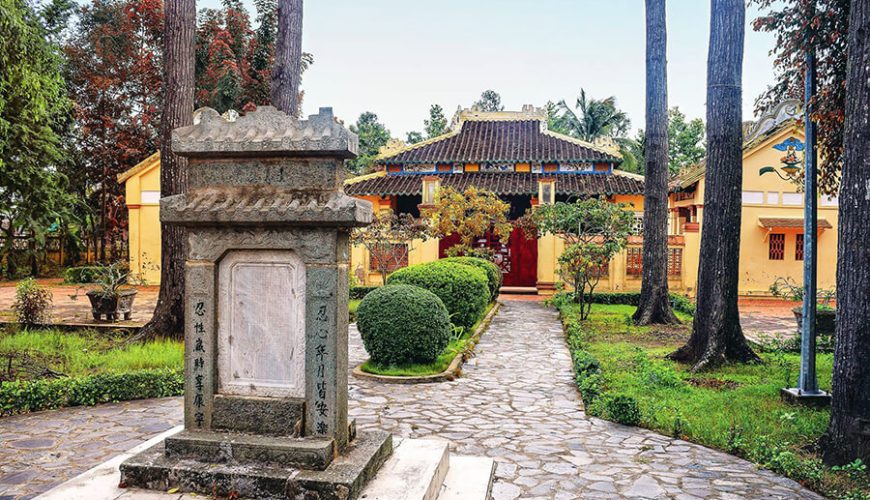
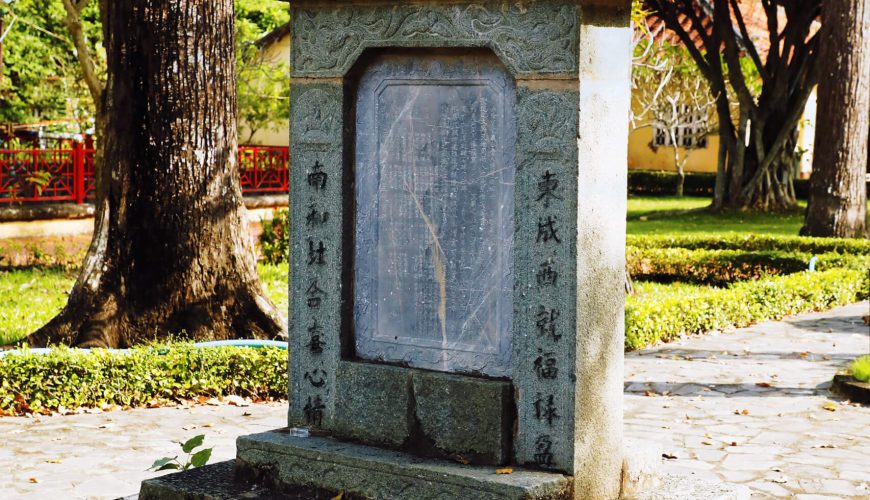
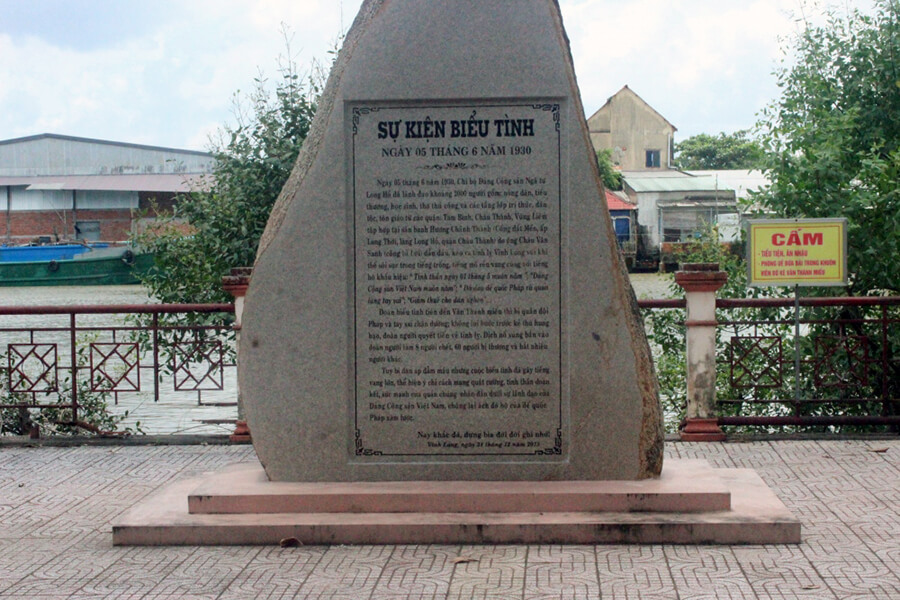
In front of the gate is a stele recording the writings of Mr. Phan Thanh Gian: the front mentions the reason for building the temple and praises the merits of the Saint and the court, while the back praises the names of those with meritorious services.
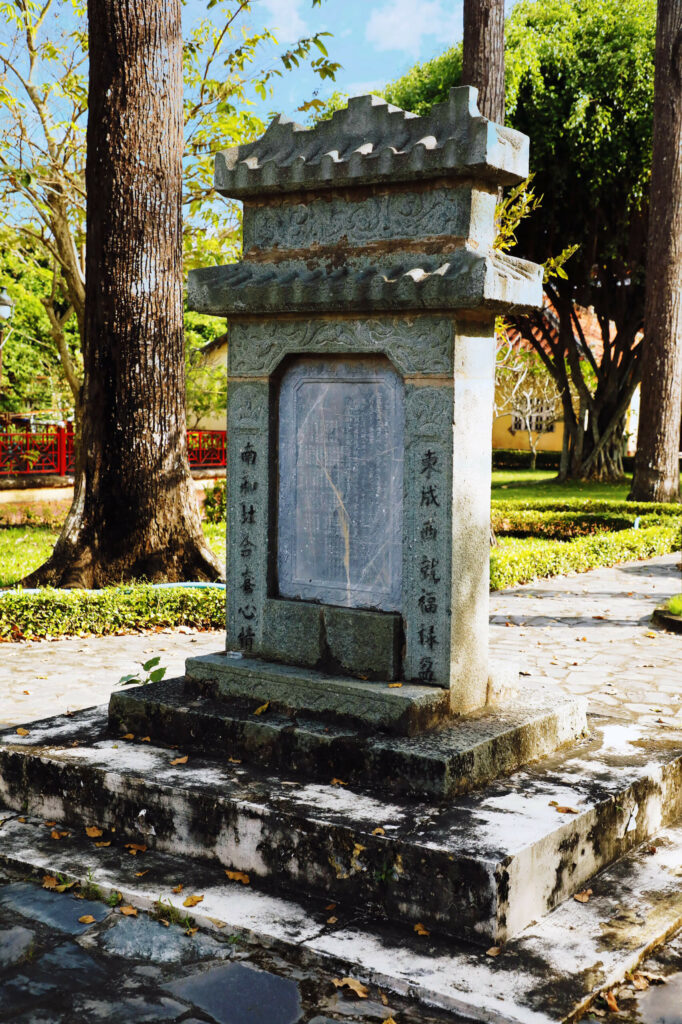
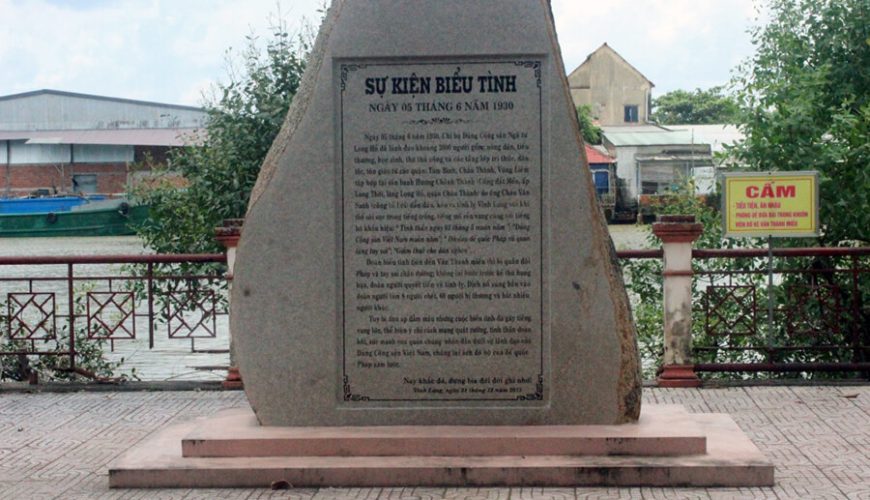
In total, there are three valuable steles marking historical periods associated with the Temple of Literature. In addition to Phan Thanh Gian’s stele, there is also a stele recording the temple’s restoration in 1903, and a stele recording credit to Ms. Truong Thi Loan (Mr. Truong Ngoc Lang’s daughter) for donating the land.
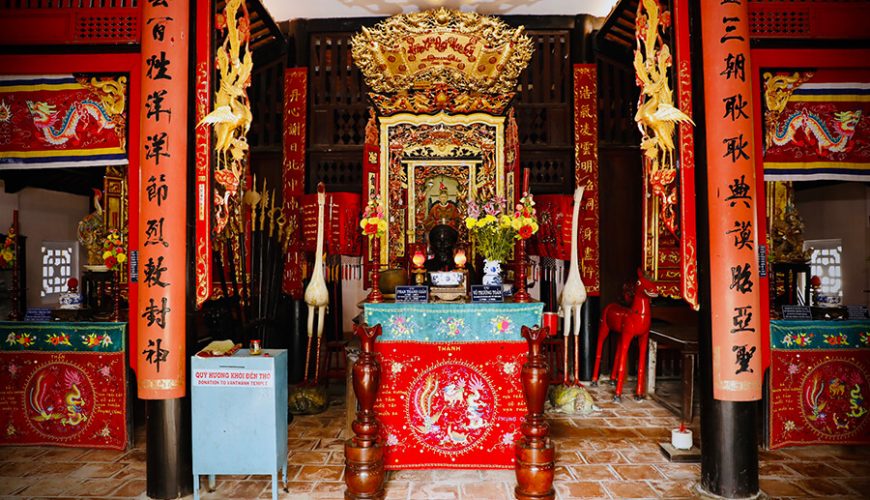
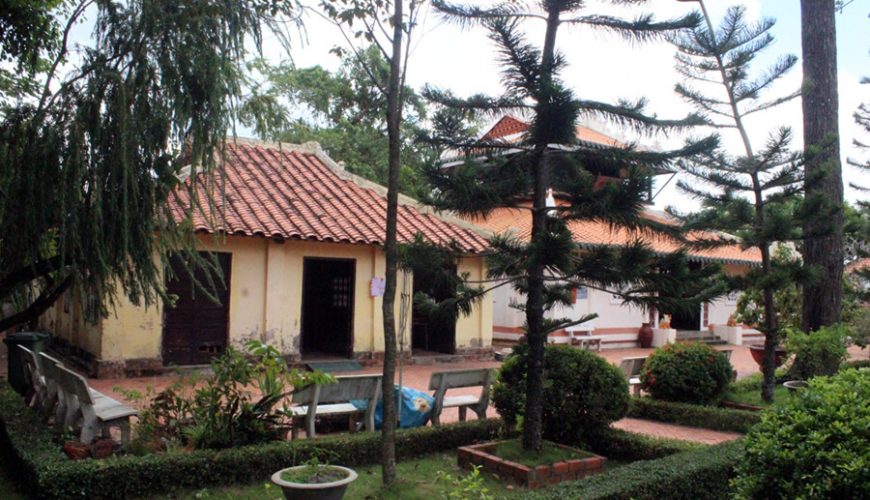
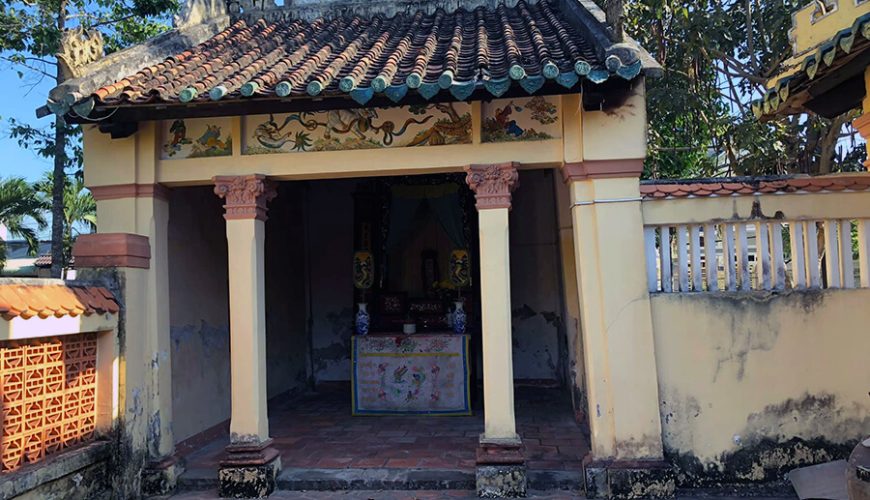
The main hall is designed in an overlapping style. The statue of Confucius is worshiped in the middle, flanked by four masters.
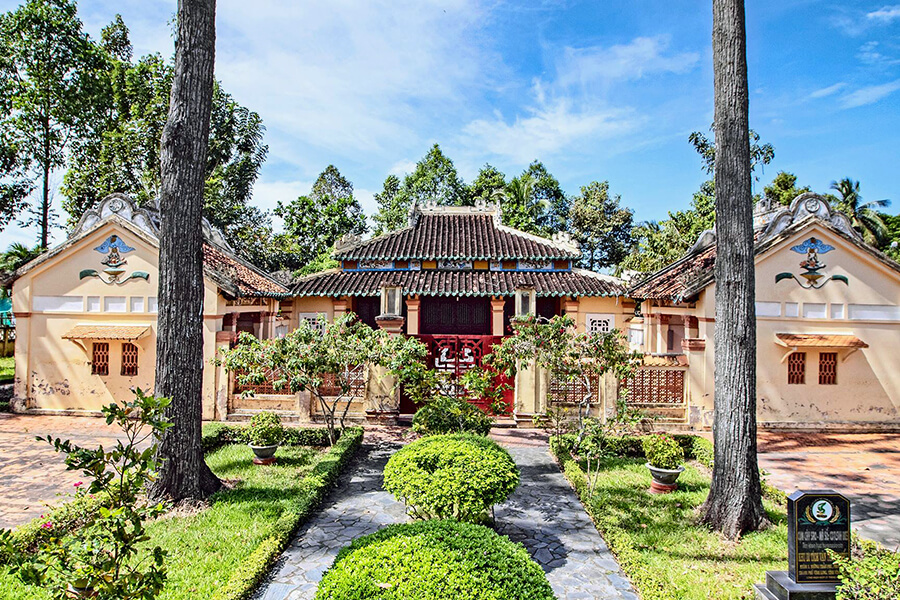
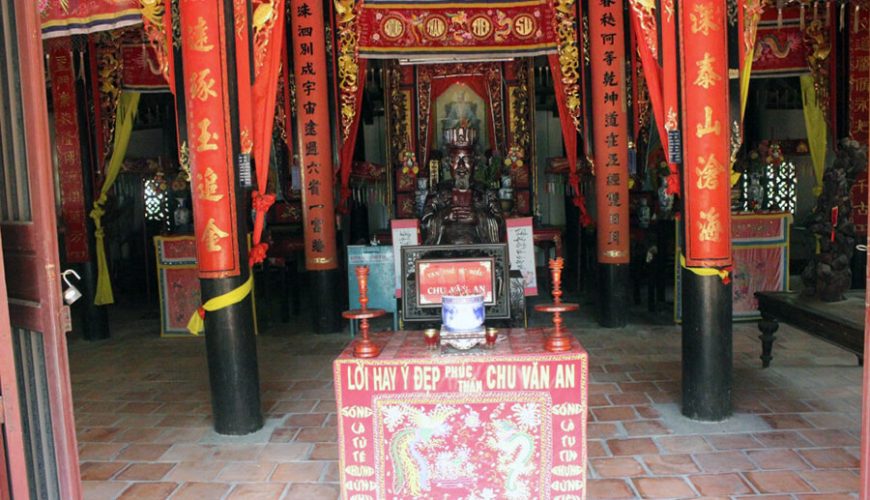
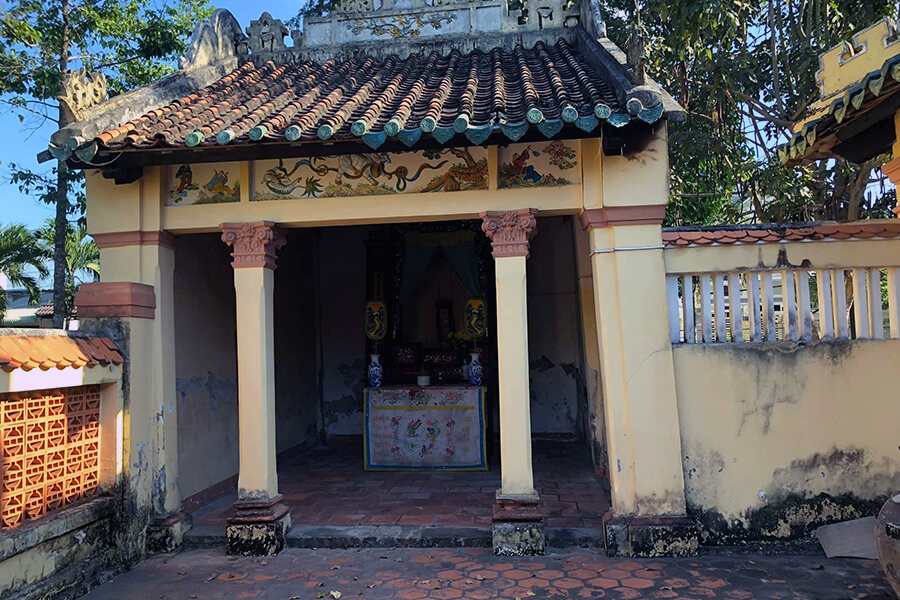
In addition, the altar on the left and right also worships 12 other scholars. In front is the altar of Mr. Chu Van An, a teacher, physician, and high-ranking mandarin of the Tran dynasty (1226-1400). Outside, two small temples were built to commemorate the 72 famous students of Confucius.
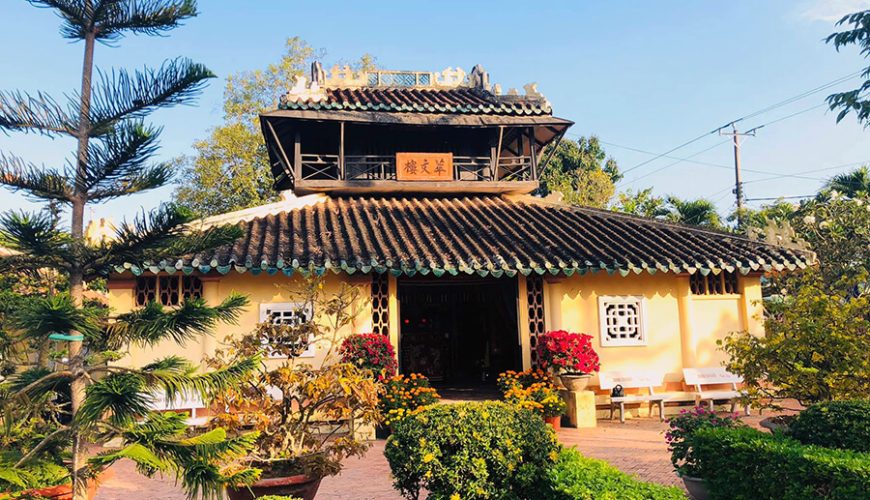
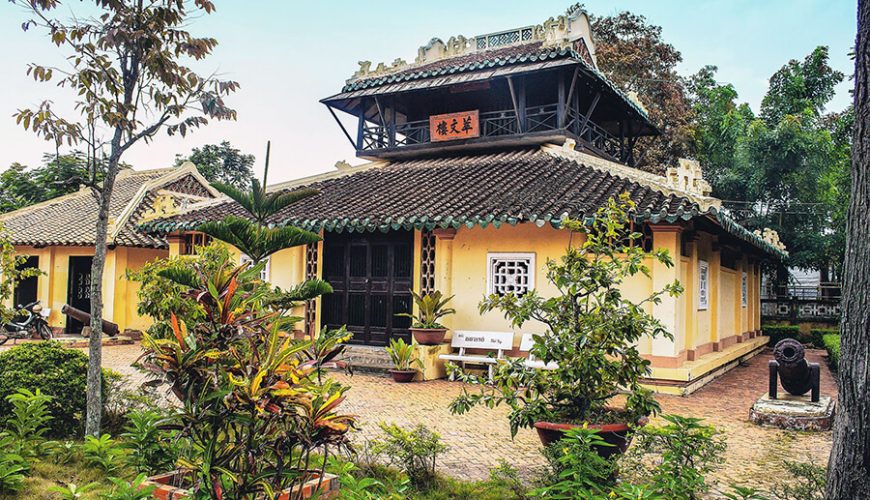
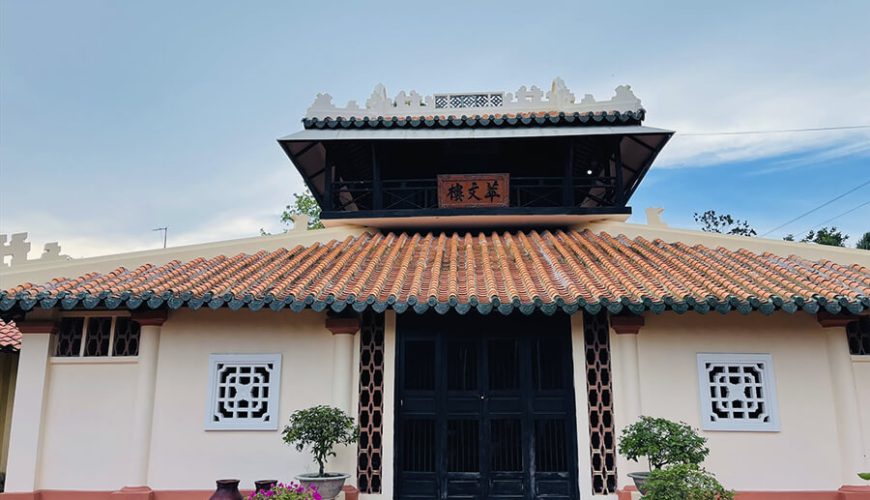
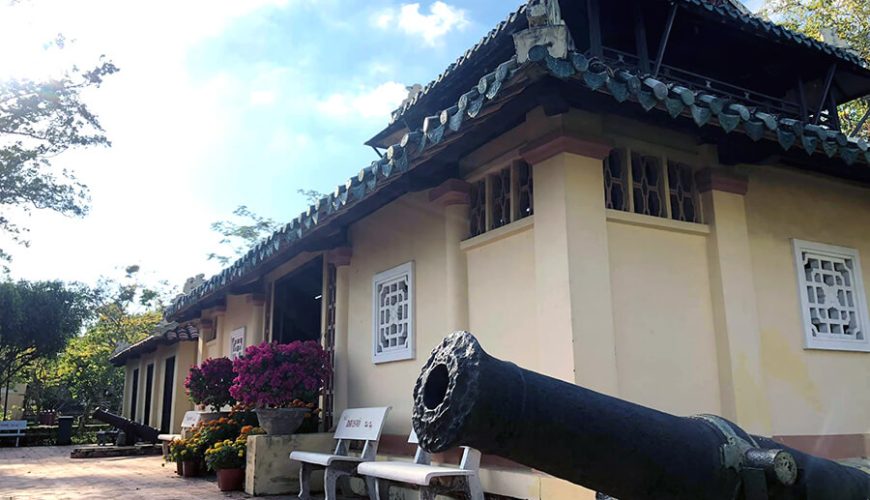
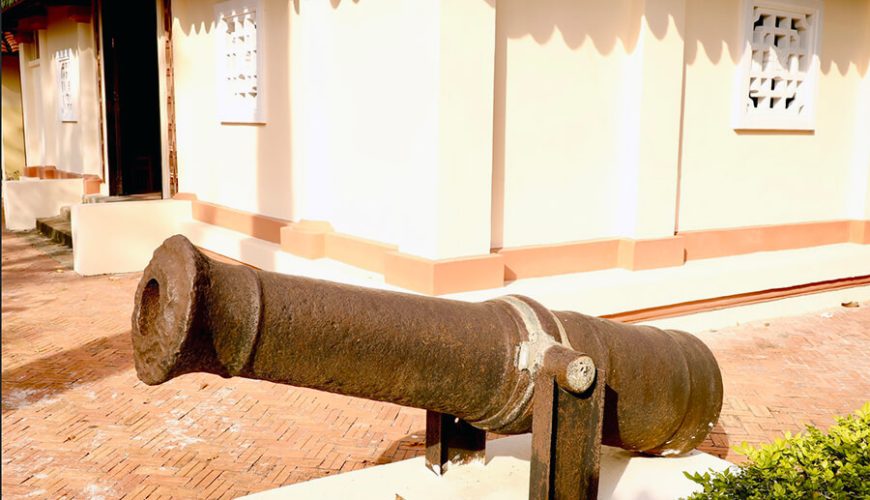
On the campus of Van Thanh Temple, there is also a lotus pond and a small architectural work to the right of the entrance, called the Tuy Van pavilion (also known as the Van Xuong pavilion). The Tuy Van pavilion is located right at the entrance, with two cannons on both sides. These ancient guns from 1921 were placed at the wharf (in front of the current Vinh Long Museum).
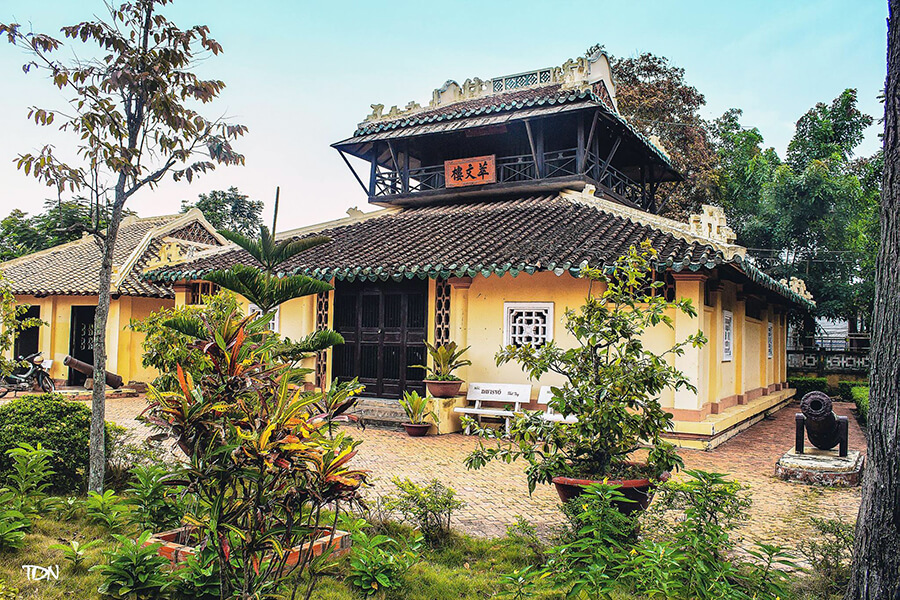
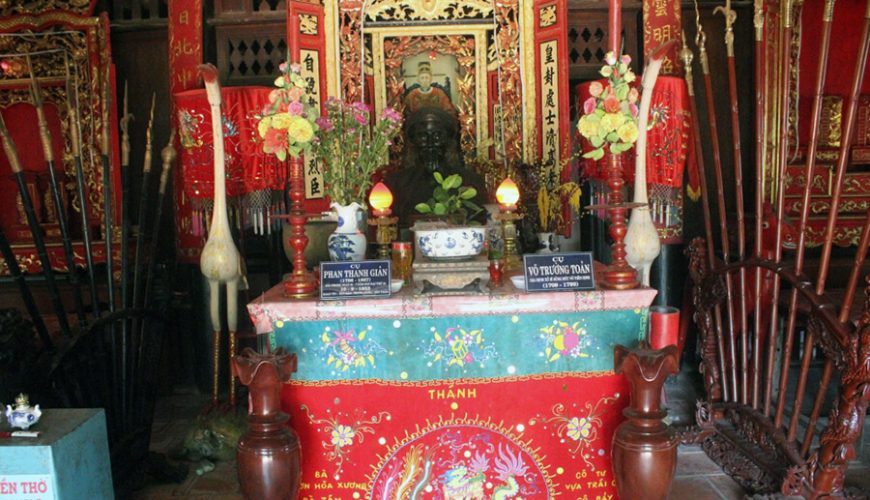
In 1937, it brought Van Thanh Temple, and in 1960, it was placed majestically on a pedestal. The Van Xuong Pavilion was built in an overlapping style. Upstairs is a place to store books and worship Wenchang Wang, known as the God of Culture and Literature. Downstairs, the middle space is a meeting area for students; behind it is a sophisticatedly carved altar, and inside are two tablets of scholars Vo Truong Toan and Phan Thanh Gian.
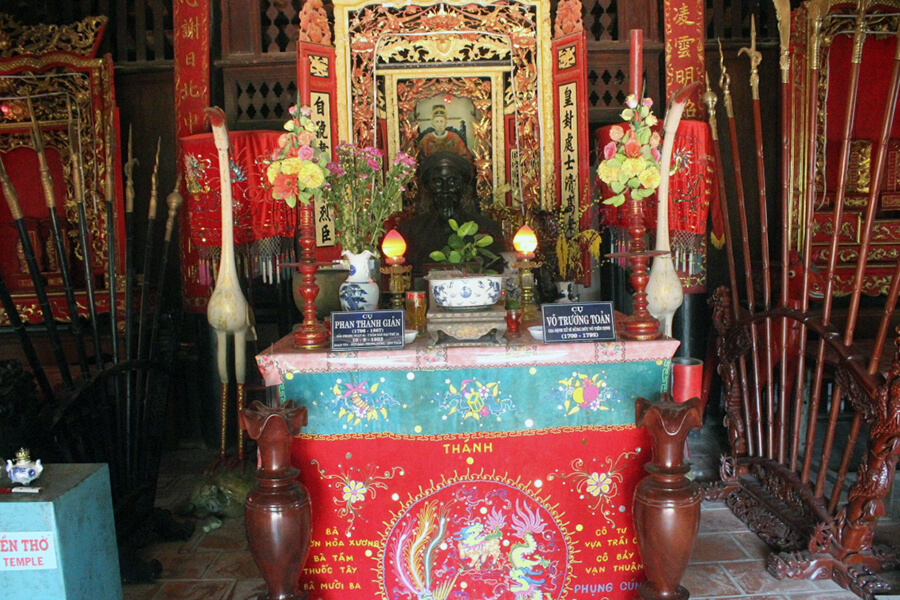
On March 25, 1991, Van Thanh Temple was recognized as a National Historical and Cultural Relic. Every year, the temple held two worshiping anniversaries of Phan Thanh Gian (the 4th and 5th of the 7th lunar month), the death anniversaries of high-ranking mandarins and soldiers (the 12th and 13th of the 10th lunar month).
Useful information about Van Thanh Temple
- Best for: solo, family, student.
- Entrance: Free
- Tourist spots nearby: Vinh Long Ceramic Brick, Vinh Long Ancient House Ecological Area, Vinh Long Museum, May Islet, Phu Ly Pagoda, Museum of Khmer Ethnic Culture…
Source: collected by An
Follow us for the best deals on Vietnam package tours and visa services!

Comment (0)