
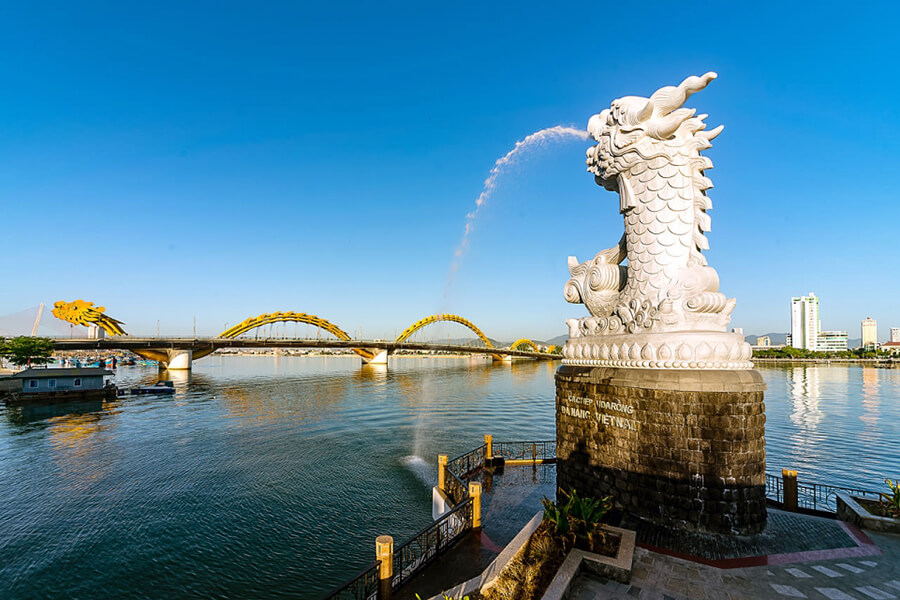
Da Nang lies on the coast of the East Sea at the mouth of the Han River. It has had a well-sheltered, easily accessible port for many centuries. Thanks to its growing importance in the Central region, Da Nang has developed into a first-class city, attracting many tourists to live and visit.
Overview of Da Nang City
In 2025, Da Nang City merged with Quang Nam province, becoming Da Nang City. This is the largest city in Vietnam (with an area of 11,859.6 km²). Da Nang borders Hue City to the north and Quang Ngai to the south; it has a 162 km-long coastline to the east and nearly 160 km of the western border with Laos.
This is a city with comprehensive tourism resources: sea, peninsula, Han River urban area seamlessly connected to the ancient town, islands, coconut forests, craft villages… A large system of unique green and ecological tourist destinations (conservation areas, national parks; tourist villages; community tourism areas; farmstays; green hotels) creates an “experiential arc” attracting many tourists to visit and enjoy.
What is the best time to explore Da Nang?
Da Nang has a tropical monsoon climate with two distinct seasons: a dry season from January to the end of August and a wet season from September to December.
The highest average temperature is 35°C, lasting from May to September, making Da Nang a popular retreat among locals; expect large crowds. From January to April, the average temperature is 25°C, with sunny skies and low humidity; this is the best time to explore the city or enjoy the beach.

Da Nang sits between the Northern and Southern climates, with a tropical climate dominating the South. Each year there are two distinct seasons: the dry season from January to July and the rainy season from August to December. Sometimes there are cold spells in winter, but they don’t last long, and the weather isn’t very cold.
Late December to late March: the weather is cool and pleasant, most ideal for spring trips. Hotel and food prices are said to be most stable at this time. Note: visitors should bring a thin jacket because evenings can be chilly, and there is sometimes spring rain.
Early April to mid-September: This is the best time to travel to Da Nang, but it is also the peak summer tourism season, so it is crowded and expensive. April is when the trees on the Son Tra peninsula turn yellow and red.
Mid-September to late December: The weather is no longer hot; it starts to rain sporadically, but it doesn’t last long. The peak season has passed, so airfares, accommodation, and meals are reasonably priced.
How to get here?
Da Nang center, Tam Ky, and Hoi An are the main stops in this city. Besides its scenic beauty, the city also offers convenient transportation. You can go by plane, train, bus, motorbike, or ship.
By airplane:
Tourists from Hanoi and Ho Chi Minh City often fly, with round-trip ticket prices ranging from 1,300,000 to 3,000,000 VND, depending on when you book. Flight time is about 1 hour.
Visitors to Da Nang can land at Da Nang or Chu Lai airport. Depending on the destination, choose the appropriate airport. If you’re going to Hoi An or the inner city of Da Nang, fly into Da Nang and then travel by road about 30 km; the distance from Chu Lai to Hoi An is 70 km. However, if you’re going to the Tam Ky area, Chu Lai Airport is only 25 km away.
By railroad:
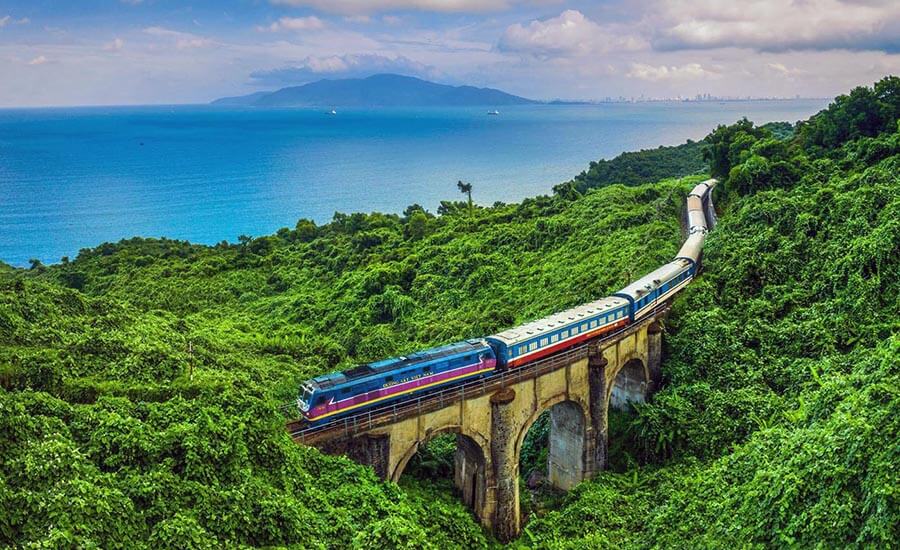
With more time, visitors can take the train to take in the scenery along the way, especially the section through the Hai Van Pass if you come from the north. Train tickets from Hanoi or Ho Chi Minh City to Da Nang or Tam Ky cost between about 700,000 VND and 1,300,000 VND one-way, depending on the seat type and sleeper berth class. Travel time is about 17 to 18 hours.
By road:
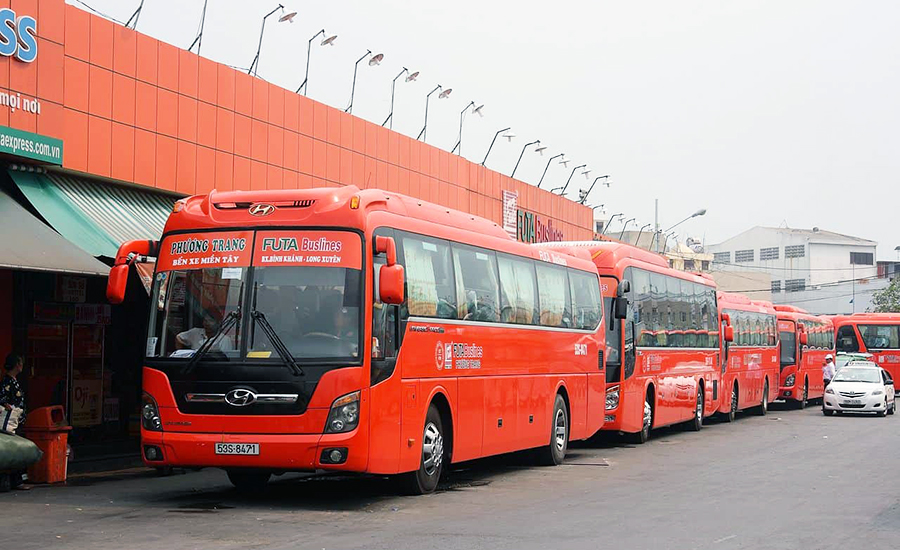
National Highway 1A and Ho Chi Minh Road both run through Da Nang City, convenient for tourists from three regions of the country. Bus ticket prices and quality don’t differ much; you can refer to these companies: Futa, Dinh Nhan, Hoang Long… Travel time is around 15-20 hours, and ticket fares start at 600.000 VND per ticket.
From Da Nang to Hoi An or Tam Ky, there are transportation and tourism service providers, including Hoi An Express, Queen Cafe, Dong Hanh Travel Bus, Hanh Cafe, Sinh Cafe, Ha Linh, and Truong Thinh. Vehicle types include limousines or 45-seat vans; ticket prices range from 100,000 VND to 150,000 VND per trip.
Bus number 14 runs from Da Nang center to Hoi An and vice versa; trips are 15-20 minutes apart. The ticket price is 30,000 VND. Travel time is about 1 hour and 15 minutes. Connecting to Tam Ky at Hoi An.
Taxis or 5-7 seater service vans running the Da Nang – Hoi An route cost from 200,000 VND. In addition, visitors can also choose shared buses (shared with others) from the station or airport.
Booking a private car to Da Nang is also a good way to explore Da Nang, as it’s flexible and easy to stop, rest, and admire the road’s beauty along the way.
Sea and inland waterways
Da Nang has Truong Hai port in Chu Lai for large cargo ships and Da Nang port for cruise ships. From Cua Dai beach, visitors can take a small speedboat (canoe) to Cham islet, provided by service providers. Trips run daily from 7:30 to 17:00. The ticket price is 100,000 VND per person, one way.
Accommodation in Da Nang
As a major tourist destination, Da Nang offers many hotel rooms, homestays, apartments, dormitories, and resorts. Depending on your budget and needs, visitors can choose the right option, but should book in advance to avoid shortages on weekends and during peak seasons.
Famous 5-star resorts and hotels in Da Nang that you can refer to include InterContinental Da Nang Sun Peninsula Resort, Hyatt Regency Danang Resort and Spa, Pullman, Furama Resort Danang, Four Points by Sheraton Danang, Novotel, Hilton, Fusion Suites, Danang Golden Bay Hotel… Room rates range from 1,200,000 to 10,000,000 VND per night.
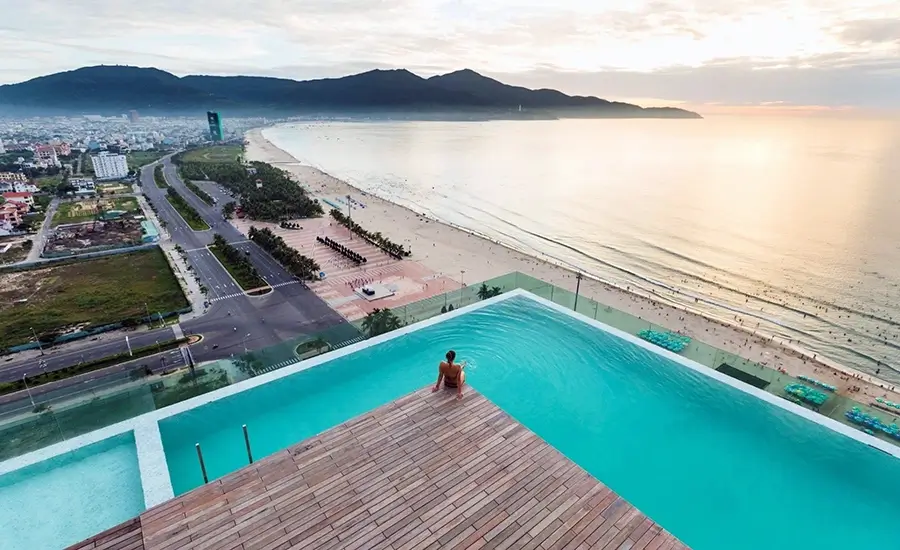
The old Quang Nam province (now part of Da Nang City) has other coastal resorts such as Victoria Hoi An Beach Resort & Spa, Palm Garden Resort & Spa, Wyndham Hoi An Royal Beachfront Resort & Villas, Citadines Pearl Hoi An, Vinpearl Resort & Golf Nam Hoi An, Hoiana Hotel and Suites, Hoi An Beach Resort, Tui Blue Nam Hoi An, with prices ranging from 1 to about 5 million VND per room per night.
In the ancient town of Hoi An, there are also many riverside resorts or boutique hotels in the city that are highly appreciated by tourists, such as: La Siesta Hoi An Resort & Spa, RiverTown Hoi An Resort & Spa, Allegro Hoi An Luxury Hotel & Spa, Little Hoi An Hotel & Spa, Lantana Boutique Hoi An Hotel, Almanity Hoi An Resort & Spa, and Vinh Hung Riverside Resort, with room prices ranging from 1 to 2 million VND per night.
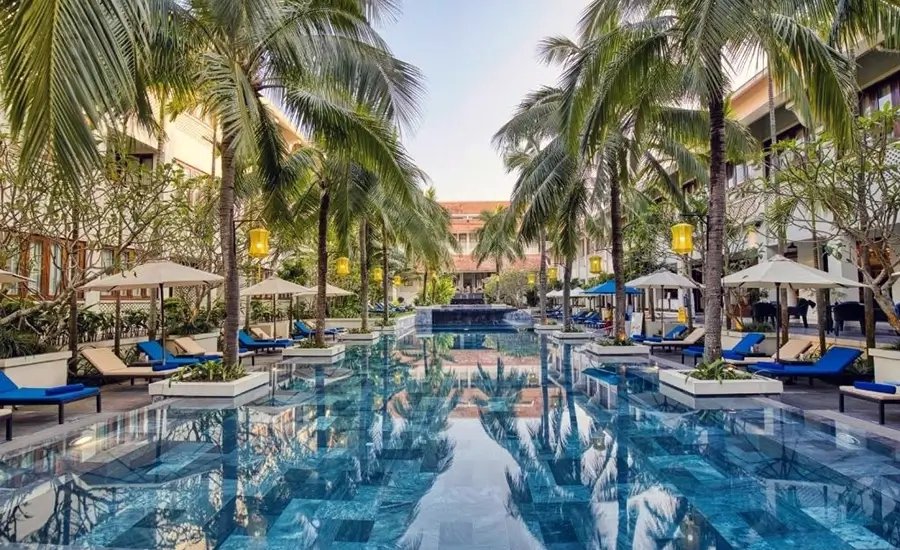
Hoi An also has many homestays and smaller hotels priced from about 300,000 VND to under 1 million VND per night.
In the Tam Ky area, visitors can choose hotels such as Muong Thanh Grand Quang Nam, Ban Thach Riverside Hotel & Resort, Tam Thanh Beach Resort & Spa, and Phu Long Tam Ky Hotel & Restaurant with room rates ranging from VND 500,000 to VND 1.2 million per night.
Tourist spots in Da Nang
Da Nang has many beautiful, famous tourist attractions spread throughout the whole city. Each destination has its own charm you shouldn’t miss. In this article, Vietdreamtravel will introduce the most beautiful and outstanding places in Da Nang in detail.
The best beaches and islands
My Khe Beach
My Khe Beach is one of Central Vietnam’s most beautiful beaches. It is about 10km long, stretching from the base of the Son Tra Peninsula to the Marble Mountains (Ngu Hanh Son), with fine, powdery white sand and gentle waves. The beach is also famous for its blue sky, smooth white sand, gentle slope, and clear & warm water, especially from January to September.
With the lack of large waves and the efforts of the local government, such as keeping the beach clean, ensuring visitor safety, offering free admission for tourists, and providing great accommodations…My Khe Beach is an ideal and safe place for adults and children alike to swim, enjoy magnificent scenery, and play games on the beach.
Non Nuoc Beach
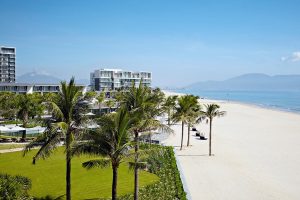
Non Nuoc Beach is located in Ngu Hanh Son ward, Da Nang City. This place is about 8 km southeast of the city center. The beach stretches for 5 km, with clean, white sand to the north and south of Ngu Hanh Son.
Although it was opened to tourism many years ago, this beach still retains its inherent beauty and an unspoiled environment. With calm waves, it is ideal for tourists who want to swim and sunbathe. Lifeguards are always on duty for safety and emergencies. This is a perfect place to relax and bathe.
Cua Dai Beach
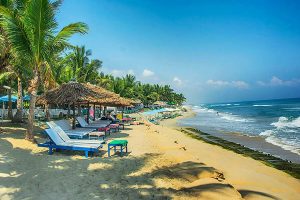 Cua Dai Beach is not far from Hoi An center (about 5 km) and is located in Hoi An Tay ward. The beach has gentle, charming white sand, clear blue water, moderate slopes, and small waves, making it ideal for relaxing and enjoying recreational activities. Another impressive sight in Cua Dai is the rows of coconut trees stretching out, swaying in the sea breeze.
Although this beauty has been somewhat reduced with white sandbags blocking the waves, this place is still suitable for walking and enjoying the cool air in the late afternoons.
Cham Islet
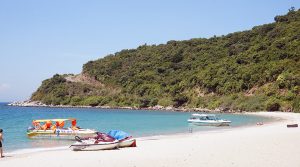 The Cham islet, approximately 20 km from Hoi An town, is in the East Sea. Covering an area of 15 km², this archipelago includes 8 islets: Lao (also known as Cu Lao island, the largest), Kho Me, Kho Con, La, Dai, Mo, Tai, and Ong islet. The population on these islets is about 3,000 people. The islets have preserved many architectural structures belonging to the Sa Huynh, Cham Pa, and Dai Viet cultures, dating back several hundred years. The islet is also a tourist destination with a cool year-round climate, rich flora and fauna.
With its wild beauty, the island quickly becomes an attractive destination, offering many activities such as fishing, camping, scuba diving, and canoeing trips to nearby islets.
An Bang Beach
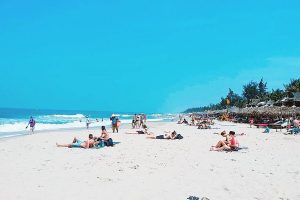 An Bang Beach is located in Hoi An Tay Ward and still retains its pristine, pure beauty, in stark contrast to the vibrant, bustling Cua Dai Beach. Although the beach is a new tourist spot, many people, including locals and tourists, have flocked here since the recent erosion at Cua Dai Beach. An Bang Beach is well managed, very clean, and spacious. It’s not only a good place to relax, sunbathe, swim, or fish, but you can also find jet skis and parasailing on offer.
Furthermore, many people prefer to cycle along the beach to visit Tra Que village or go boating to explore Cham islet from An Bang beach.
Nature & wildlife areas
Son Tra Peninsula
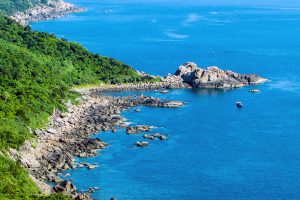
Son Tra is the name of a peninsula and a mountain in Son Tra ward (named after the peninsula), located about 10 km from the city center. Son Tra peninsula, along with Hai Van Pass and Danang Bay, surrounds the center.
Because of its location, Son Tra is like a stela to shield Da Nang from natural disasters coming from the sea. It’s also a historical site and a natural ecological region rising nearly 700 m above sea level.
Here, visitors can participate in many exciting activities, such as scuba diving to see 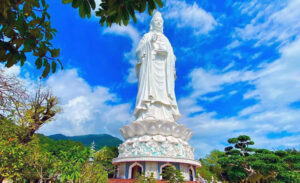 coral, fishing with fishermen, and admiring the city from a helicopter on top of Ban Co…
In particular, Linh Ung Pagoda, located at the top of the hill, is also a spot you should not miss. This is where the tallest statue of Avalokiteshvara Buddha in Vietnam is located, facing the sea.
Inside the statue, there are 17 floors; each floor has an altar with 21 Buddha statues, each with different shapes, postures, and facial expressions.
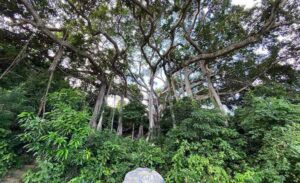 On the peninsula, there are side roads leading to many beautiful beaches, including Bai But, Bai Nam, Bai Da Den, Bai Da, Mui Nghe, Bai Rang, and Bai Bac. The sea around the peninsula has many beautiful coral reefs. In addition, there is a banyan tree which has existed for nearly a thousand years with a unique shape suitable for photography.
The peninsula is also home to hundreds of animal species, such as stag, monkey, and gibbon, and especially the red-shanked douc, with a population of about 300-400 animals, strictly protected.
Marble Mountains
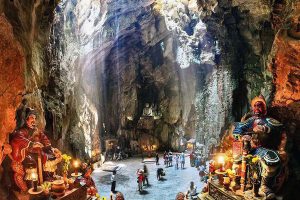
Marble Mountains, also called Ngu Hanh Son (five elements mountains), is a cluster of five marble and limestone hills located in Ngu Hanh Son ward, approximately 8 km southeast of Da Nang city center, close to the sea. The five mountains were named by King Minh Mang (a King of the Nguyen Dynasty) according to the five elements of nature: Kim (metal), Thuy (water), Moc (wood), Hoa (fire), and Tho (earth). Each of them carries its own legends and a mysterious beauty. Of the five mountains, Thuy Son is the largest and the most beautiful, making it a tourist destination.
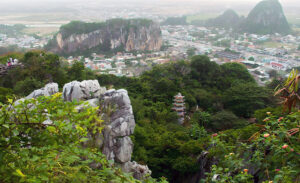
Following the trails through the Marble Mountains, visitors will suddenly turn a corner into a cave or temple. At Kim Son, there are Quan Am pagodas and caves; Hoa Son has Linh Son pagoda and Huyen Vi cave, Pho Da Son pagoda and cave; Tho Son has Long Hoa and Hue Quang pagodas; Thuy Son has Tam Thai, Linh Ung, Tam Ton, Tu Tam pagodas…
Most of the pagodas here have their backs against the mountain. Although they are not too high, they are quiet and sacred. With the cool breeze blowing in from the sea and the green space of mountains and trees, visitors will easily feel a world of peace and serenity.
The Marble Mountains were officially designated as a National Special Relic by the Ministry of Culture, Sports, and Tourism on January 20, 2019.
Ba Na – Chua Mount
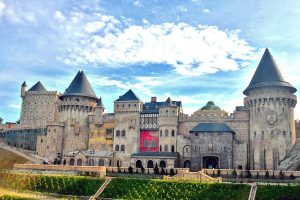
Ba Na is a nature reserve and a resort complex located about 25km southwest of Da Nang center, at the top of Chua Mountain, around 1,500 m above sea level, with an average temperature between 18 and 20 degrees. This is considered one of the leading resort-tourism complexes in Vietnam, combined with entertainment areas.
To serve the needs of the tourists, many bungalows, villas, and hotels sprang up along the slopes, on top of Chua Mountain.
 With a modern system of cable cars, it helps visitors get a panoramic view, very miraculous and attractive, while enjoying the feeling of flying in the blue sky amidst the clouds and wind. Ba Na by night is also more wonderful. There are also regular campfire nights, promoting mountain specialties and creating conditions to help tourists go on picnics
One particular characteristic is that the clouds are at mid-mountain height, so the peaks are always clear.
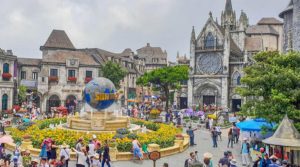 Chua Mount also boasts beautiful forests and green pine hills. Ba Na – Chua Mountain resort has a rich and diverse fauna and flora system.
The vast primeval forests are home to 256 species of animals, including 61 species of mammals, 178 species of birds, and 17 species of reptiles. The flora here has 543 species, including 136 families and 379 genera.
Chua Mountain is also home to many rare and precious animals, such as the crested argus, the Asian black bear, and the red-cheeked gibbon…
Nam O Reef
Located in Hai Van ward, about 17 km from the center, Nam O Reef captures visitors’ hearts with the cool green color of its mossy rocks. The best time to visit Nam O Reef is around March – April. At this time, the weather has just stopped being cold, but it is not yet hot; everywhere, rocks covered with green moss lie on the clear beach.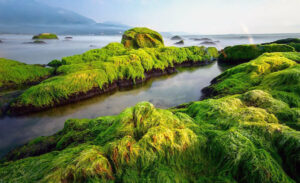
In addition to familiar activities on the beach such as seafood fishing, beach camping, and scuba diving to see coral, when coming to Nam O Reef, you can visit Nam O fish sauce village to understand more about the traditional craft village as well as buy some bottles of local fish sauce as gifts for friends and relatives.
Besides, don’t forget to enjoy seafood here, especially Nam O fish salad. The salad made from freshly caught herring, mixed with a “secret” sauce available only at Nam O, will deliver an impressive and unforgettable culinary experience.
Hai Van Pass
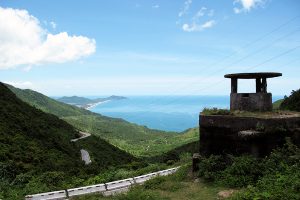
Hai Van Pass is also known as Ai Van Pass or May Pass (because the top of the pass is often covered with clouds), 500 m above sea level, 20 km long, and runs across the Bach Ma mountain range in the middle of the border between Hue and Da Nang City.
Today, on the top of Hai Van Pass, there is still a trace of a gate. This gate, called Hai Van Quan, was built during the Tran dynasty and restored during the Nguyen dynasty (1826). Standing here, you can admire the beautiful view of the sea in the distance. At the beginning of the year, visitors can take photos of “cloud hunting” at the famous bend, the top of Hai Van Quan, the “cloud garden” opposite Hai Van Quan, or go down to Van village to swim in the sea. The ideal time to visit is dawn or dusk.
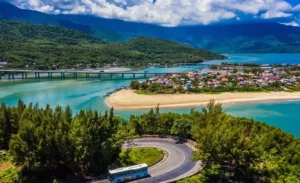 There are currently two routes through Hai Van Pass: the Hai Van Pass tunnel (not for motorbikes) and the Hai Van Pass road.
The Hai Van Pass tunnel is open daily and has a toll. The tunnel is closed from 3 am to 4 am every day for cleaning, repairs, and maintenance of tunnel equipment. If you go through the tunnel, you will not be able to sightsee or visit some famous places on Hai Van Pass.
The Hai Van Pass road is open daily, free of charge. Visitors should choose this route if they want to experience the feeling of conquering the pass and enjoying the scenery. Visitors should note that they should reduce speed whenever there is fog.
Bay Mau nipa palm forest
From the center of Hoi An, along the Hoai River bank for more than 3 km lies the Bay Mau nipa palm forest, more than 10 hectares, in Hoi An Dong commune.
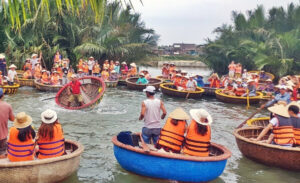 The basket boat rowing service for transporting passengers to visit the coconut forest has emerged in recent years and has gradually become an indispensable “specialty” of Hoi An tourism. Each boat is only allowed to carry a maximum of two people. To visit the nipa palm forest, each guest pays 200,000 VND to sit in a basket boat, weaving through the creeks, flanked by green coconut forests for about an hour.
In addition to riding the basket boat, visitors can also watch boat dance performances and learn how to make beautiful small toys from nipa palm leaves, such as flowers, locusts, bracelets, glasses, rings, or hats… as souvenirs. If you come to Bay Mau in the 8th lunar month, you will enjoy ripe water coconuts with sweet, crisp pulp.
Than Tai Mountain Hot Spring Park
If you have enjoyed enough of the noisy atmosphere of the coastal city and want to find a quiet space between the mountains and forests to relax and unwind, then Than Tai Mountain Hot Spring Park will definitely be the next tourist destination.
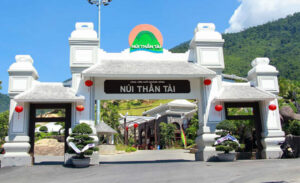 Located in Phu Tuc village, Hoa Vang Commune, Than Tai Mountain hot spring is another wonderful gift from nature to this land. With a cool climate year-round and surrounded by vast forests and mountains, Than Tai Mountain hot springs are truly a “paradise” of relaxation for those who love the forest and mountains.
Tourists coming here, in addition to soaking in the hot water that is beneficial for their health, can also enjoy high-class entertainment and resort services such as Japanese-style Onsen bathing, playing at the water park, mud bath, lazy river, Jura Park dinosaur park, etc.
Spiritual and Sacred Places
Temple of Caodaism in Da Nang
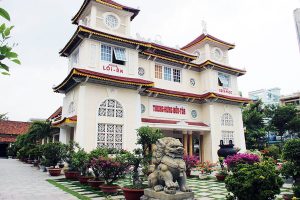
The Cao Dai religion was founded in 1926 in Tay Ninh. Between 1934 and 1960, Caodaism developed strongly, and many temples were built from the south-eastern area to Hue.
In 1956, a group of followers built the Trung Hung Buu Holy See at 63 Hai Phong, Hai Chau Ward, Da Nang City. It is exactly like the miniature replica in Tay Ninh. The temple has 03 doors; Caodaist dignitaries go through the middle door, and the two side doors are smaller, one for men and one for women. The altar is dedicated to the Left Eye shining on the earth.
On the upper side, there is a picture of the meeting in heaven of the five first leaders of the world’s major religions: Lao Tzu, Buddha Shakyamuni, Jesus Christ, Confucius, and Mohammed. In the temple, the Caodaist dignitaries pray four times a day: at 6 am noon, 18 pm, and midnight.
Assembly Hall of Fujian Chinese
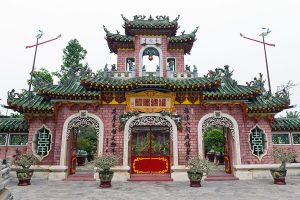 The Assembly Hall of Fujian Chinese was built in 1697 by members of the local Fujian community. It was constructed according to the Chinese character. The main hall is dedicated to the sea Goddess Thien Hau. Alongside her are Thuan Phong Nhi, who has ears to hear the wind, and Thien Ly Nhan, who has eyes to see for thousands of miles. Many ancient objects still remain inside, including statues, bronze drums, bronze bells, and a horizontal lacquered board engraved with Chinese characters.
In addition to its architecture, many events and activities take place, following the lunar calendar, on January 15, February 2, February 16, March 23 … attracting a lot of domestic and foreign tourists to participate.
Address: 46 Tran Phu Street, Hoi An Dong Ward.
Da Nang Cathedral
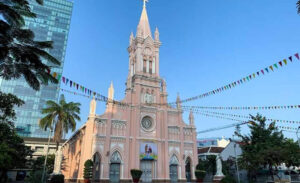 The Da Nang Cathedral, also known as the Church of the Sacred Heart of Jesus or the Cathedral, was started in February 1923. It was designed and built by Father Vallet. Local people often call the project by a familiar name: the Chicken Church, because a typical gray chicken statue sits on the church roof.
Da Nang Cathedral has Gothic architecture with soaring lines and diamond-shaped doors. Inside the church, there are paintings and statues of God illustrated according to the Bible, arranged in the style of Western Catholic church art.
The exterior architecture of the Chicken Church has not changed much to this day.
The church is located in the center of the land. In front of the church are statues of Saints Paul and Peter. On the right is the building of the Diocese of Danang; behind the church is the grotto of Our Lady of Lourdes with surrounding offices and a Catholic bookstore.
Location: 156 Tran Phu, Hai Chau, Da Nang.
Quan Cong Temple
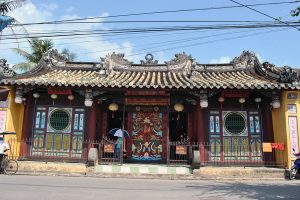 The Quan Cong Temple was built in 1653 and dedicated to Guan Yu (also known as Lord Guan), a general in the Three Kingdoms period of ancient China who was a model of loyalty to the king and dutifulness to his parents. Quan Cong Temple was constructed in the Chaozhou-China style, with many houses linked together by rafters. The roof is covered with colorful glazed pip-shaped tiles. They are also decorated with colorful porcelain flowers of lemon trees, dragons, and small lions.
The main hall has a statue of Guan Yu wearing a dragon-embroidered robe, with a dignified face and sharp, bright eyes ahead. Besides, there are two statues of Guan Ping and Zhou Cang – the loyal and sacrificial guardian and servant of General Guan Yu. On two sides of the main altar are worshipped two horses: the white horse on the left and the Red Hare on the right – which had accompanied Guan Yu in many life-and-death battles.
Address: 24 Tran Phu, Hoi An Dong ward.
Linh Ung pagodas
Currently, Da Nang has three famous Linh Ung pagodas, each located in a special place, together forming a “sacred triangle” that protects the city from three directions: mountain, sea, and sky. Specifically:
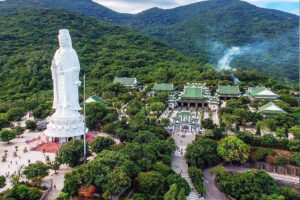 Linh Ung Bai But Pagoda – Son Tra: This is the largest and most famous pagoda, located on the slope of Son Tra peninsula – Da Nang, standing out with a 67m high statue of Quan The Am facing the sea. The majestic architecture combined with the open terrain creates a pure and solid space.
Linh Ung Ngu Hanh Son Pagoda: The pagoda is located in the Ngu Hanh Son scenic complex, surrounded by rocky mountains and forests. The pagoda’s traditional architecture, combined with its natural beauty, evokes a sense of purity and depth for all visitors.
Linh Ung Ba Na Pagoda – Nui Chua: The pagoda is located at an altitude of nearly 1,500m at the top of Ba Na, standing out for its 27m-high statue of Buddha Shakyamuni. Surrounded by clouds and majestic mountains, the pagoda offers a pure, peaceful space, ideal for meditation.
Museums
Museum of Cham Sculpture
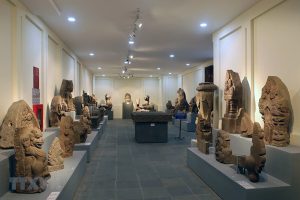
The Da Nang Museum of Cham Sculpture is the largest museum in Vietnam exhibiting Cham artifacts. This museum was built in 1915 by the French. In 1936, the Museum was expanded and opened to the public in 1939. It has a total area of 6,673 m², of which the exhibition area is 2,000 m².
The total number of art objects on display at the museum is up to about 500 items and is divided into 10 rooms corresponding to the geographical areas where they were discovered, including My Son, Tra Kieu, Dong Duong, Thap Mam, Quang Tri, Quang Ngai and Gia Lai. The museum’s compound blends harmoniously with the local landscape, giving tourists a chance to relax and feel immersed in the golden past of Cham civilization.
Location: No 2, Road 2/9, Hai Chau Ward, Da Nang.
Museum of Trade Ceramics
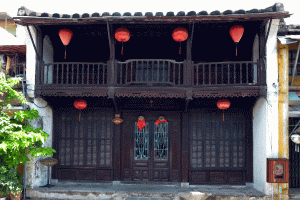 The museum was formerly a house built in the 19th century. The Museum of Trade Ceramics has over 430 ceramic artifacts, including dishes, wine cups, vases, and teapots, dating from the 8th to the 18th centuries. Most of the artifacts are trading ceramics originating from the Middle East, India, China, Japan, Thailand, and Vietnam, which shows that international cultural-economic exchange was strong in Hoi An.
In addition, many samples of parts from the old trading ships that brought merchants from around the world to this seaport are preserved intact. In particular, numerous handicraft items from traditional villages are sold here.
Address: 80 Tran Phu, Hoi An Ward.
Da Nang Fine Arts Museum
Da Nang Fine Arts Museum was established on July 29, 2014, as a representative of the Central and Central Highlands regions, with an exhibition area of 1,185.5 m² on a land area of 1,870 m² and 3 floors.
 The first floor of the Museum has an area of 390 m², including a celebration space, a space for displaying modern fine arts of Da Nang, and a space for displaying modern fine arts by the young generation.
The second floor has an area of 412.5 m², featuring 5 topics on modern fine arts of Da Nang and the region (including oil paintings and sculptures; lacquer and sculptures; silk and sculptures; graphic and sculptures; revolutionary struggle topics).
The 3rd floor has an area of 383 m², divided into 3 topics: ancient fine arts of Da Nang and the region; folk fine arts of Da Nang and the region; applied fine arts of Da Nang and the region.
The Da Nang Fine Arts Museum preserves and organizes exhibitions, introducing to the public about 413 works of fine arts with artistic quality and traditional handicraft products of painters, sculptors, artisans in Da Nang and provinces and cities in the Central – Central Highlands region, including materials such as oil paint, lacquer, silk, graphics, sculpture…
Address: 78 Le Duan, Hai Chau Ward.
Buddhist Museum
This is considered the first Buddhist cultural museum in Vietnam. Here, visitors can admire more than 500 ancient Buddhist artifacts. The museum’s collection was formed and continuously supplemented by three generations of abbots, including many artifacts reflecting the Buddhist art of Vietnam and many countries across Asia.
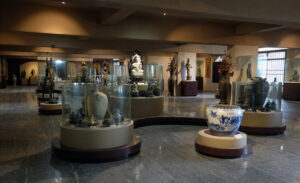 Many collections reflect the Buddhist heritage, rich in expression style and materials, dating back to the last few centuries, but there are also many artifacts dating back quite early. The artifacts displayed at the museum, in addition to their value as ancient works of art, also crystallize the quintessence of Buddhist cultural heritage. In addition, there are several other cultural civilizations.
In addition, the museum preserves many artifacts, such as ancient bronze incense burners and worship objects, dating from the 7th century to the end of the 19th and 20th centuries.
The Buddhist Museum is located in the premises of Quan The Am Pagoda, at 48 Su Van Hanh, Ngu Hanh Son ward.
Ancient and unique architectures
Phong Nam ancient village
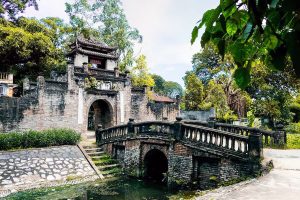
Phong Nam ancient village is located in Hoa Xuan Commune, about 10 km southwest of Da Nang center. This is one of the rare villages in the city that still retains the pristine features of ancient Vietnamese villages with bamboo banks, rice fields, communal houses, and the simple, honest lifestyle of the local people.
The attraction of Phong Nam ancient village also lies in ancient architectural works such as communal houses, pagodas, temples, ancestral churches, and clan churches. Currently, Phong Nam ancient village still retains many ancient houses; some have existed for more than 100 years, dating back nearly 200 years, and are still well preserved, making the village a popular spot for those who want to discover a traditional Vietnamese village.
Tan Ky ancient house
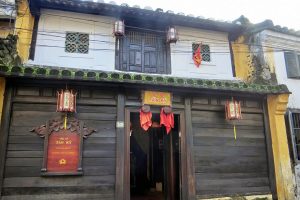 Built in 1741, this is the oldest house in Hoi An. It was named “Tan Ky” after the second generation of the house, the residence of the Le family, hoping that it would bring them wealth. Until now, the house remains fully preserved, with its unique architectural features and the ancient beauty of its time. Some of the special architectural works include two vertical panels which are inscribed with parallel sentences; many ancient artifacts and sailboats – the symbol of Hoi An Port many centuries ago; unique horizontal lacquered boards…
Furthermore, coming to visit Tan Ky ancient house, tourists will have the opportunity to ascertain much more about typical architecture, which is a convergence of 3 cultural regions of Vietnam – Japan – China with unique and rare motifs.
Address: 101 Nguyen Thai Hoc, Hoi An Ward.
Phung Hung ancient house
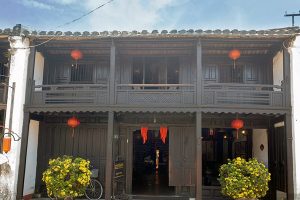 The Phung Hung ancient house in Hoi An was built in 1780. This is the house of a Vietnamese merchant in Hoi An. He named the house “Phung Hung”, meaning “Flourish” with the desire to always be successful.
Phung Hung ancient house was modeled on a popular merchant house from the early 19th century, blending Vietnamese, Japanese, and Chinese architectural styles. The materials are mainly rare woods that still retain their original beauty today.
The house was built amid lively trade integration and is one of the signs of the prosperous period of Hoi An’s trading port. Phung Hung was ranked as a “National Historical and Cultural Site” in 1993.
Address: 04 Nguyen Thi Minh Khai, Hoi An Ward.
Japanese Covered Bridge
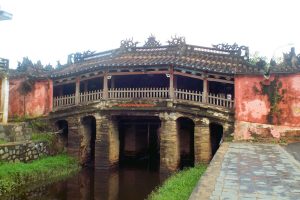 The Japanese Covered Bridge, also called the Pagoda Bridge, was built in the 16th century and remains incredibly well preserved. The pagoda and bridge are made of lacquered wood with elaborate carvings. On the northern side of the bridge is a Japanese pagoda dedicated to the God of weather to protect sailors. There are statues of two dogs located at the western end of the bridge and two monkeys at the eastern end. Although it is called a pagoda, there is no Buddha image inside. The middle part is where a wooden statue of Bac De Tran Vo, the guardian deity of the country, is worshiped, giving people joy and happiness.
The Japanese Covered Bridge has been restored many times but still retains its architectural and cultural imprints. And today, the bridge stands as a symbol of the old town.
My Son Holy Land
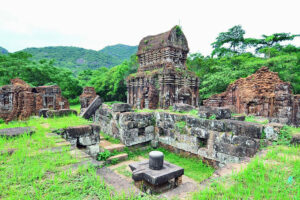 My Son Holy Land is located in Thu Bon Commune, about 40 km away from the ancient town of Hoi An, in a valley about 2 km in diameter, surrounded by hills. The temples were constructed between the 4th and the 14th centuries by the Kings of Champa. Besides the ceremonial function, My Son was also the cultural and religious center of the Champa dynasties and the burial place of many kings, Cham royalty, and national heroes. The sanctuary was a complex structure, comprising many temples and numerous steles in various architectural styles.

According to French research, there were 70 temples here. Now, only 20 temples remain almost intact. The rest have been destroyed and reduced to ruins by war and time. However, it remains the most important sanctuary of the Cham people and holds a significant position in the art and culture of Southeast Asia.
In 1999, My Son Holy Land was recognized as a World Cultural Heritage Site by UNESCO because it is a typical example of cultural heritage. cultural change and is the only evidence of an Asian civilization that has disappeared.
Bridges in Da Nang
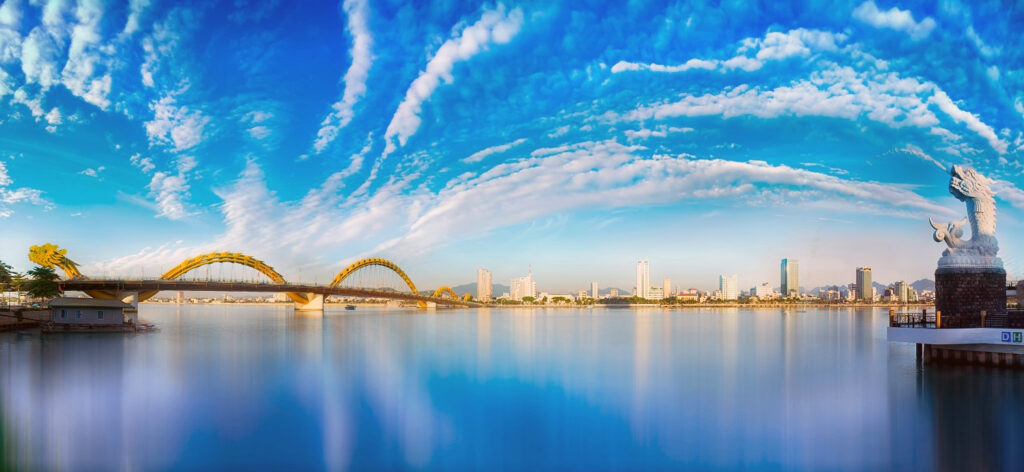
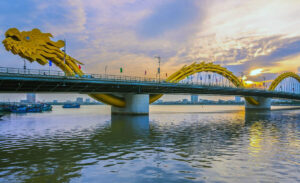 Da Nang is known as the city of bridges in Vietnam. Dragon Bridge, Han River Swing Bridge, Tran Thi Ly Bridge, and Love Bridge are attractions that attract visitors to sightsee and check in. Right near the Love Bridge is a statue of a carp turning into a dragon.
In particular, Dragon Bridge is more crowded on weekend nights when there are dragon performances that spray water and fire. From 21 pm, many tourists and people gathered on the bridge, on both sides of the Han River or in nearby high-rise buildings. Vehicles traveling at both ends of the bridge were stopped for 15 minutes during the show.
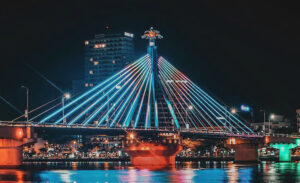 Visitors should choose a suitable standing position or wear a raincoat or umbrella to avoid getting wet when watching the water-spray performance.
Han River Bridge is the first swing bridge in Vietnam. Han River Bridge has a length of nearly 500 m and a width of 13 m with 11 spans. The bridge section in the middle of the river can rotate 90 degrees, parallel to the flow, to allow large ships to pass.
Thuan Phuoc Bridge is the largest suspension bridge in Vietnam. The bridge is 1,856 m long and 18 m wide, with two abutments at both ends and two cable towers set in the riverbed.
Tran Thi Ly Bridge is named after a heroine in the anti-American resistance war from Quang Nam. The bridge is located to the south of Dragon Bridge, about 1.5 km from Dragon Bridge. There used to be an old bridge with the same name, but it has been replaced by the new bridge.
Monument of Mother Thu
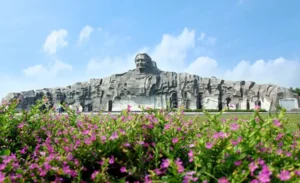 The old Quang Nam (now part of Da Nang City) has not only natural and cultural tourist attractions but also historical relics, the most prominent of which is the Mother Thu Monument. The monument was built in Quang Phu commune, Tam Ky ward, and is the largest of its kind in Southeast Asia. This is the place to commemorate the Vietnamese Heroic Mother Nguyen Thi Thu. She is the mother with the most children and grandchildren sacrificed in both the resistance wars against France and the US: 9 sons, a son-in-law, and 2 grandchildren.
The main statue, 18.5 m high, made of granite, and transported from Binh Dinh, depicts a mother opening her arms to embrace the children of the country. Next to the main statue are blocks of statues arranged in an arc, 120 m wide.
Craft villages
Non Nuoc Marble carving village
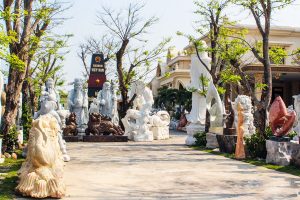
The Non Nuoc marble carving village, located at the foot of Ngu Hanh Son Mountain, is a famous traditional village in Da Nang city, known for fine art stone products. It was formed in the 18th century. The first person to set up the village and create a carving job was Mr. Huynh Huynh Quat.
The raw materials are obtained from marble mountains. Then, they will be sketched, carved, and polished to achieve the final products. Products from craft villages are diverse and rich, ranging from common, everyday items like a pestle and mortar… to sophisticated jewelry, Buddhist and saint statues, animal figurines, and bracelets…
Thanh Ha Pottery Village
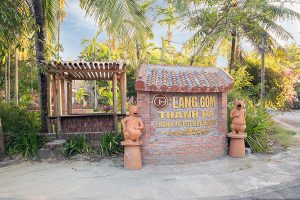 Thanh Ha pottery village dates back to the late 15th century and is located about 3 km west of Hoi An ancient town, right next to the Thu Bon River. The area is a pretty small but extremely peaceful village.
This pottery village specializes in manufacturing popular everyday items, such as cups, bowls, vases, pots, bricks, tiles, and dishes, as well as unique souvenirs crafted by skilled hands and decorated with attractive colors.
Over the past five centuries, local potters have kept their traditional method of making pottery- handmade and wheel-thrown- which attracts many people to visit and practice.
Cam Ne mat village
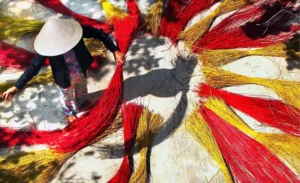 The Cam Ne mat village is located in Hoa Tien commune, about 14 km southwest of Da Nang city center. This place has long been famous for its traditional flower mats, which were once present in the Nguyen Dynasty’s royal court; a flower mat 2.5 meters wide, up to 25 meters long, made by experienced mat weavers in nearly a month. Thanks to that mat, the villagers were rewarded handsomely, and after that miracle, the reputation of Cam Ne mats spread throughout the country.
Today, the village has only a few households practicing the profession; however, the beauty of the weaving frame and the quality of the mats are still preserved, embodying many meaningful cultural values.
Tuy Loan rice paper craft village
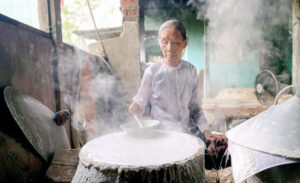 Tuy Loan rice paper craft village is located in Hoa Vang commune, about 15 km from the center. The village is over 500 years old and is a good place to explore Da Nang’s history. The village is also famous for making rice paper and Quang noodles.
Tuy Loan rice paper is handmade from rice flour and other ingredients such as sesame (white sesame), ginger, garlic, sugar, fish sauce, and salt, creating a unique flavor. In particular, the rice paper here is known for its chewy, delicious taste, and can be eaten directly or grilled to a crispy, attractive texture.
The traditional Tuy Loan rice paper-making craft village is listed on the National Intangible Cultural Heritage List, creating more buzz for a centuries-old craft in Da Nang.
Must-try experiences
Explore Tra Que Vegetable Village
 Tra Que Vegetable Village is located in Hoi An Tay Commune, about 3km northwest of Hoi An center, with an area of over 40 hectares, and households here rotate and intercrop more than 20 types of leafy vegetables and spices, with a tradition of nearly 400 years.
Tra Que has more than 40 types of vegetables, with herbs being prominent. It’s still onions, laksa leaves, perilla, basil, and coriander, but Tra Que vegetables are fragrant and have a unique, unmistakable flavor.
It is worth mentioning that coming to Tra Que is not only about admiring the scenery and watching people grow vegetables, but also about interacting with farmers to experience how to care for, water, and harvest vegetables… In addition, guests can cycle through the surrounding roads of this vegetable village to enjoy the cool, joyful atmosphere in this 18-hectare vegetable field.
Cycling
 Biking is the perfect way to explore Da Nang. The excursions will give you the chance to really get up close to the locals and see how they live. The best sights and experiences are often found down obscure side streets, alleyways, cycling through rice paddies and traditional villages, or river views.
Currently, many tour agents offer half-day to full-day cycling trips to some of the best places, such as Cam Kim Island, Tra Que Vegetable Village, Hoi An Town, An Bang Beach, and My Son Sanctuary.
Boating along the river
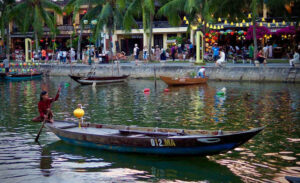 Cruising along a river is one of the most popular activities in Da Nang. Visitors can take a boat from the Han River or the Thu Bon River. A trip would help you indulge in the beautiful surrounding landscape and witness rural life, where local people live along the river, growing corn and peanuts or raising ducks, and using bamboo boats as their main mode of transportation.
It would be so much fun to see local fishermen rowing a boat with a fishing net to catch fish. This is also an ideal way to visit handicraft villages and observe local people’s daily activities during the excursion.
The boat serves food, music… depending on the needs of the visitors. Some tours offer sightseeing and dinner, with ticket prices ranging from 150,000 to 500,000 VND per person.
Cooking classes
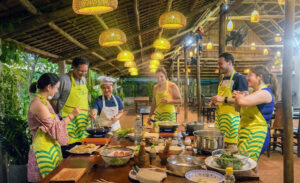 Cooking classes in Da Nang do not just give you the idea of how to cook some Vietnamese dishes. The most basic experiences will guide you to visit a local market, choose and buy ingredients, learn about your host’s special foods, choose some dishes, and cook them.
Of course, you also enjoy the results of your endeavors. However, some of the cooking classes in Da Nang will still include the above, but there are also experiences to visit a local farm, select fresh ingredients there, and use them later to cook. Even more, you also have a chance to practice what the farmers are doing daily on their land, such as fertilizing, preparing the soil, planting the herbs, watering, and hoeing the vegetable beds… with simple tools or by hand.
Explore local markets
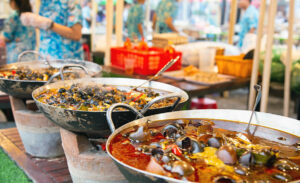 Located on Ong Ich Khiem Street right in the city center, Con Market is one of the oldest and largest markets in the coastal city. Con Market is considered a snack paradise, with many restaurants that are always crowded and sell a variety of foods, including breakfast, lunch, and especially afternoon snacks. Banh beo, rice paper rolls with pork, Quang noodles, snails, and sweet soup are popular, with prices starting from 10,000 VND. In addition to food, local specialties bought as gifts are also sold in a wide variety, such as fish sauce, tamarind-marinated squid, and beef patties.
Han Market is located in the city center, near the Han River bridge, and is adjacent to Hung Vuong, Tran Phu, Tran Hung Dao, and Bach Dang streets on 4 sides. The market dates back to the 40s of the last century, but with a convenient location for both road and waterway traffic, the area has become increasingly developed and bustling.
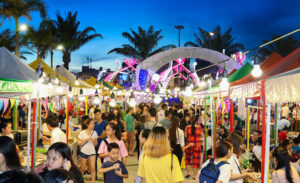
The city has many seafood markets, but the most attractive is still the area along Vo Nguyen Giap Street and the coastal streets of Son Tra. Here, the stalls display all kinds of freshly caught seafood, from oysters, snails, and crabs to very fresh fish, shrimp, and squid…
In addition, Da Nang also has bustling night markets such as Helio night market (2/9 Street, Hai Chau), Son Tra night market (Ly Nam De street intersects with Mai Hac De, Son Tra), Thanh Khe night market West (Yen Khe 1 street), Le Duan night market (144 Le Duan, Hai Chau), Hoa Khanh night market (Nguyen Canh Chan street). This is a vibrant shopping and dining paradise at night for both residents and tourists.
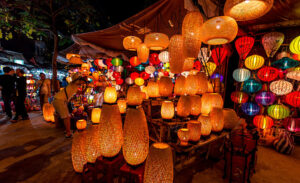 Furthermore, the night markets in the Hoi An area are not as famous or as crowded as other markets in Da Lat, Dam Market in Nha Trang, Ben Thanh Market in Ho Chi Minh, or Old Quarter Market in Ha Noi, but they have many unique features. The markets offer many types of souvenirs, clothes, jewelry, and especially lanterns with all shapes, sizes, and hues. Although it is a market, this place is not only for trading activities, but also an attractive spot for many people to visit, enjoy the rustic dishes, and various folk games – one of the indispensable experiences at these markets.
Da Nang cuisine
After having fun exploring Da Nang, don’t forget to try the specialties of this land
Quang noodles
This is a popular dish in Da Nang. Some places on Hai Phong, Nguyen Huu Tho, and Nguyen Cong Tru streets sell it all day. A bowl of “traditional” Quang noodles features flat white noodles, shrimp, pork or chicken, and eggs, served with herbs and never without roasted peanuts and crispy toasted sesame rice paper.
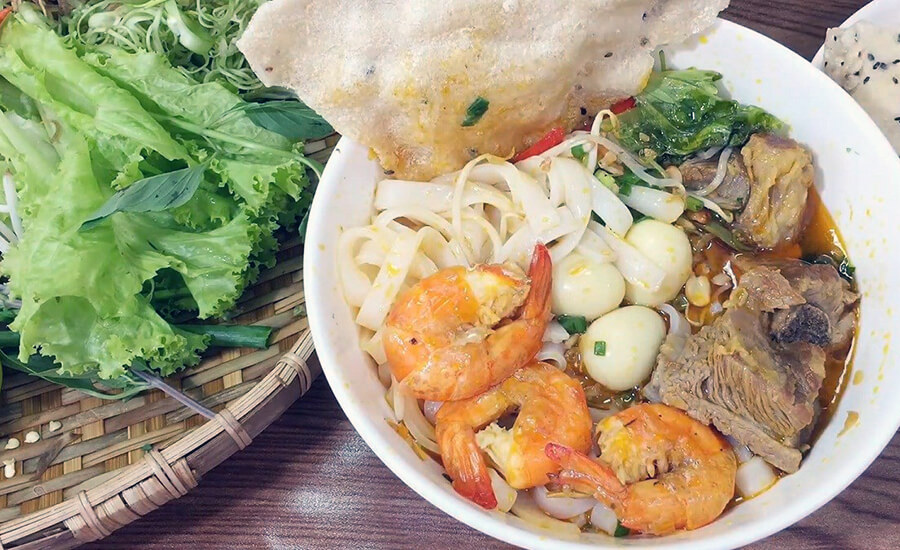
If you are a vegetarian, the main ingredients are tofu, mushrooms, and tubers.
Fish noodle soup
Although it is a dish found in many regions, Da Nang fish noodle soup has a unique flavor found nowhere else. There are two types of fish noodle soup: steamed fish and fried fish cake (or both). Especially in the Central region, the noodles are delicious because of the broth.
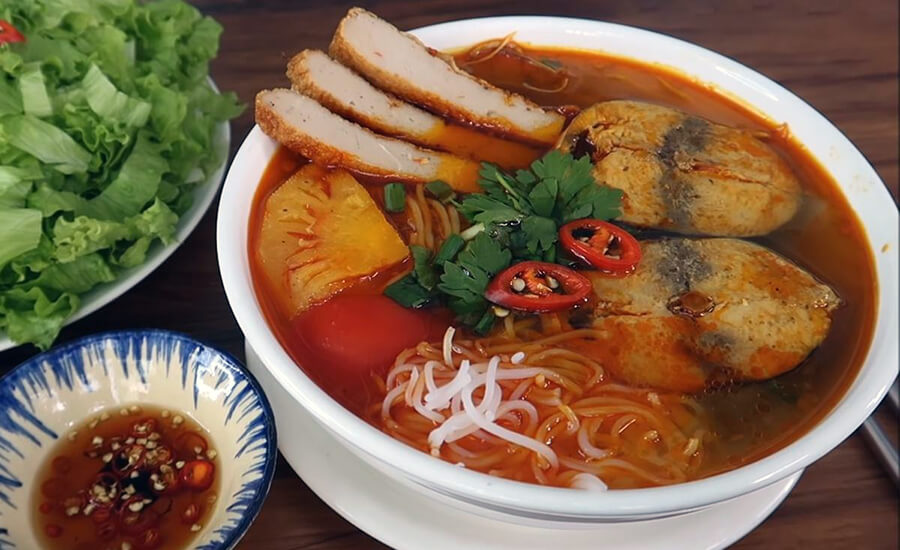
Vermicelli noodles are often served with lettuce and bean sprouts; don’t forget to add a little local fermented shrimp sauce.
Crispy pancakes
Da Nang crispy pancakes are not too small and not too big, just the right size. The crispy pancakes in Da Nang is made from ground rice flour with added egg yolks and turmeric powder, cooked in a hot pan. The filling is also carefully selected, made only from fresh shrimp, pork belly, and fresh bean sprouts.
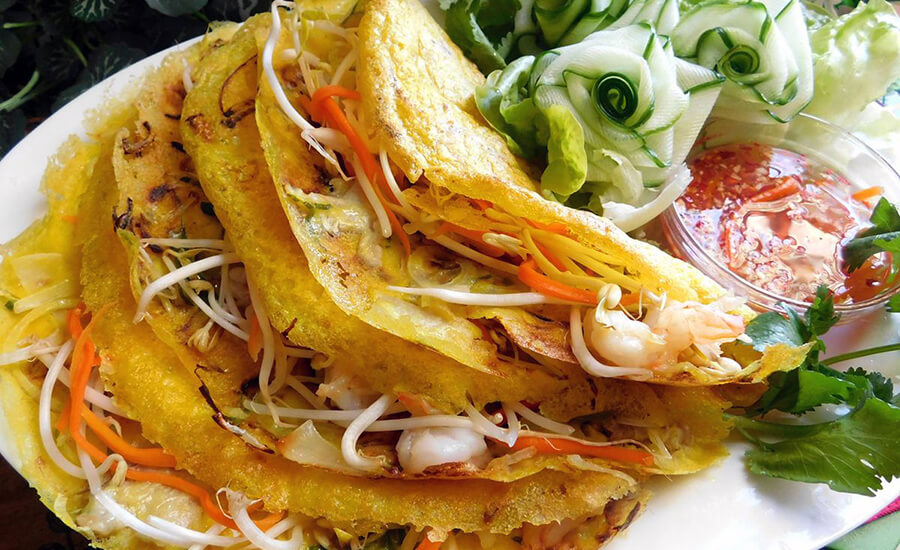
The pancakes are served with raw vegetables, including lettuce, basil, banana, and baby mustard greens, and a dipping sauce made from ground peanuts for a rich, fatty flavor, or the traditional chili-garlic sauce.
Mixed jackfruit
Mixed jackfruit: simply boil young jackfruit until just cooked. Tear into pieces to mix with pork belly salad, white shrimp, or shredded pork skin. Add crushed peanuts, fried onions, and sweet and sour fish sauce, along with a little Vietnamese coriander and basil. But it makes people ecstatic with its seductive scent and eye-catching colors.
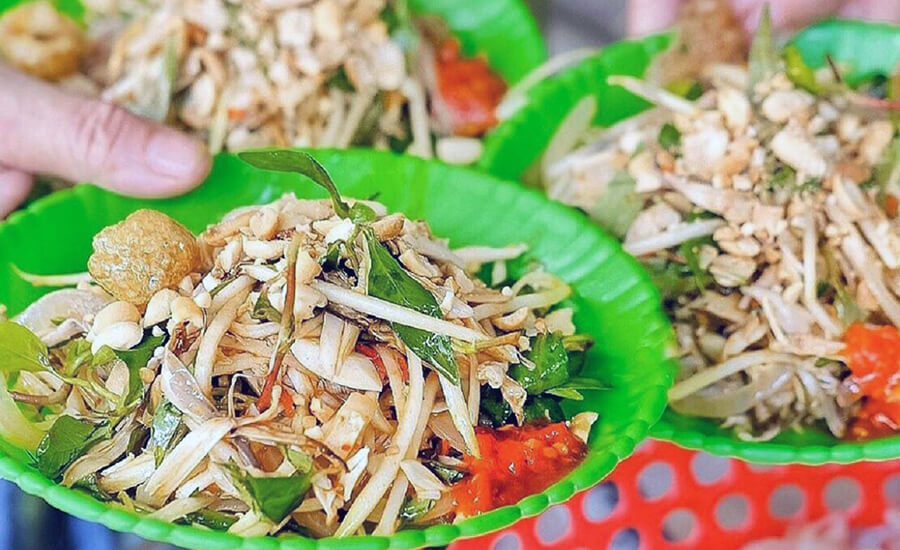
Eat jackfruit mixed with sesame rice paper. Break a piece of rice paper and scoop a piece of mixed jackfruit; this is the way local people enjoy the dish.
Nam O fish salad
The fish used to make this dish can be sardines or anchovies; however, the most delicious is still herring. The characteristic feature of Nam O fish salad is the dipping sauce made from boiled fish juice, mixed with Nam O fish sauce, chili, and tapioca starch. In addition to the usual accompanying vegetables, Nam O fish salad also includes wild herbs… which grow only on the Hai Van Pass.
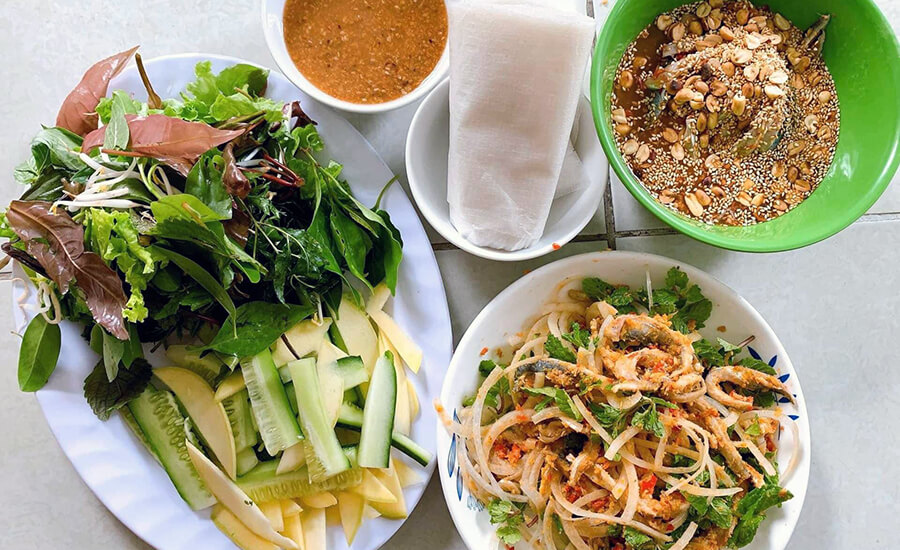
Visitors can eat fish with vegetables and rice paper rolls or just mix fish and vegetables with dipping sauce.
Grilled veal Cau Mong
Grilled veal is a popular dish in the Central provinces, but the most delicious and famous is Cau Mong, Dien Ban ward. If you follow National Highway 1A, you will see grilled veal restaurants next to each other, and all of them are crowded.
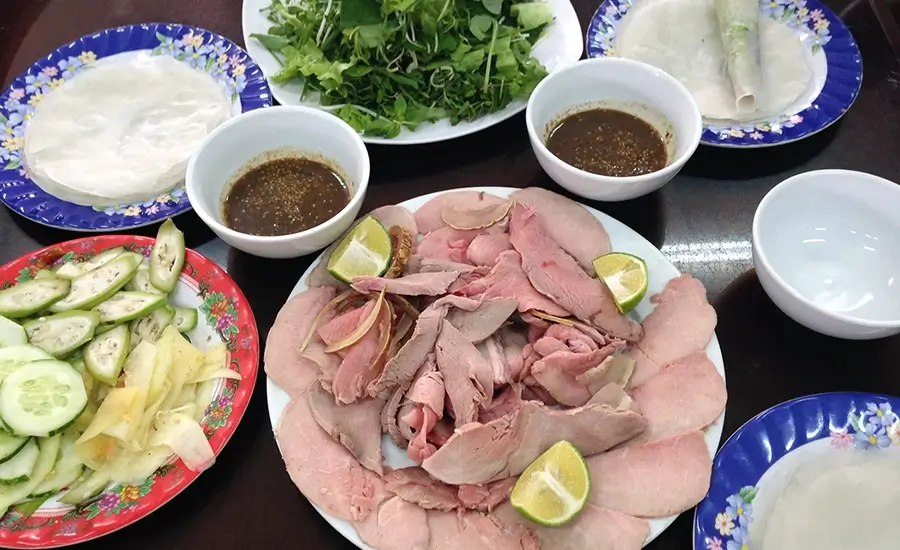
The calves are about 4-5 months old, weighing 50-60 kg. They are butchered, their entrails are removed, stuffed with deodorizing leaves such as lemongrass and lemon, then sewn with steel wire. A long tree trunk is taken and skewered along the body of the calf, placed on two medium-heat charcoal stoves, and grilled. When grilling, turn the calf evenly so the meat is rare, soft, and sweet, and the skin is golden. The cooked veal is cut into large pieces, hung in a glass cabinet, and when there are customers, it is sliced into thin slices and arranged on a plate. Grilled veal cannot be eaten without Central Vietnamese fish sauce, raw vegetables, and rice paper rolls.
Cao Lau
This is considered a specialty of Hoi An. The dish has thick noodles, served with shrimp, pork, raw vegetables, and a little broth. The yellow noodles are made from flour mixed with ash from a local tree.
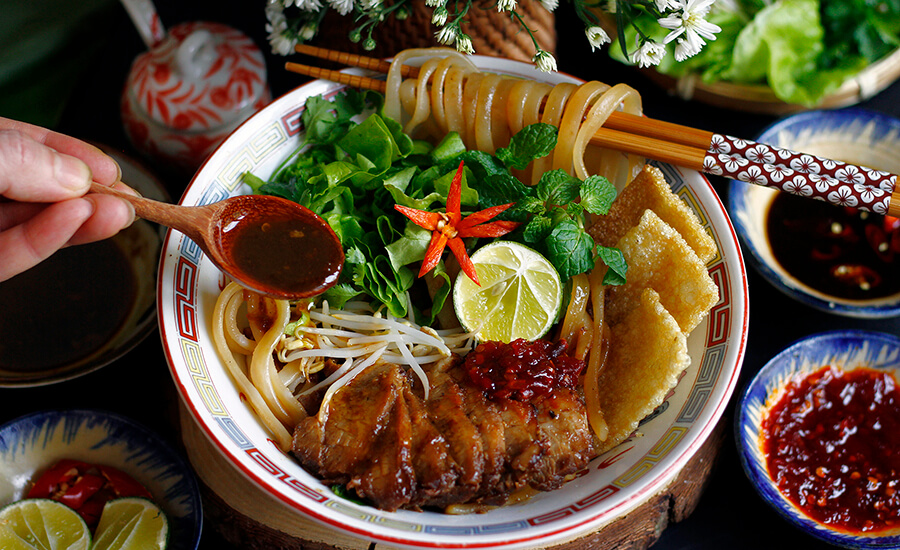
The name “Cao Lau” means “delicacy” and is enjoyed on a high floor. Diners can enjoy the dish while admiring the beautiful scenery of Hoi An from above. Cao Lau appeared in the 17th century, when Chinese and Japanese merchants came to Hoi An to trade. The dish is considered a blend of Chinese and Japanese cuisine. Later, Cao Lau was adapted to suit Vietnamese tastes and became a Central region specialty.
Chicken Rice
Tam Ky and Hoi An are two places famous for chicken rice. Decades ago, chicken rice was sold by street vendors on every street and alley. Gradually, the dish became popular in large restaurants. A proper chicken rice dish must meet all the conditions: sticky, fragrant rice, firm, fatty chicken, flavorful chicken gizzards, crispy, sour shredded papaya mixed with Vietnamese coriander, and a little chili sauce.
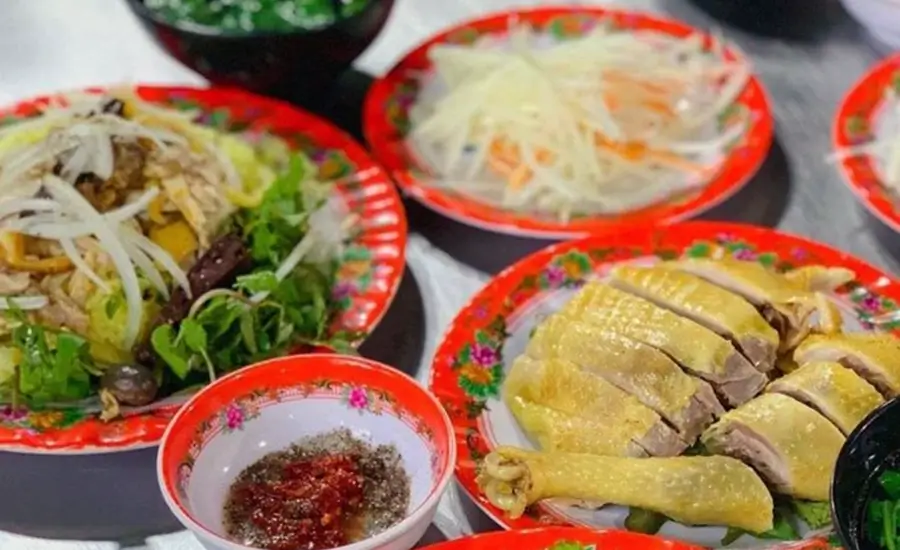
The chicken broth is used to cook the rice; when the rice turns opaque white and the grains are dry, add turmeric juice and stir well until the rice turns yellow. In addition to the typical dishes mentioned above, the old Quang Nam (now Da Nang City) is also known for popular Central region dishes such as pork rice paper rolls, rice noodles, bread, tapioca dumplings, and grilled spring rolls.
What to buy as a gift?
Mr. Chanh’s cake, Ba De’s cake, Cam Le sesame dried cake, My Khe seaweed, Nam O fish sauce, fresh seafood or dried squid, dried fish… are famous specialties of Da Nang, easy to find, buy, and pack luggage.
If you want to buy souvenirs, you can choose silk paintings, embroidery, oil paintings, decorative items made of stone, porcelain, wood, bronze statues, or stone art artifacts from the Marble Mountains, and clothes made of silk and silk fabric. Other special products such as:
Lanterns are a gift associated with Hoi An. You should look to buy at large stores that both make and sell, to have a variety of choices in styles, sizes, and materials.
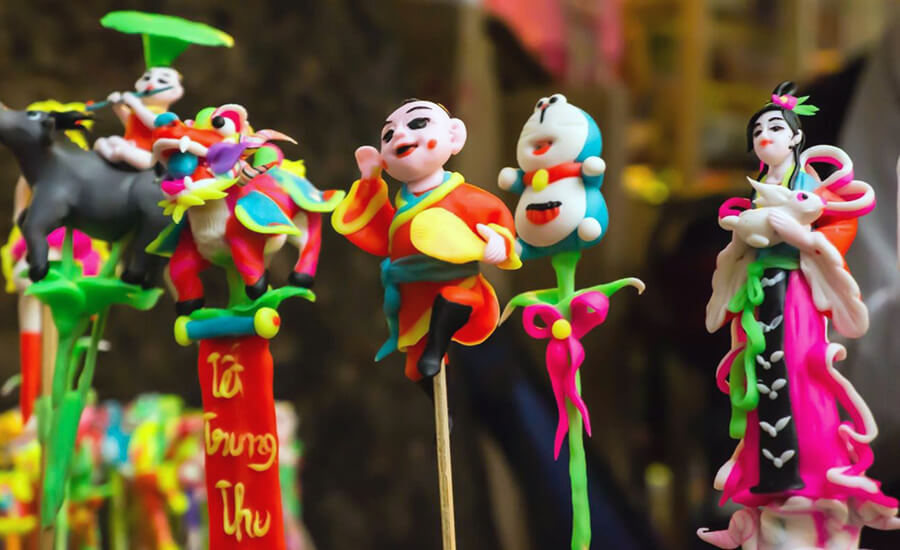
To He (Vietnamese: Tò He) is a product of Thanh Ha pottery village, Hoi An. There are no diverse designs, but this is still a popular souvenir because of its cheap price, about 5,000 VND.
Vietdreamtravel provides daily and package tours, car/bus rental services and entry visa services for foreign visitors who want to come and explore Da Nang City. Do not hesitate to contact us for any support.
Source: collected by An
Comment (0)