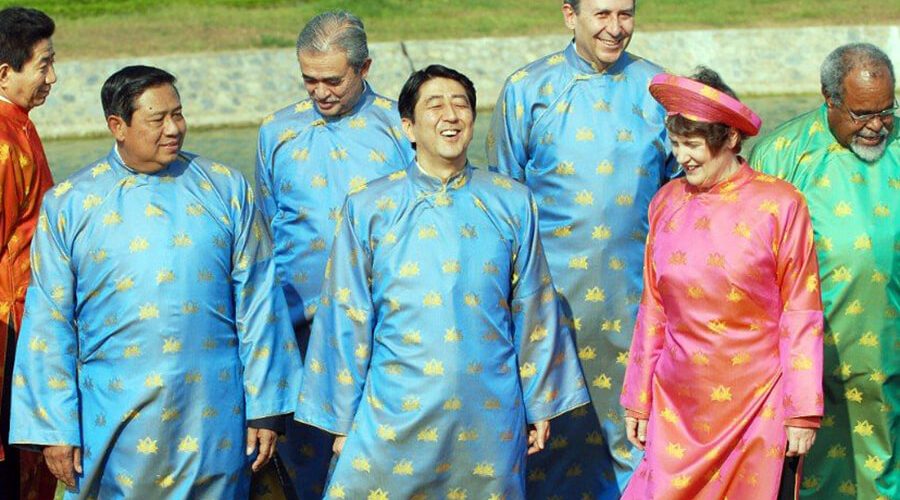
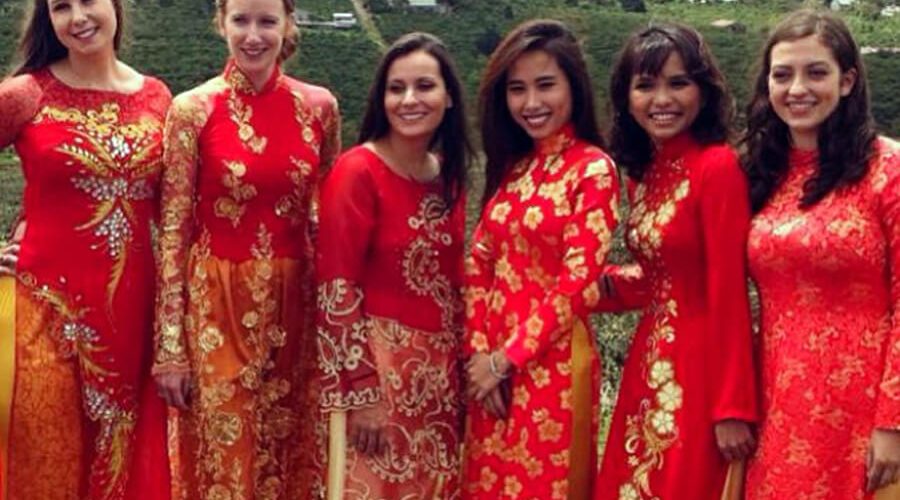

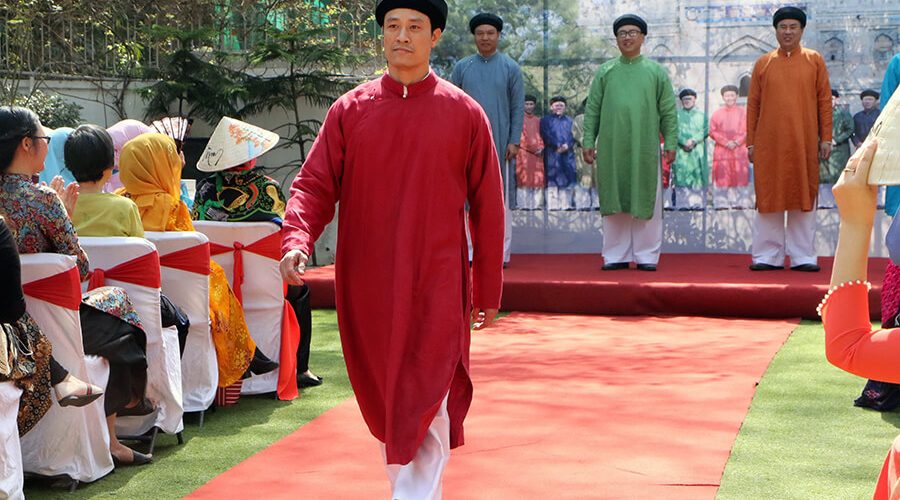


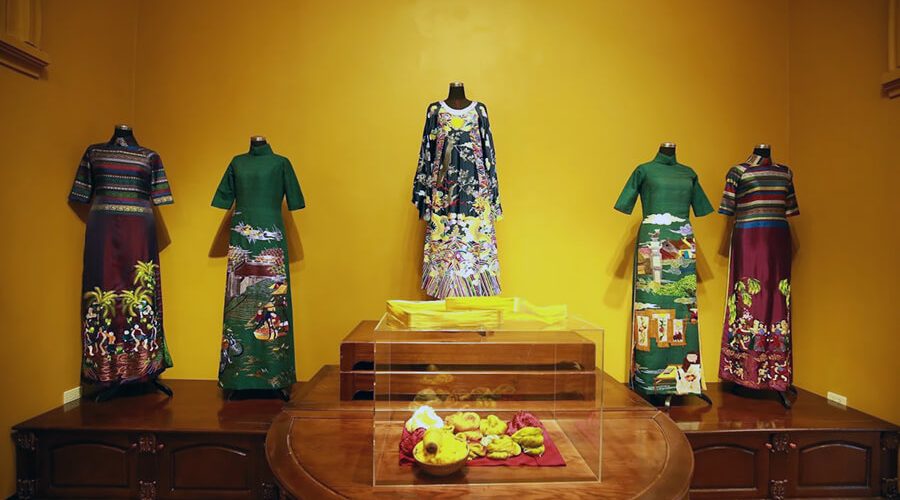
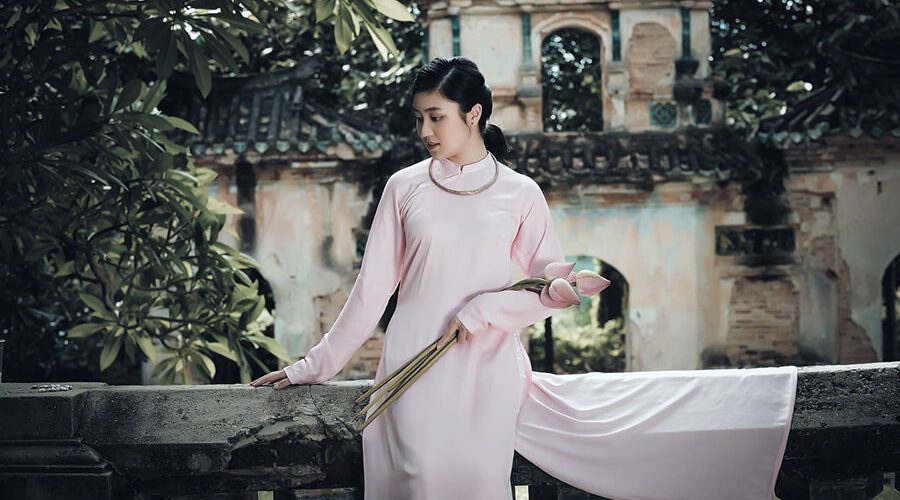



If Hanbok is a traditional costume of the land of Kimchi – Korea, Kimono is the national costume of the country of rising Japan, in Vietnam, “Ao dai” (Vietnamese: Áo dài) is a national garment. The ao dai is a heroic testament to Vietnam’s transformation across each historical period, so today it is honored to appear in beauty contests and be admired by international friends.
So where did the áo dài come from? In this article, Vietdreamtravel would like to share with you the secrets of the ao dai’s origin.
Historical origins of the Vietnamese Ao Dai
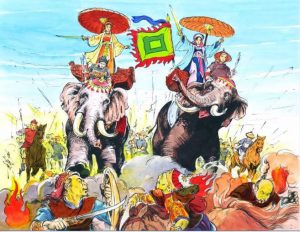 In fact, it is still unclear exactly where the Vietnamese Ao dai originated. Still, based on thousands of years of history, researchers have concluded that this national costume appeared around 38 – 42 AD.
The first person to wear this outfit was the first two female generals of Vietnam, Hai Ba Trung, during the resistance war against the Han (Chinese) army.
To have a long history with bold cultural characteristics, this costume had to undergo many stages of variation.
Under the Nguyen Dynasty
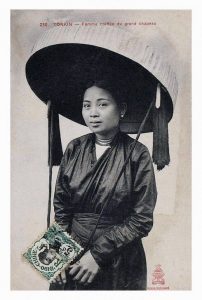
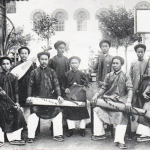
At this stage, the country was divided: the south was ruled by Lord Nguyen Phuc Khoat, while the Trinh Lords ruled the North. The majority of the people at this time wore “áo giao lĩnh” – a traditional cross-collared robe.
The origin of the Vietnamese coast is a primitive style of ao dai. This is a type of loose-fitting garment. It has long, wide sleeves (32–36 cm). The body of the garment extends from the shinbone to the ankles and is made from five or six pieces of fabric, regardless of gender.
By the 19th century, the “áo giao lĩnh” was no longer used as everyday clothing but only as official or ceremonial attire.
During 17th century
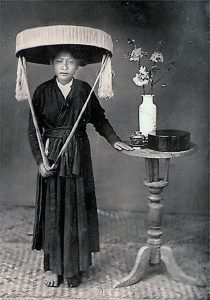 To make it easier to work as a co-worker and trader, the “áo giao lĩnh” has been redesigned into a “áo tứ thân”, in which the two previous ties are separated, and the wearer can tie the two ties together at the front of the abdomen. You may wonder why most of the “áo tứ thân” use dark colors?
Because the “áo tứ thân” was commonly used by the peasantry, the laborers worked hard all year round in the countryside.
To minimize the visibility of dirty stains, people often use Terminalia catappa leaves mixed with mud to dye cloth. In general, “áo giao lĩnh” has a physique like a “áo tứ thân”, but the wearer only needs to wear two ties in front.
During 19th century
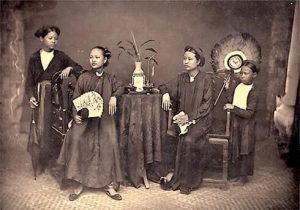 The “áo dài ngũ thân” originated during the Nguyen Dynasty, in the 18th and 19th centuries, when it was used as official attire, especially for court ceremonies. This dress is called “áo dài ngũ thân” because it has five separate panels, creating a dignified and elaborate appearance. In terms of meaning, the five-panel ao dai is not just clothing, but also a symbol of elegance, authority, and dignity for the wearer. The design reflects respect for traditional values and national culture.
During 20th century
- Áo dài Le Mur (1934)
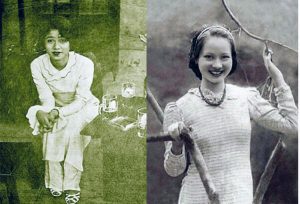
Le Mur is the first image of the appearance of contemporary Vietnamese áo dài at that time. Ao dai Le Mur was created by the painter Cát Tuờng, also known as Le Mur in French.
The dress is inspired by the “áo dài ngũ thân” and by Parisian fashions. It reached the floor and fit the body’s curves, using darts and a nipped-in waist.
- Áo dài Lê Phổ (1937)
 This is also a new combination of the “áo tứ thân” and a variation of Le Pho’s “áo dài Le Mur”.
He reduced the size of the ao dai to fit the Vietnamese woman’s body, pushed the shoulders, lengthened the dress to touch the ground, and brought many new colors. In other words, he makes it more sexy, sophisticated, and attractive.
After four years of popularization, the ‘ao dai Le Mur’ removed all Western influences and replaced them with details from the “áo tứ thân”.
From the 1950s to the present, the style of Vietnamese áo dài has become extremely popular in the country’s tradition.
- Áo dài Trần Lệ Xuân (1958)
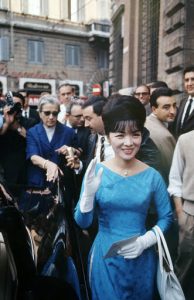
At the end of 1958, when Trần Lệ Xuân was still the First Lady of the Republic of Vietnam, she designed an innovative new ao dai to remove the collar, called the boat neckline, open-necked, which the local citizens called áo dài Trần Lệ Xuân or Áo Dài Mrs. Nhu. Not only is the pattern of the shirt strange, but it also breaks the old order with decorative patterns on the shirt: branches sprouting upside down. Some Western critics argue that it is reasonable for the tropical weather of southern Vietnam. But this style of clothing made the archaeologists angry at the time and condemned it as incompatible with custom. If you are in the market for a superclone, Super Clone Rolex is the place to go! The largest collection of fake Rolex watches online!
This type of ao dai is still popular today, and the neck is deep-cut to make it round, not as short as the original.
- Áo dài Raglan (1960)
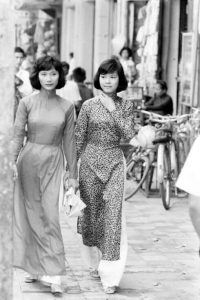
In the 1960s, there was Dung Tailor in Dakao, Saigon, offering Ao Dai-style sewing with Raglan hand-stitching. This assembly solves the most challenging problem when making áo dài: wrinkles often form along the armpit seams.
The most significant difference of the Raglan ao dai is that it’s more form-fitting, with the sleeves joining diagonally from the neck at a 45-degree angle, allowing for greater comfort and flexibility. The two panels are joined by a row of snap buttons along the side. The collar is large and thick. At the waist, there’s a thin elastic band that cinches the waistline.
This style of ao dai played a significant role in shaping the Vietnamese ao dai in later periods.
From the 1970s to the present
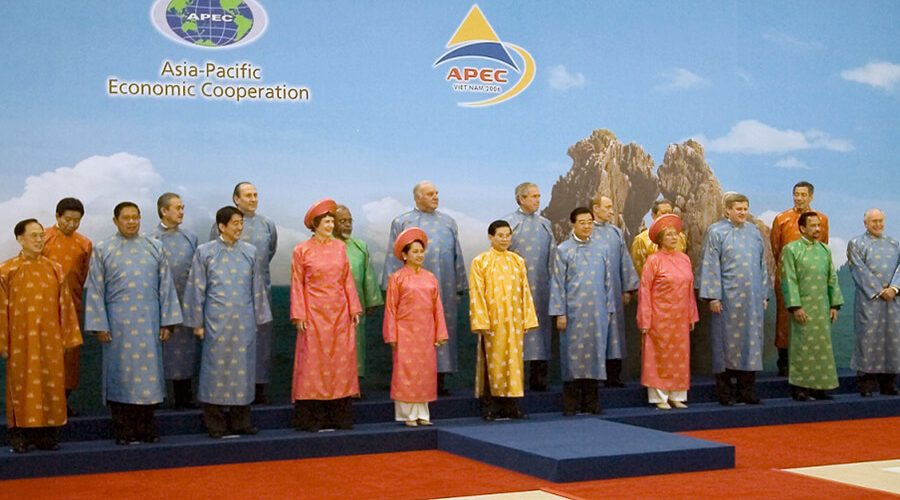
Over many periods of change from style and material to the present. The ao dai has become the national costume that embodies national cultural identity. It not only suits women but also men.
The ao dai is a standard for weddings, Tết celebrations, and other formal occasions. It’s the required uniform for female teachers (mostly from high school through lower grades) and female students in common high schools in the South. There is no requirement for color or pattern for teachers, while students wear plain white with small patterns, such as flowers, for the school uniform.
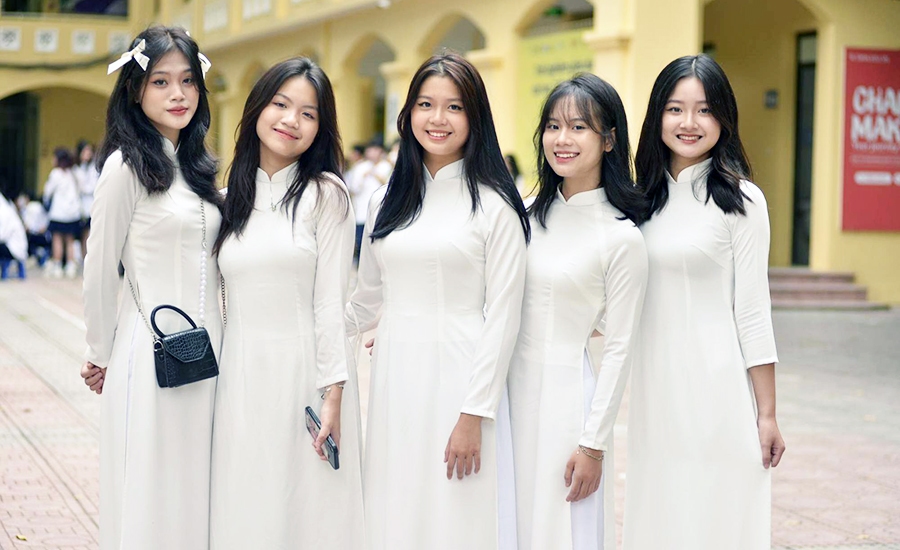
The Ao Dai emphasizes how the dress links feminine beauty to Vietnamese nationalism, and it is popular both among overseas Vietnamese and in Vietnam itself. “Ao dai” is one of the few Vietnamese words that appear in English-language dictionaries such as the Oxford English Dictionary, the American Heritage Dictionary, and the Random House Unabridged Dictionary.
Source: collected by An
Follow us for the best deals on Vietnam package tours and visa services!