
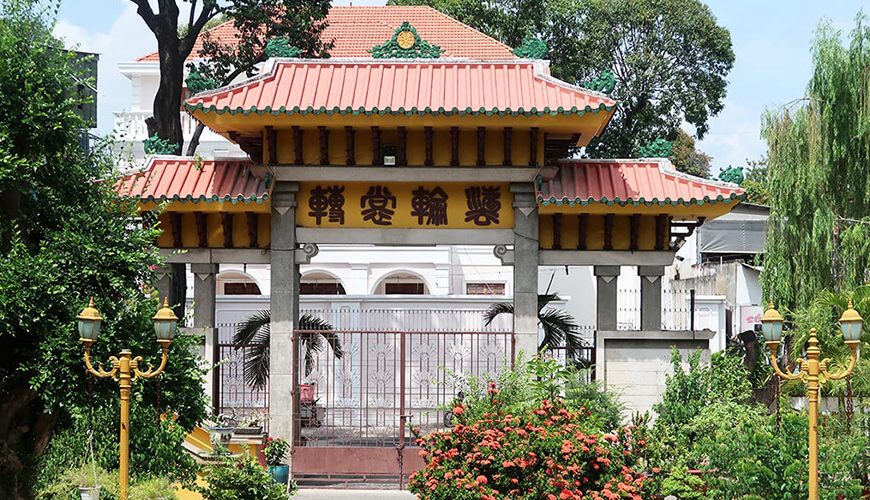
Xa Loi Pagoda (Vietnamese: chùa Xá Lợi; chùa means pagoda) is one of the most famous pagodas in Ho Chi Minh City. The name Xá Lợi is the Vietnamese translation of Śarīra, a generic term referring to Buddhist relics. The pagoda is known not only for its typical architecture but also as a symbol of the Buddhist struggle against the dictatorship of Ngô Đình Diệm, which was marked by discrimination and religious persecution. Furthermore, this place marked a historical milestone in the unification of Buddhism in Vietnam.
Overview of Xa Loi Pagoda
Construction of the pagoda began on August 5, 1956, during the First Republic of Vietnam. It was built according to the drawings of architects Trần Văn Đường and Đỗ Bá Vinh. The construction site was controlled by engineers Dư Ngọc Ánh and Hồ Tố Thuận. It was completed on May 2, 1958.
The pagoda was built to worship Gautama Buddha’s Śarīra (Vietnamese: Xá Lợi Đức Phật). Therefore, it was initially called the Xá Lợi Đức Phật Pagoda. However, the local people used to call the pagoda Xá Lợi for short, so when it was inaugurated, the monk Khánh Anh named it Xá Lợi to match people’s hearts.
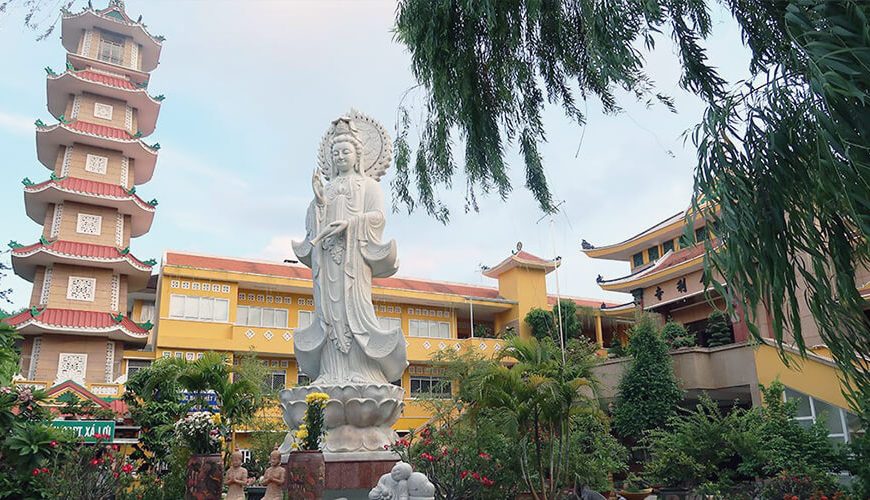
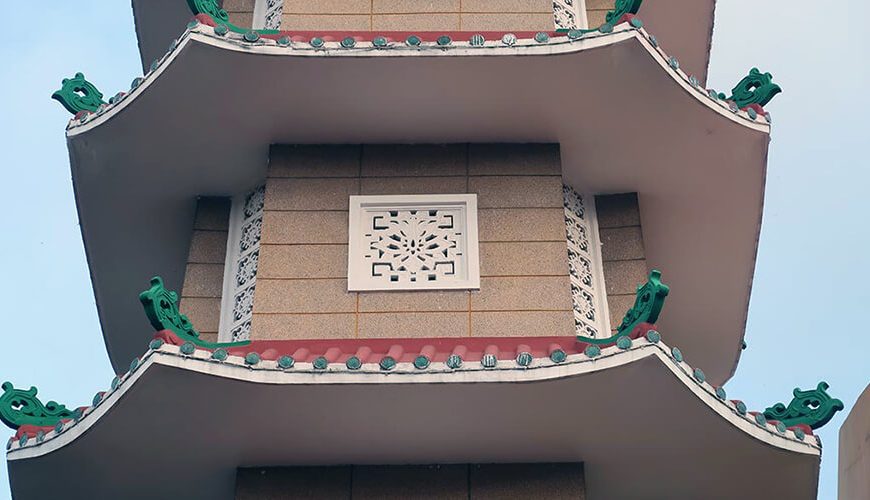
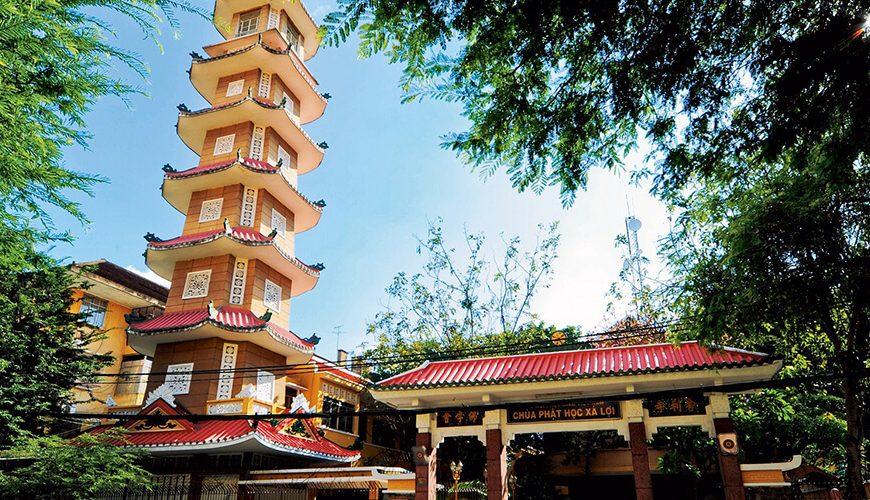
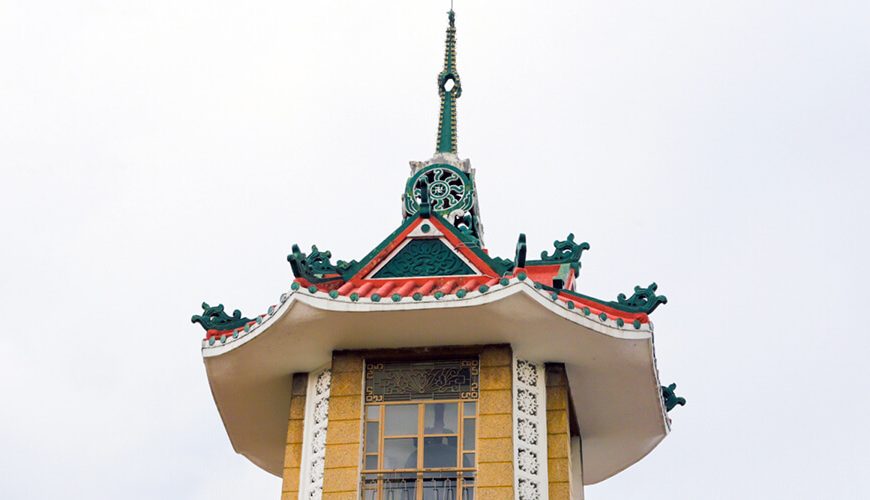
In 1961, the tower stood 32 m, had seven stories, and was built. Inside the tower is a giant bell that weighs up to 2 tons. The bell has a diameter of 1.2m, and is 1.6m high. This is the tallest bell tower in the Vietnamese pagoda.
From 1951 to 1981, Xá Lợi pagoda was the headquarters of the South Vietnamese Buddhist Association. In 1964-1966, the pagoda served as a teaching area at Vạn Hanh University. From 1981 to May 1993, the pagoda served as the headquarters of the Vietnamese Buddhist Association (second office).
Protests and raids in 1963
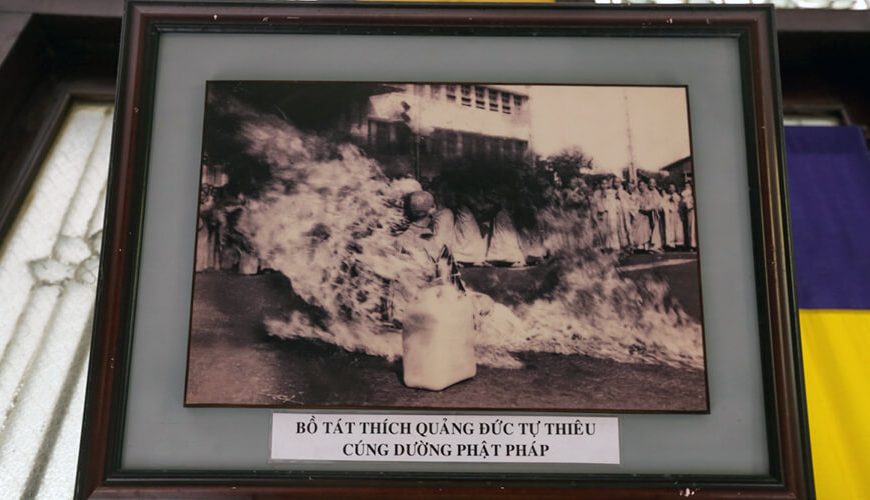
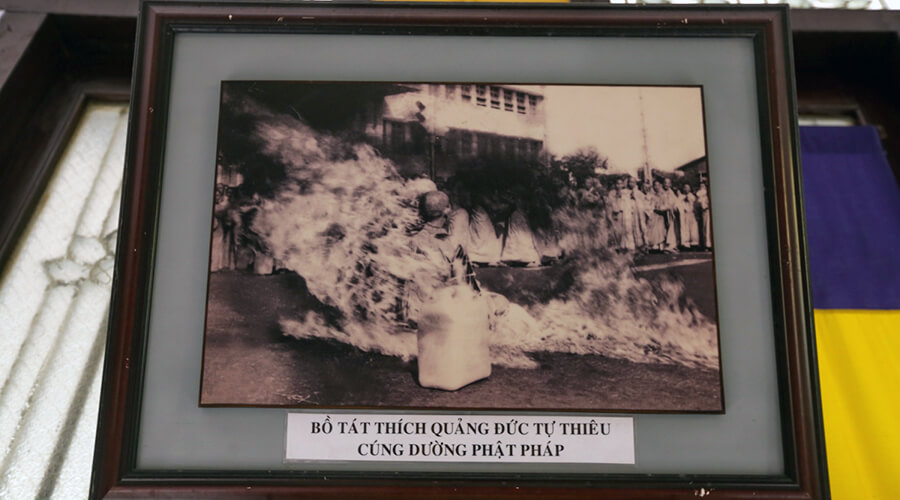
During the Buddhist crisis of 1963, when monks and their followers campaigned against the tyranny of President Ngô Đình Nhiệm’s regime. On June 11, 1963, monk Thích Quảng Đức traveled from Xá Lợi Pagoda and self-immolated in protest against the policies of the regime. The image of the burning monk was broadcast worldwide and created a dilemma for the government.
Because it is the epicenter of the struggle in Saigon, around 00:20 on 21 August 1963, the Special Forces were armed with pistols, submachine guns, carbines, shotguns, grenades, and tear gas, and conducted a massive assault into the pagoda. The commander announced military control over Saigon and instituted press censorship. Across the country, hundreds of monks were estimated to have been killed, and more than one thousand were incarcerated.
However, the attacks had led to the war, which led to the deaths of President Diệm and his brother Ngô Đình Nhu on November 2, 1963.
Architecture of the pagoda
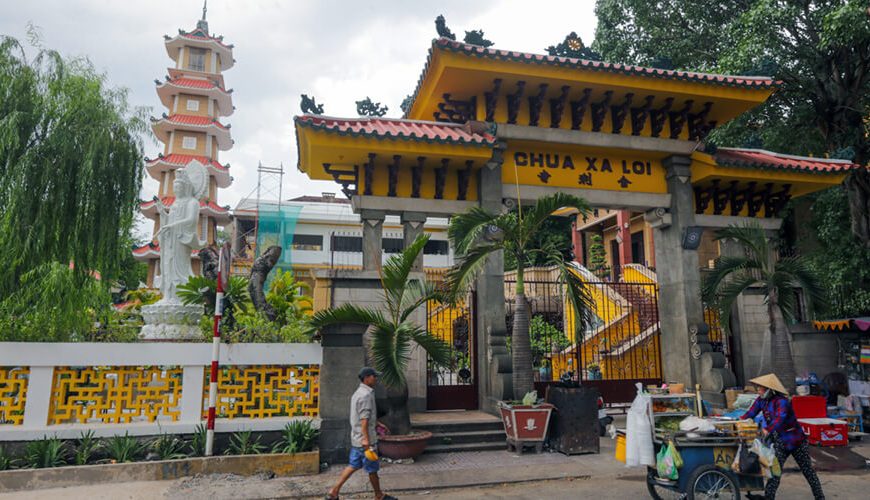
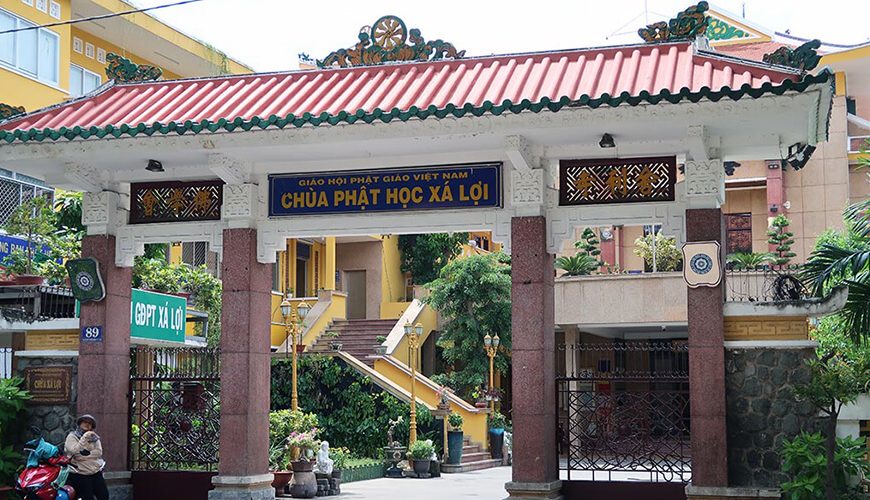
Xa Loi is the first pagoda in the city, built in a modern style, yet retaining many characteristics of ancient architecture. The pagoda has two gates. The main gate is on Bà Huyện Thanh Quan Street, and another one faces Sư Thiện Chiếu Street. The two gates of the pagoda are built in the Vietnamese traditional style: three-arched entrances with red tiles. On top of each gate is a dharma wheel.
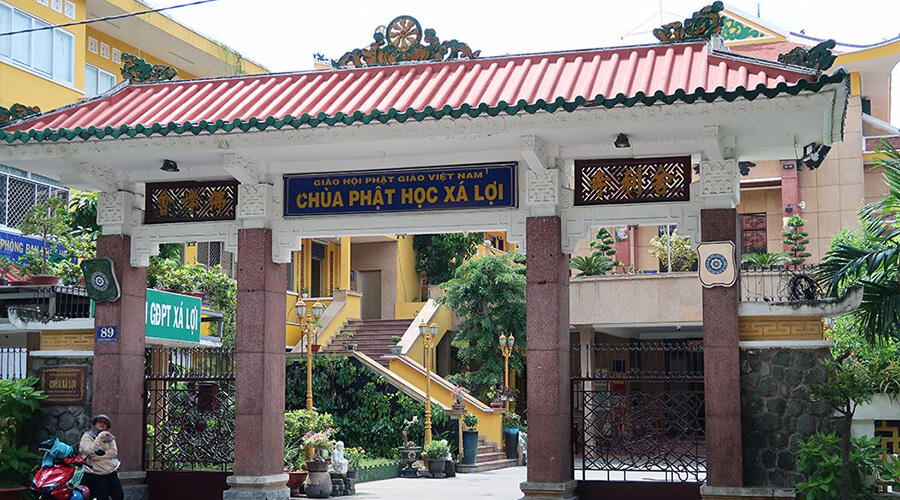
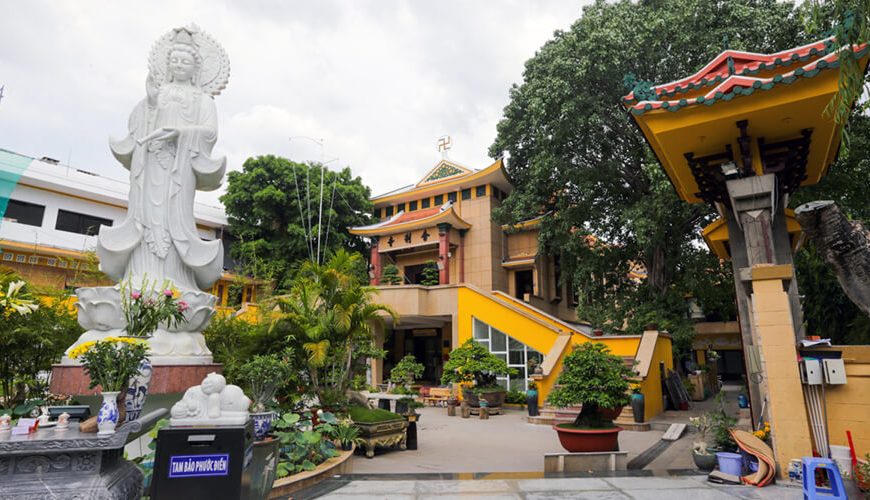
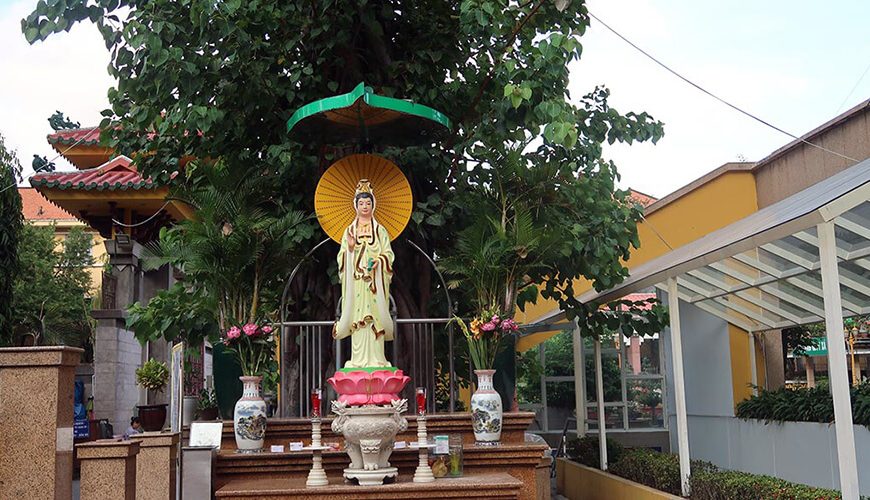
Beyond the main gate, there is a large yard with many green trees, bonsai, plants, and flowers. A 6-meter-high statue of Guanyin, carved from a single block of stone and standing on a lotus flower, is located at the corner.
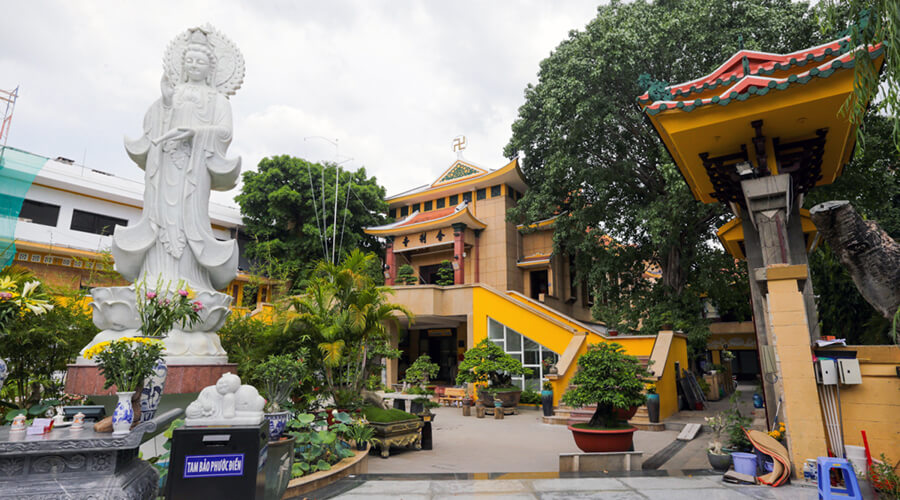
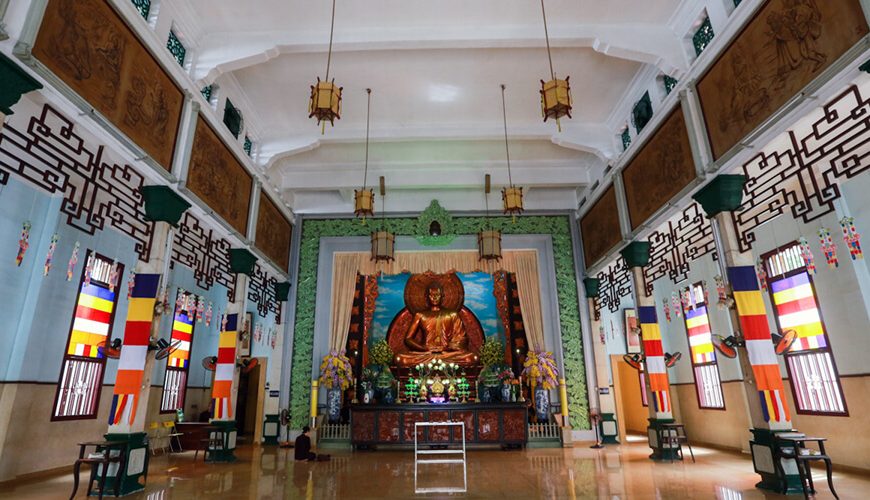
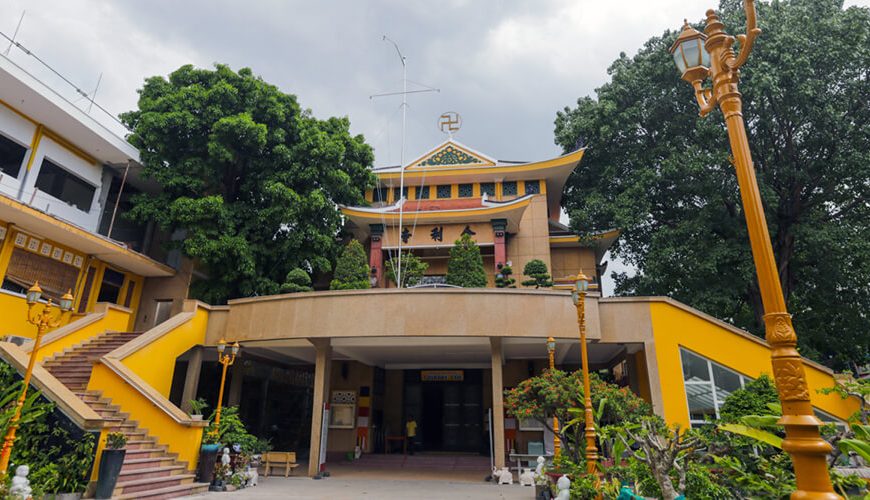
The pagoda also includes a main hall for worshiping the Buddha, a lecture hall, a bell tower, a library, a monks’ room, an office, a dining hall, a book-publishing room, and a Ksitigarbha hall…However, the most attractive one is the main hall. It was built in a modern architectural style, with a cube-like shape and two floors. The first floor is the lecture hall, and the second floor is the main hall. Two charming and wide zigzag staircases lead to the main hall.
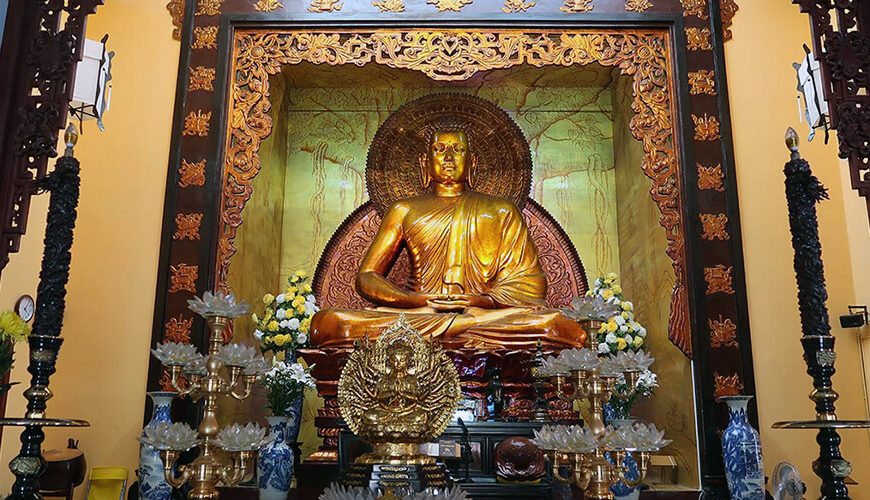
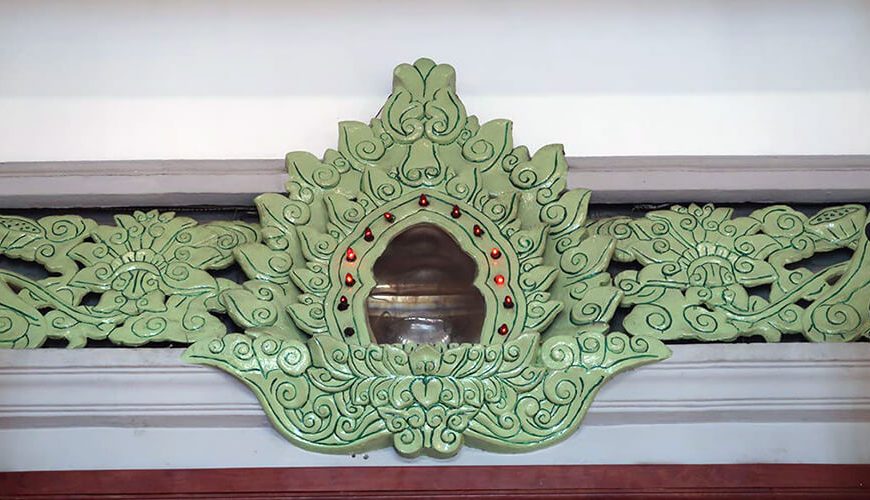
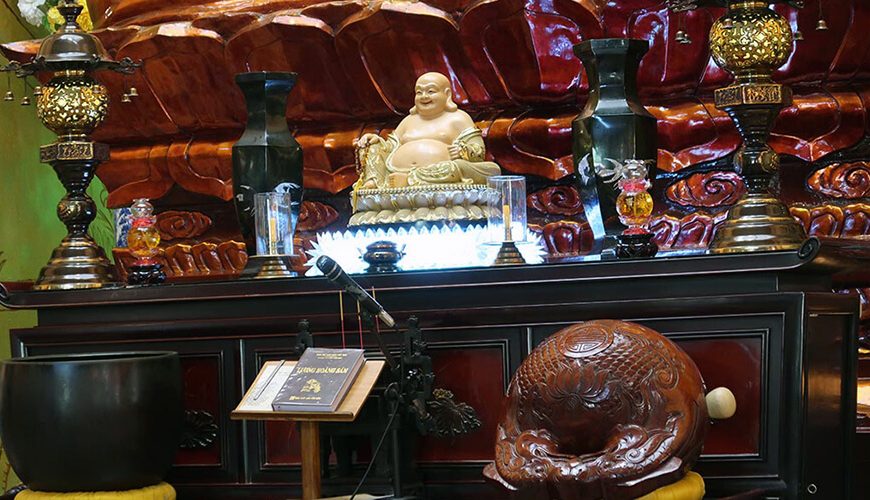
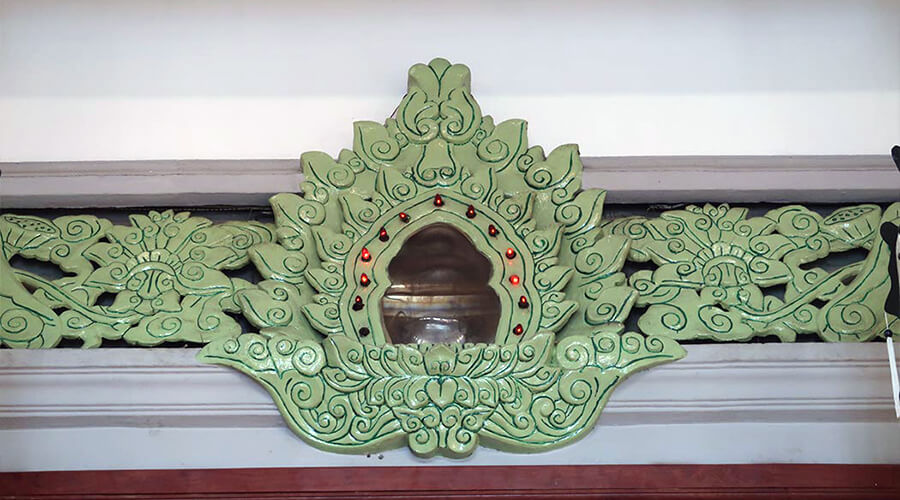
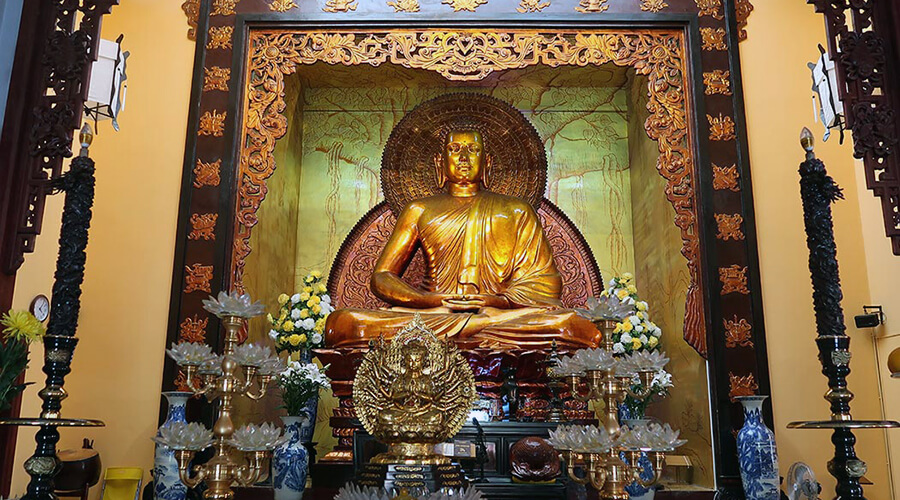
There is a large gold-covered Buddha statue in the main hall. In front of the statue are small statues of Guanyin and Maitreya. Above the Buddha statue is a green, bodhi-leaf-shaped stupa that preserves the Śarīra.
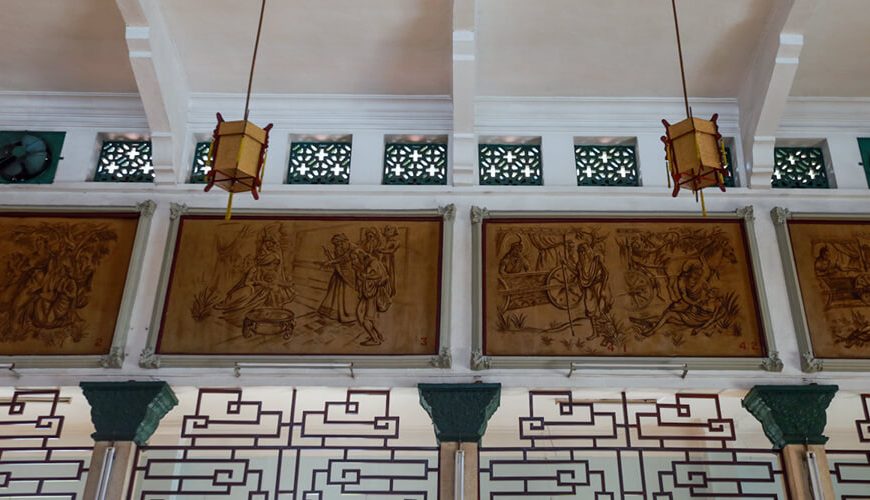
There is also a large set of 14 paintings by Professor Nguyễn Văn Long depicting the life of Gautama Buddha, from his birth as Prince Siddhartha to his attainment of nirvana.
Useful information about Xa Loi Pagoda
Location: 89 Bà Huyện Thanh Quan Street, Xuan Hoa Ward, Ho Chi Minh City.
Opening hours of the Main Hall: Morning: 7:00 – 11:00 | Afternoon: 14:00 – 17:00 | Evening: 18:00 – 19:00 | On special occasions: 7:00 – 21:00.
Rules and regulations: Please remove your shoes and place them on the shelf before entering the Main Hall.
Source: collected by An
Follow us for the best deals on Vietnam package tours and visa services!

Comment (0)