
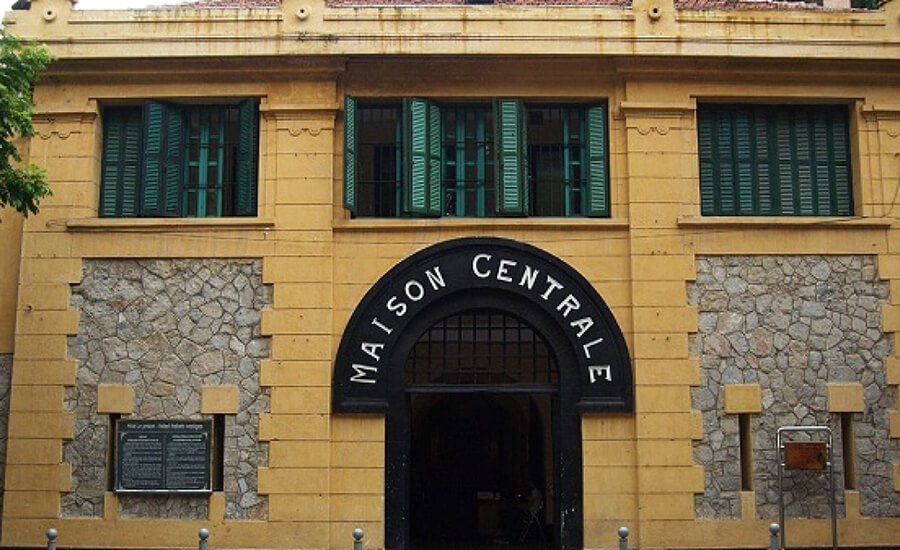
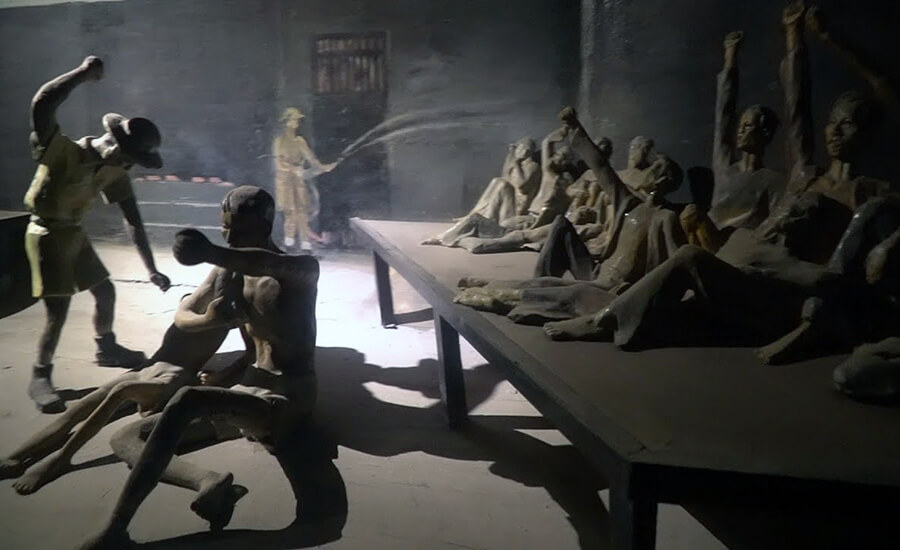
Hoa Lo Prison is considered a “hell on earth” in the heart of Hanoi for prisoners. Here, communists are depicted as shackled and brutally beaten in solitary confinement cells or beheading cells.
Hoa Lo Prison has a total area of over 12,000 m² and was built by the French colonialists in 1896 on the old land of Phu Khanh village, Vinh Xuong commune, Tho Xuong district (now Hoa Lo street, Cua Nam Ward). This is considered the largest prison in Indochina at that time.
At that time, the French name for this prison was Maison Centrale, meaning “Central Prison” or “Hanoi Prison”. This place used to be the place to detain many great Vietnamese revolutionaries during the Indochina War and American pilots during the Vietnam War.
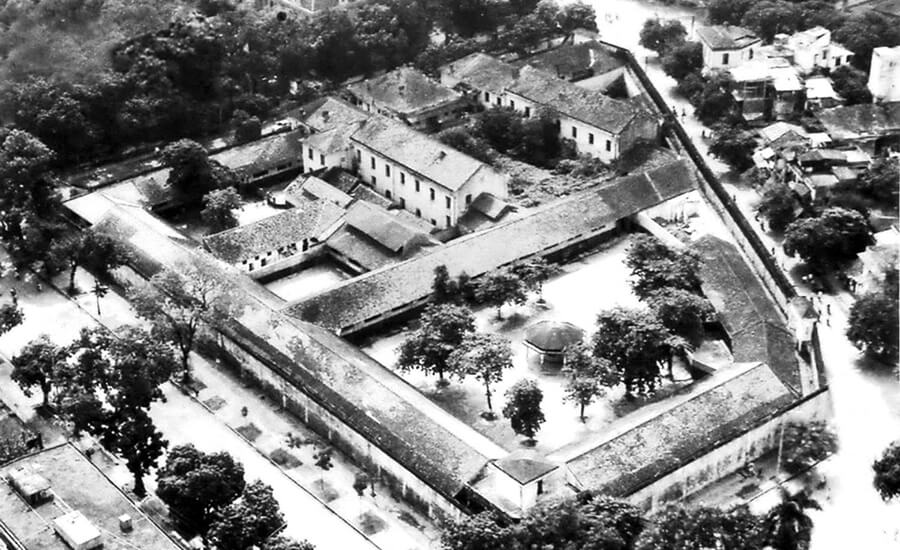
The French colonialists paid special attention to the construction and selection of materials for the prison. The iron door and lock system was imported from France and strictly inspected before construction.
The design of the prison allowed Hoa Lo to regularly hold about 500 prisoners with extremely harsh and brutal detention and torture regimes.
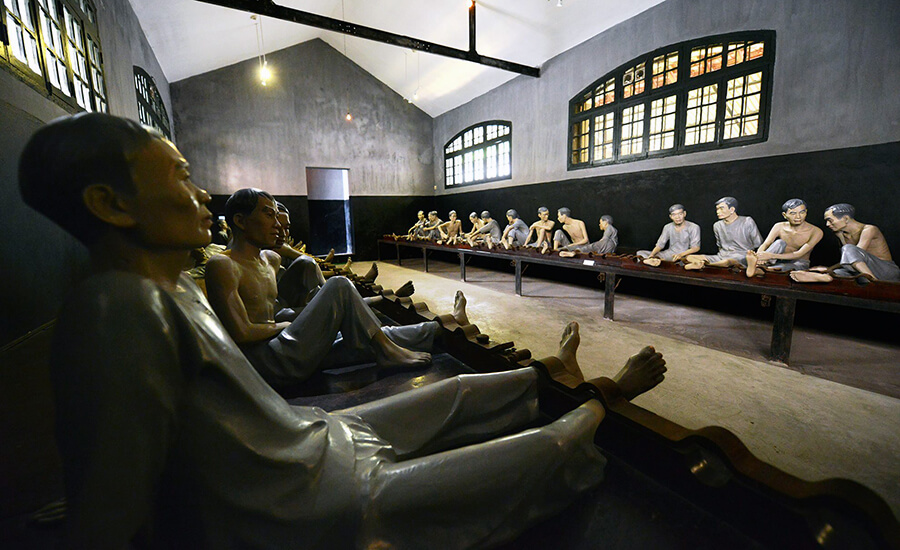
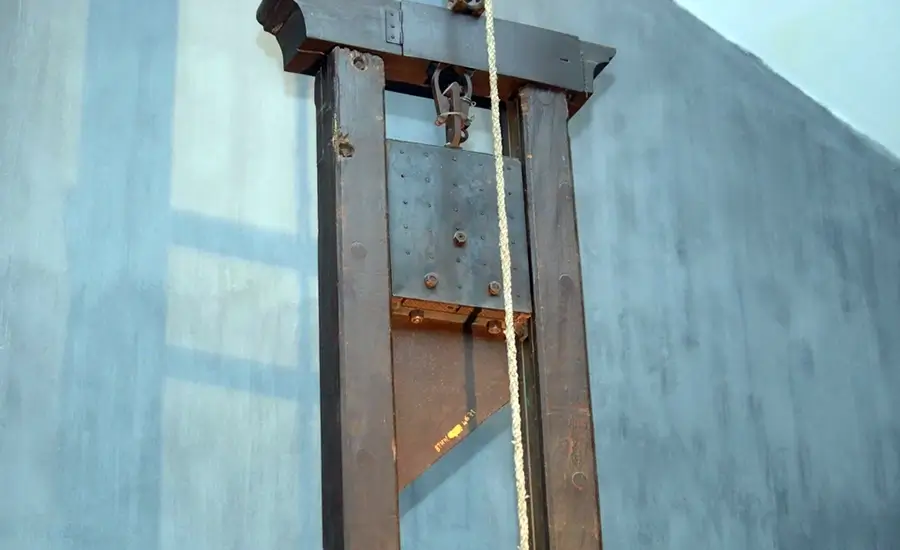
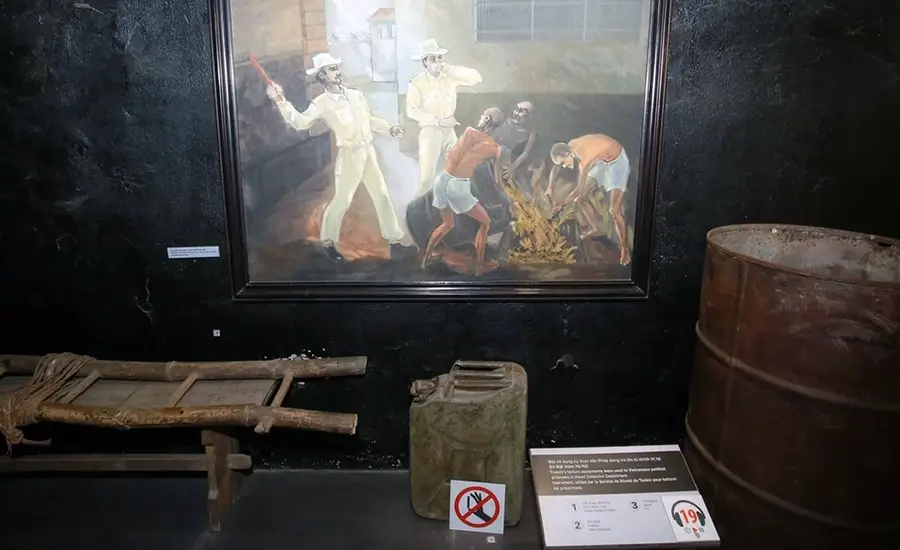
There are still mannequins simulating communist soldiers imprisoned and shackled by the French colonialists. A series of weapons were used to torture Vietnamese revolutionaries, the most barbaric of which was the giant guillotine from the Middle Ages.
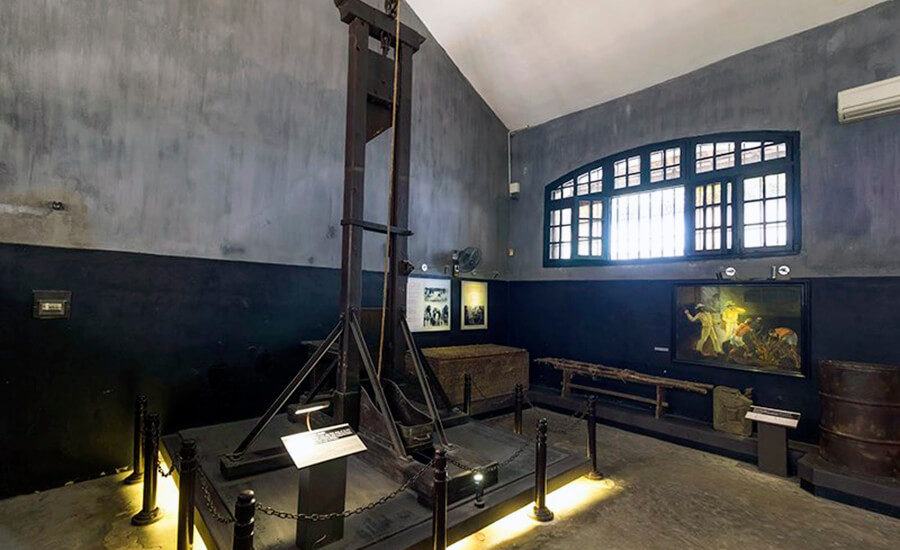
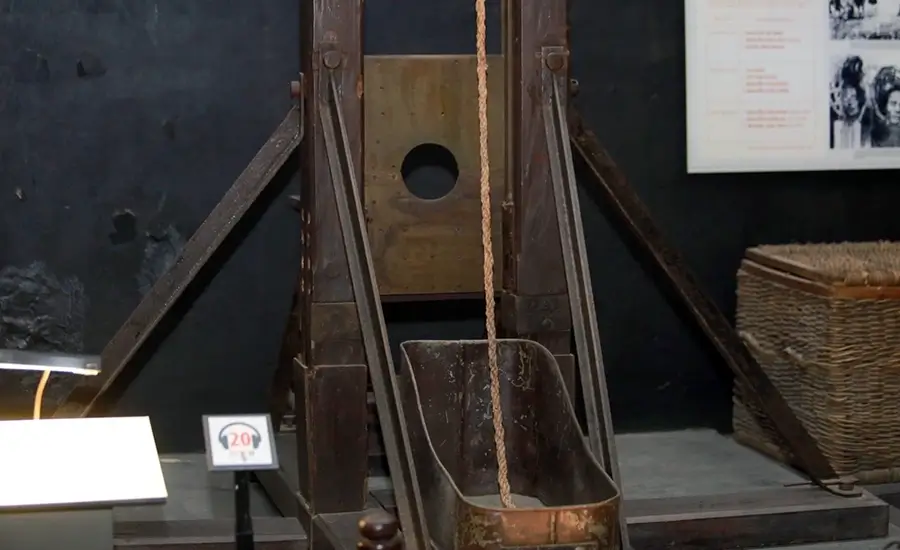
The medieval guillotine, designed around two 4m-high wooden pillars, with the blade held high by a pin. Below is another crossbar and a narrow shelf for the condemned to put his head on.
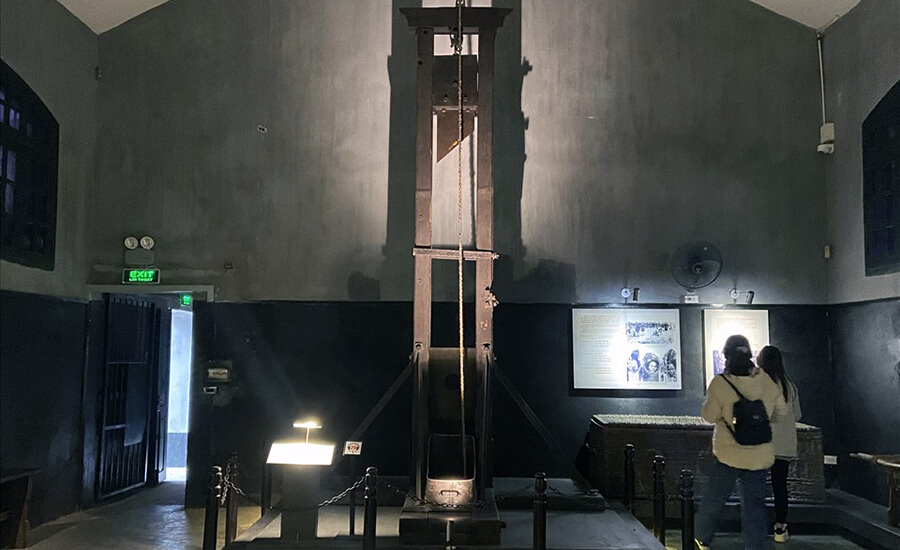
Below is an iron box to hold the prisoner’s head; next to it is a woven rattan box to hold the body.
Hoa Lo Prison is also known as one of the 10 most notorious prisons in the world or the top 5 most horrifying places in Southeast Asia.
The death row cell area consists of death row cells holding prisoners sentenced to death, awaiting execution. Cachot (dark dungeon) is used to detain prisoners punished for violating prison rules or having opposing behavior (organizing struggles, organizing prison breaks, propagating revolution). Cachot is the “hell of hell,” with its narrow cells and darkness.
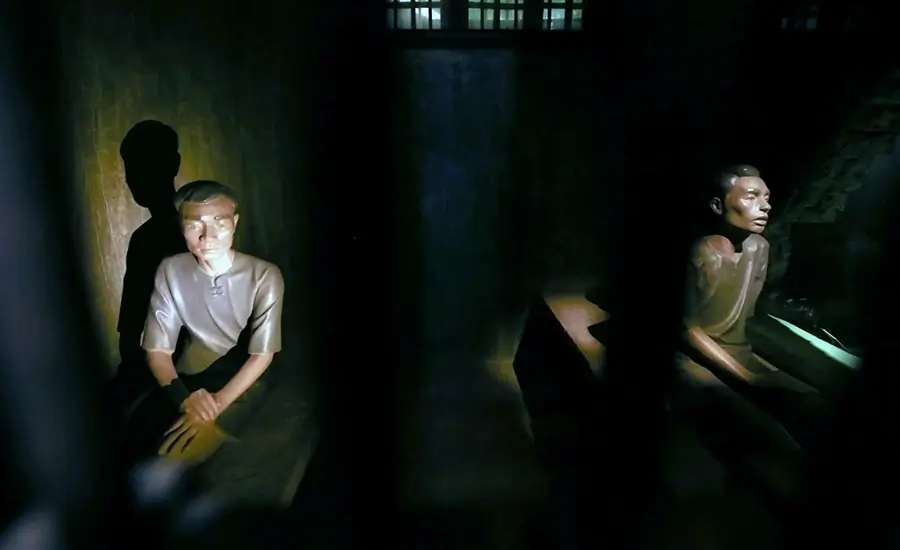
Here, prisoners are locked in isolation, shackled at night, forced to eat, sleep, and use the toilet on the spot. The prison floor is tilted so that prisoners cannot lie down. Prisoners imprisoned after a short time suffered from edema, blurred vision, and scabies all over their bodies due to a lack of hygiene, light, and oxygen.
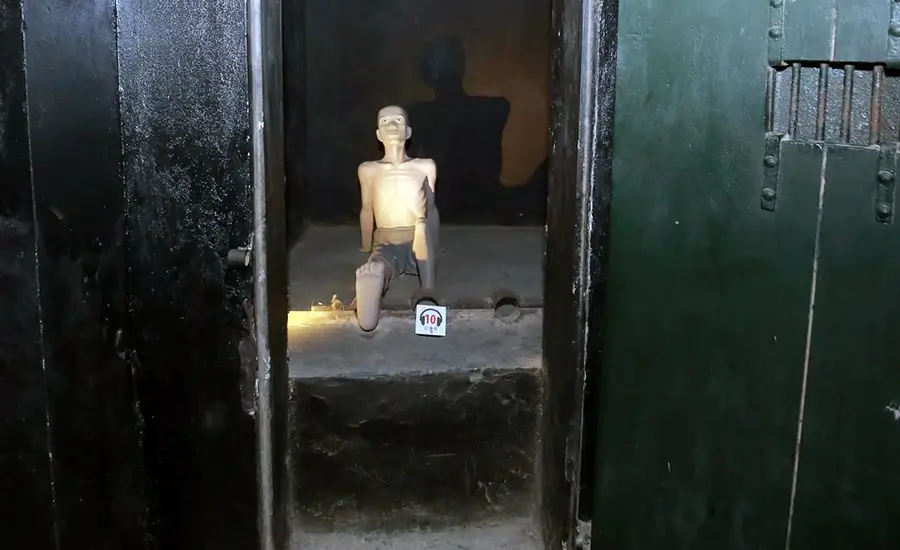
Hoa Lo is also considered a “hell on earth” in the heart of Hanoi for prisoners. Here, communists were portrayed as shackled and brutally beaten in solitary confinement cells or death row cells.
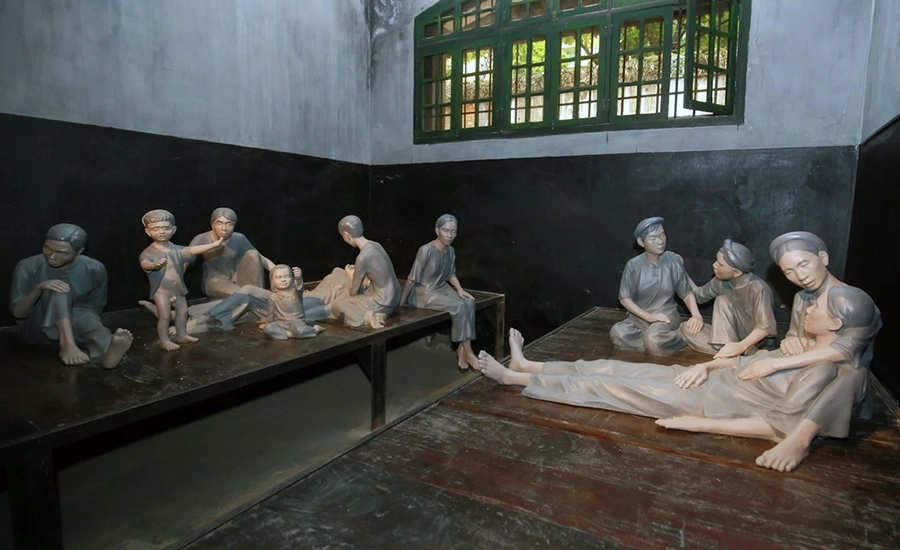
The cells for female prisoners were more lenient with the French colonialists, as prisoners were not shackled, so they could take care of their children. For female prisoners, the French colonialists also had other torture methods, but they were also extremely cruel and brutal, using electric shocks with electric cameras.
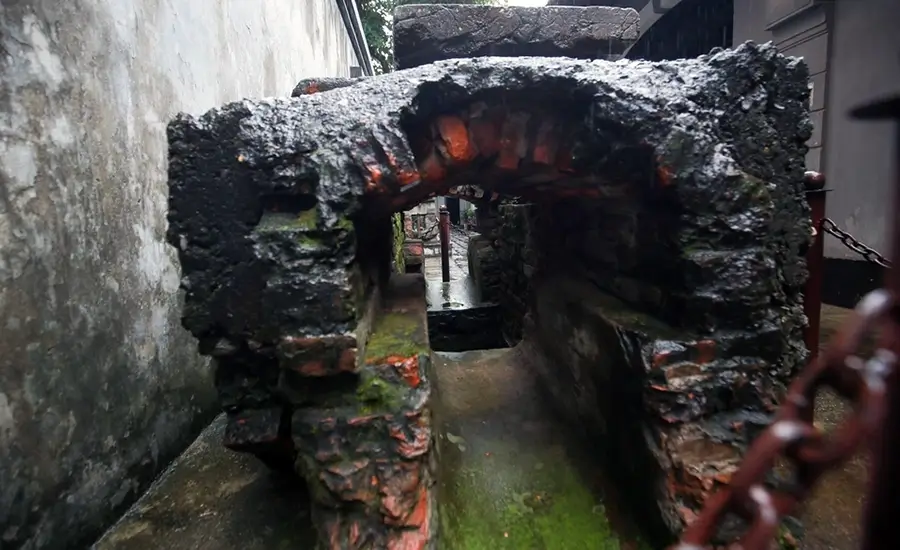
There were many successful escapes of political prisoners when they sawed through the iron bars of the underground sewers under the death row prison yard to get out.
Hoa Lo Prison was recognized as a historical relic in 1997. The entire area of only 2,434m² is now preserved as a relic site, serving as a tourist destination for those who want to witness the site of the colonial prison.
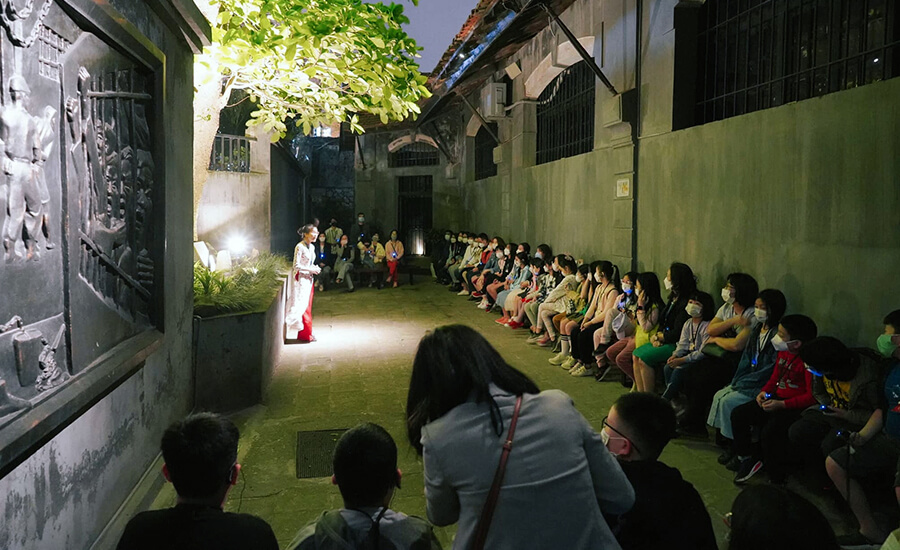
Outside the prison, there are pictures on display in the “Finding Memories” program for visitors. Every day, Hoa Lo Prison welcomes hundreds of visitors.
Source: collected by An
Follow us for the best deals on Vietnam package tours and visa services!

Comment (0)