
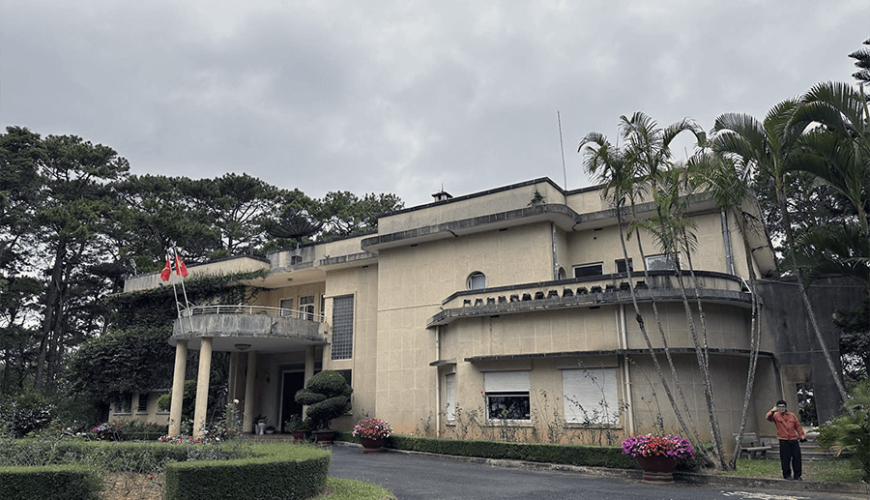
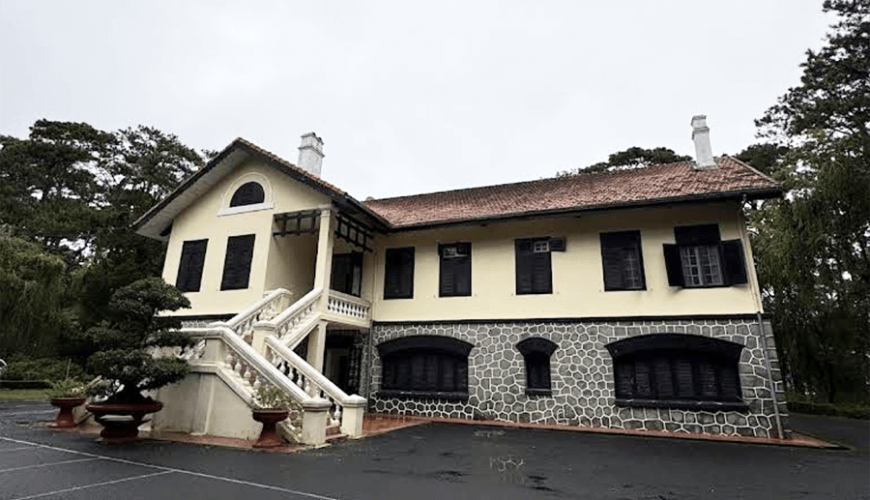
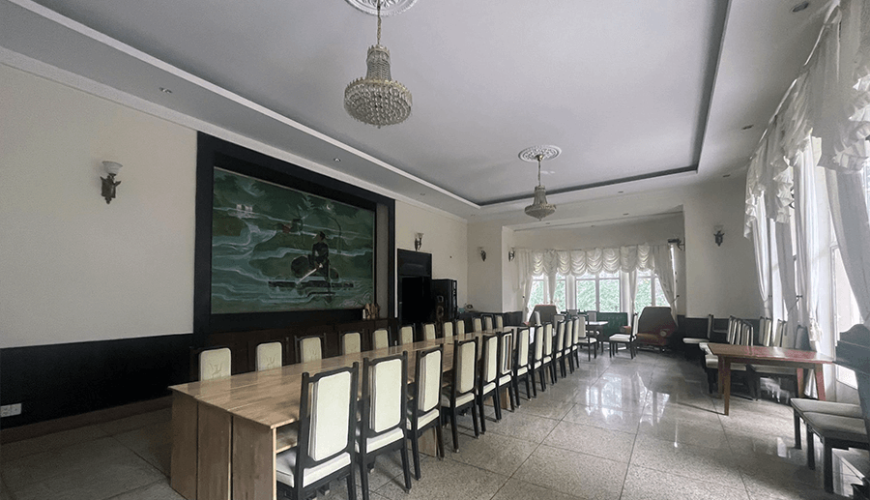
Nestled amidst lush green pine hills, Bao Dai Palace II stands out as an architectural gem bearing the indelible mark of time. The building attracts visitors with its elegant and refined beauty, a wonderful blend of classic French architecture and modern touches.
Overview of Bao Dai Palace II
Bao Dai Palace II, also known as the Governor-General Palace or Palace II, is an important architectural work that began construction in 1933 and was completed in 1937. It served as the summer residence of Governor-General Jean Decoux, the head of the French Indochina government from 1940 to 1945. The palace served as Governor-General Decoux’s residence and workplace during the summer months, usually from May to October.
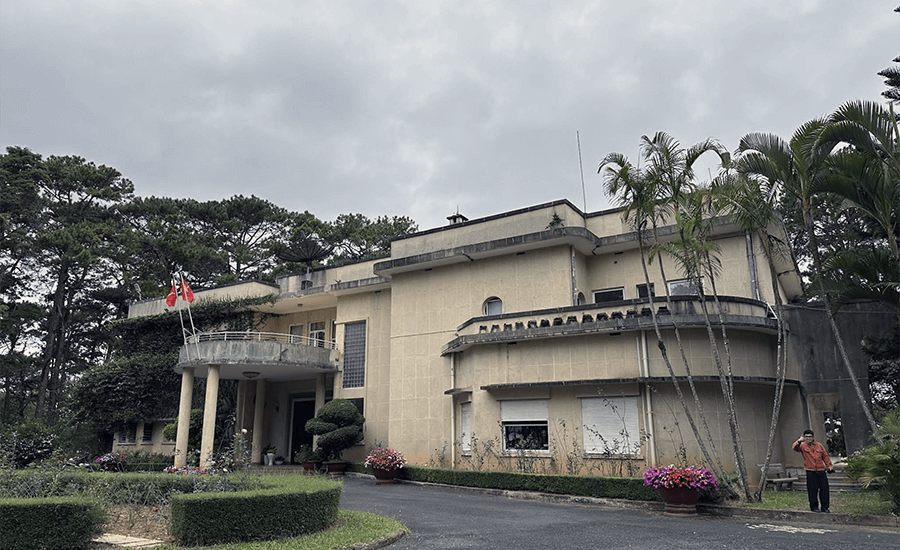
The building was designed by the talented architects A.T. Kruzé, D. Veyssere, and A. Léonard, while the interior decoration was entrusted to P. Foinet. The collaboration of these prominent figures resulted in a palace with a distinctly European architectural style, serving the leisure and work needs of high-ranking officials in the peaceful, cool climate of Da Lat.
To ensure the absolute safety of himself and his family, Governor-General Jean Decoux had secret, sturdy tunnels built. During the presidency of the Republic of Vietnam, Ngo Dinh Diem, Palace II served as a summer retreat for Ngo Dinh Nhu and his wife, Tran Le Xuan.
After the events of April 30, 1975, Palace II, like many other government and private residences, was taken over by the state. It became a central government guesthouse and underwent various periods of use. Currently, Palace II in Da Lat is used as a guesthouse for the People’s Committee of Lam Dong Province. Although its original interior is no longer intact, the overall architecture and the historical stories associated with it are still preserved, giving visitors and the public the opportunity to learn about a part of Da Lat’s turbulent past, in particular, and Vietnam’s in general.
Opening hours and entrance fees
- Address: 12 Tran Hung Dao Street, Xuan Huong-Da Lat Ward, Lam Dong Province.
- Opening hours: 7:30 AM – 5:00 PM daily.
- Entrance fee: 30,000 VND / person
Architectural features of Bao Dai Palace II
If history gives depth to Palace II, then architecture is the soul that gives this building its timeless beauty. Bao Dai Palace II is not just an ordinary mansion but also a vivid testament to the harmonious fusion of function and aesthetics, clearly reflecting the characteristic architectural style of mid-20th-century Da Lat.
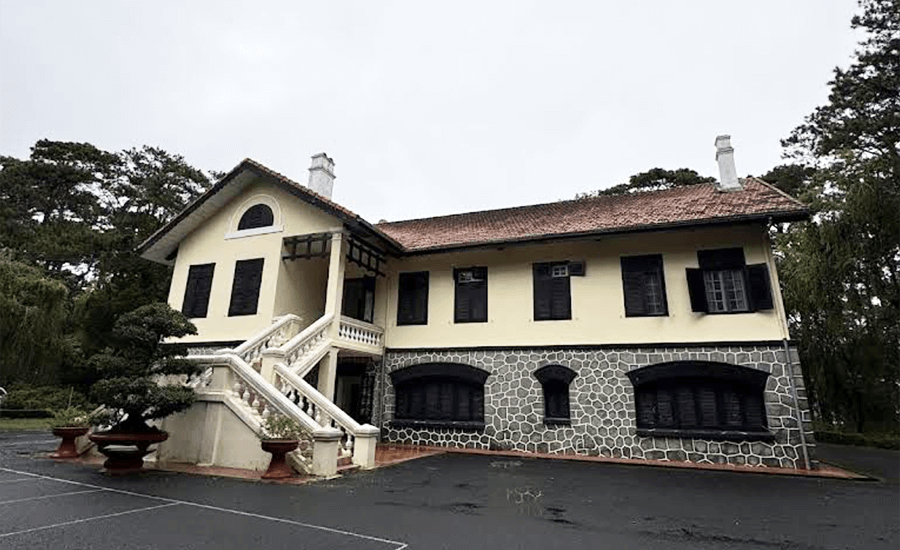
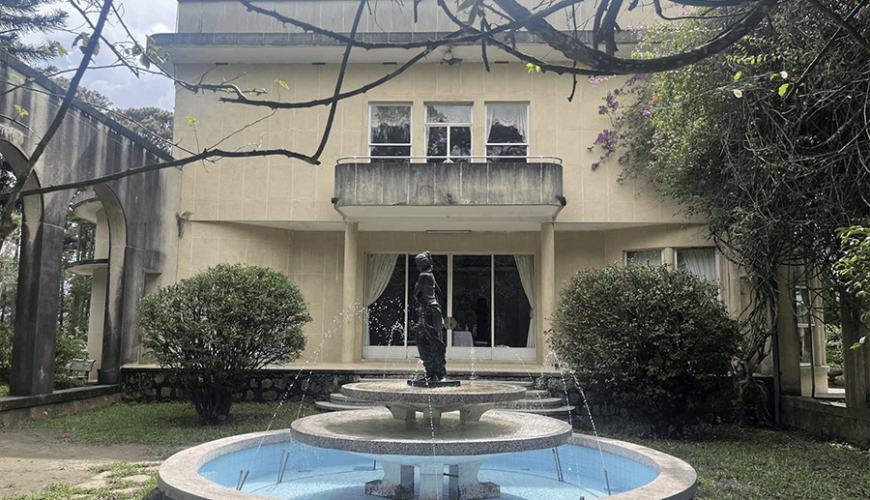
The Palace II is a building strongly influenced by the architectural reform movement in Europe during the 1920s and 1930s, initiated by pioneering architects such as Le Corbusier and Gropius. The architectural style primarily focuses on geometric forms rather than elaborate details. The dynamic floor plan, with its protruding and recessed sections, creates large, modern, and unique forms.
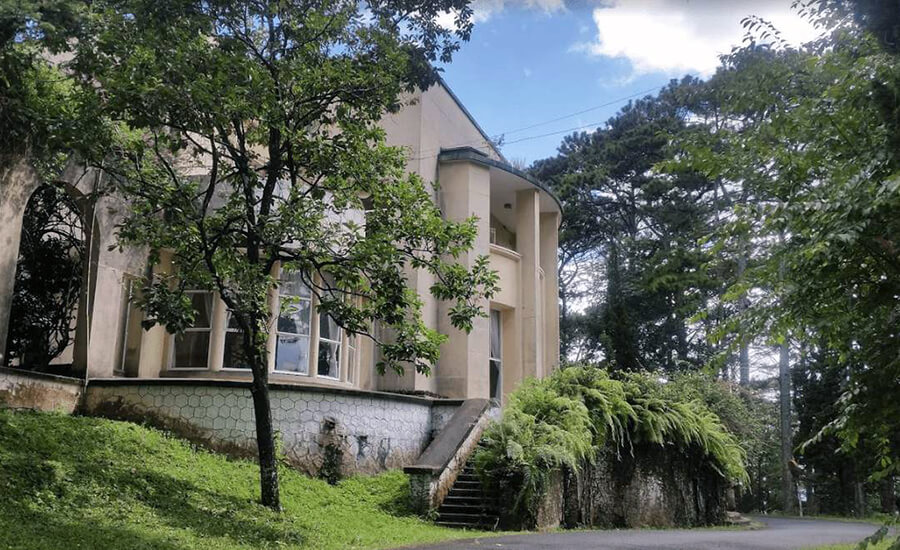
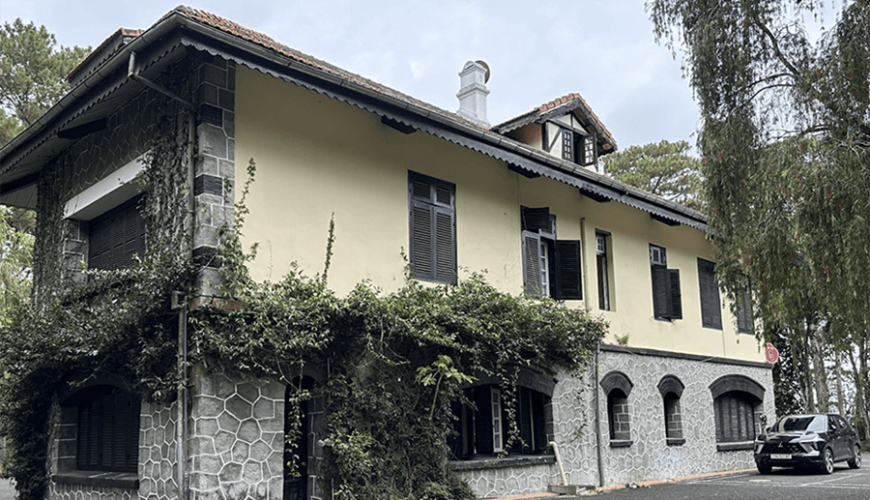
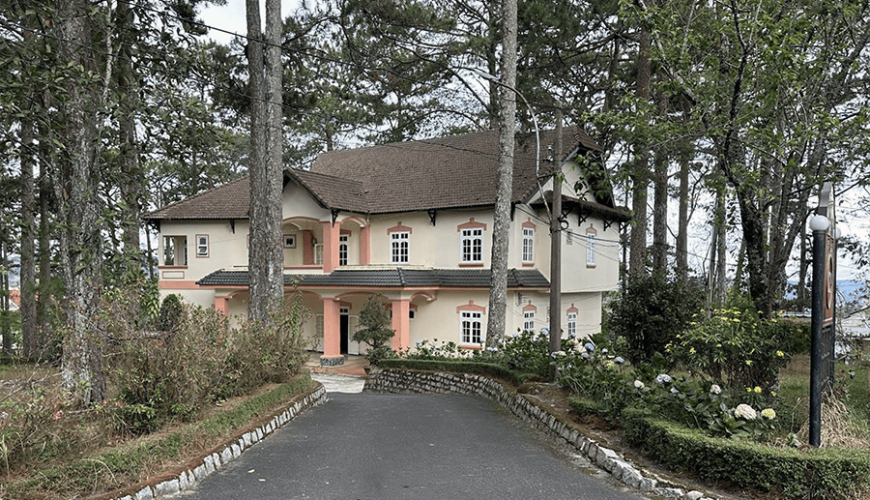
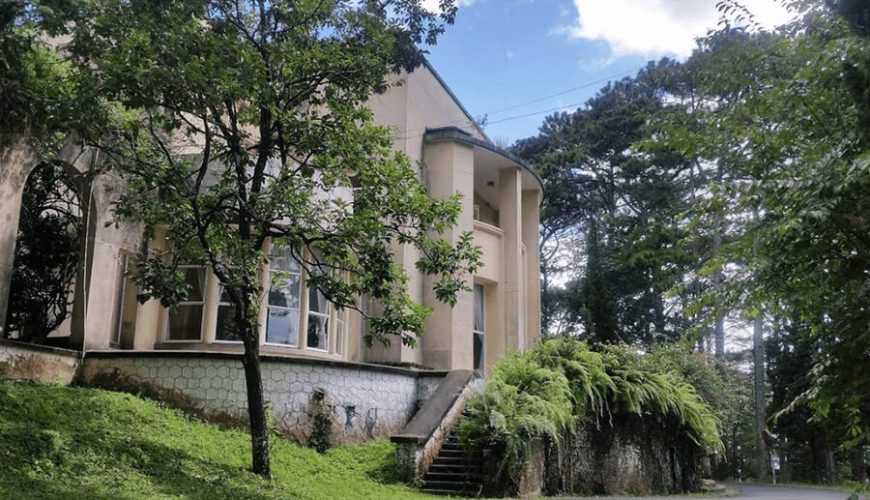
From the outside, Palace II in Da Lat impresses with its simplicity, yet solidity and grandeur. The building is designed with clear geometric shapes and a tiled roof, creating a striking focal point amidst the green pine hills. A distinctive architectural feature is the large, overhanging entrance hall that serves as a canopy to welcome guests when cars are parked – a novel approach at the time, intended to add grandeur and elegance to the building. The windows and vents are generously spaced and face in multiple directions, maximizing the intake of natural light and fresh air from Da Lat.
The exterior is clad in washed stone (quite similar to the modern architecture of Southern Vietnam in the latter half of the 20th century), creating strong, unpretentious lines that exude elegance. The main building materials are reinforced concrete, natural stone, and wood, ensuring durability and harmony with nature.
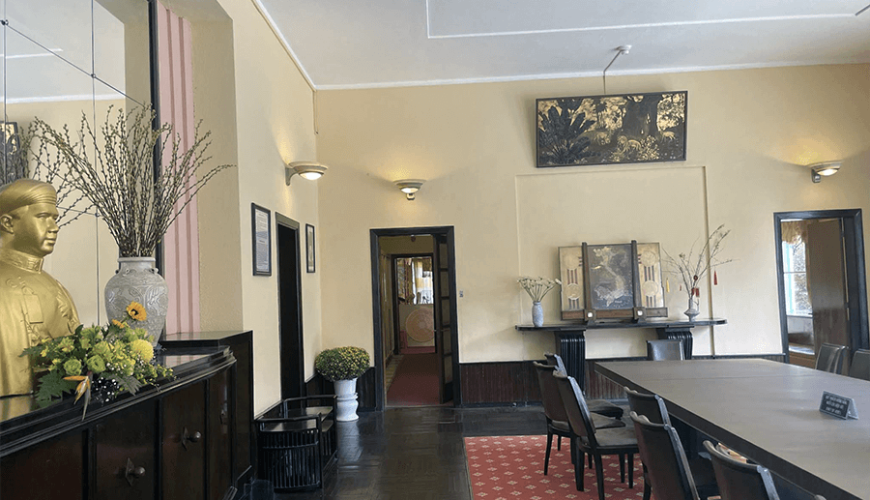
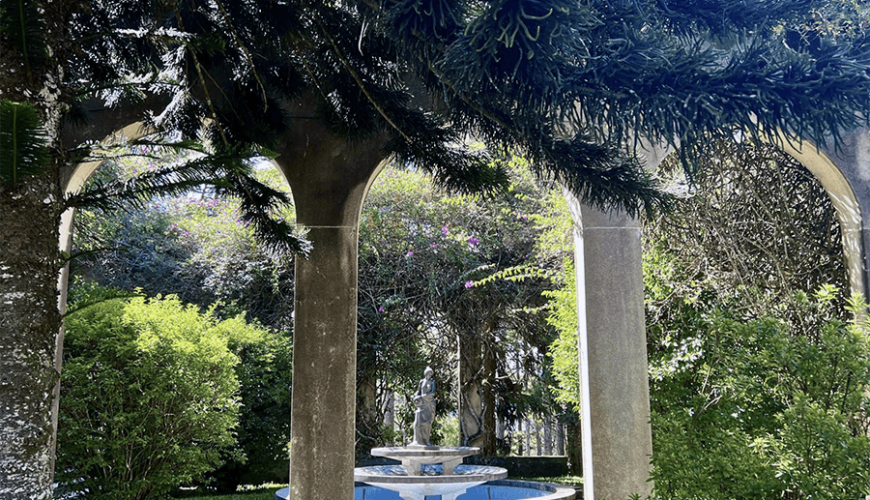
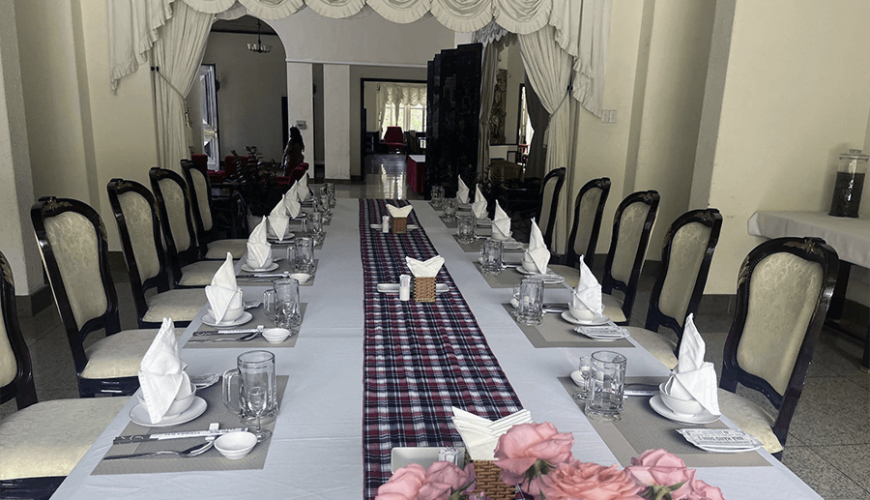
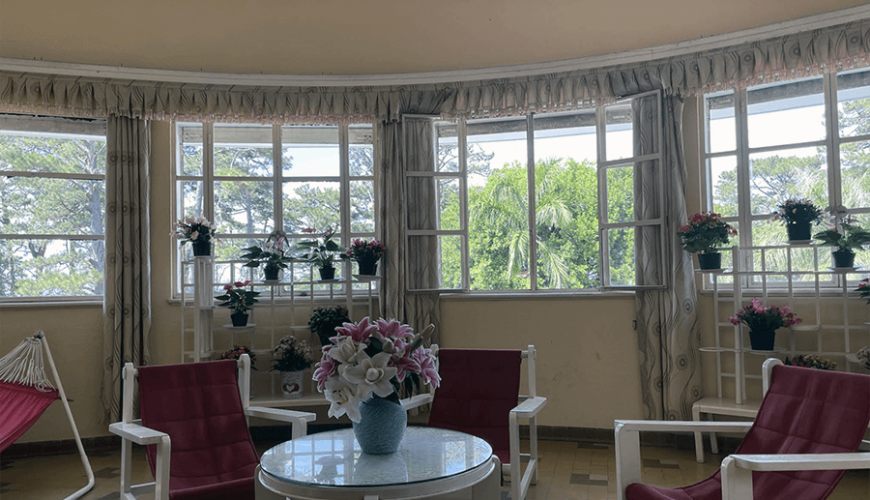
Inside, Bao Dai Palace II is rationally arranged with a basement, ground floor, and upper floor, covering a construction area of 720 m² and a usable area of 1,238 m². The entire ground floor is dedicated to offices and reception areas, integrated with landscaped park and garden features. Here, the interior and exterior architectural spaces blend together around walkways and large steel-framed glass windows or through courtyards surrounded by pillars, creating transitional spaces that feel airy and spacious.
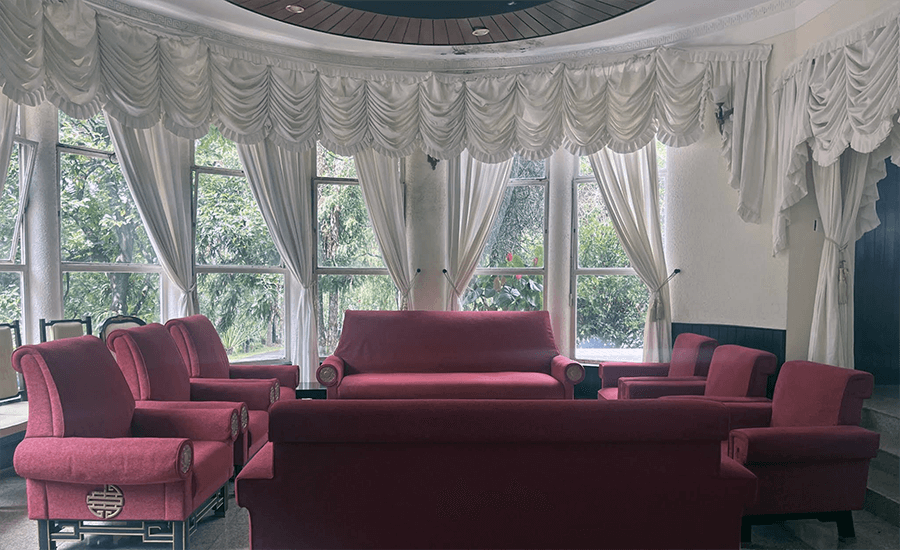
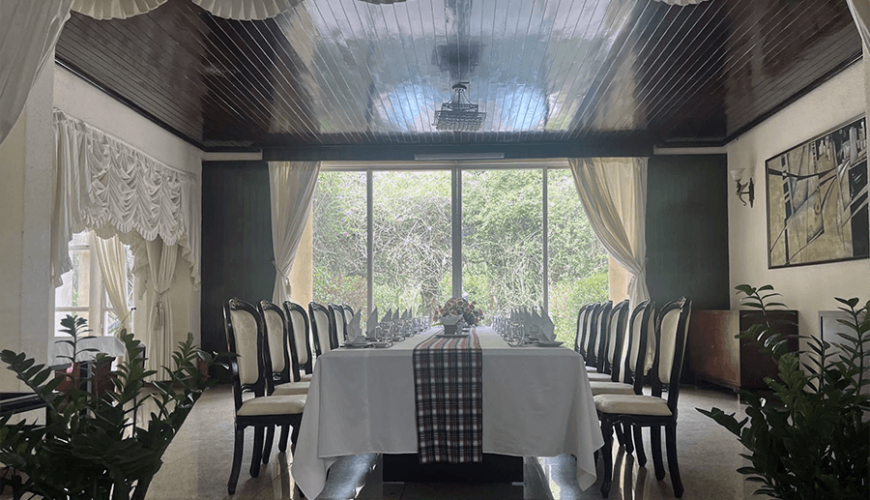
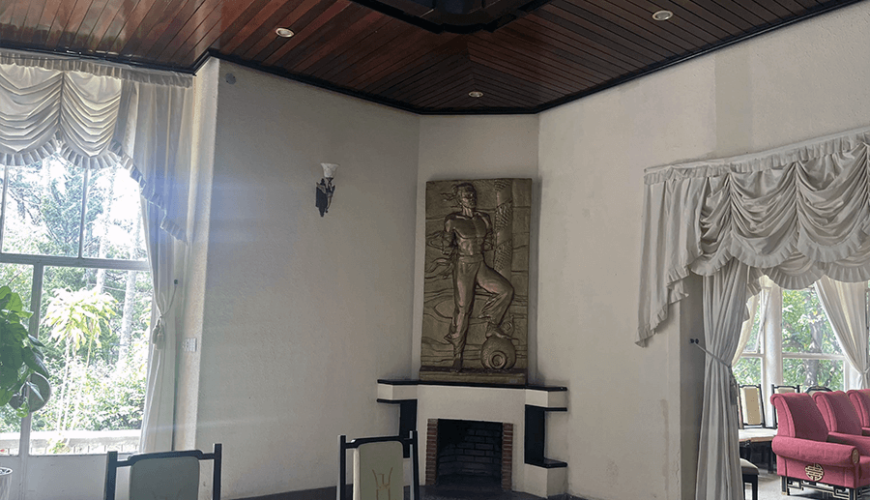
The entire upper floor is dedicated to family living, ensuring privacy and comfort. Palace II is a magnificent villa with five luxuriously furnished rooms. Although many original furnishings are gone, the remaining traces allow us to imagine the comfort and luxury that once existed. The large fireplaces in the main rooms are not only architectural highlights but also essential in Da Lat’s cool climate.
In particular, the basement of the Bao Dai Palace II conceals a system of very sturdy secret tunnels, built during the time of Governor-General Decoux. These tunnels connect to a wine cellar, approximately 1.5 meters wide and over 1 meter high, with many nooks and crannies reinforced with concrete. This is a unique feature that demonstrates meticulous planning for safety and strategic design.
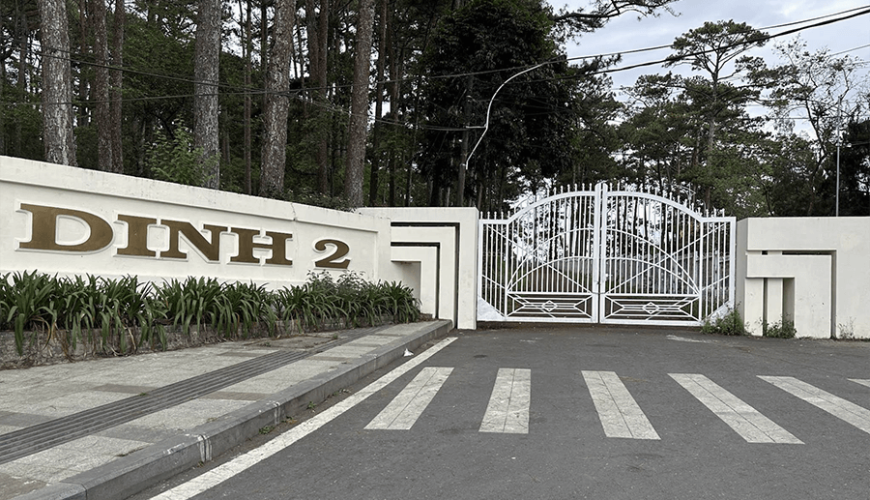
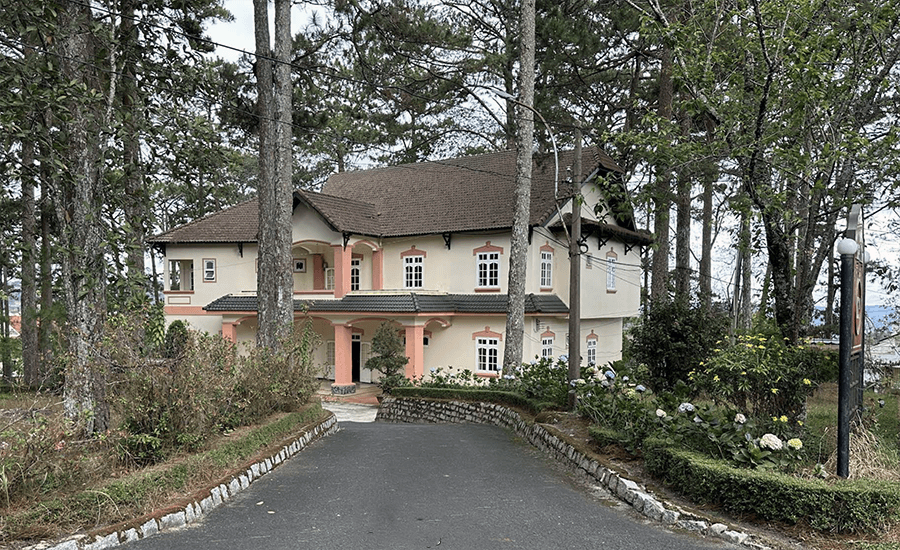
The grounds of Bao Dai Palace II cover a total area of 82,160 m², with four main entrances via Tran Hung Dao and Khoi Nghia Bac Son roads. Within the grounds are seven buildings: Palace II, Villa 12A, Villa 12B, Villa 12C, and a restaurant. The total natural area is approximately 26 hectares, with the palace complex occupying 10 hectares and the landscaped area covering 16 hectares.
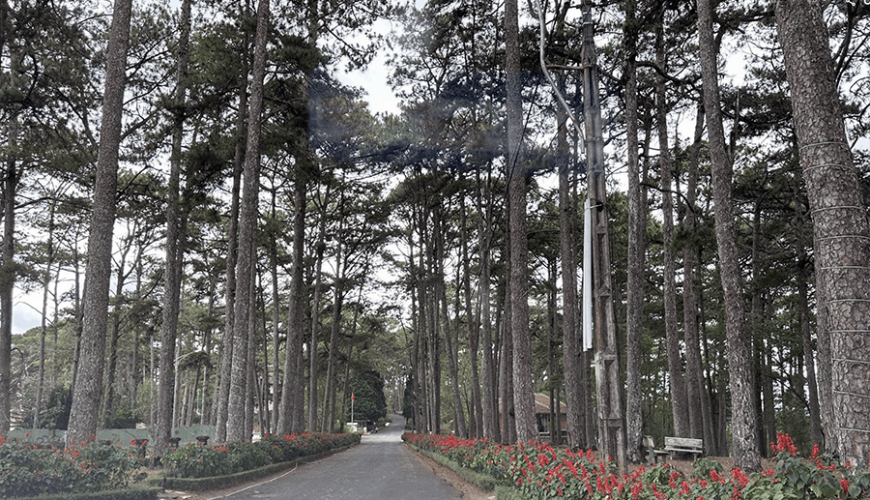
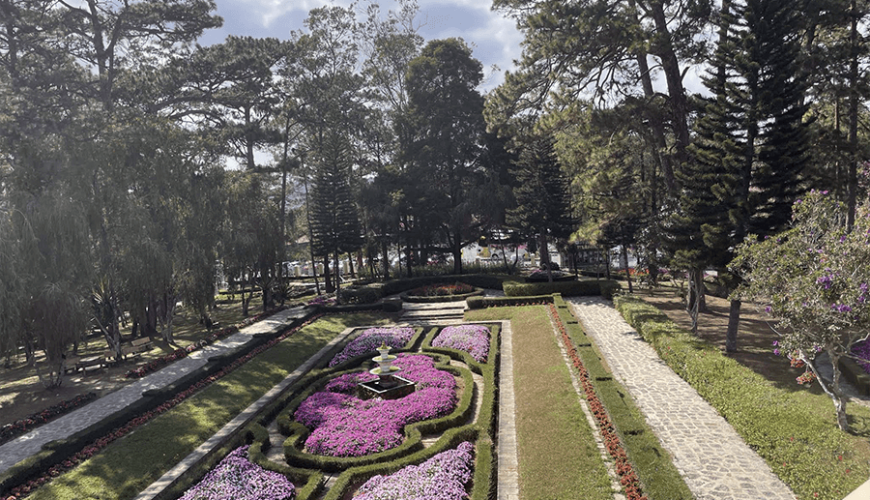
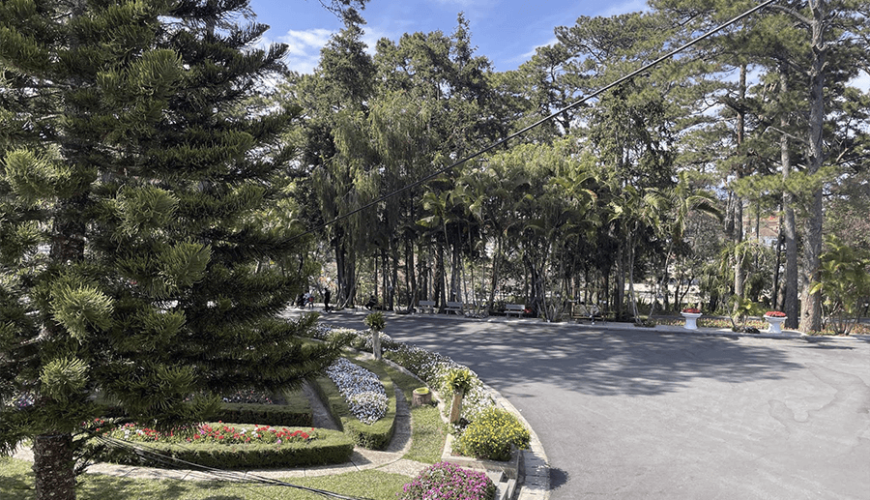
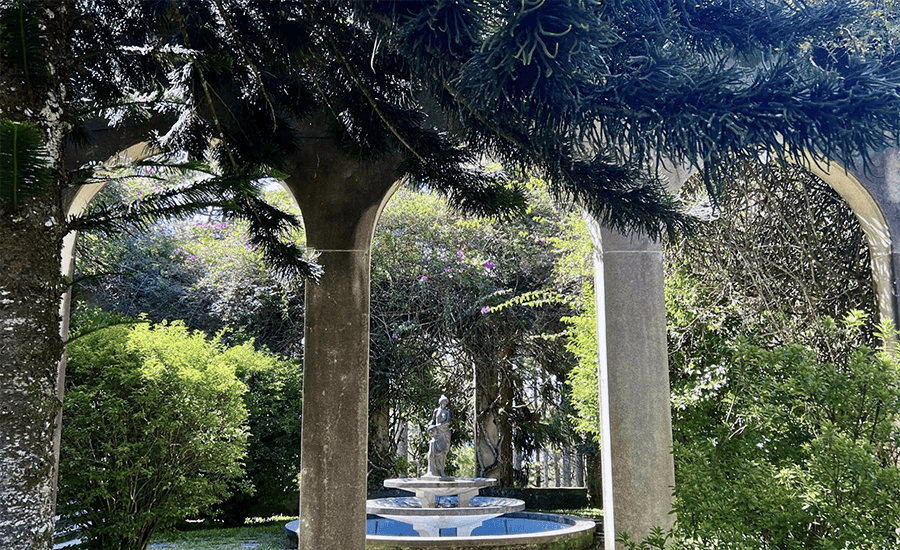
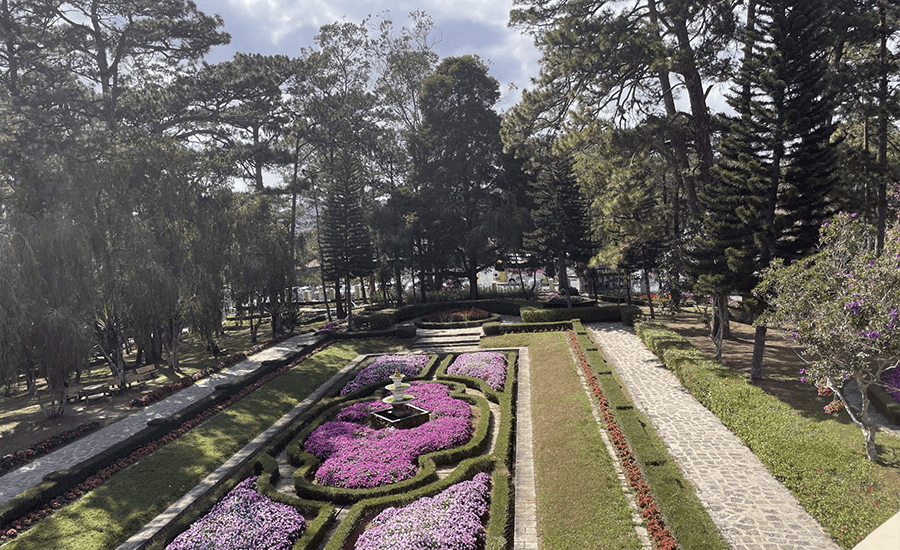
The expansive, meticulously planned garden features lush, naturally growing lawns, neatly trimmed flowerbeds, and rows of ancient pine trees providing year-round shade. Stone-paved pathways guide visitors to explore every corner of the garden. From this vantage point, glimpses of the gently rippling Xuan Huong Lake can be seen through the pine canopy, and further in the distance, Cu Hill with its verdant meadows and the peak of Lang Bian Mountain shrouded in clouds. The harmonious blend of the palace’s architecture and the natural landscape creates an ideal retreat, a haven from the hustle and bustle of urban life.
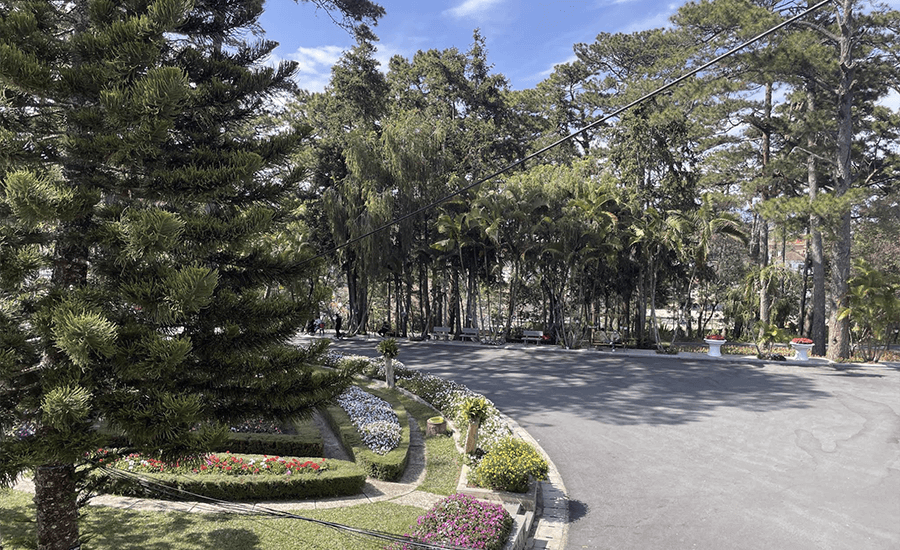
The beauty of modern architecture, combining strong forms with a connection to nature, along with its stories, all contribute to the irresistible charm of Bao Dai Palace II. Exploring this palace is not just about admiring a beautiful structure, but also about a journey back in time to feel the depth of Da Lat’s culture and history.
Source: collected by An
Follow us for the best deals on Vietnam package tours and visa services!

Comment (0)