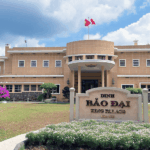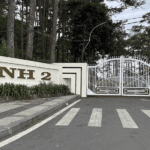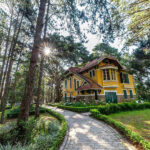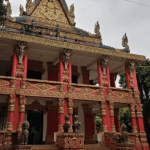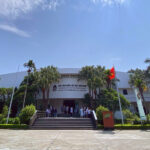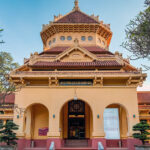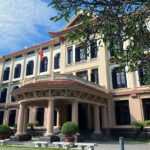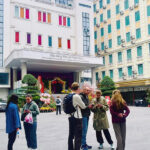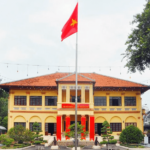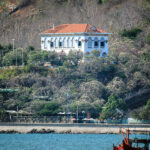
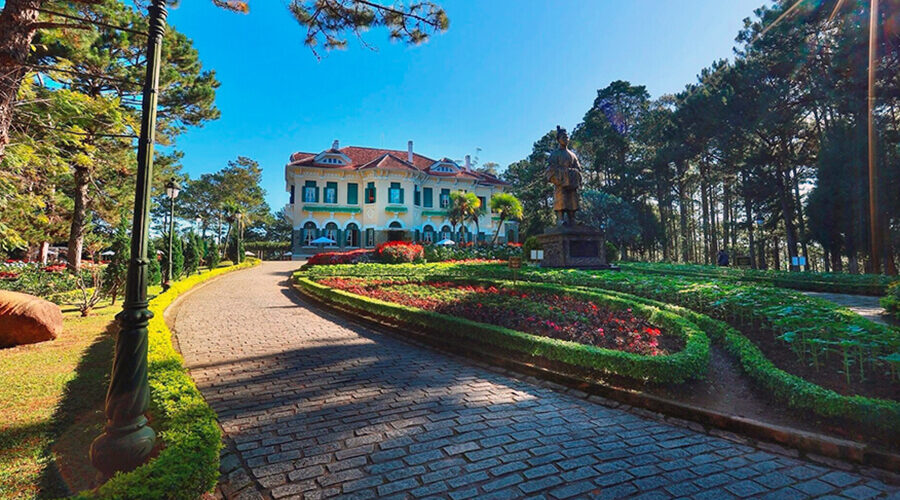
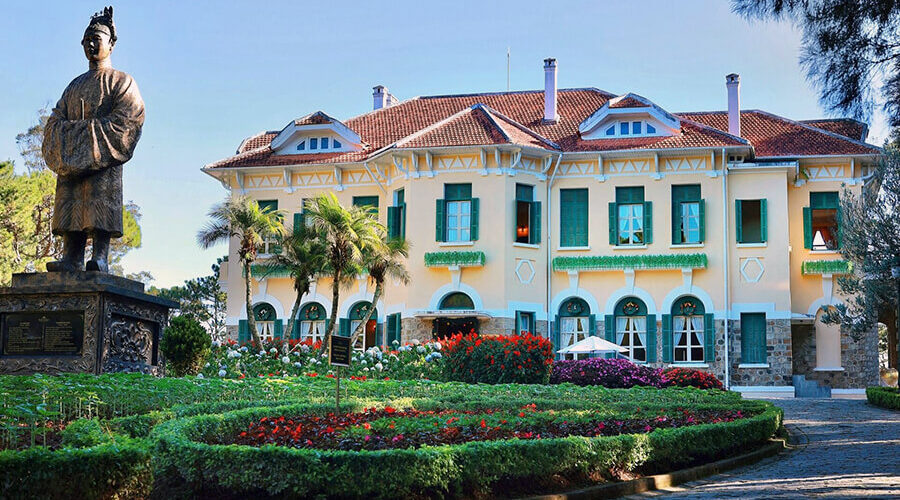
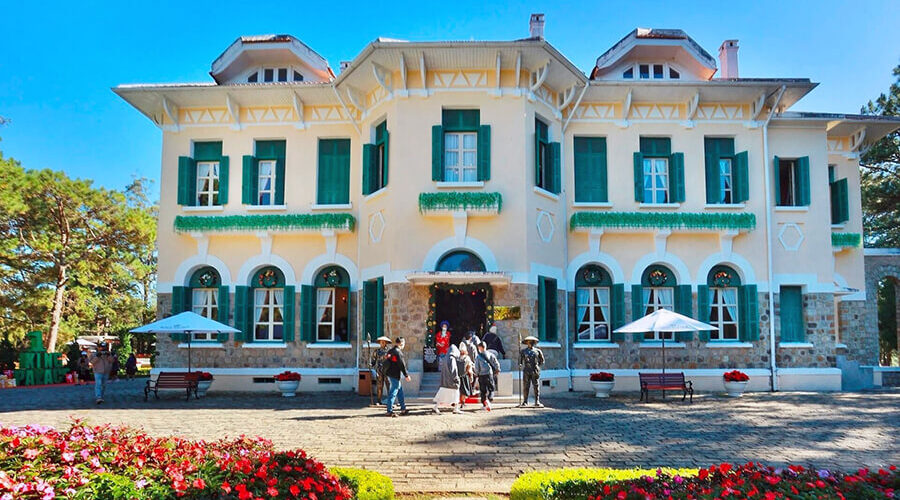
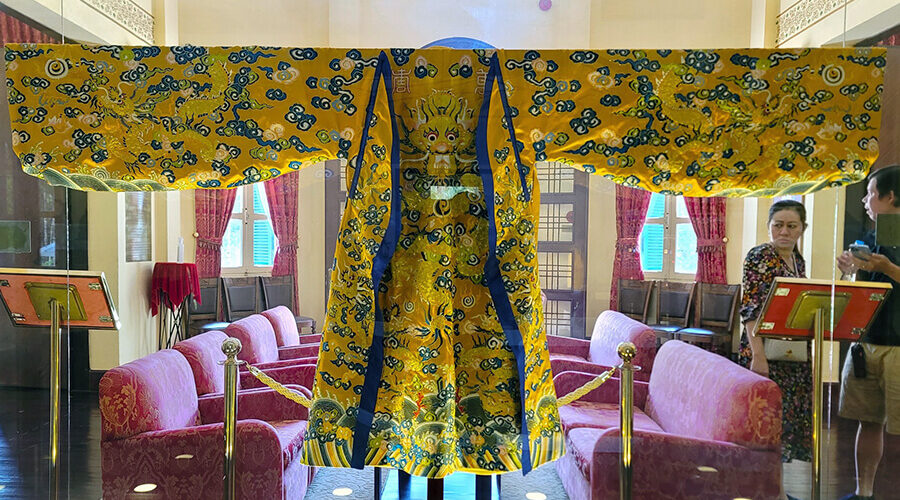
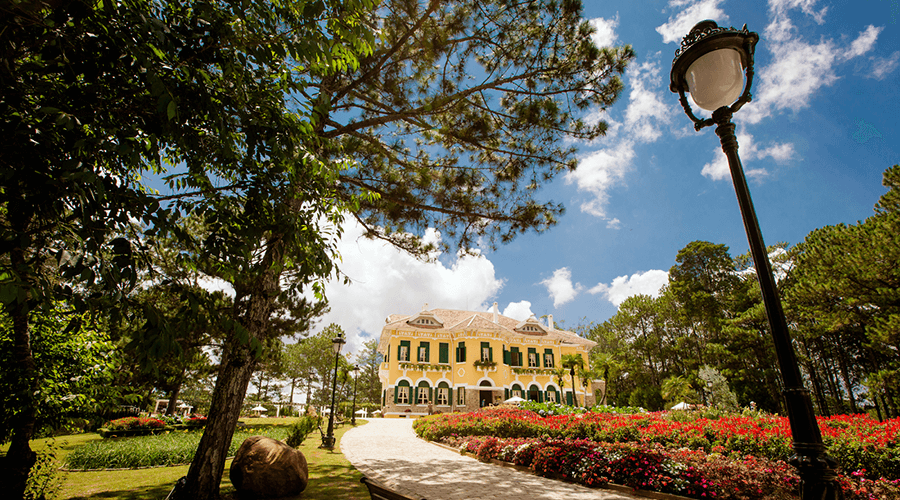


Nestled amidst the picturesque pine hills of Da Lat, Bao Dai Palace I, is not only a unique architectural masterpiece but also a living witness to many important historical periods. Also known as the Bao Dai Palace or King Palace, it is one of the three residences of the last emperor of the Nguyen Dynasty in Da Lat. This building, with its classic French style, boasts outstanding architectural value and is closely associated with the life and career of Emperor Bao Dai. Today, Da Lat Palace 1 has become a must-see destination, attracting tourists with its nostalgic beauty, peaceful atmosphere, and fascinating stories about the last emperor of Vietnam.
Overview of Bao Dai Palace I
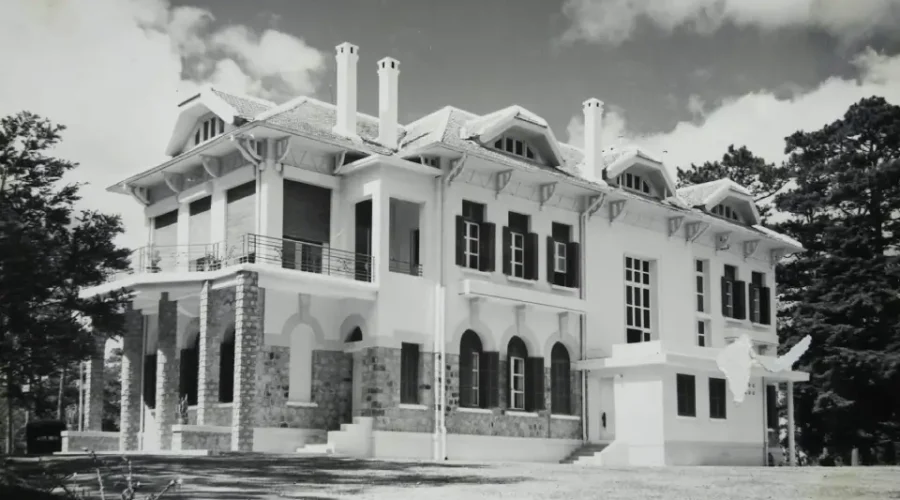
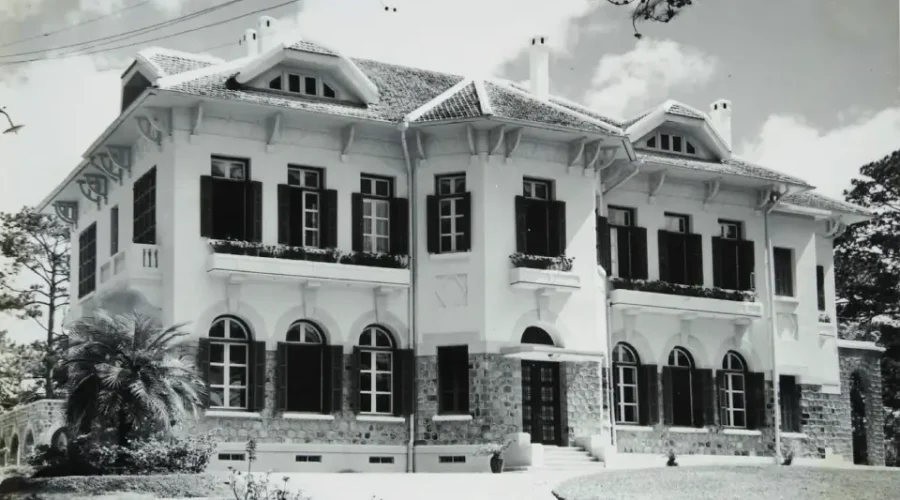
The Palace 1 is a private villa built around 1940 by a French millionaire named Robert Clément Bourgery. Enthralled by the romantic beauty of misty Da Lat, he chose this location to build a residence and vacation home for his family.
By August 1949, this palace had been purchased by Emperor Bao Dai to serve as his official residence as Head of State of Vietnam. He transformed Palace 1 into the headquarters, a place for work and the reception of important delegations, as well as a workplace for officials, until 1954.
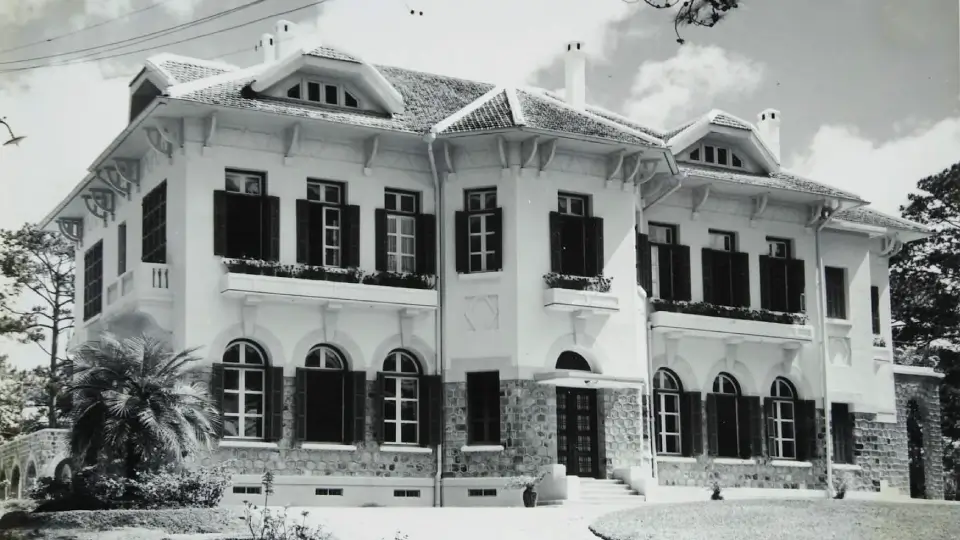
The photo was taken around 1940.
After Emperor Bao Dai left Vietnam, Palace 1 in Da Lat was taken over by the Ngo Dinh Diem government and used as a private residence for the President from 1956. Subsequently, the palace remained a retreat for the heads of state of the old regime until 1975.
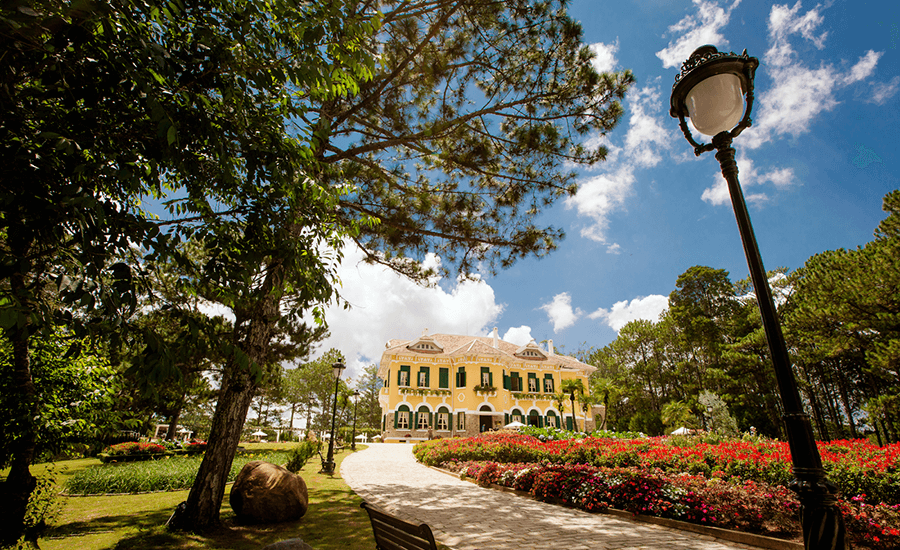
After 1975, the palace was used for various purposes, leading to serious deterioration and, at times, to near abandonment. After restoration, the Palace I was officially opened to tourists and became one of Da Lat’s most attractive tourist destinations.
Opening hours and entrance fees
- Address: 01 Tran Quang Dieu Street, Xuan Huong-Da Lat Ward, Lam Dong Province.
- Opening hours: 7:00 AM – 5:30 PM every day of the week.
- Entrance Ticket: 50,000 VND/adult, 25,000 VND/child.
Outstanding Architecture of Bao Dai Palace I
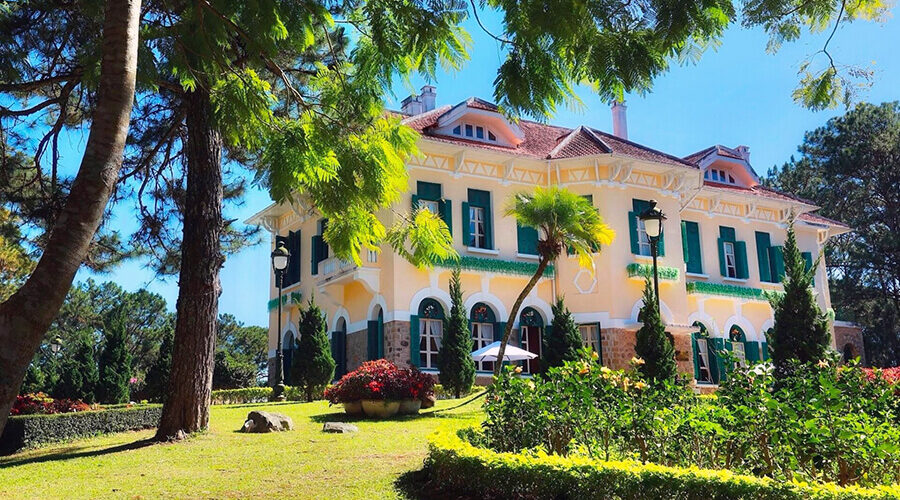
Bao Dai Palace I is not just a simple architectural structure but a complete complex that showcases a harmonious blend of European neoclassical architecture and Da Lat’s characteristic natural landscape. It’s situated on a picturesque hill at an altitude of 1,550m, about 4km southeast of Da Lat center. The entire grounds cover more than 60 hectares, including many supporting buildings.
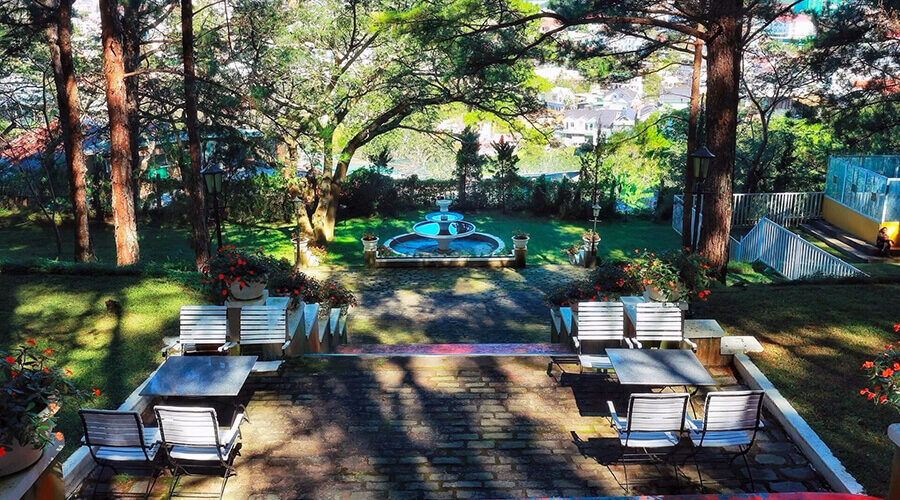
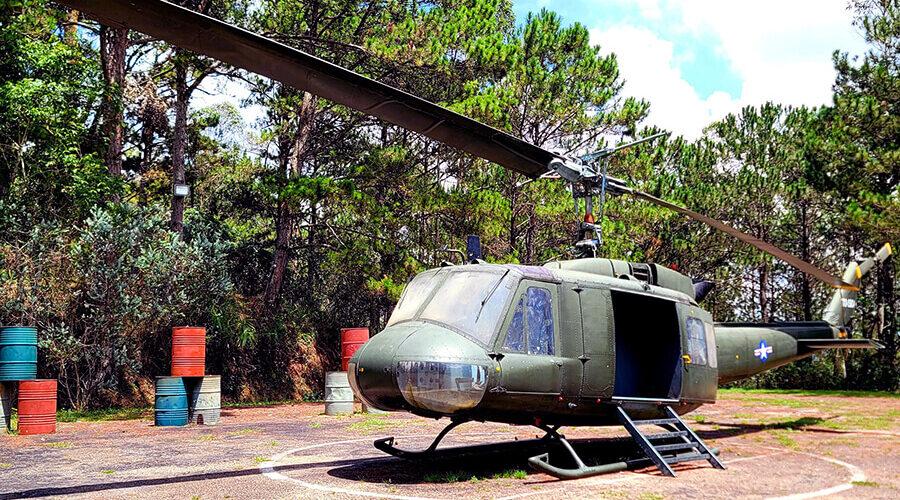
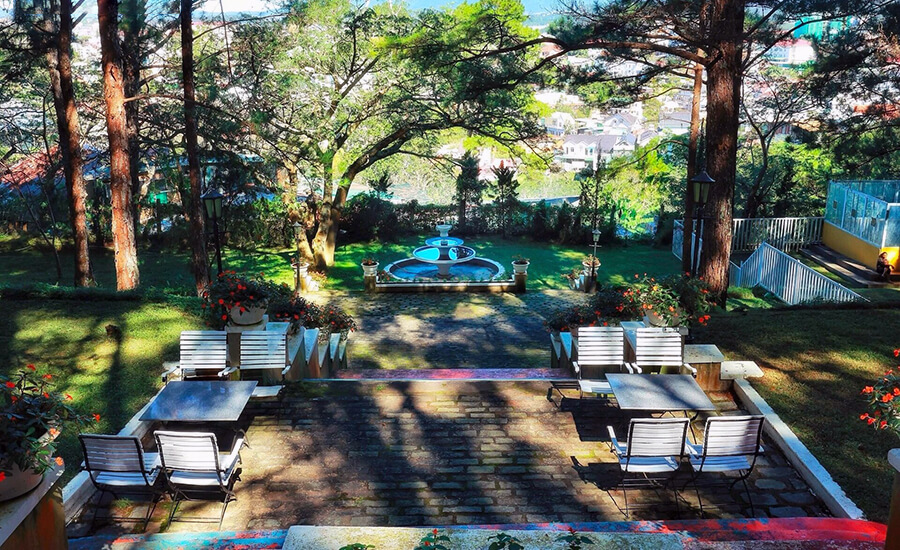
The nearly 500m long pathway leading to the palace is paved with stone and lined on both sides with century-old white-trunked melaleuca trees. At the end of the path is an oval-shaped flower garden, which serves as a focal point before reaching the main hall. Surrounding the villa are gardens, royal gardens, fountains, and a helipad, creating a luxurious, secluded complex.
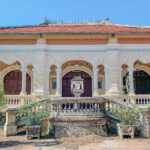
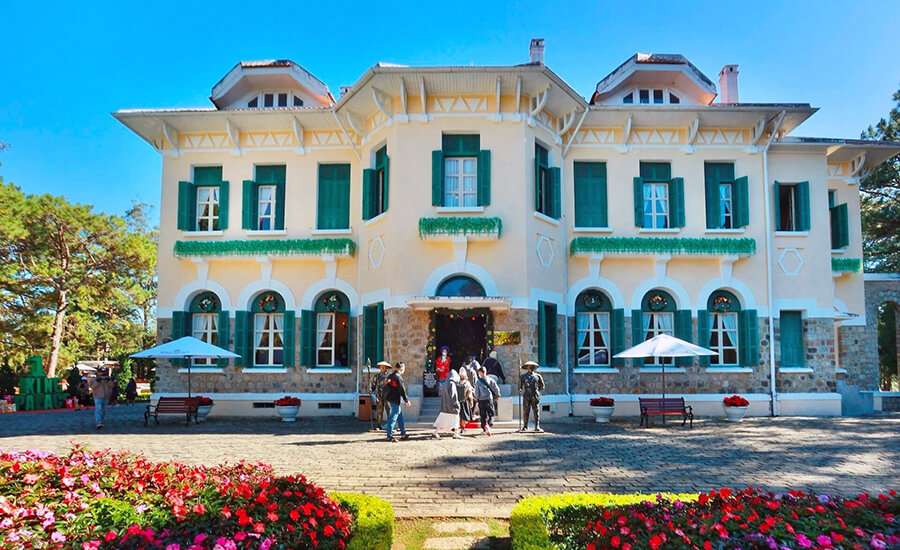
Designed by the French in the European neoclassical style, Bao Dai Palace I stands out for its classical details, with a modern twist. A distinctive feature is the well-proportioned spatial arrangement and the interconnectedness of the rooms.
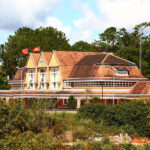
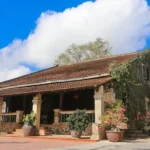
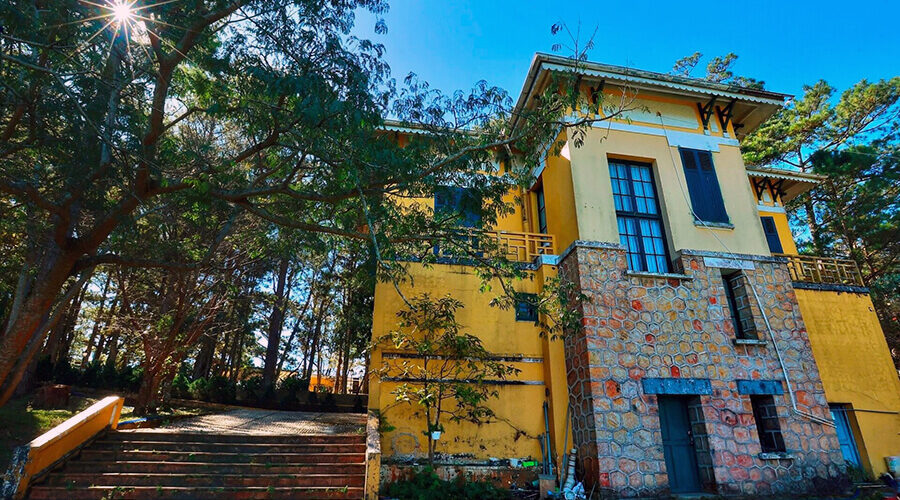
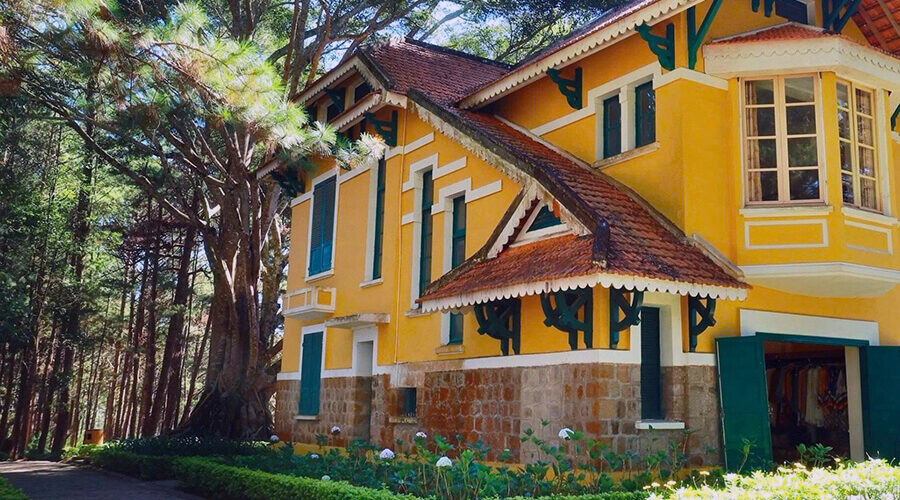
The building, spanning over 810 m², comprises a basement, ground floor, and first floor, with a total of 12 rooms of varying sizes. The structure is solidly built with brick and split stone in the lower part, showcasing its robustness. It features a distinctly French architectural style, with a sloping red-tiled roof, dormer windows, and characteristic chimneys. The main entrance is an arched doorway but incorporates a horizontal stone roof, creating a modern focal point.
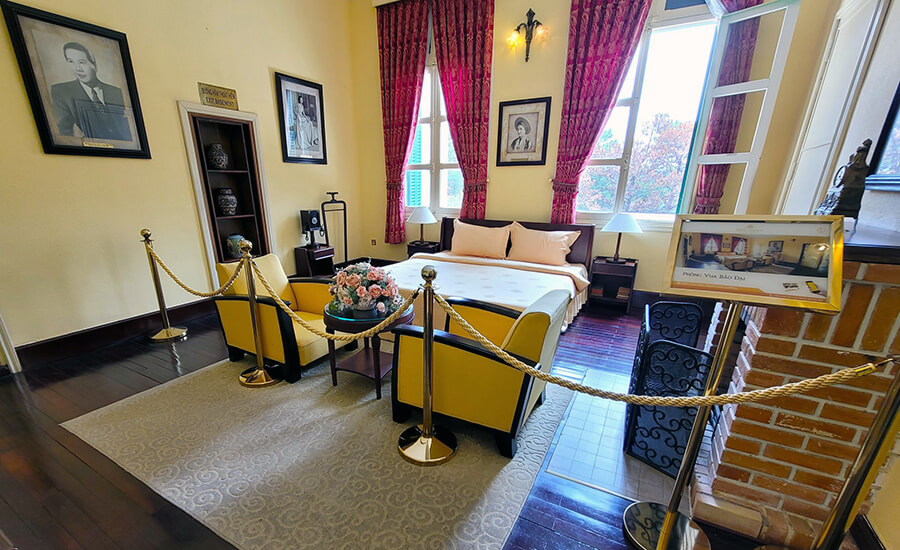
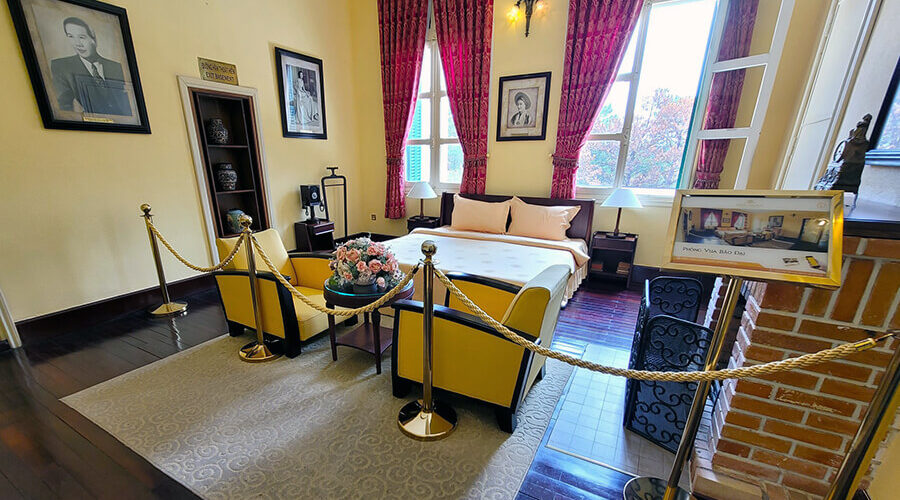
bedroom
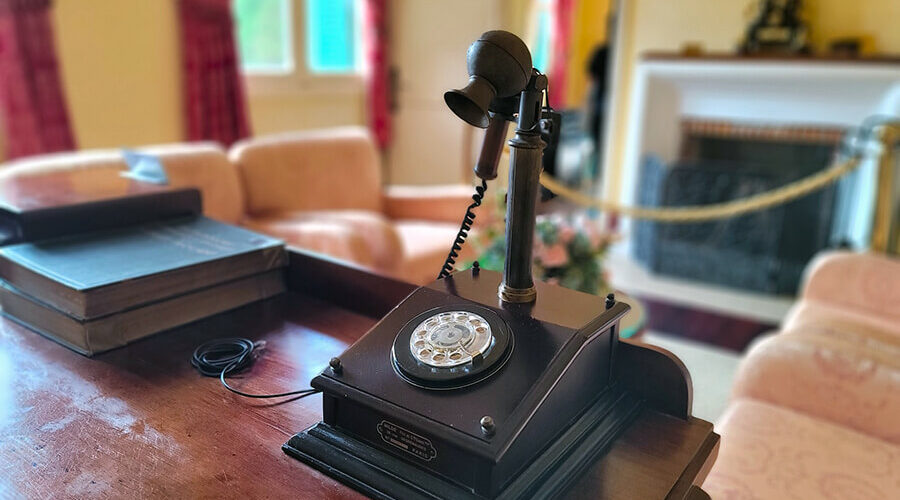
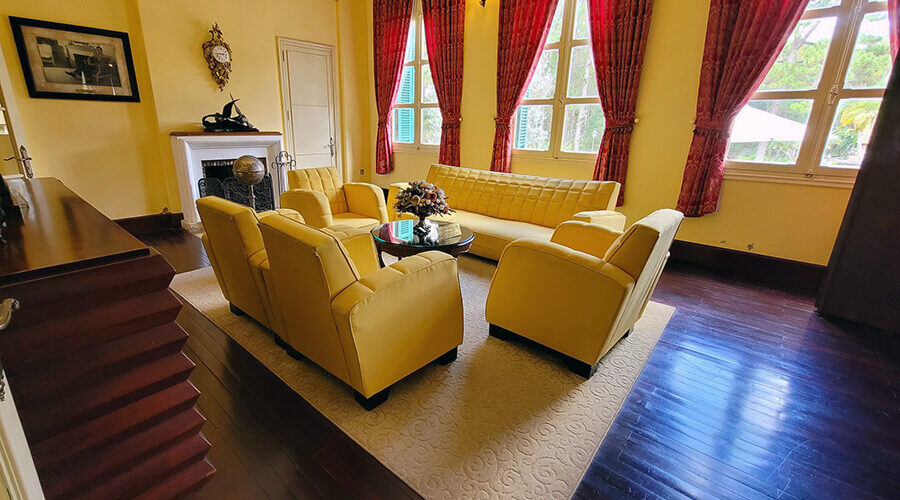
The ground floor houses the reception and work areas. The main hall is used for welcoming guests, flanked by two reception rooms. Behind it are functional rooms, including the office, reception room, restrooms, and kitchen. All rooms utilize a dominant color scheme of gold and red, reflecting the power of the Royal Family.
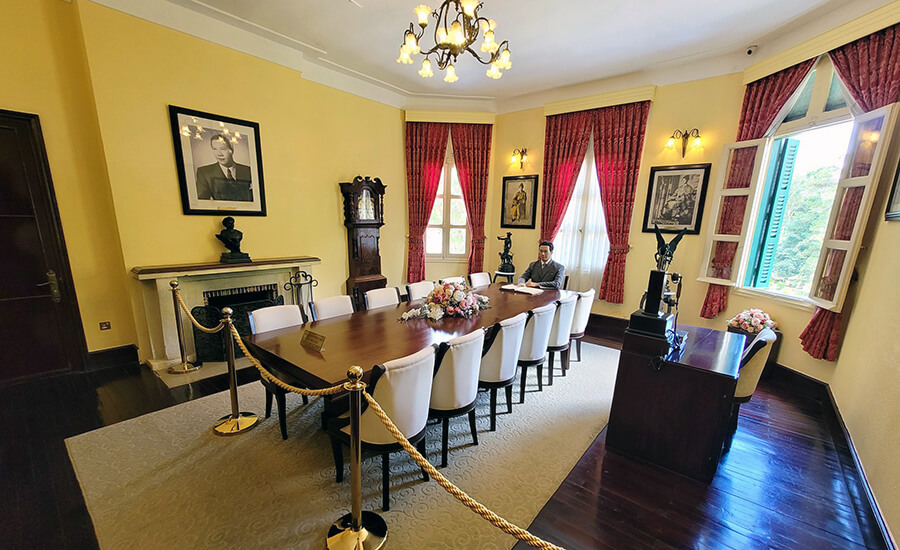
The living in Bao Dai Palace I.
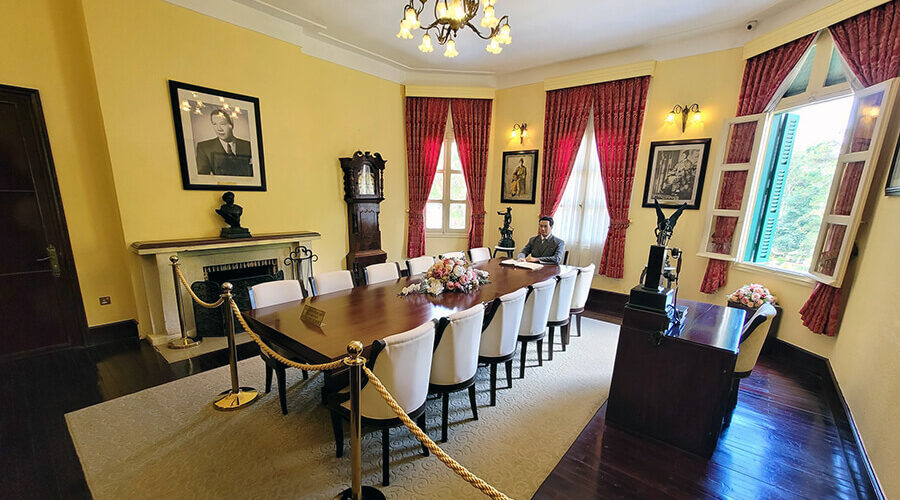
The upper floor served as a resting place and the site of important meetings. The Cabinet Room here was where Emperor Bao Dai held meetings from 1949-1954, and later, under the Republic of Vietnam, it was also used to discuss military matters.
The Secret Tunnel System
This is one of the most unique features of Bao Dai Palace 1. The underground tunnel system was dug by the Japanese before the French coup.
A tunnel nearly 4km long led from Bao Dai’s bedroom to the helicopter landing pad behind the hill. A branch of the secret tunnel system was dug through several hills to connect to Bao Dai Palace II – Governor’s Residence, and branched off to several villas on Tran Hung Dao Street. The average height of the tunnel along the entire route was about 2 meters, and the width was over 1 meter; however, some sections were relatively low, requiring people to walk crouching. Junctions were usually wider, providing enough space for 5-6 people to take shelter.
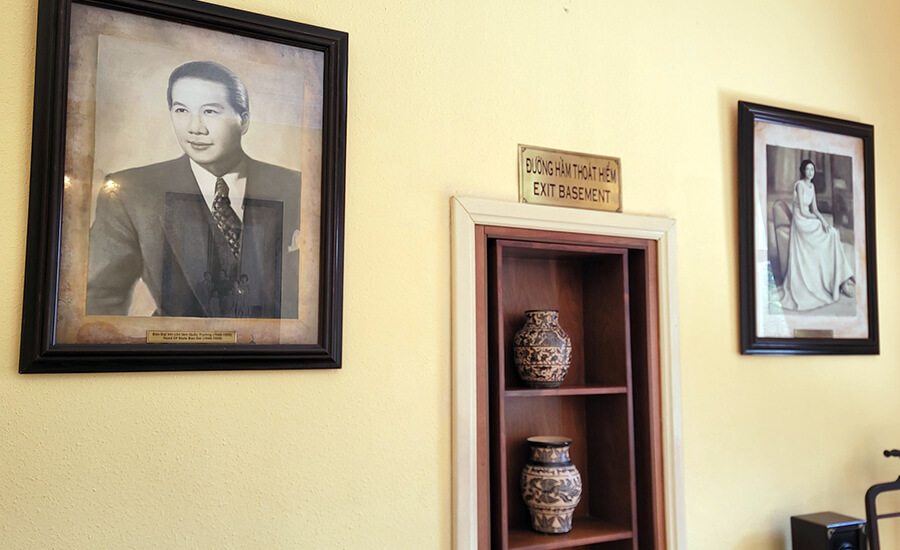
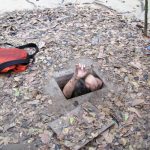
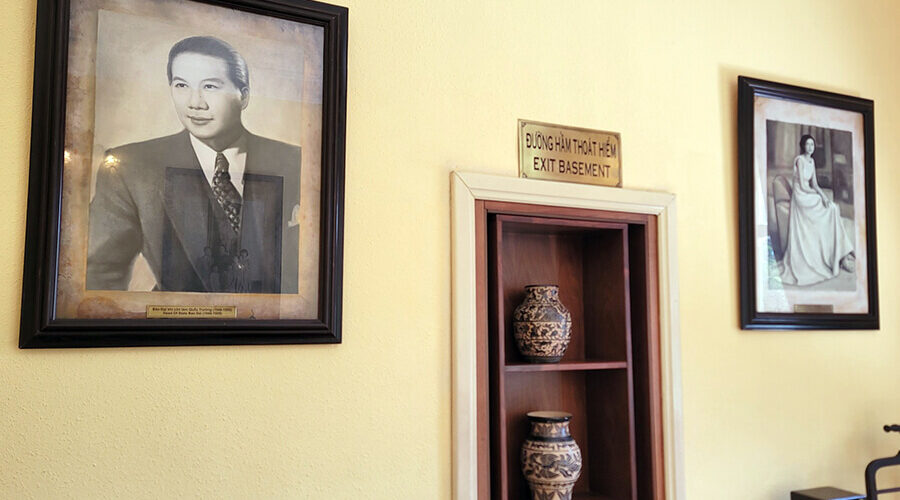
exit basement in the Bao Dai Palace’s bedroom.
In 1955, after deposing Bao Dai and becoming president, Ngo Dinh Diem later reinforced the tunnel with concrete and built a secret escape route. The tunnel entrance was disguised with a bookshelf; a slight movement of the bookshelf allowed one to slip through the door and descend into the fortified tunnel. Inside the secret tunnel were the president’s private room, a security room, and a room for secret communications…
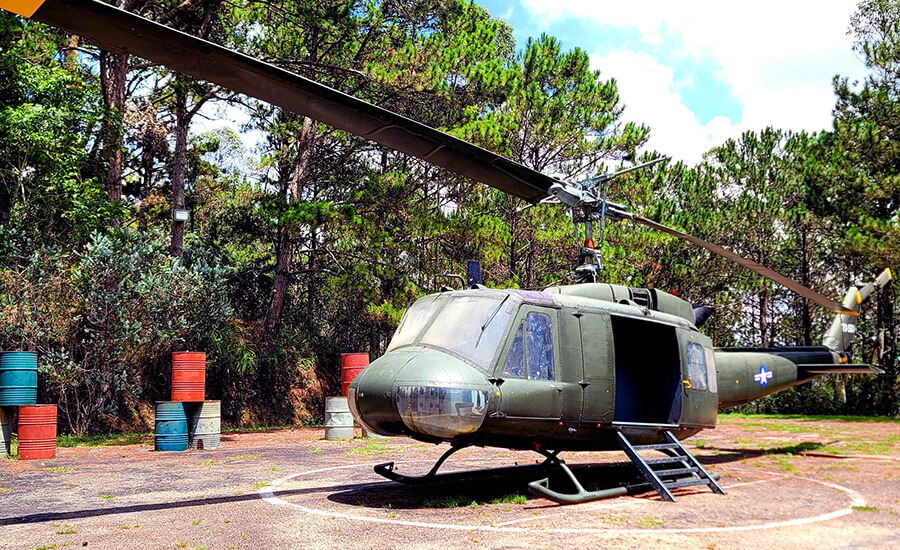
Having weathered countless changes over time, Bao Dai Palace I still stands, a bridge between the past and the present. It is not just a building to admire, but also a space to feel and to understand more about the nation’s history and culture.
Source: collected by An
Follow us for the best deals on Vietnam package tours and visa services!