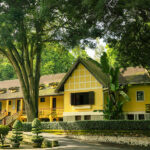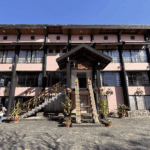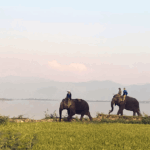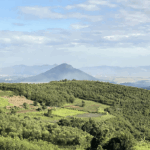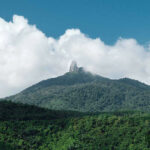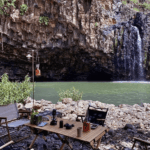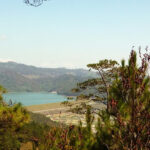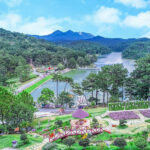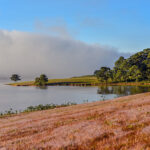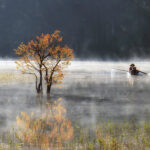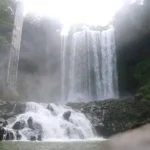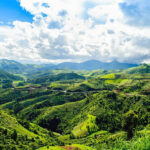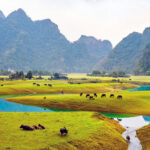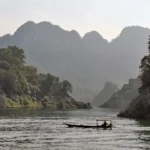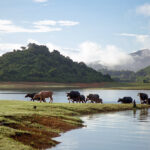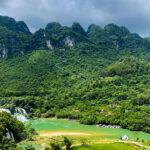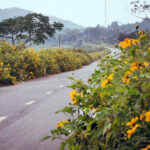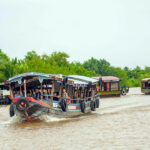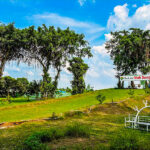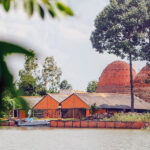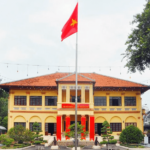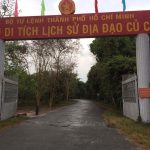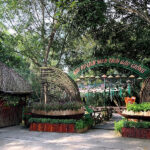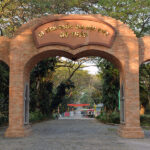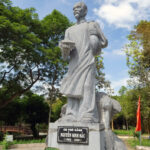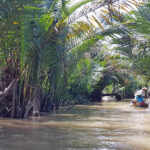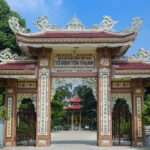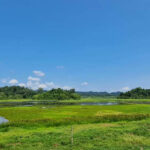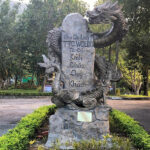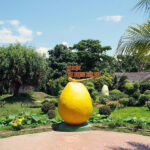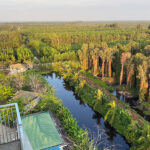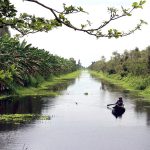
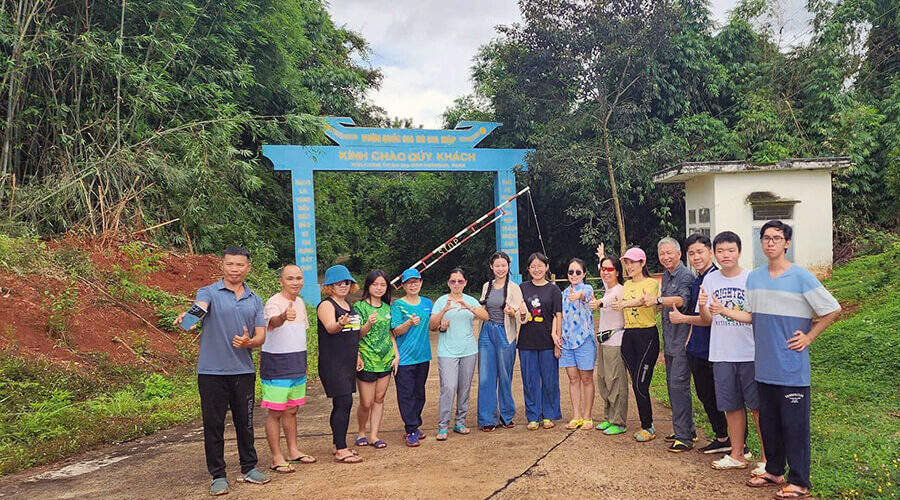
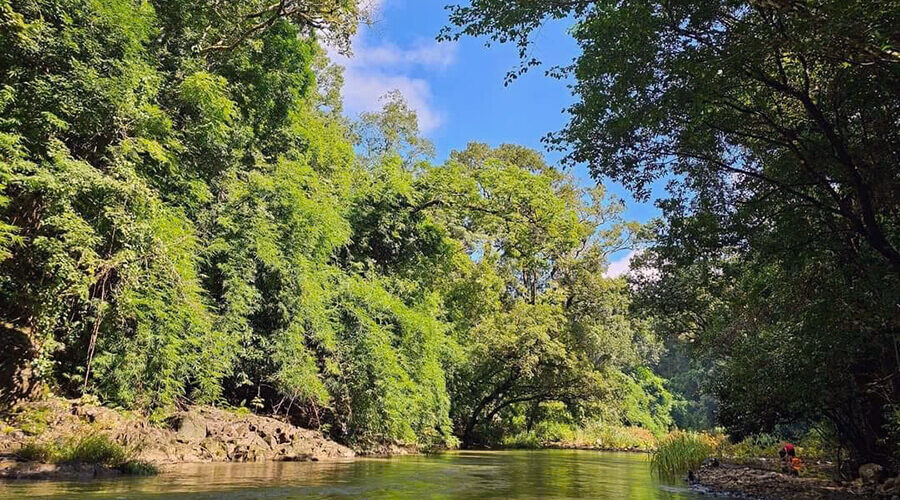


Bu Gia Map National Park impresses visitors at first glance with its rugged landscape and numerous rare and protected plant and animal species. Upon arrival, visitors will experience the natural atmosphere and fresh trees and admire a beauty rarely seen amid societal development and modern life.
Overview of Bu Gia Map National Park
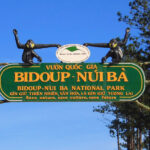
The Bu Gia Map National Park is one of Vietnam’s two national parks, located in the dry-forest ecosystem of central Indochina, within the priority conservation corridor of the Mekong Subregion. The National Park conserves wildlife, plant species, and rare medicinal resources to support scientific research, environmental education, and the development of ecotourism services. In addition, Bu Gia Map National Park is a watershed protection forest ensuring water supply for the reservoirs of the Sork Phu Mieng, Can Don, and Thac Mo hydroelectric power plants.
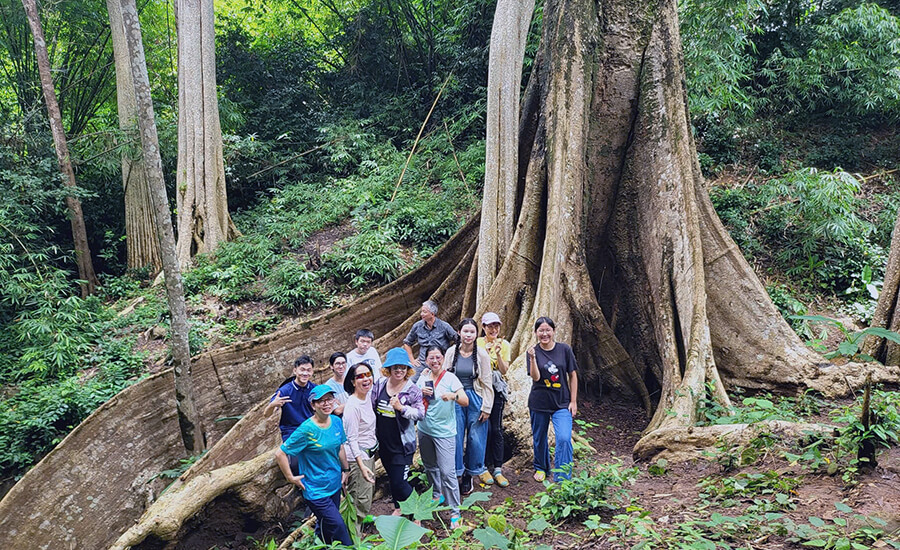
Currently, Bu Gia Map National Park has 724 plant species across 326 genera, 109 families, 70 orders, and 6 plant divisions. In particular, this area retains the characteristics of a primeval forest, with many Dipterocarpus species and rare, valuable timber species, and hundreds of medicinal plant species.
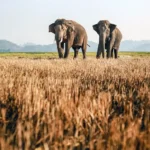
In addition, it is home to various wildlife species, including many listed in the Vietnamese Red Book, such as sun bears, clouded leopards, dhole, gaur, wild cattle, Germain’s peacock-pheasant, elephants, and black-footed douc. Due to its pristine primary forest characteristics, with deciduous oil palm and bamboo forests interspersed with other tree species, Bu Gia Map National Park is an ideal habitat for many primate species, including pig-tailed macaques, stump-tailed macaques, rhesus macaques, red-shanked douc, and Phayre’s leaf monkey.
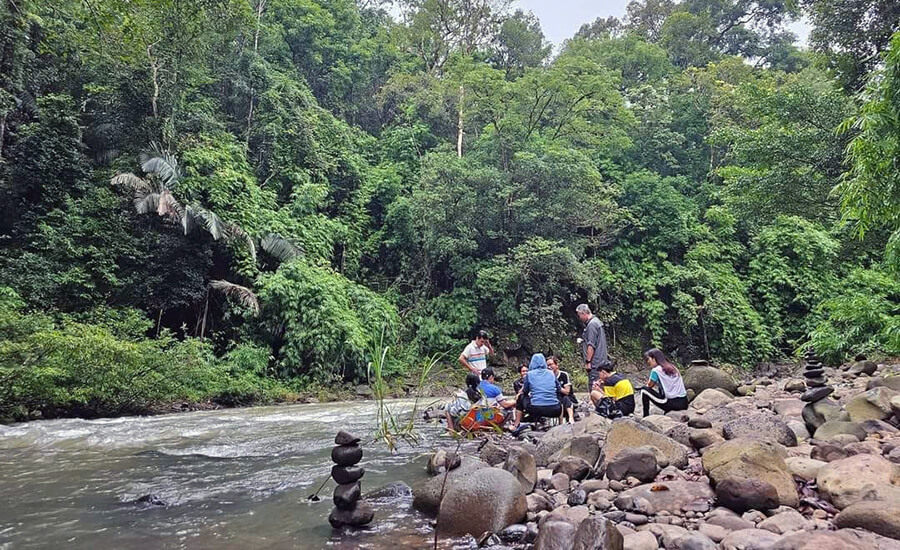
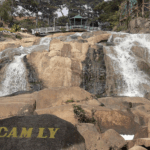
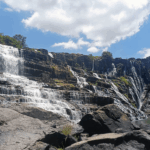
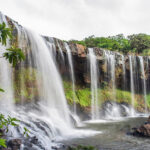
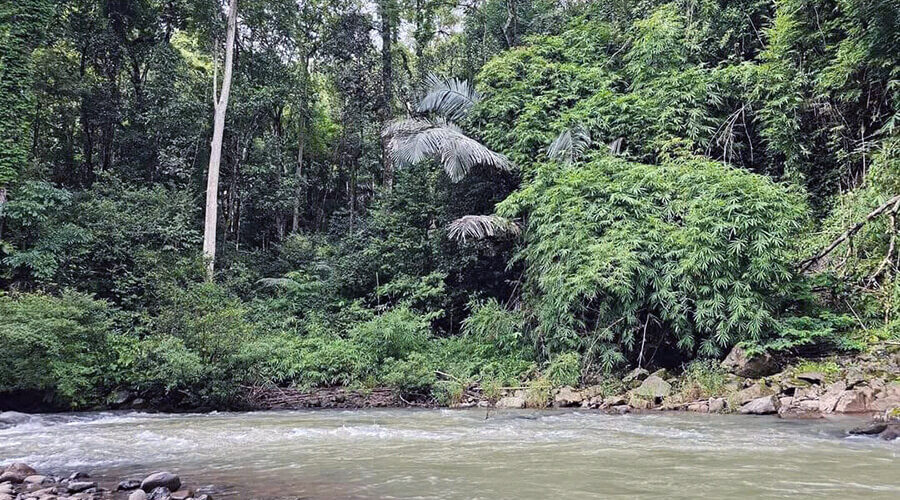
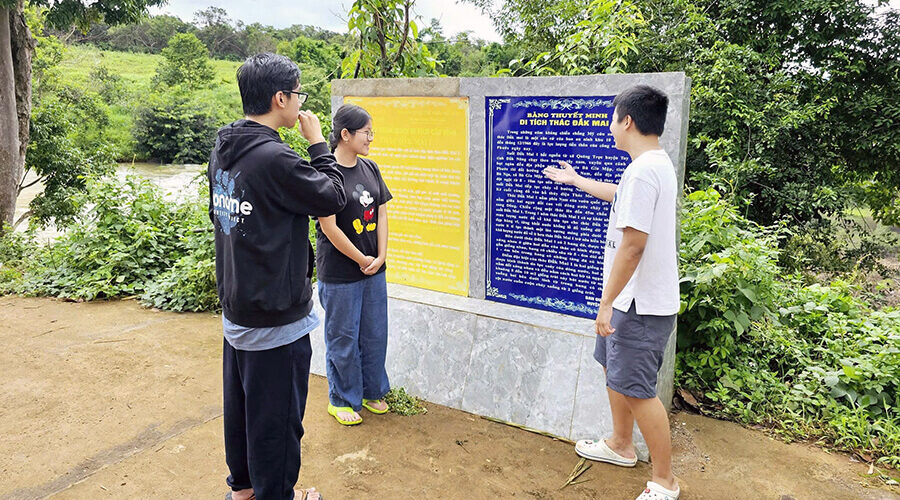
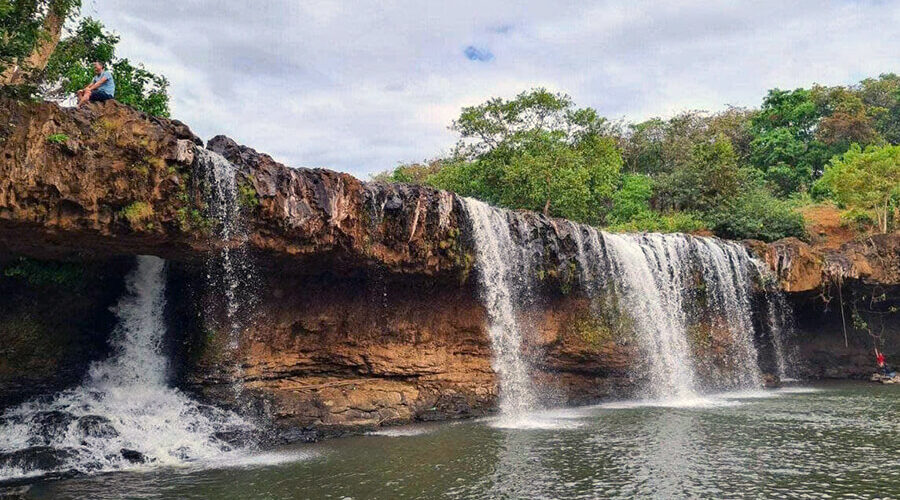
Currently, with over 20 streams and waterfalls of various sizes running around the park, such as Dak Mai Waterfall, Song Be Waterfall, Luu Ly Waterfall, and many caves, such as Nai Cave, Doi Cave… Bu Gia Map National Park is a highly attractive ecotourism destination for adventure seekers and nature enthusiasts. Beyond its scenic and ecological value, Bu Gia Map National Park is also an important historical site associated with the resistance war against the US, where the name “Bu Gia Map” entered the historical record amid fierce battles fought by the army and people of the Southeast region.
What’s the best time to visit Bu Gia Map?
Characterized by a tropical monsoon climate, the national park has two distinct seasons: dry and sunny. The average temperature is 25.8-26.2°C, which is favorable for exploring the park’s landscape. Therefore, you can plan a visit at any time of the year.
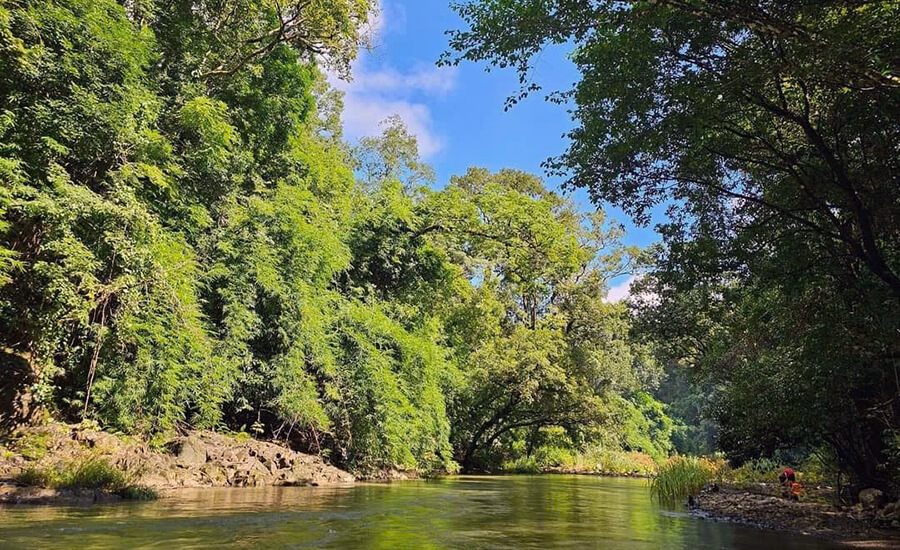
However, for a smooth visit and to create many memorable moments, you should choose to visit during the dry season. Specifically, from November to early May of the following year, it’s best to avoid visiting Bu Gia Map National Park during the rainy season, as it will make travel and sightseeing difficult.
How to get there?
In addition to choosing motorbikes or a private car to Bu Gia Map National Park in Phu Nghia Commune, Dong Nai Province, visitors can also take a bus for a safer and more economical option. You can choose the Petro Binh Phuoc bus company to go directly to the national park, with a ticket price of approximately 260,000 VND/person, and a journey time of 4-5 hours. Visitors should note that buses operate daily from 10:00 AM to 10:45 PM.
Things to do in Bu Gia Map National Park
Trekking and exploring the national park
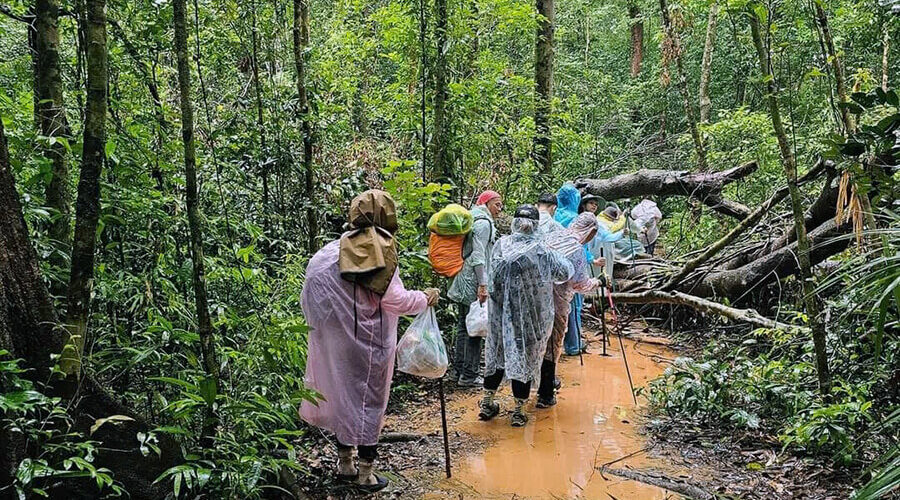
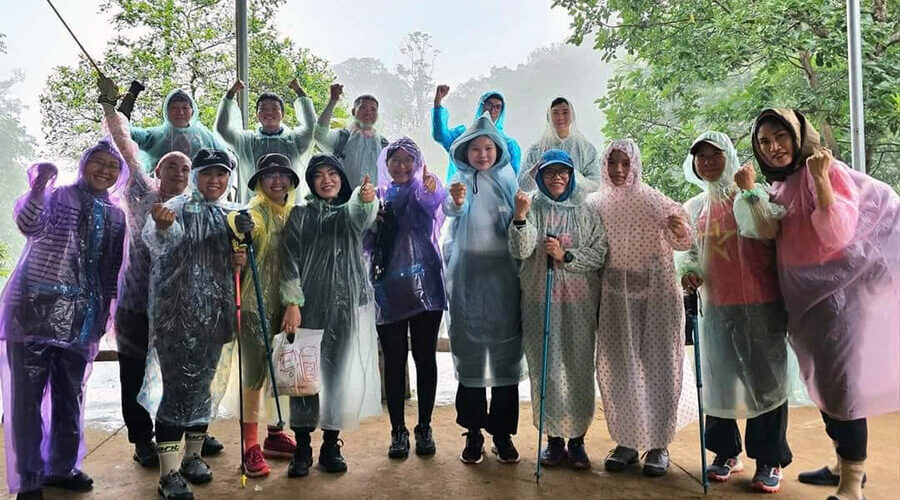
Trekking is an essential activity when visiting natural tourist destinations like national parks. Throughout this trip, you will participate in a range of adventurous activities and immerse yourself in the fascinating scenery and landscape. At the same time, it’s an opportunity to discover many protected plant and animal species within the national park.
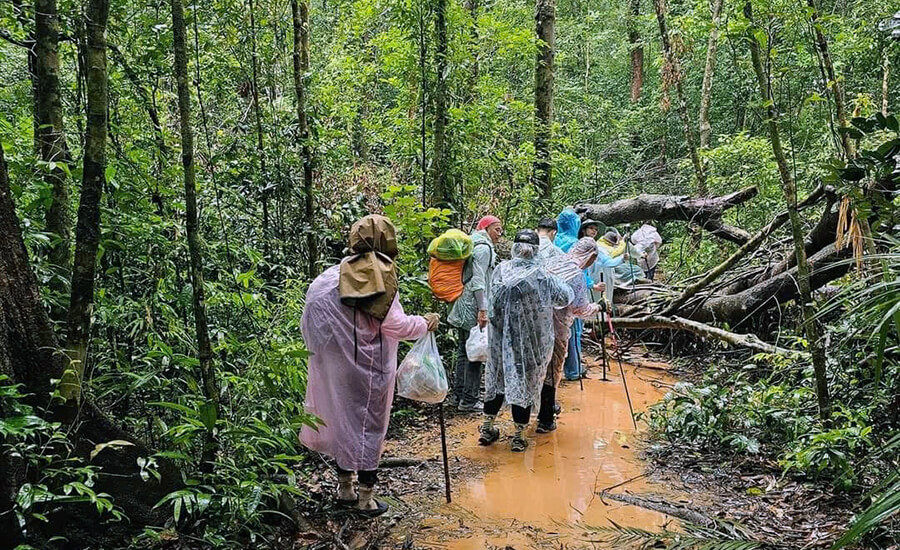
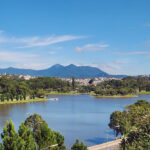
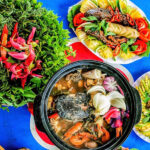
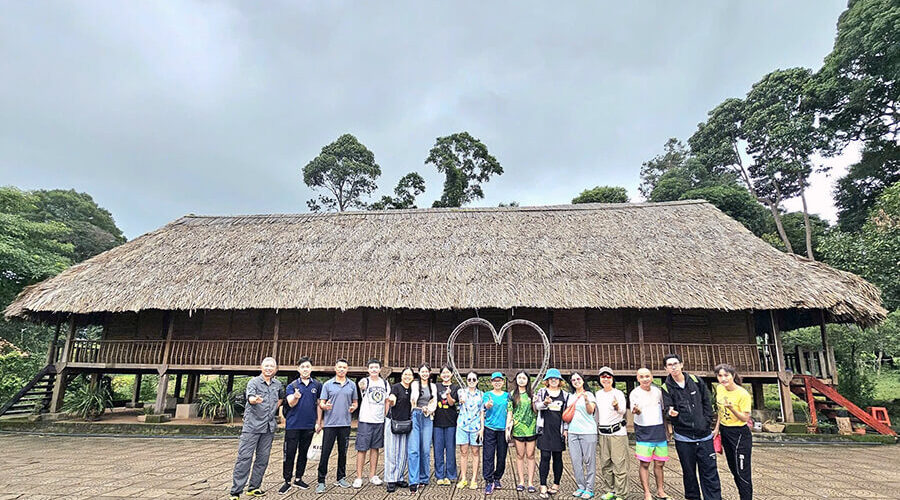
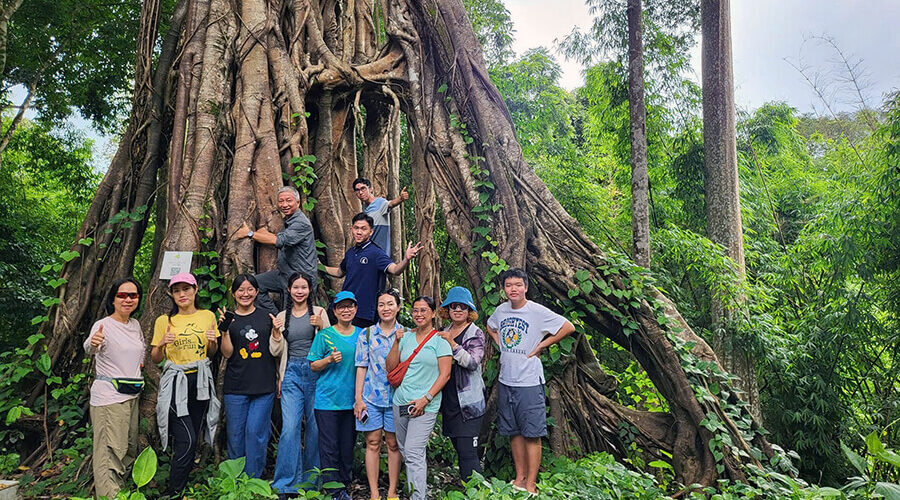
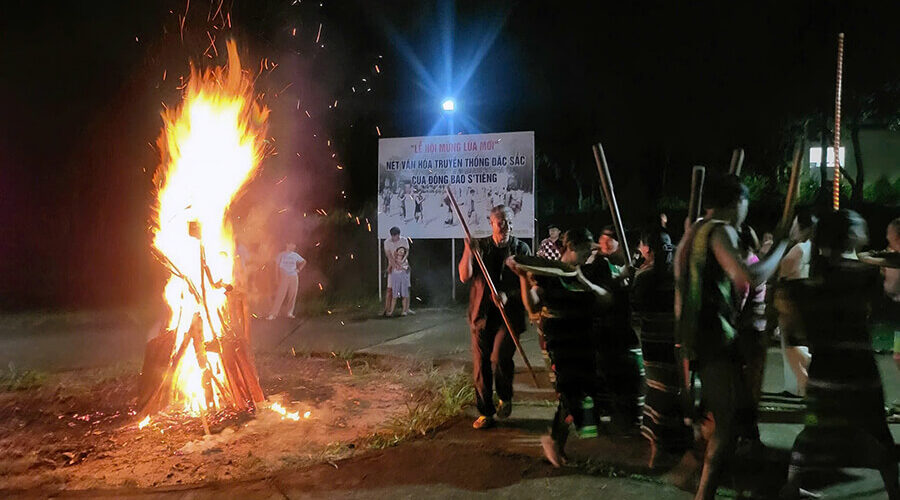
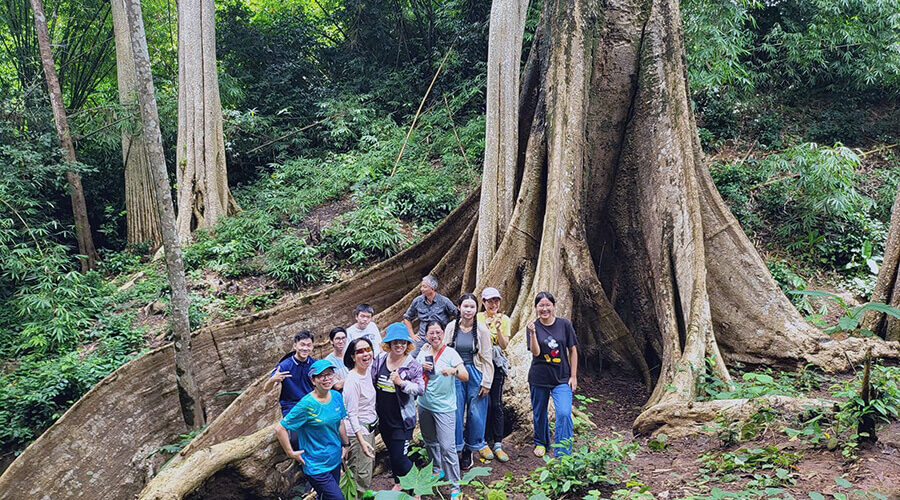
If time is limited, visitors should allocate at least 2 days and 1 night. This amount of time is sufficient to sightsee, explore, and experience many places, such as Dak Mai 1 Waterfall and Hoa Mai Lake, visit heritage trees and pine hills, and immerse yourself in the area’s beautiful, romantic nature. Evenings are the perfect time to organize cultural and artistic exchanges and enjoy the unique dishes of the S’tieng people.
Exploring Elephant Rock and Dak Mai Waterfall
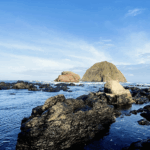
This is an interesting tourist attraction located within the national park. Not only is it vast, but it also features many large rocks amid lush cashew orchards, creating the majestic Elephant Rock Beach.
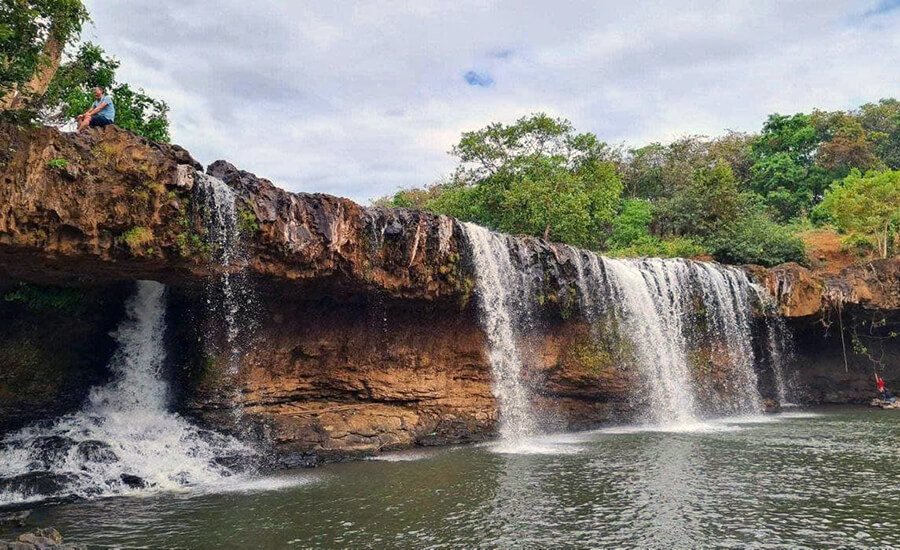
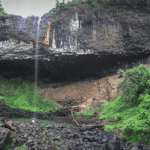
The highlight of the waterfall is the two cave entrances on either side, each containing a natural skylight. There is no water during the dry season, but during the rainy season, water flows in from the caves. The water will cascade down like a giant shower. Dak Mai Waterfall features the classic waterfall profile, with high tiers, a broad surface, and a large reservoir.
Camping at the National Park
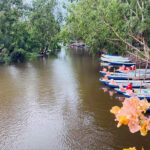
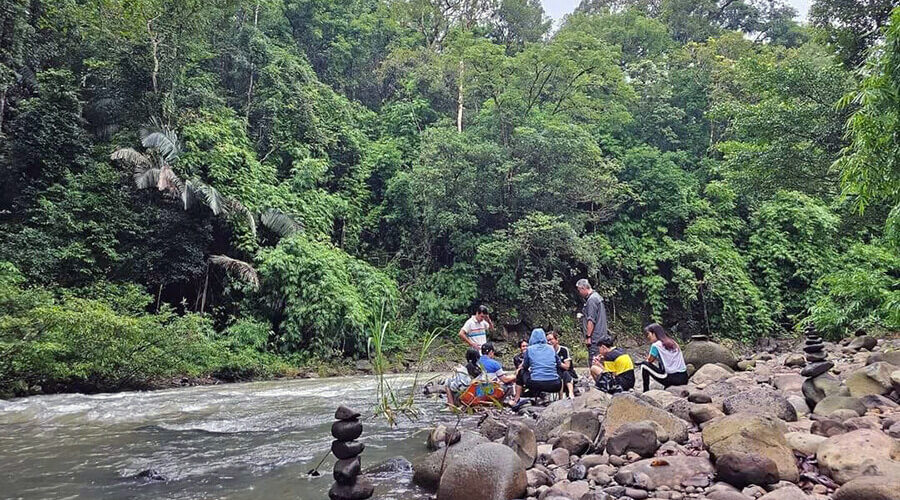
Among the unmissable experiences when visiting the national park, tourists can camp on the park grounds and beside the picturesque river.
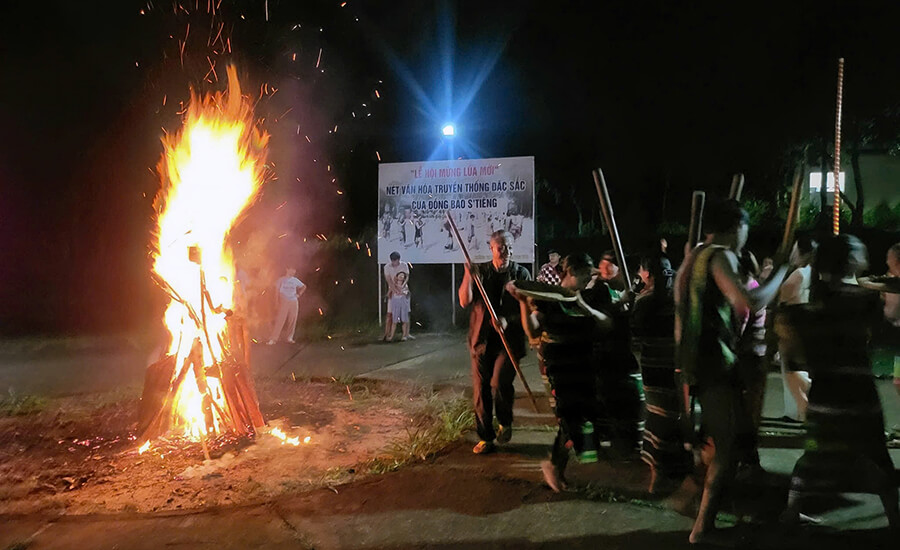
There’s nothing better than camping, lighting a campfire, and having a barbecue with friends and family to create unforgettable memories.
Visiting the Conservation Center
Bu Gia Map National Park was established to conserve and develop a standard model of evergreen closed-forest ecosystem on low hills and mountains below 1,000m in altitude, representing the transitional area between the Central Highlands and the Southern Delta. The national park covers a total area of 26.032 hectares, of which the natural forest area is 25.505 hectares.
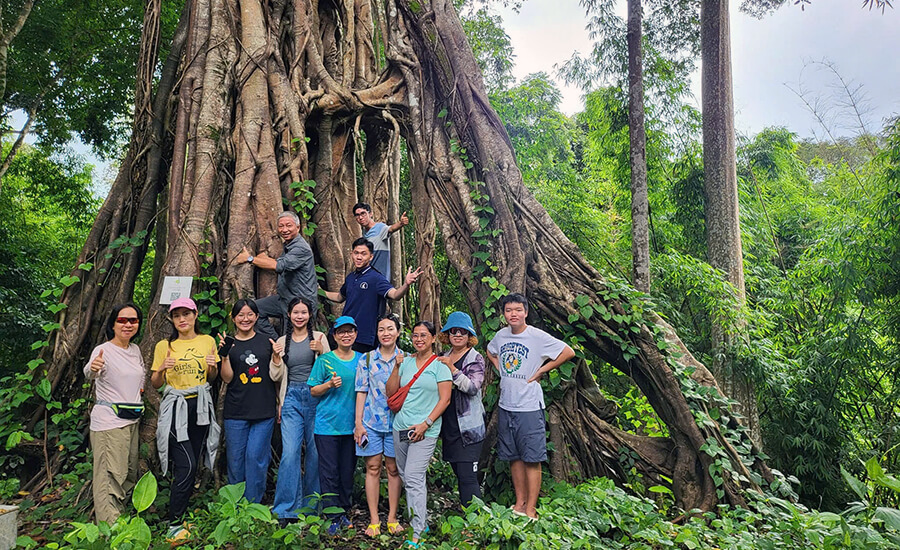
This area serves scientific research aimed at preserving the rare genetic resources of plant and animal species. With over 90% forest cover, Bu Gia Map National Park contributes to the protection and regulation of water resources for hydroelectric and irrigation reservoirs in the downstream area of the Be River. In addition, Bu Gia Map National Park is an attractive natural tourism destination, known for its forest ecosystem and the transition from the highlands to the plains.
Source: collected by An
Follow us for the best deals on Vietnam package tours and visa services!