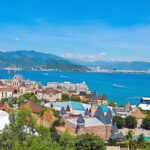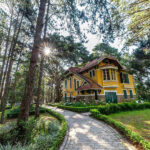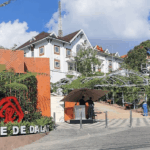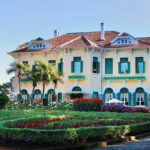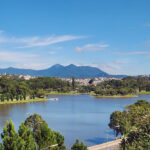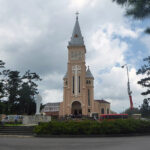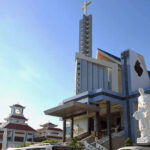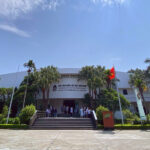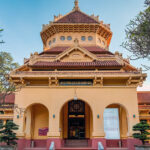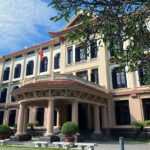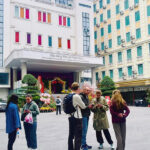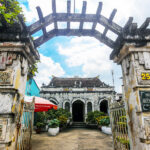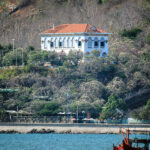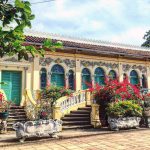
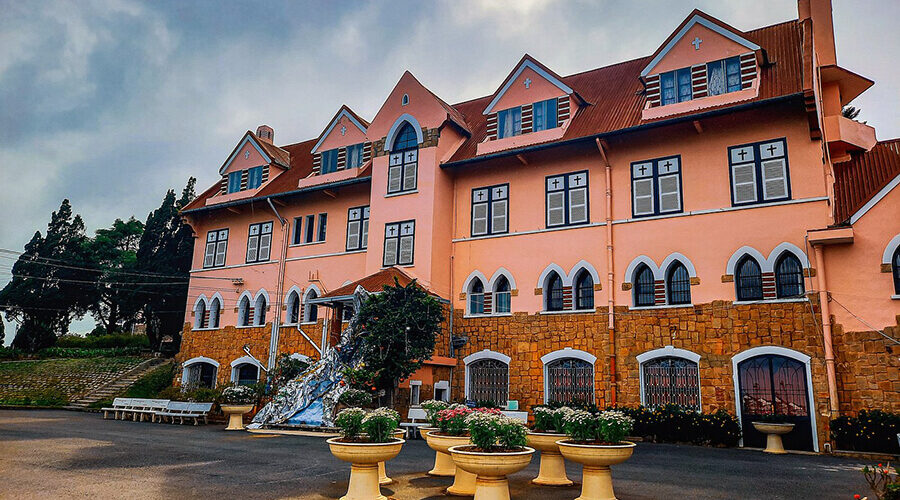
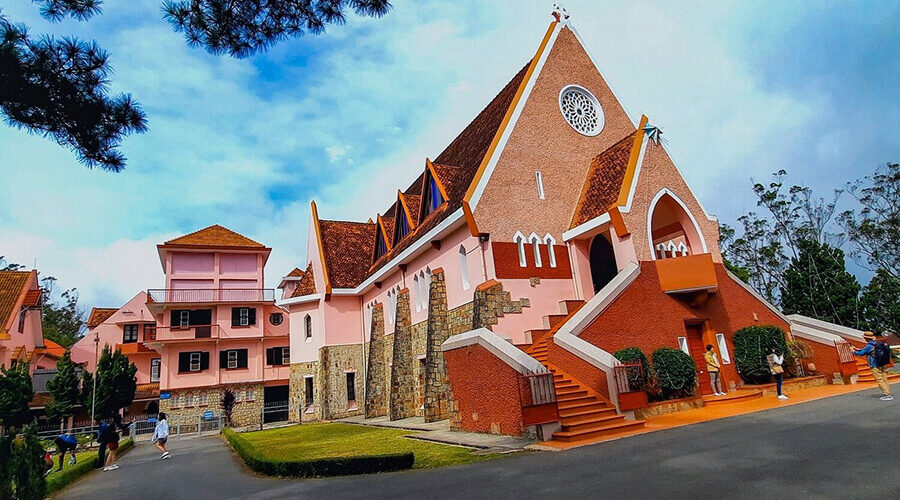
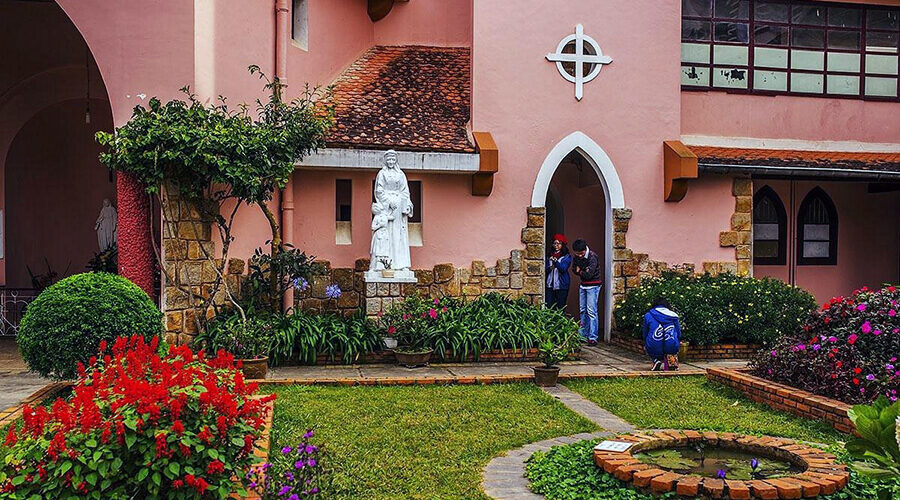
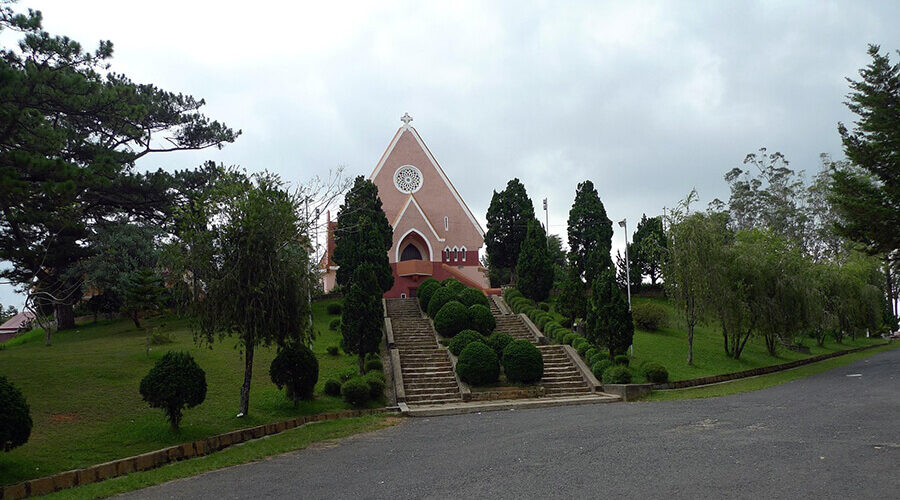
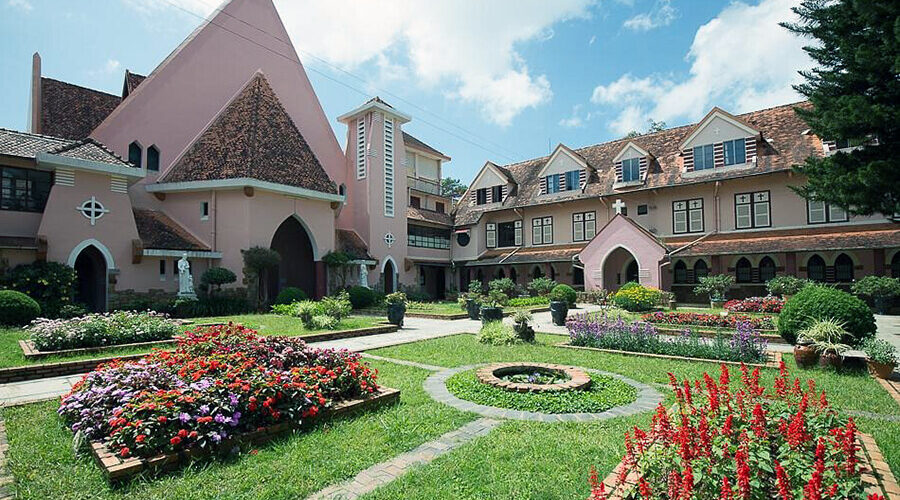
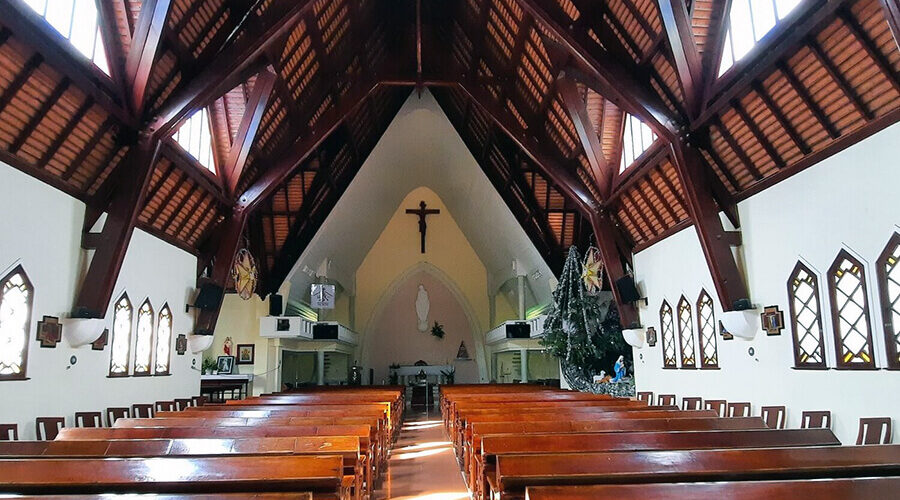
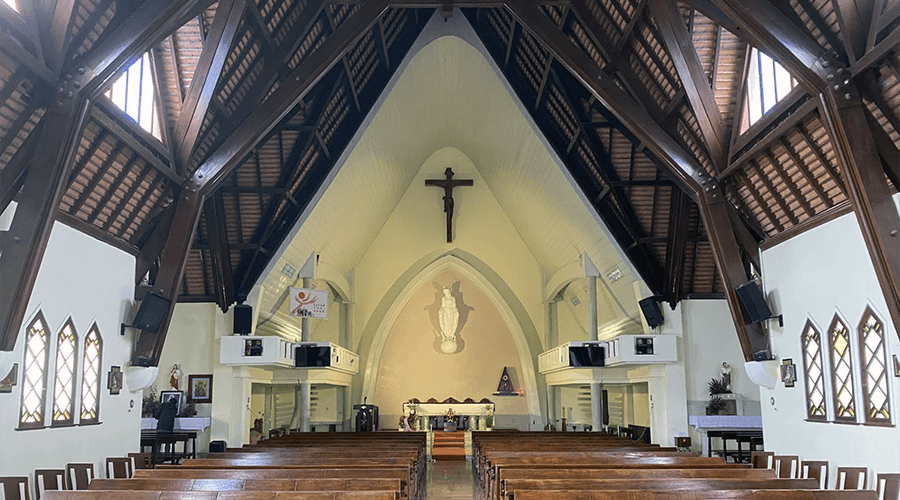
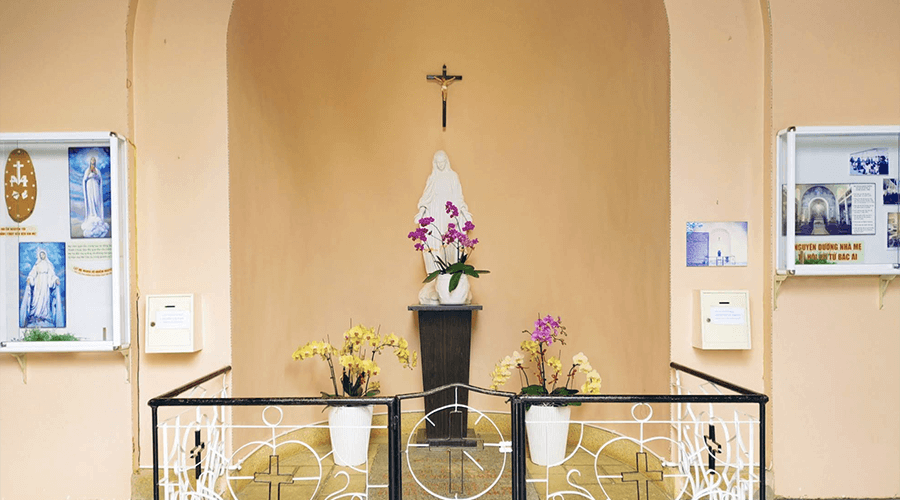


Domaine de Marie, located on Mai Anh Hill, is a famous tourist attraction in Da Lat (Lam Dong province) known for its architecture and scenery. From the church, visitors can enjoy panoramic views of the misty city’s captivating beauty.
Overview of Domaine de Marie
Domaine de Marie was built in the 17th-century European classical style, with walls constructed of split stone up to the window sills, a style typical of northern France. Construction began in the 1940s and was completed in 1944 thanks to donations from parishioners, led by the wife of the Governor-General of Indochina, Jean Decoux.
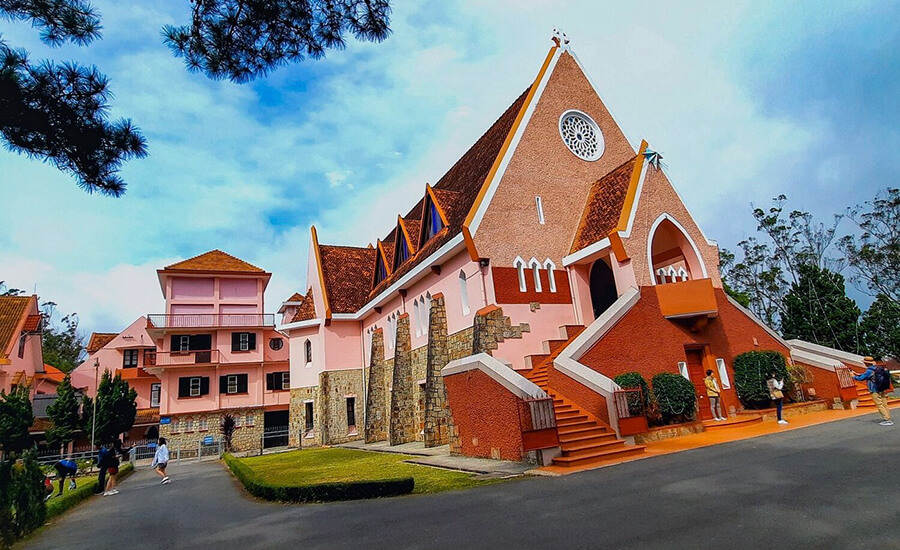
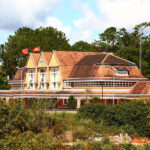
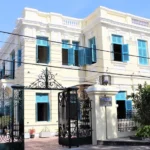
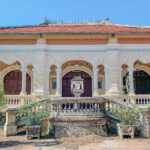
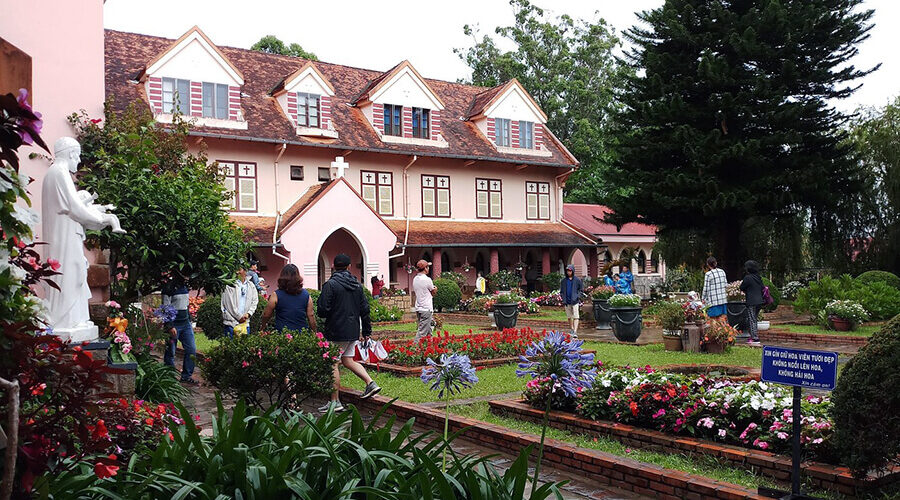
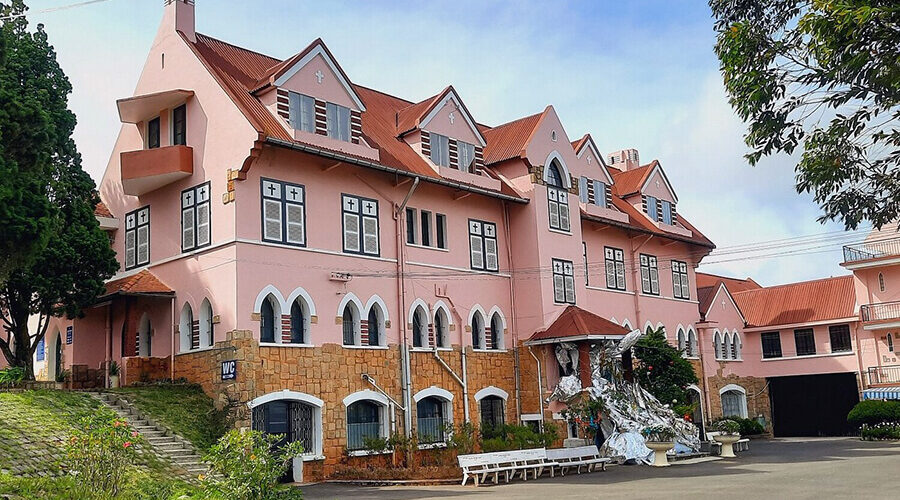
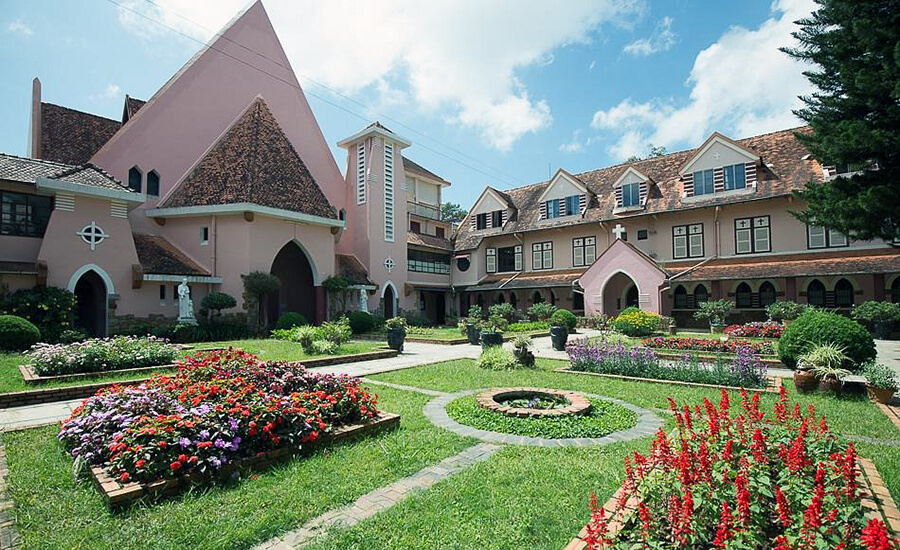
Front view of Domaine de Marie in Da Lat
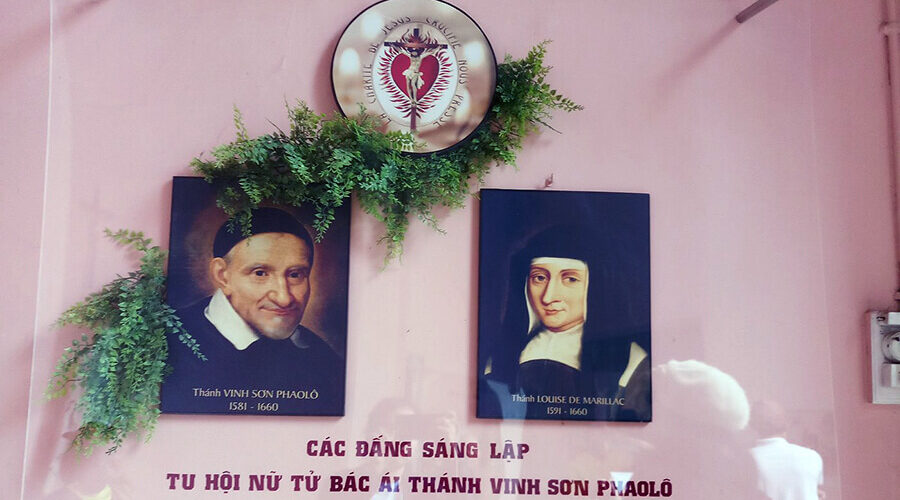
Domaine de Marie is one of the most famous convents in the land of a thousand flowers. Besides its familiar name, it is also known as Mai Anh (meaning cherry blossom trees, because there used to be many cherry blossom trees here) and Vinh Son (the chapel of the Daughters of Charity of Saint Vincent de Paul).
Domaine De Marie is located in the heart of Da Lat, attracting both tourists and parishioners. Mass times at Domaine De Marie are 5 PM on weekdays, and 5:45 AM and 4:30 PM on weekends. Mass times may vary on special occasions. Visitors should note that it is advisable to avoid visiting during services to prevent disruption and to ensure a more relaxed atmosphere.
The convent has cared for many orphaned children and taught them weaving, embroidery, and painting. The revenue from this operation helps keep the Domaine open.
Distinctive architecture of the Domaine De Marie in Da Lat
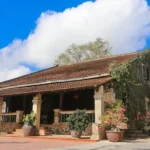
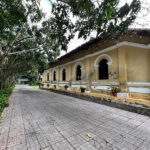
The first impression of the Domaine De Marie is its distinctive European architectural style, spread across a vast 12-hectare area. A surprising detail is that the church doesn’t use cement but instead utilizes natural binders such as lime and molasses, with walls constructed from split stone up to the window sills.
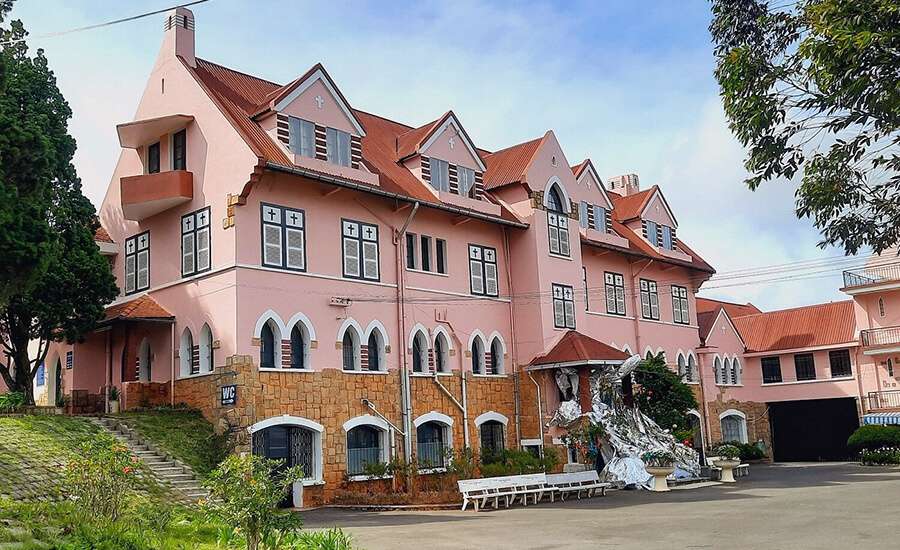
Compared to classical Western convents, Domaine De Marie has many innovative features. For example, while still maintaining a cruciform floor plan, the proportions are relatively more flexible, measuring 11 meters wide and 33 meters long. Two sets of steps lead to the main entrance, converging at the main hall.
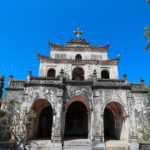
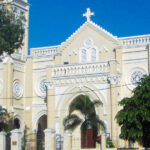
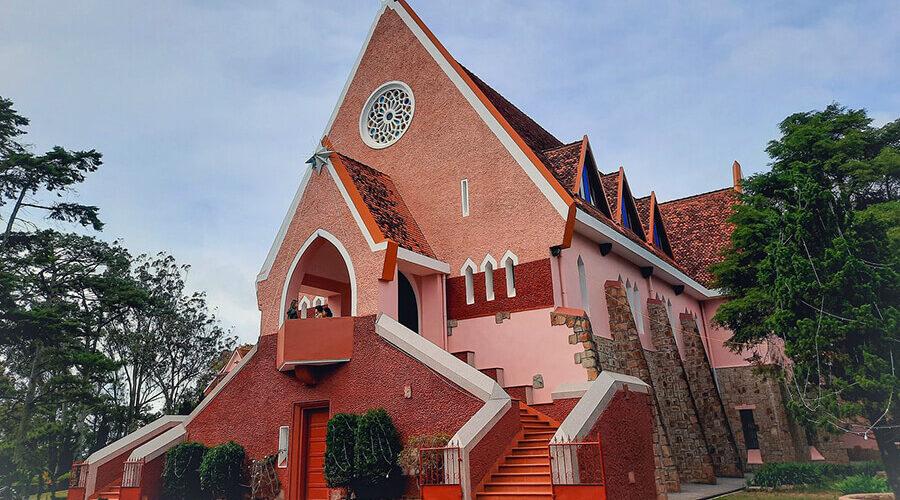
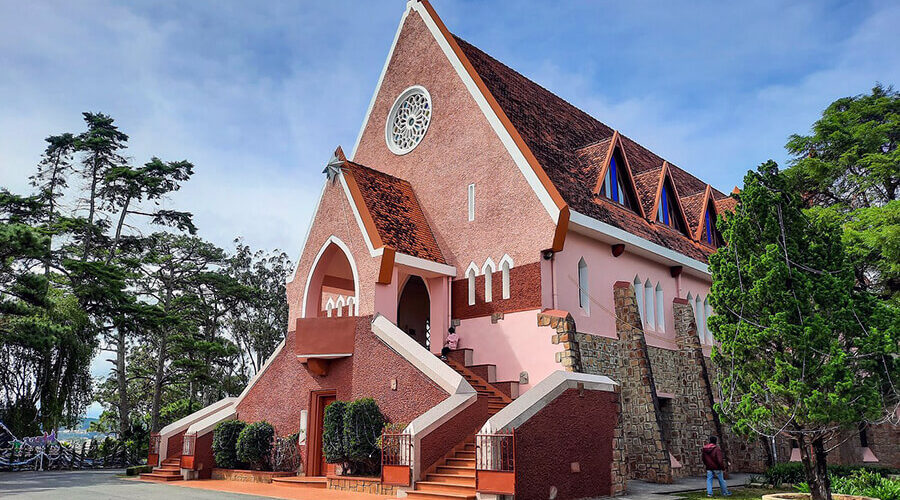
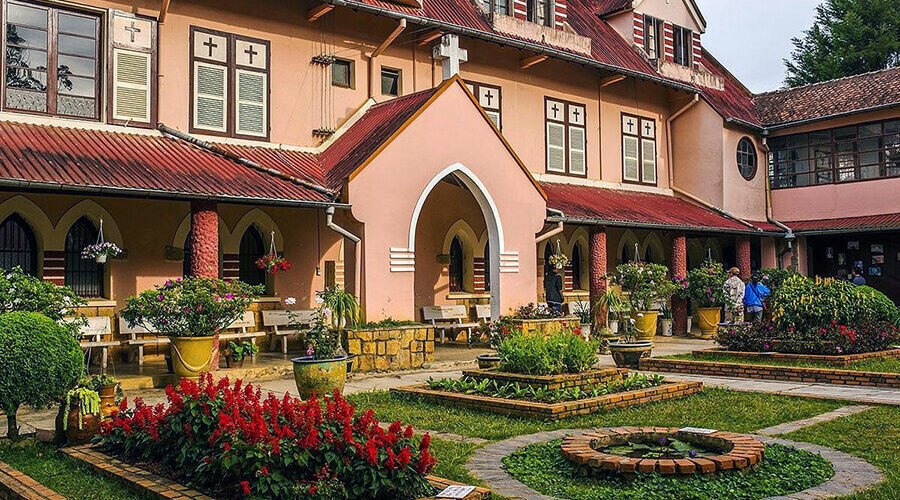
Upon entering the convent grounds, one can admire many types of flowers in bloom, especially the sea-green. The vestibule is an isosceles triangle, topped with a cross, and adorned with small, lance-shaped, arched doorways. In the center of the facade, near the roof apex, is a circular rose window – a detail commonly found in French churches of the late 17th century.
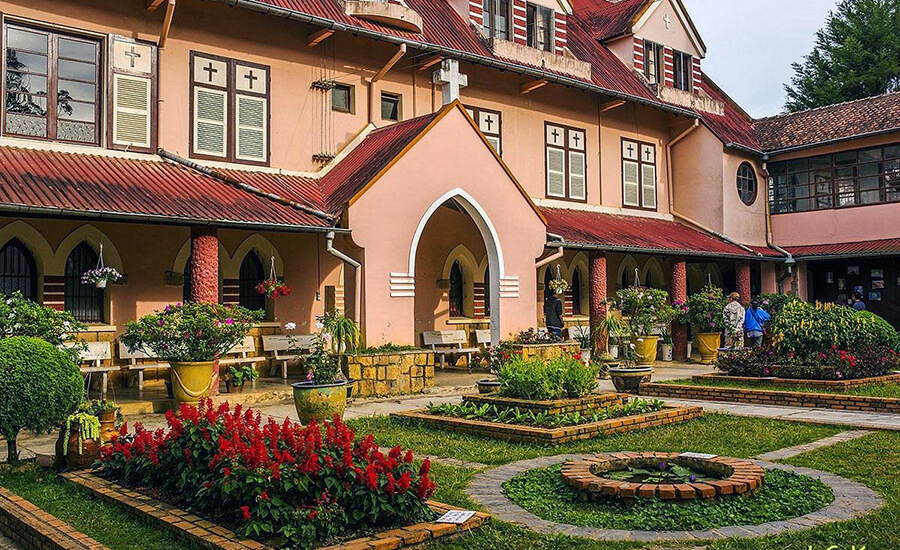
The roof of Domaine De Marie resembles the traditional communal roofs of the Central Highlands, with a steep slope and covered with red tiles manufactured in Vietnam. The dormer windows protruding from the large roof section serve both as places to install stained glass from France and to provide better lighting, making the sanctuary more radiant.
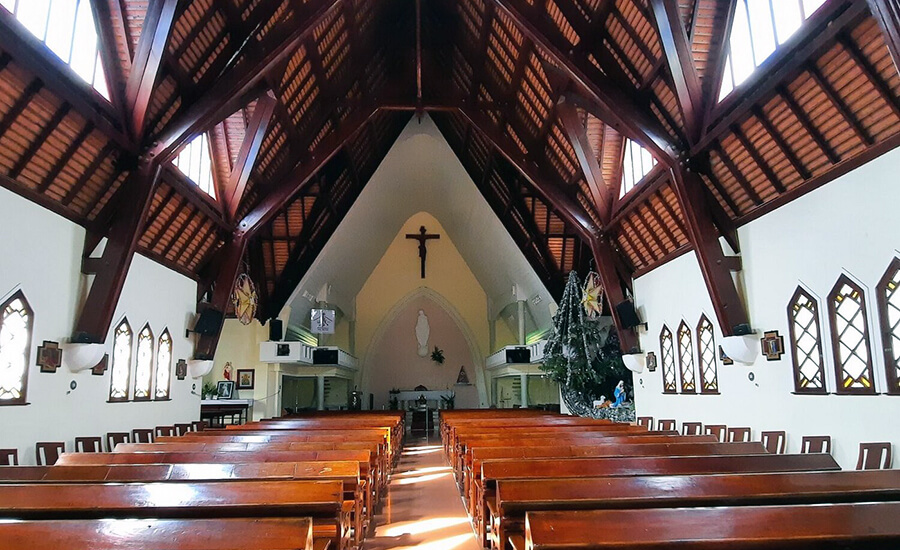
style traditional communal roofs of the Central Highlands
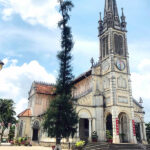
The walls are built in the Norman architectural style using split stone up to the window sills. The convent also retains its characteristic deep pink color from its completion to the present day. Initially, Domaine De Marie did not have a bell tower, but one has now been built behind the main sanctuary.
Unlike the Dalat Cathedral, the facade of Domaine De Marie is shaped like an isosceles triangle, topped with a symbolic cross. The convent’s facade features circular windows modeled after roses, while triangular windows on either side of the roof allow ample light into the interior.
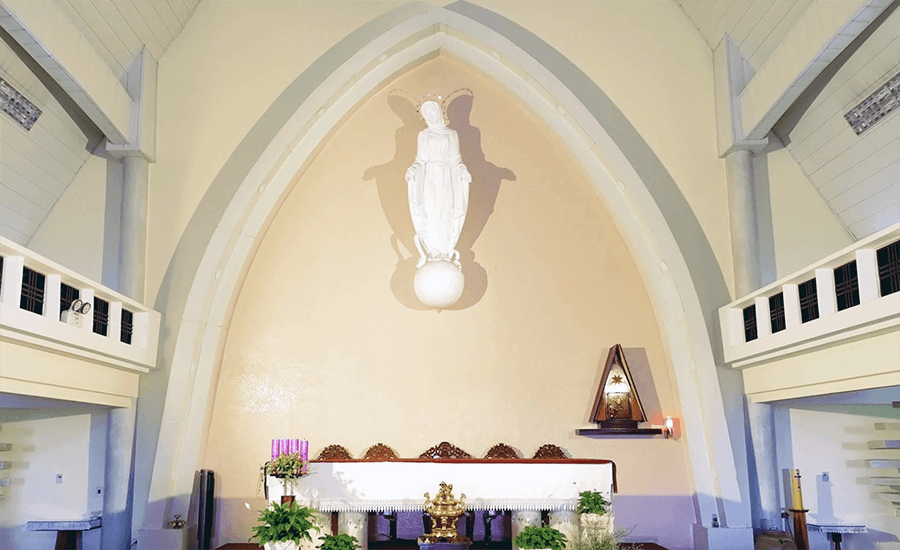
The Virgin Mary statue in the sanctuary
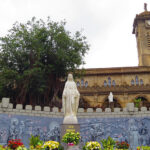
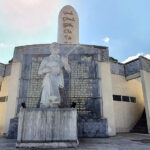
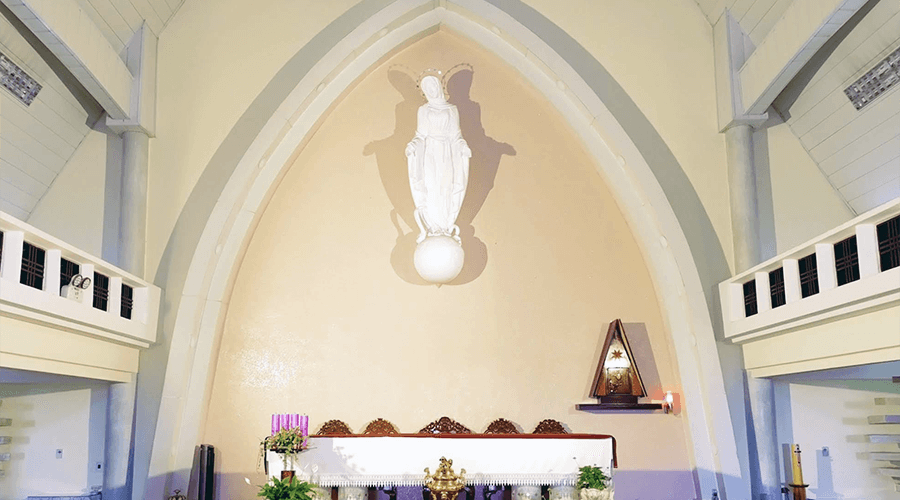
Inside the convent is a statue of the Virgin Mary standing on a globe, designed by the French architect Jonchère in 1943, modeled after a Vietnamese woman. The statue, donated by the wife of the Governor-General of Indochina, Decoux, is 3 tons tall and weighs 1 ton.
Domaine de Marie
- Address: No. 1 Ngo Quyen Street, Cam Ly-Da Lat Ward, Lam Dong Province.
- Entrance Fee: Free.
- Tourist spots nearby: Dalat Cathedral, Xuan Huong Lake, Valley of Love, Linh Phuoc Pagoda, Truc Lam Monastery…
Source: collected by An
Follow us for the best deals on Vietnam package tours and visa services!