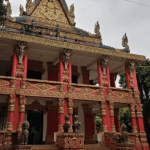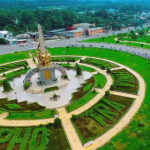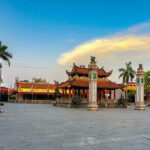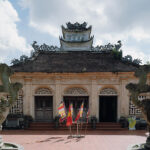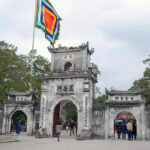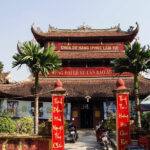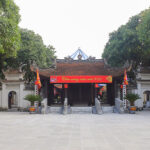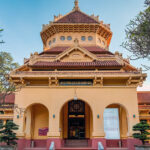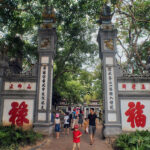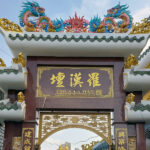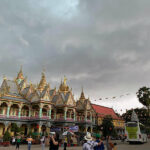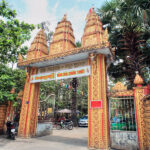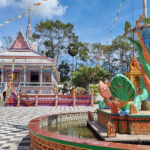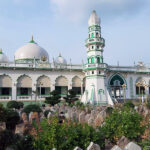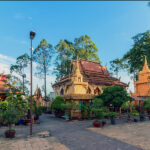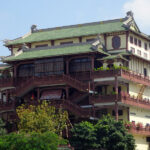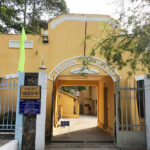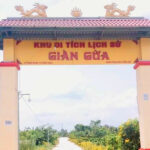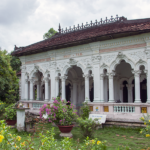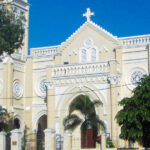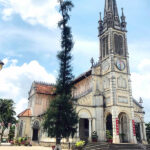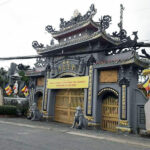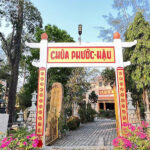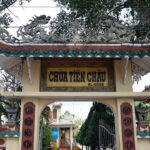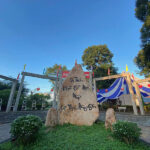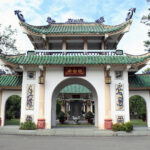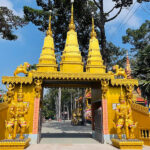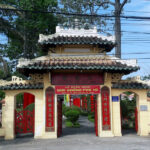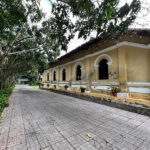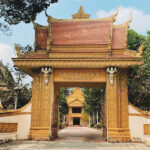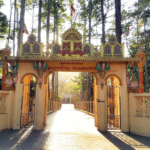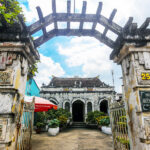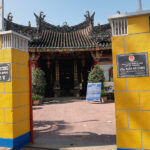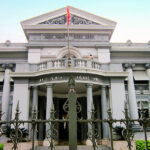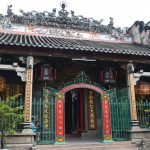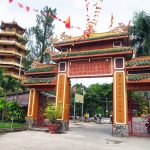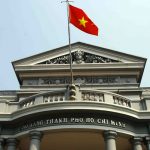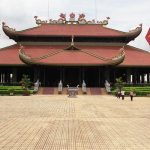
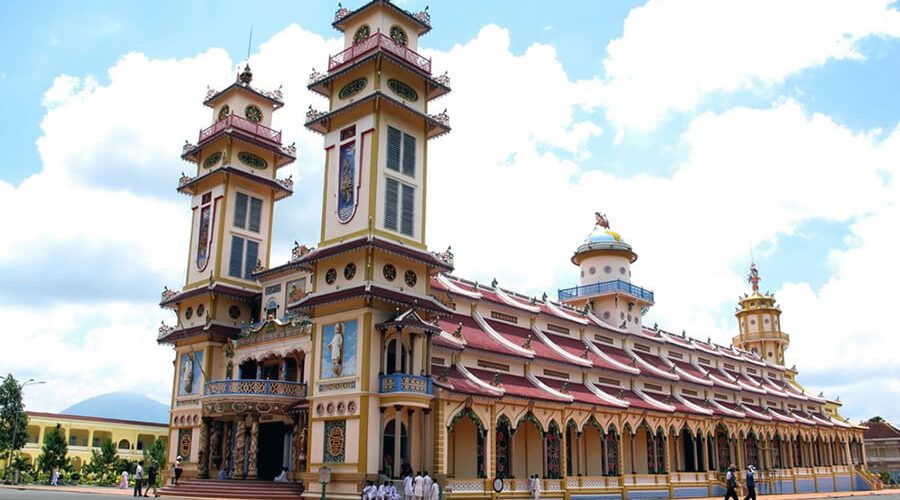

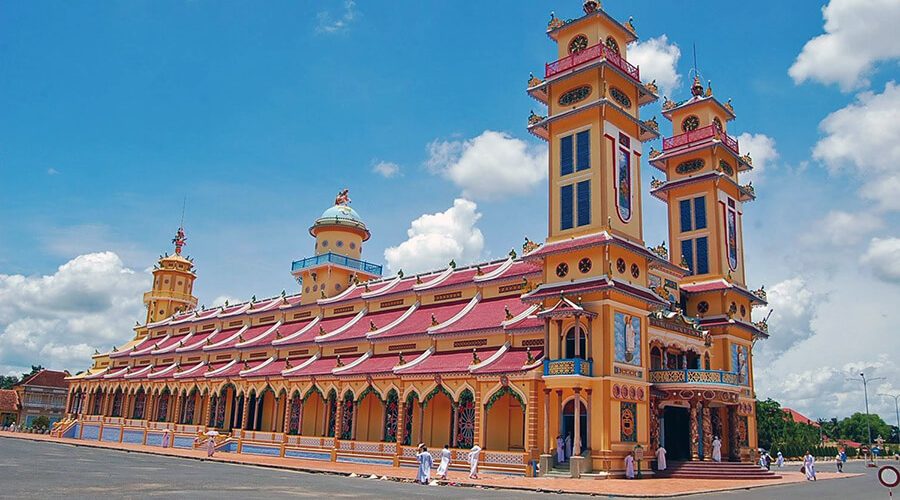







One of the famous tourist destinations in Tay Ninh is the Tay Ninh Holy See, a religious site of a local faith with distinctive architecture, located on a 1.2 km-wide campus.
Table of Contents
Overview of Tay Ninh Holy See
Tay Ninh Holy See, also known as Cao Dai Cathedral, is located on Pham Ho Phap Avenue, Long Hoa Ward, about 4km southeast of Tay Ninh center and about 100km northwest of Ho Chi Minh City. This place is known as a typical Cao Dai religious site in Tay Ninh. According to our research on the Tay Ninh Holy See, the highlight of its architecture is a structure built entirely of bamboo-reinforced cement. The local also said that the Tay Ninh Holy See was built on the sacred land – a place considered a holy place for Saints, Immortals, Buddhas, as well as God, who chose it as a Holy See to come and dwell.
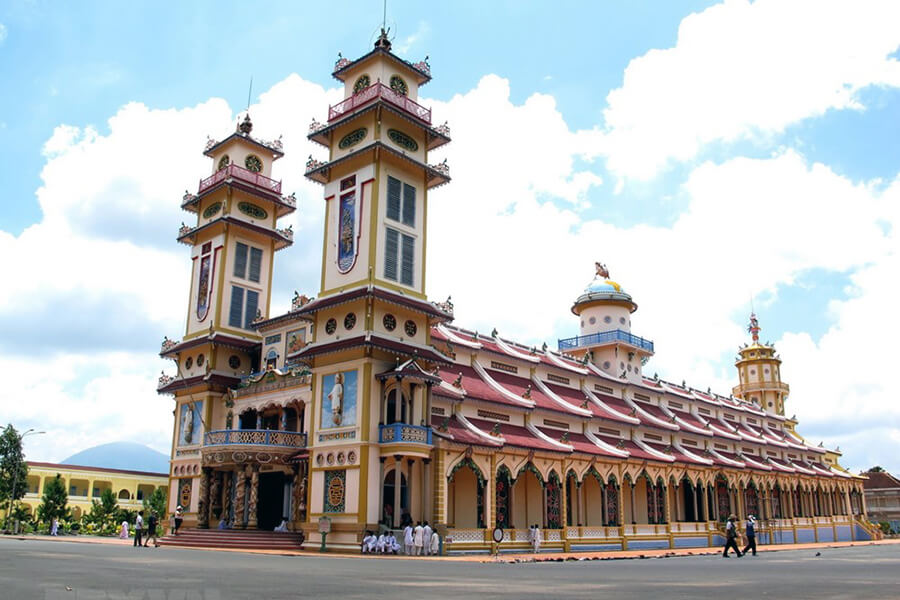
An outlook of the cathedral
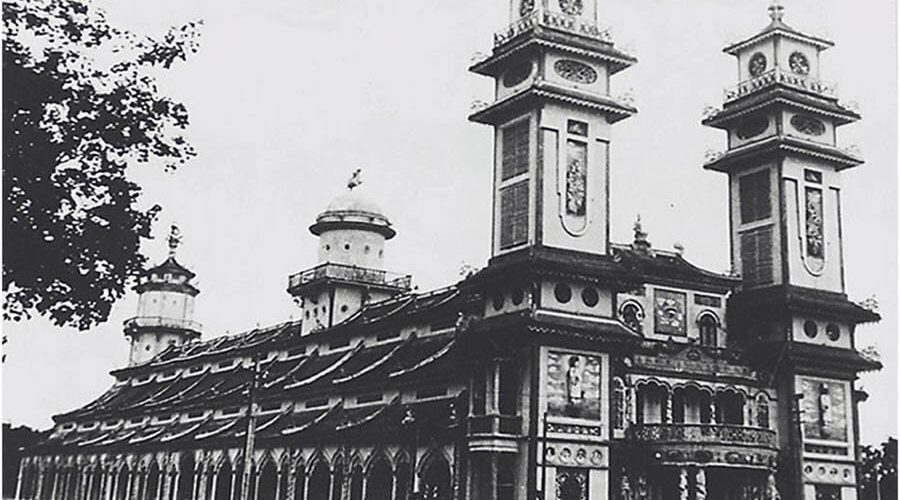
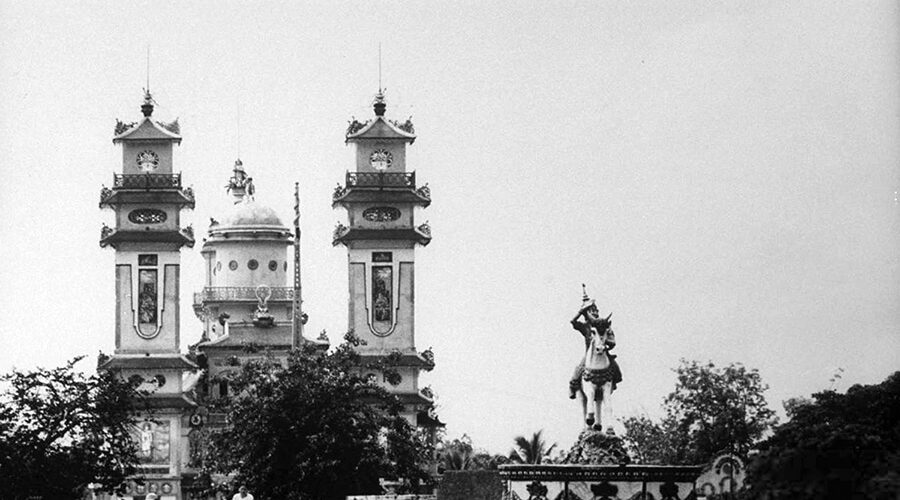
Although it was built around mid-1933, the Tay Ninh Holy See was not completed until 22 years later (1955) due to wartime interruptions. According to the original design, the Holy See is 135m long and 27m wide, with a foundation height of 1.8m.
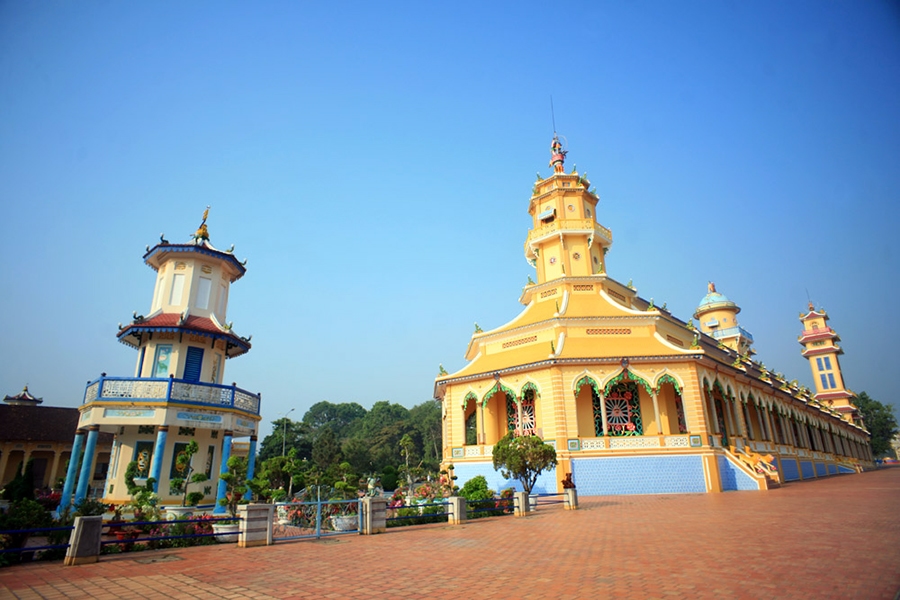
However, when construction of the Holy See began, the cathedral faced financial difficulties, so the project was scaled back. The actual size is only 97.5m long and 22m wide.
When should you visit Tay Ninh Holy See?
Unlike outdoor tourist destinations in Tay Ninh, where you need to choose the right time to avoid rainy days, you can visit Cao Dai Holy See at any time of the year. However, based on many people’s experience visiting the Tay Ninh Holy See, you should go on the 9th day of the first lunar month or the full moon day of the 8th lunar month, when the two largest Tay Ninh festivals of the year take place.
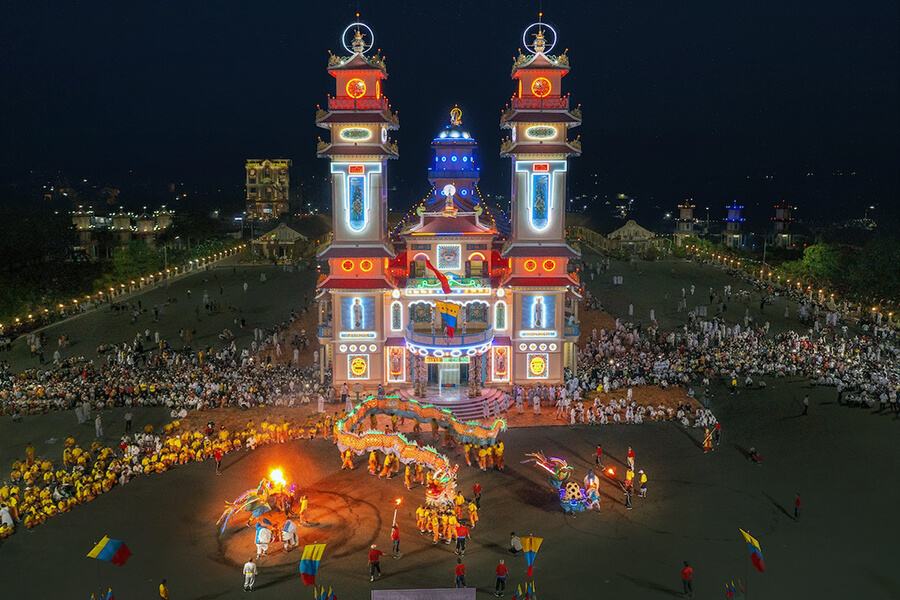
Dieu Tri Cung Festival in Cao Dai Holy Land
On these days, the number of pilgrims and visitors to the Tay Ninh Holy See is exceptionally high, resulting in extremely crowded conditions.
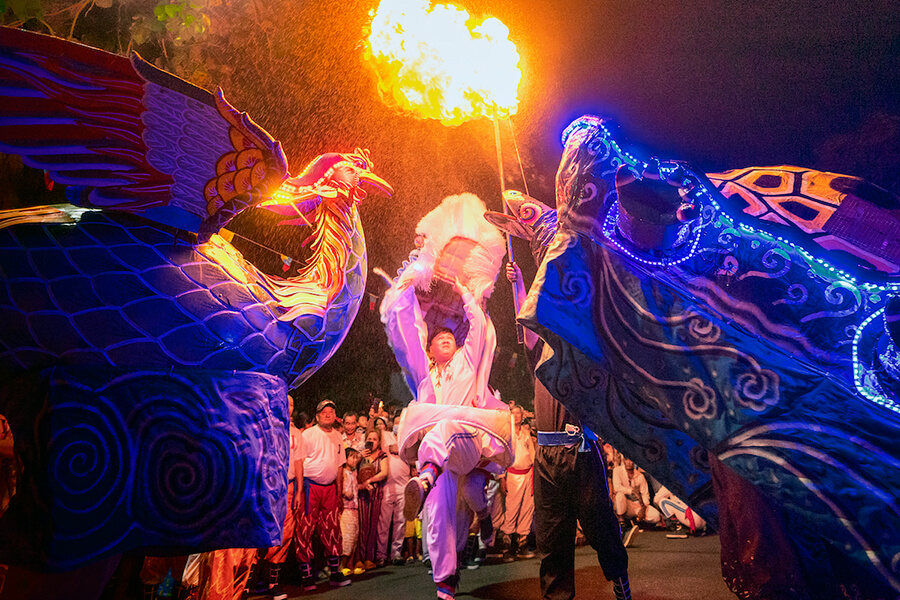
On a normal day, the ideal time is around 12 o’clock, as this is when the grand altar worship ceremony at the Holy See takes place.
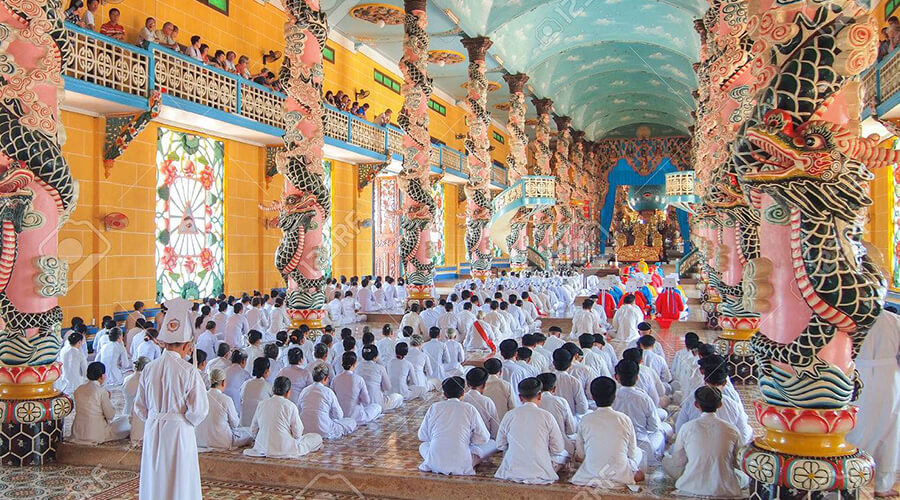
The celebration at noon time
When attending festivals here, you will learn more about the spiritual beauty and unique culture of the Cao Dai religion.
Tay Ninh Holy See Highlights
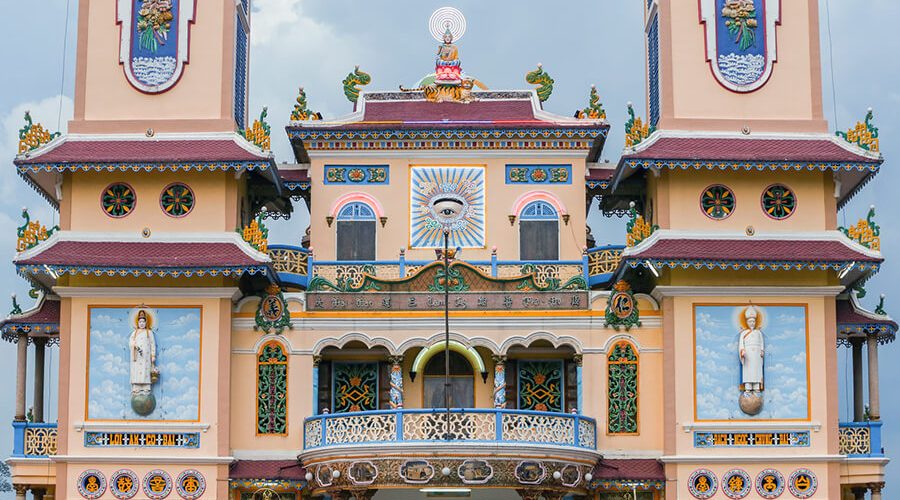
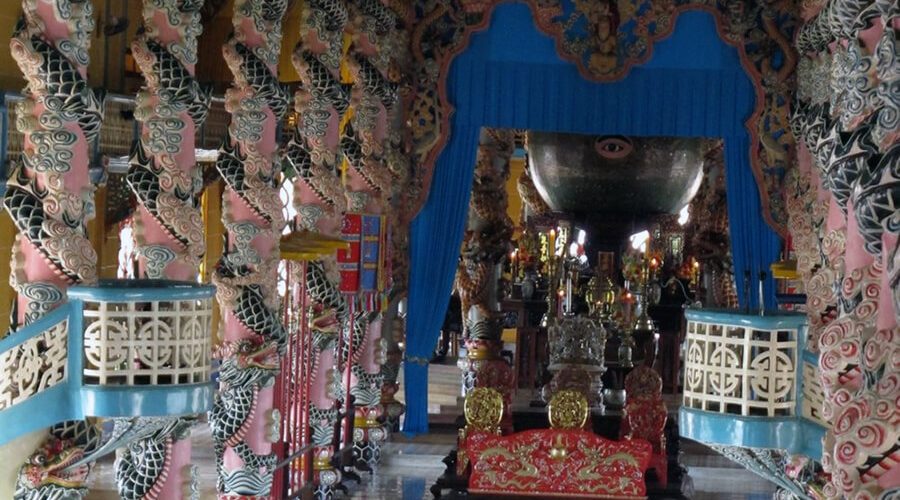
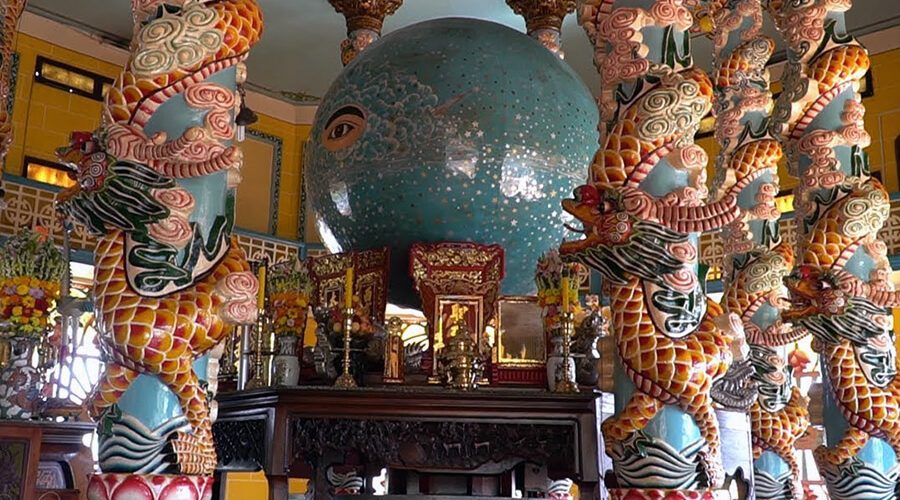
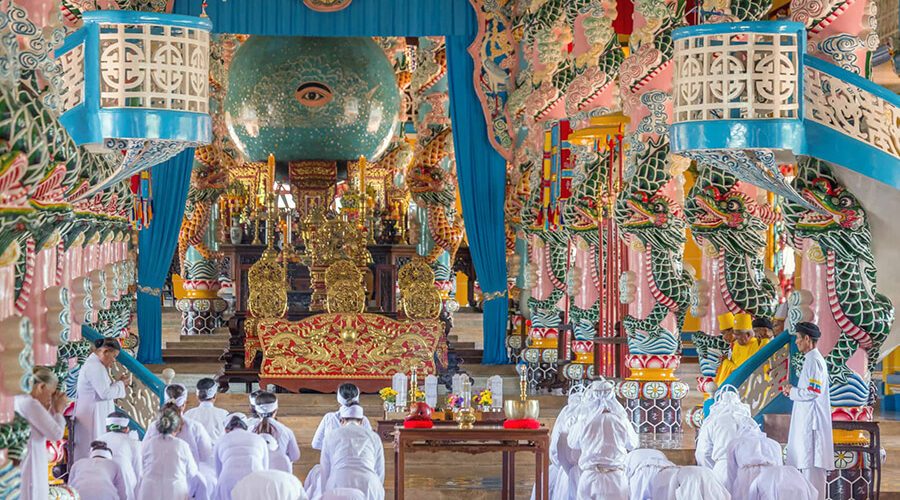
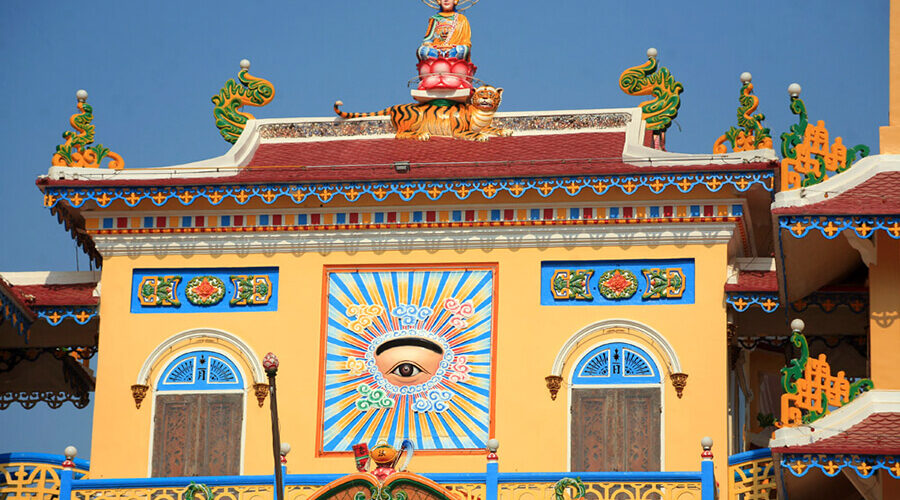
The first impression on visitors coming here is the “Thiên Nhãn”(Divine Eyes – representing God), believers that God witnesses everything, everywhere, constantly. At the temple, there are in total 50 Divine Eyes of five different shapes, each carrying a different meaning.
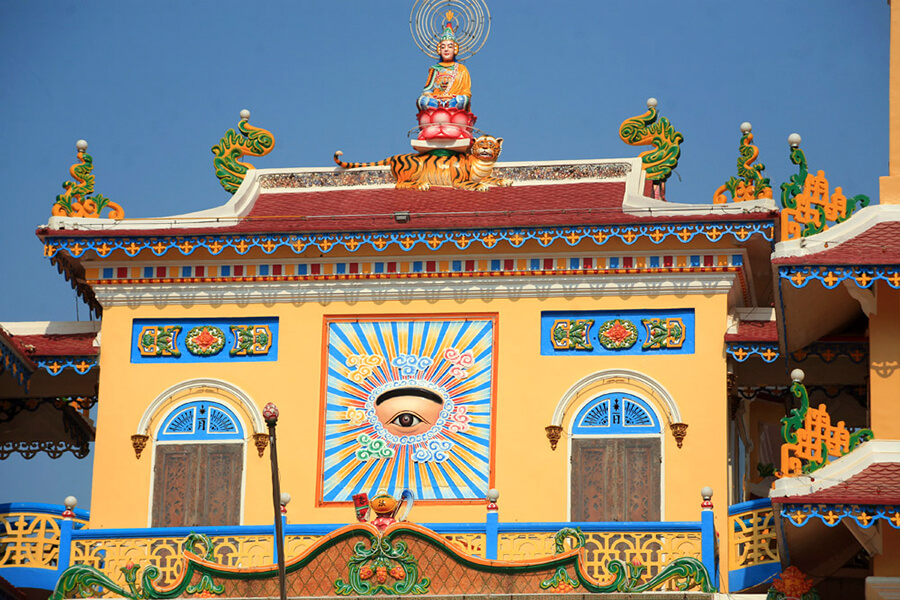
The main area of the Thien Nhan shrine is located in the realm of wisdom with 3,027 stars (representing 3,072 stars). Visitors are not allowed to enter the main hall during sightseeing; they may only look at it from the two sides and take pictures.
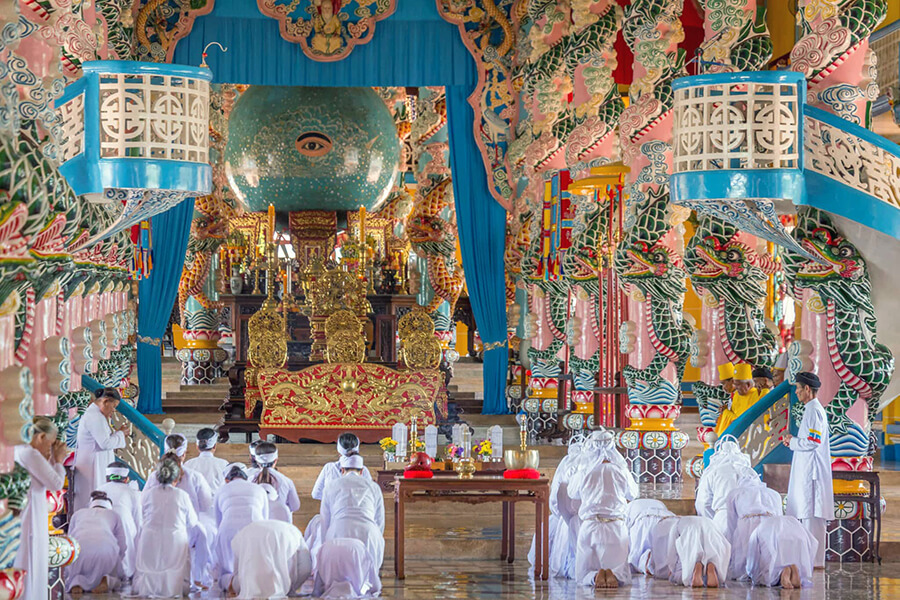
Cao Dai followers built the temple under the direct construction of the head spirit medium or Ho Phap (Defender of the Dharma). There was no detailed project drawn on paper, nor any participation by an architect, construction engineer, or machine to assist.
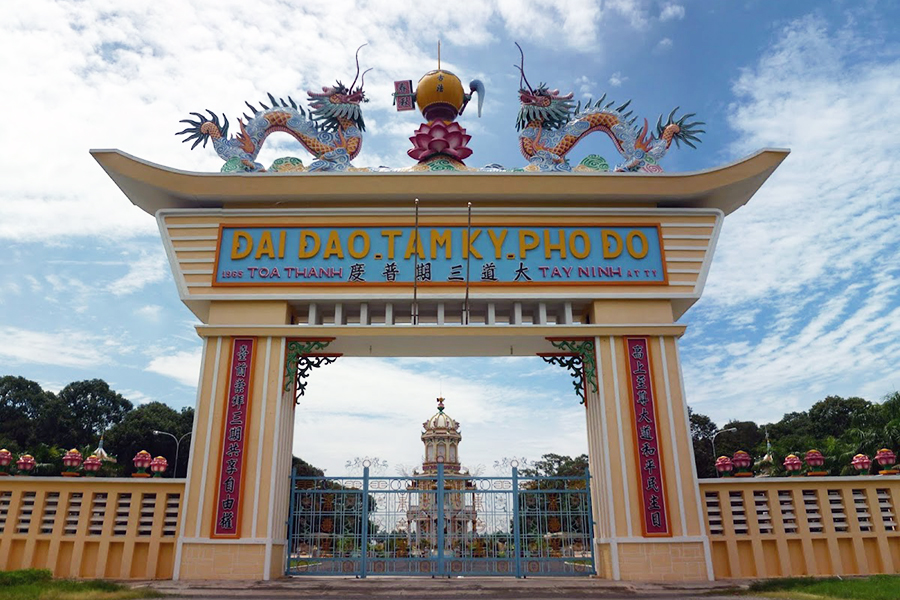
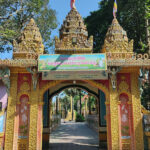
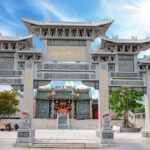
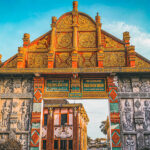
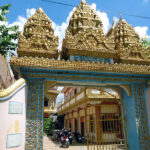
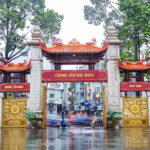
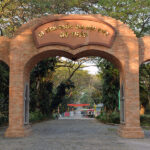
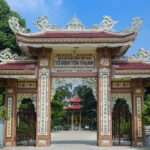
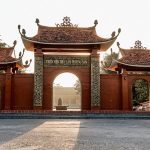
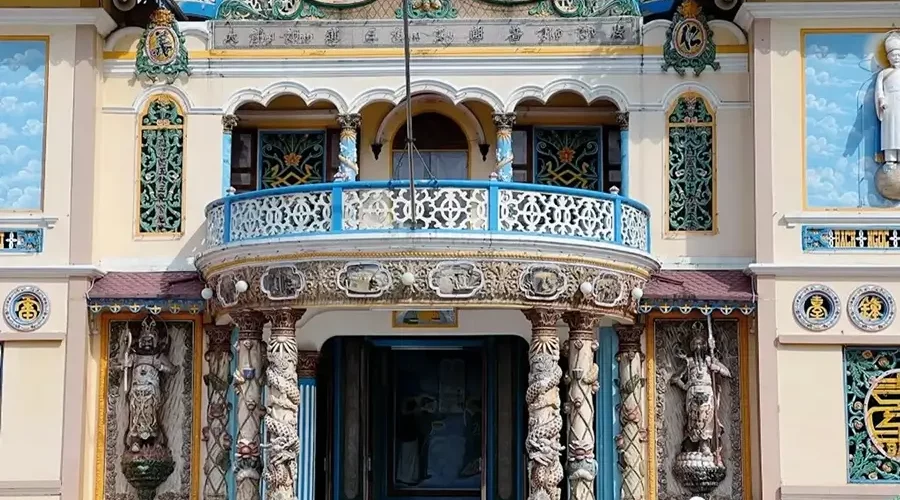
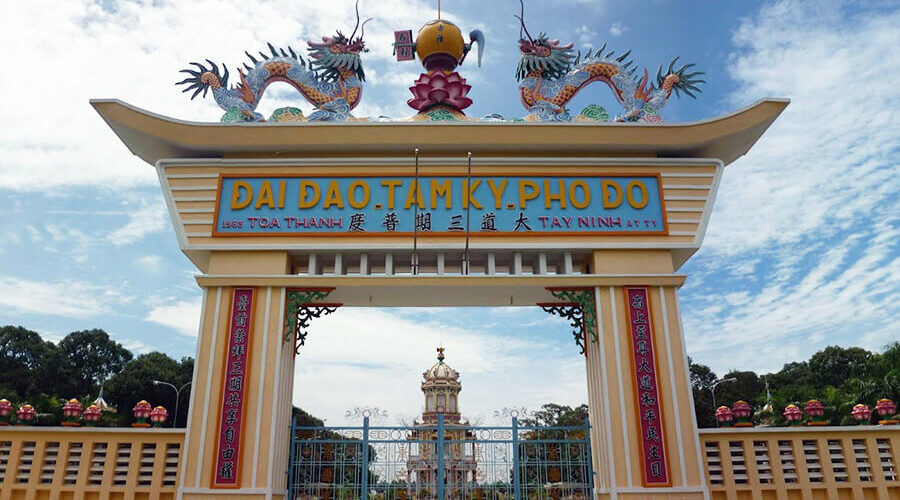
Entrance of Cao Dai Holy Land
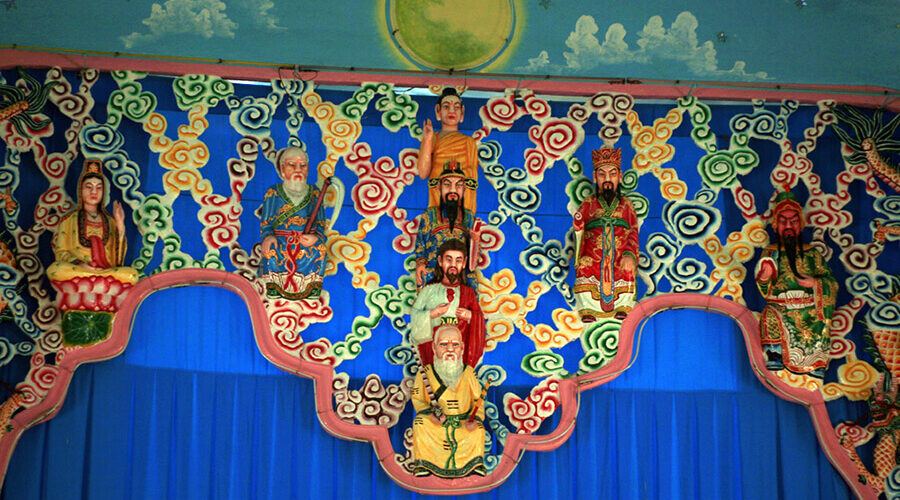
Cao Dai is a new religion that incorporates elements from major religions, including Buddhism, Taoism, Confucianism, Christianity, and Geniism.
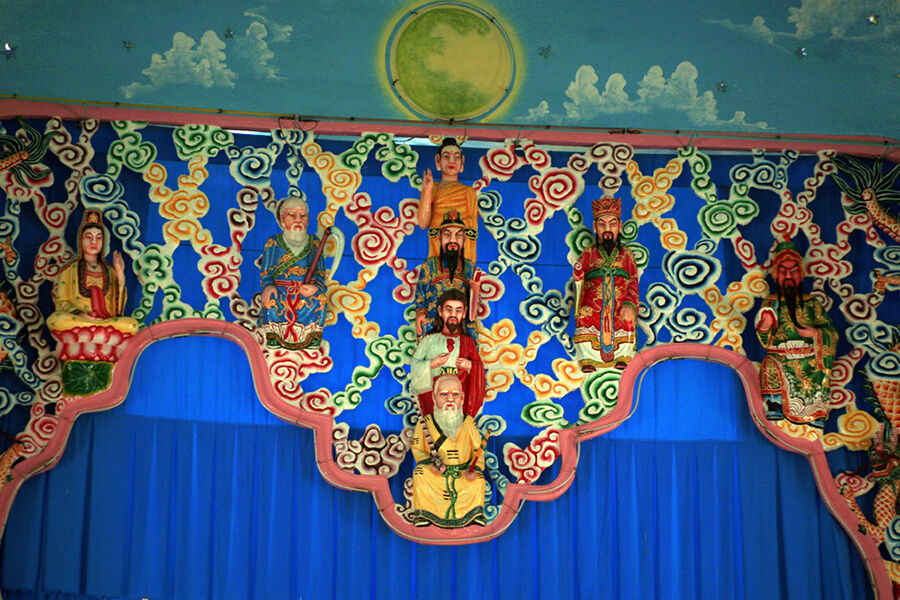
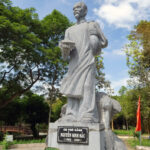
This religion even worshiped several modern politicians and writers who believed in guiding humanity toward the Third Amnesty. They are “Three Saints” including Sun Yat-Sen (the Chinese statesman and revolutionary leader), Victor Hugo (French poet and author), and Nguyen Binh Khiem (Vietnamese administrator, educator, poet, sage).
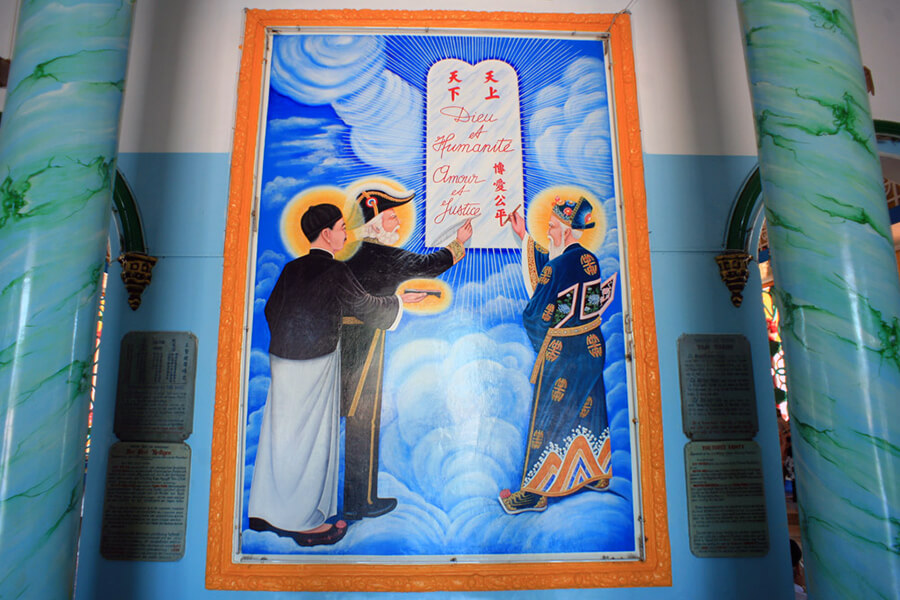
The Three Saints: Sun Yat-Sen, Victor Hugo, and Nguyen Binh Khiem
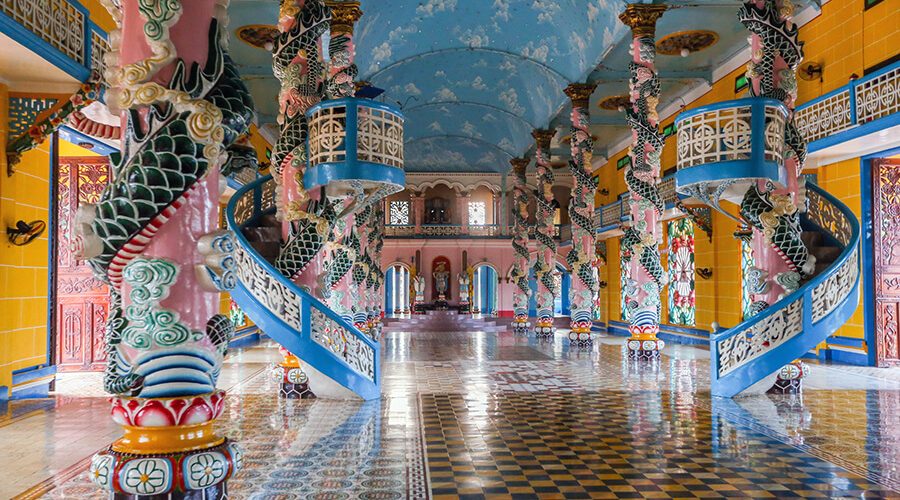
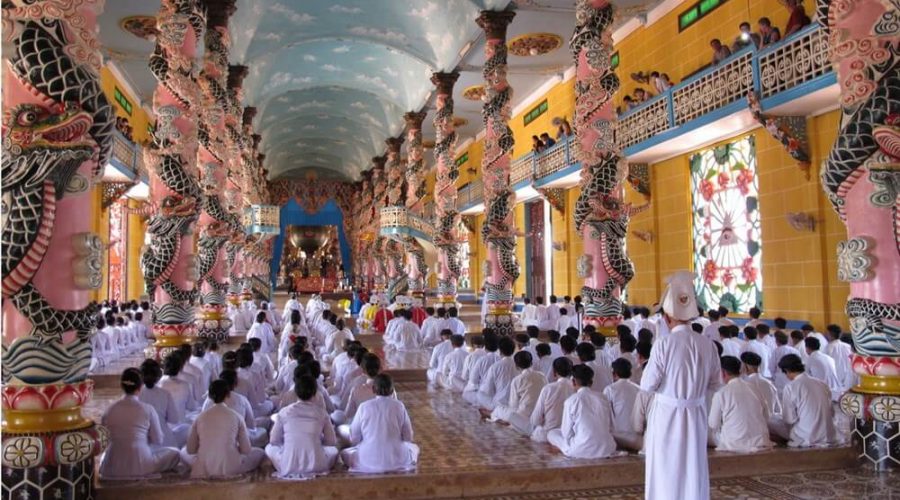
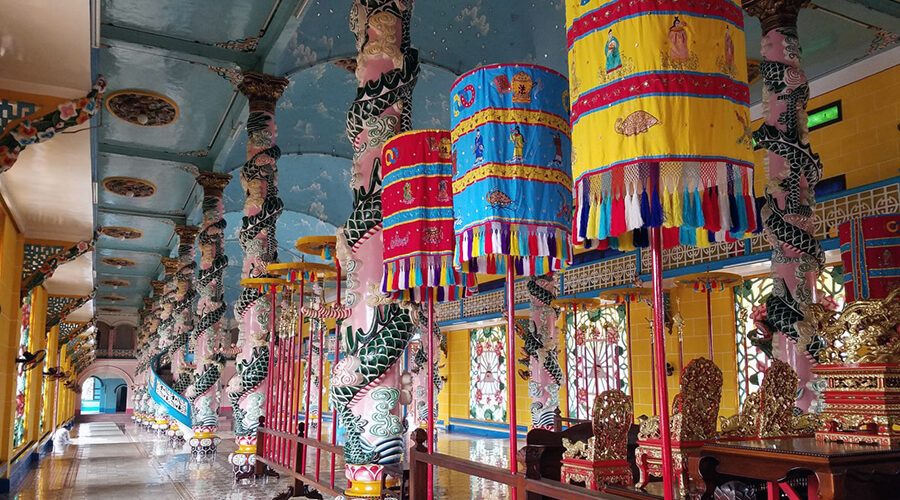
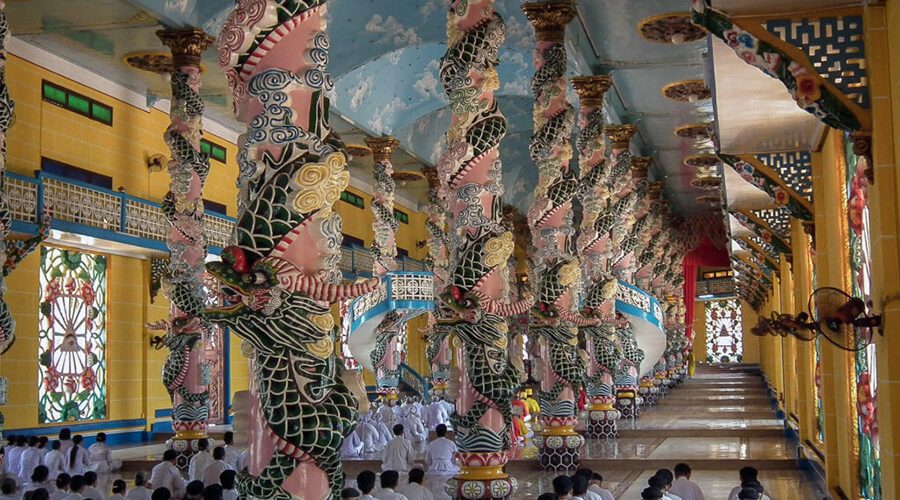
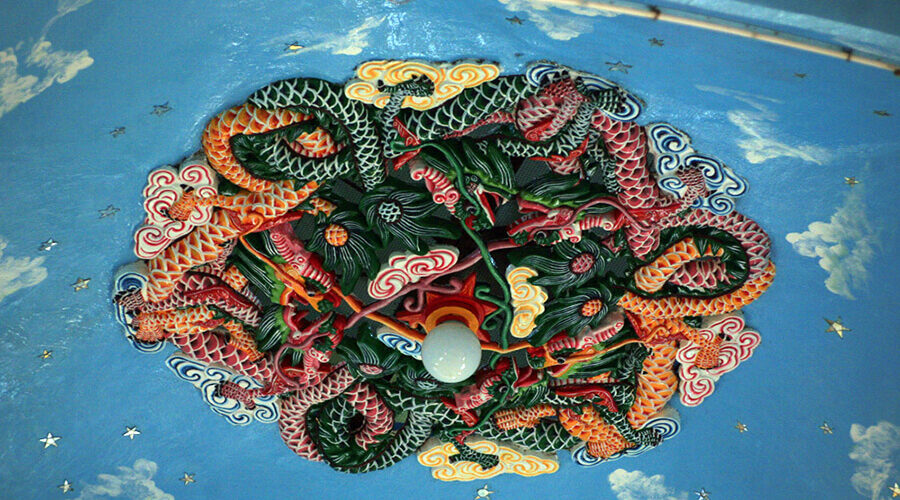
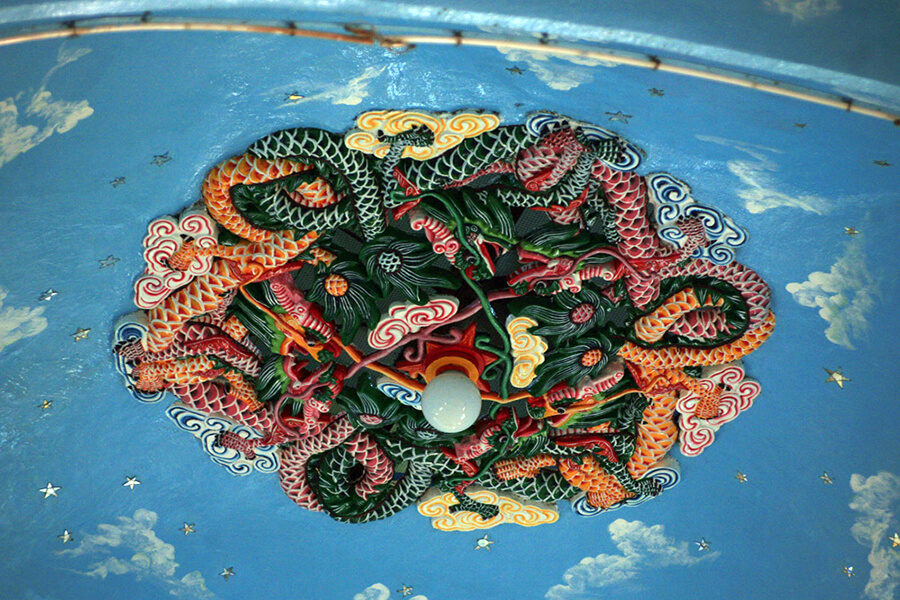
The main hall has 18 pillars, divided into 2 sides, intricately carved with dragons. These pillars fit into the platform, divide the hall into nine sections, representing the nine steps to heaven, with each level marked by a pair of columns. Worshippers achieve each new level depending on their years as Cao Dai adherents.
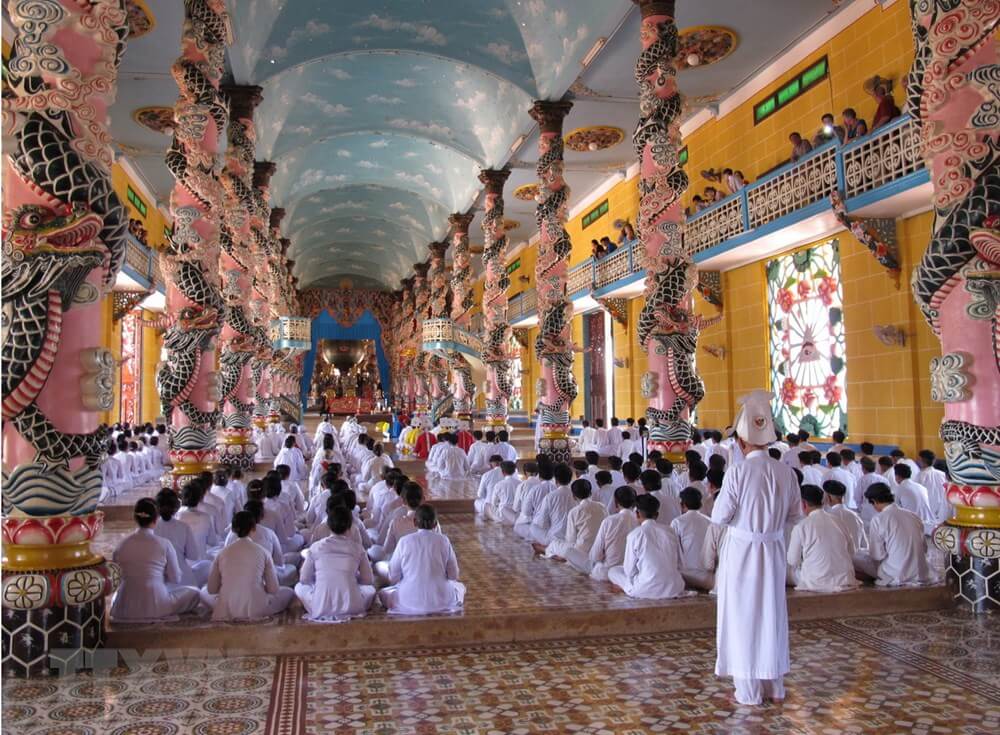
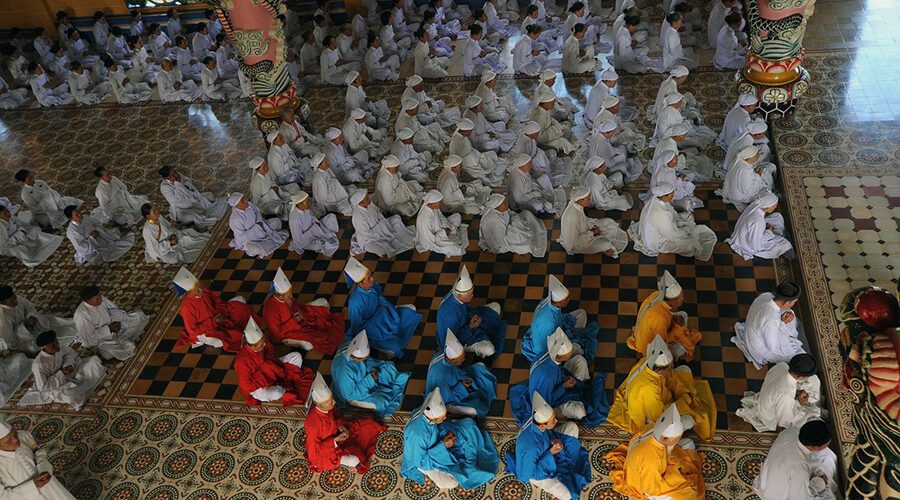
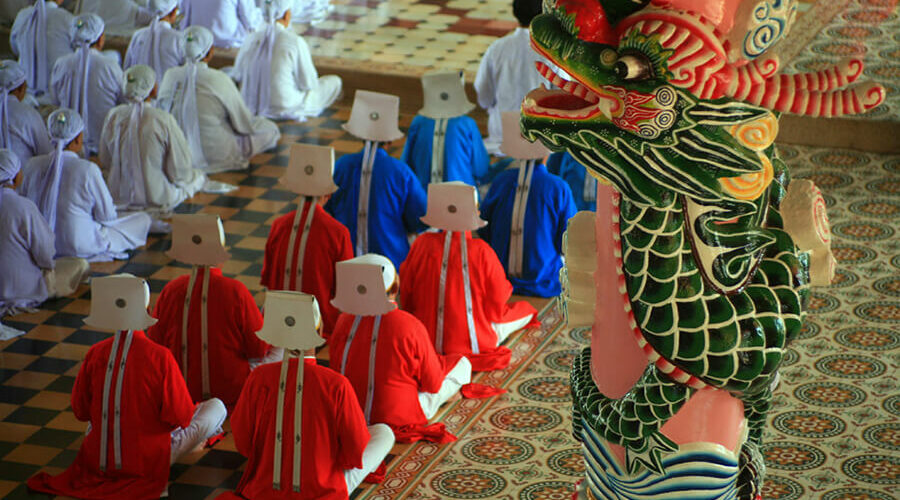
At the far end of the sanctuary, seven chairs in front of the Executive Body are reserved for the Pope; the next three chairs are for the three Censor Cardinals responsible for the religion’s law books. The remaining chairs are for the leaders of the three branches of Caodaism, represented by the colors yellow, blue, and red.
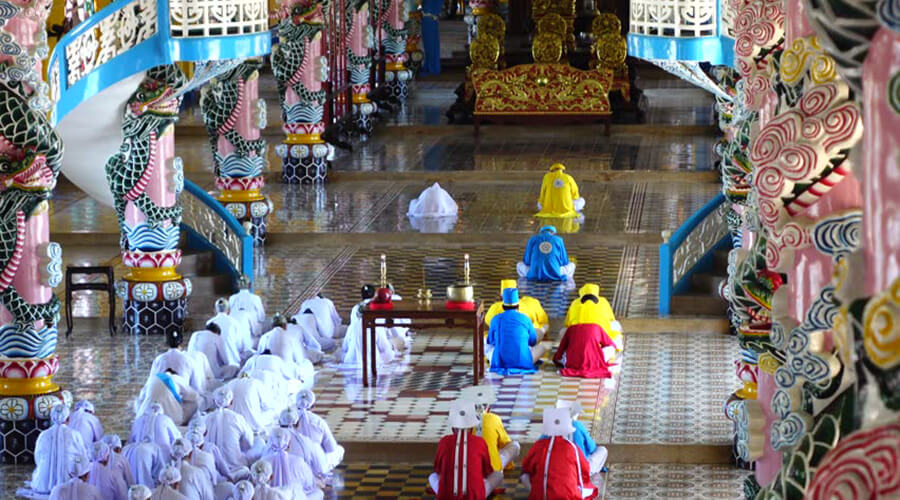
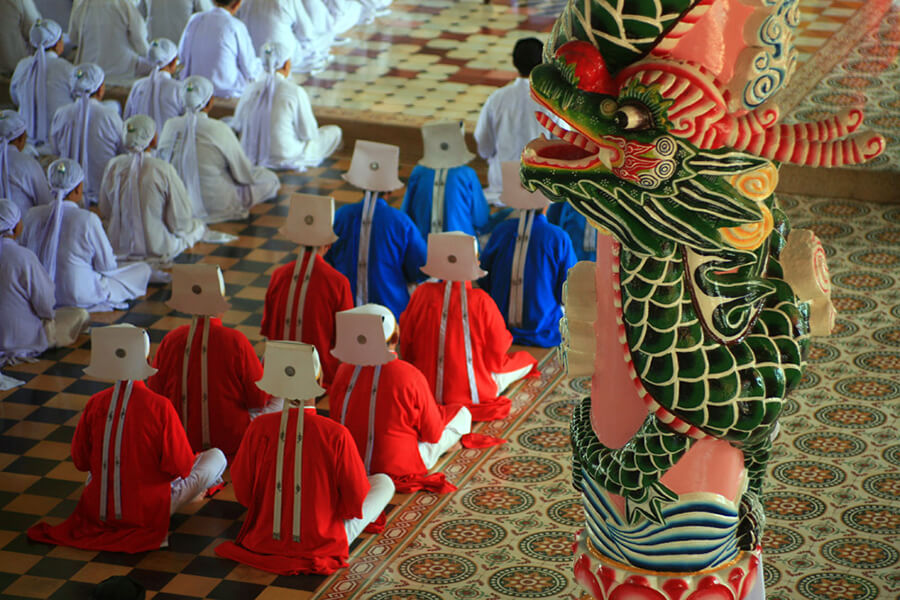
Watching worshippers pray is a significant highlight of visiting the cathedral, as they dress in “ao dai” in many colors: white for lay followers, yellow, blue, or red for priests, whilst bishops have the Divine Eye embroidered on their headpieces. During prayer time, men are seated on the right and women on the left. There are four worship with chanting each day: 6:00 am, 12:00 pm, 18:00 pm, and midnight. However, the main ceremony is at 12 noon.
The Holy See also has many symbols that carry special meanings, like prophecies in oracles awaiting answers.
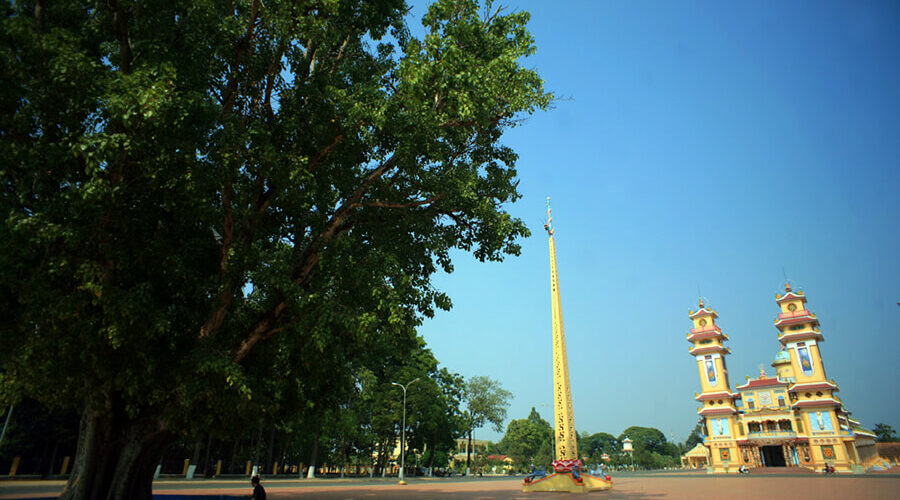
In the brick yard in front of the Tay Ninh Holy See, there is a Bodhi tree, donated by Venerable Thera Narada – Deputy Supreme Patriarch of Sri Lankan Buddhism, extracted from the Bodhi tree at Mahabodhi Temple (Bodh Gaya), India, for the Cao Dai Cathedral in 1953.
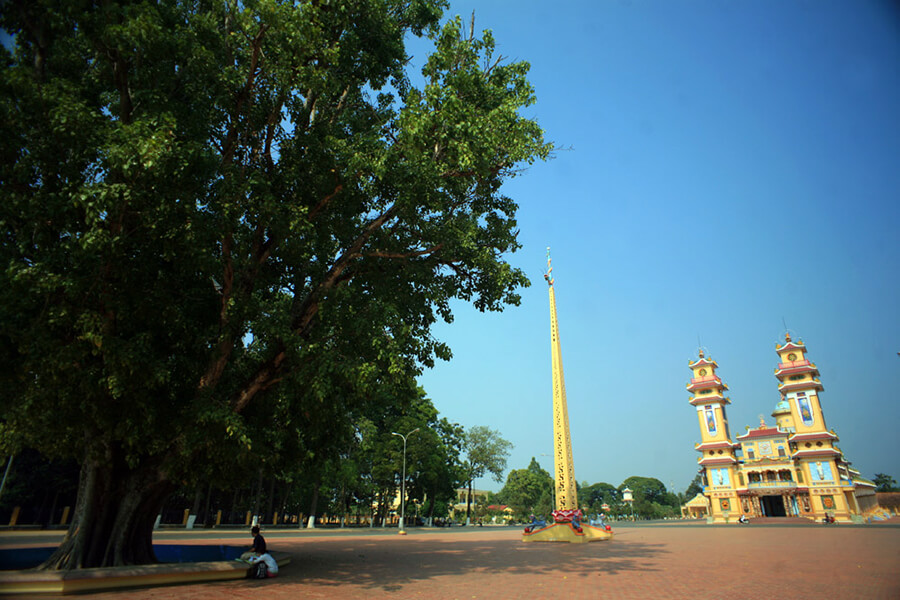
Bodhi tree in Cao Dai Holy See
Some important notes when visiting Cao Dai Cathedral in Tay Ninh:
- Silence is requested during worship.
- There are two doors to enter the temple: men enter on the right, and women enter on the left.
- Don’t forget to remove your hats, coats, and shoes before stepping inside the temple.
- There is no standard dress code, but try to wear formal attire appropriate for the religious site (e.g., trousers or skirts that cover the knees).
- Visitors are permitted to watch from the galleries and may take photographs, but DO NOT photograph people with the “Thien Nhan”. Also, please ask for permission from the manager before taking a panoramic view of the temple.
Nowadays, the Tay Ninh Holy See and Cu Chi tunnels can be visited in 1 day. Vietdreamtravel is also offering a daily tour or private tour to explore these areas. Please do not hesitate to contact us regarding your booking.
Source: collected by An