


Da Lat Station is not only a distinctive architectural landmark of Dalat city, but also a place that marks a special milestone in the history of Vietnam’s railway industry.
Overview of Da Lat Station
Located on Quang Trung Street, Lam Vien-Da Lat Ward, Lam Dong Province, Da Lat Station is also the only railway station in the Central Highlands region. The station is closely linked to the history of the formation and development of the “land of a thousand pine trees,” and is considered the most beautiful old railway station in Vietnam and Indochina.
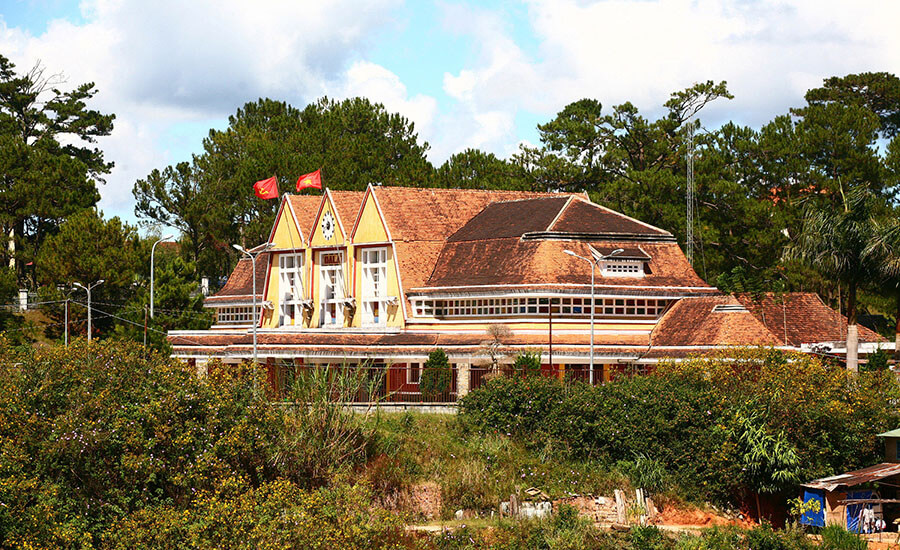
Da Lat Station is located in Lam Vien-Da Lat Ward.
Built between 1932 and 1938, Da Lat Station was part of the Thap Cham – Dalat railway line, connecting the highland city with old Phan Rang (Ninh Thuan, now Khanh Hoa Province). This railway line is 84km long, with an elevation difference of 1,500m along the entire route, and was started in 1908 by order of the Governor-General of Indochina, Paul Doumer. The line was completed in 1932, coinciding with the construction of Da Lat Station.
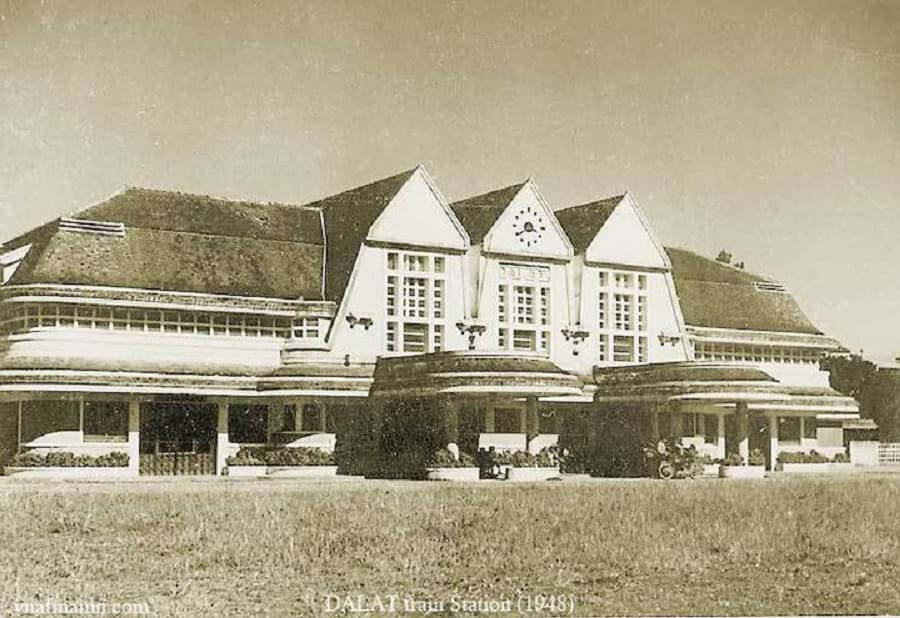
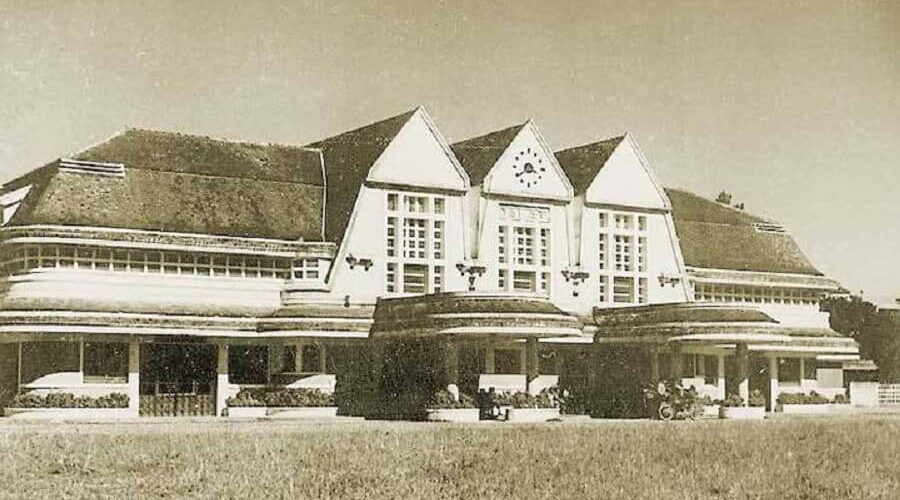
The photo was taken in 1948.
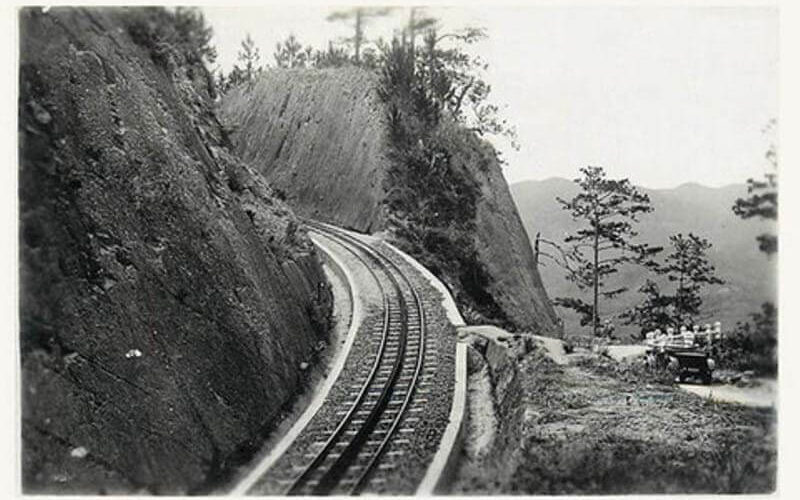
The line had 12 stations and 5 tunnels, making it unique: it featured 16km of rack railway climbing steep inclines with an average gradient of 12%. At that time, rack railways and locomotives were only found in Switzerland and Vietnam.
In 1972, this railway line was destroyed by war. In 1975, after the country’s reunification, the line was restored but operated only briefly due to poor economic efficiency. The rail system and traces of the rack railway were removed. The stations were abandoned.
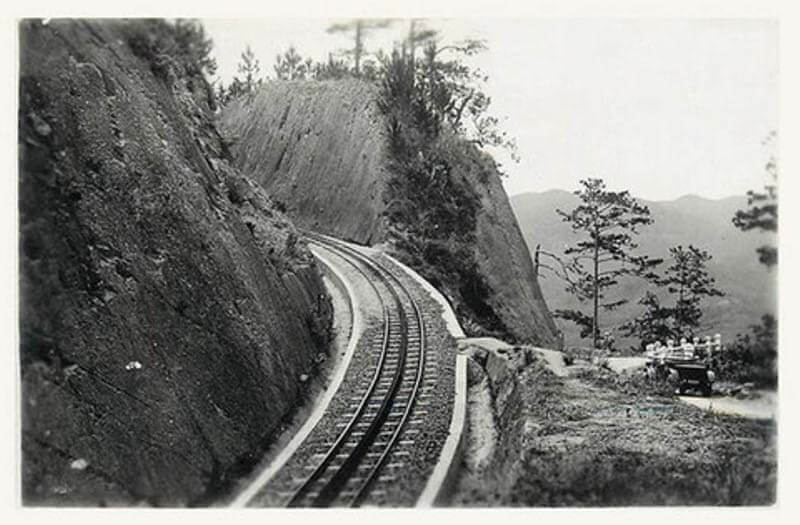
A section of the rack railway climbs the Thap Cham – Da Lat pass. (photo source: collected).
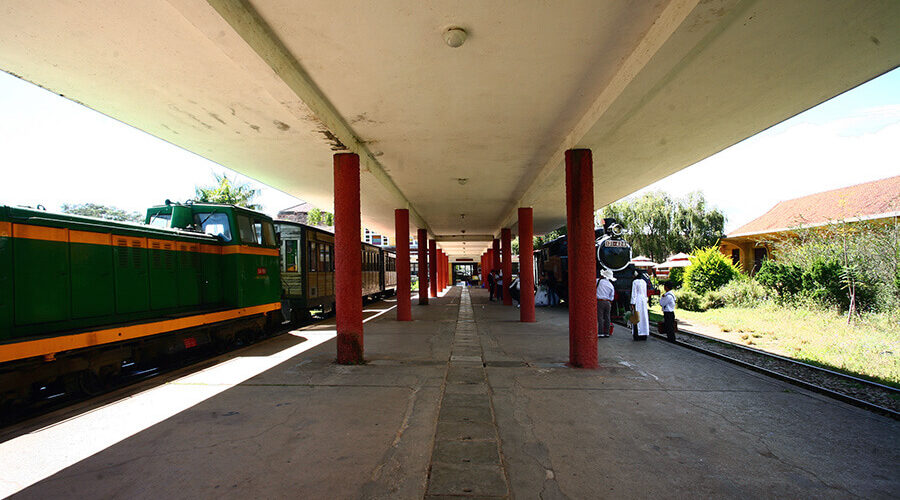
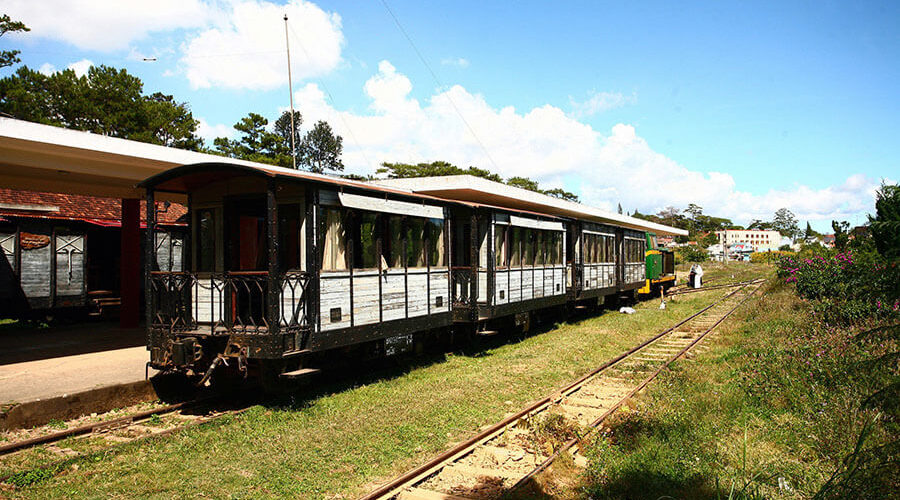
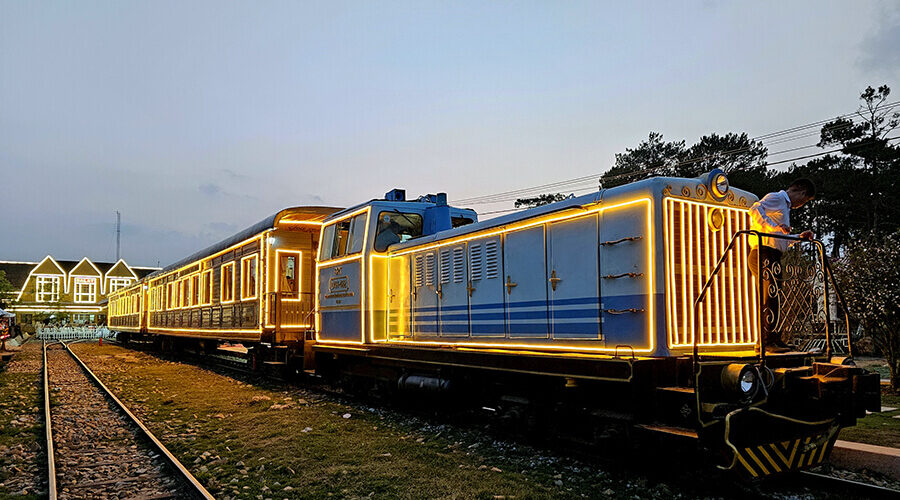
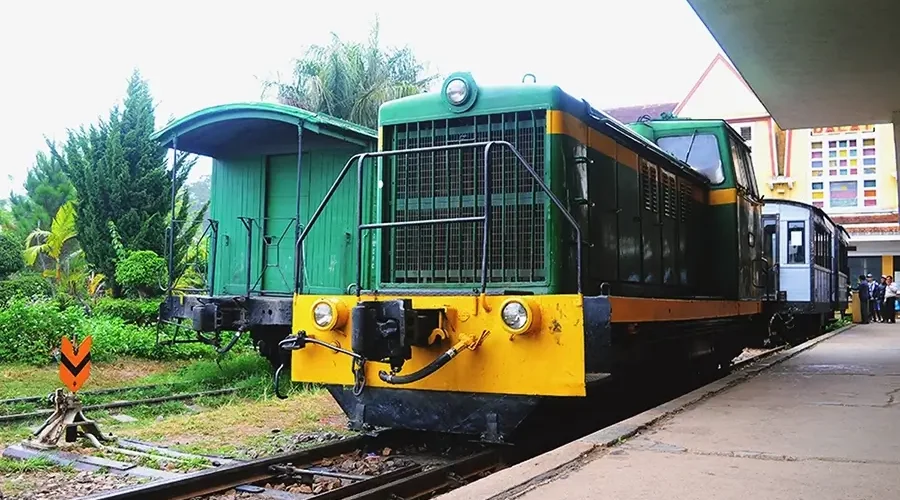
Currently, Da Lat station is no longer part of Vietnam’s national railway system, but it remains an attractive tourist destination. The station operates a tourist train with 1 locomotive and 4 carriages that runs back and forth to Trai Mat station (Xuan Truong-Da Lat Ward), located 7km east of Da Lat, with a journey of about 25 minutes.
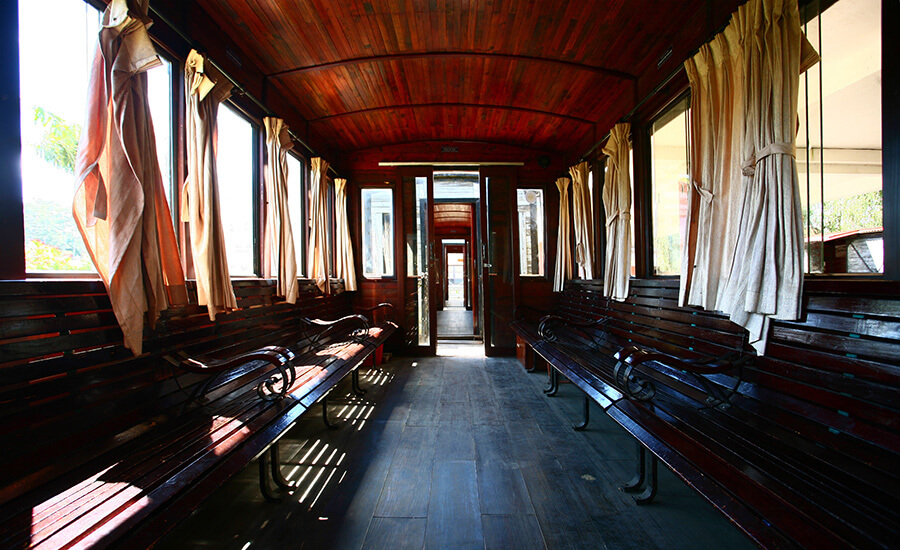
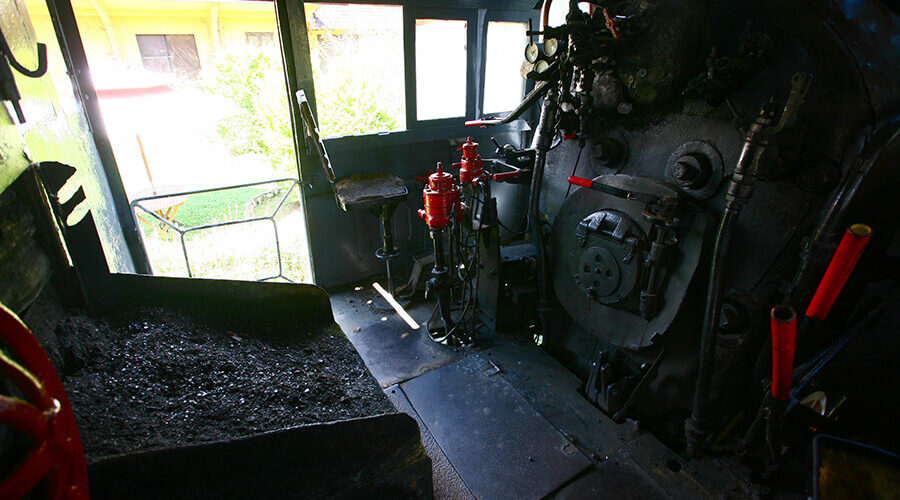
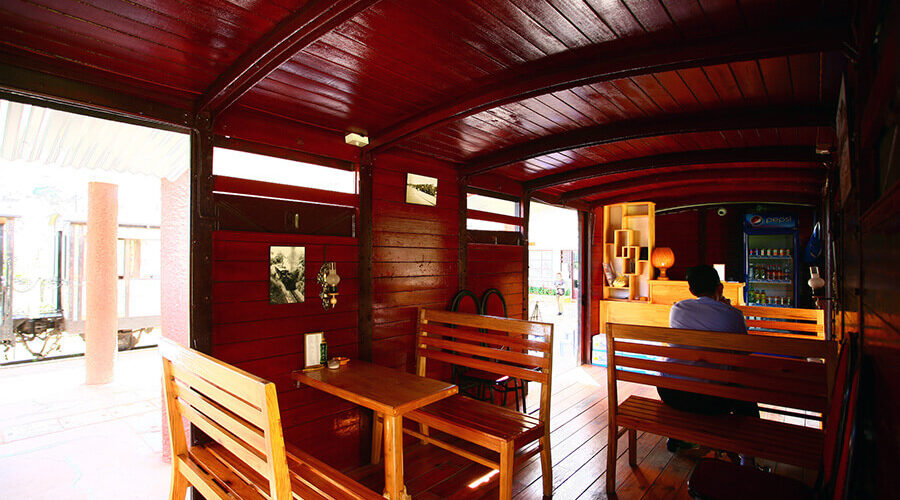
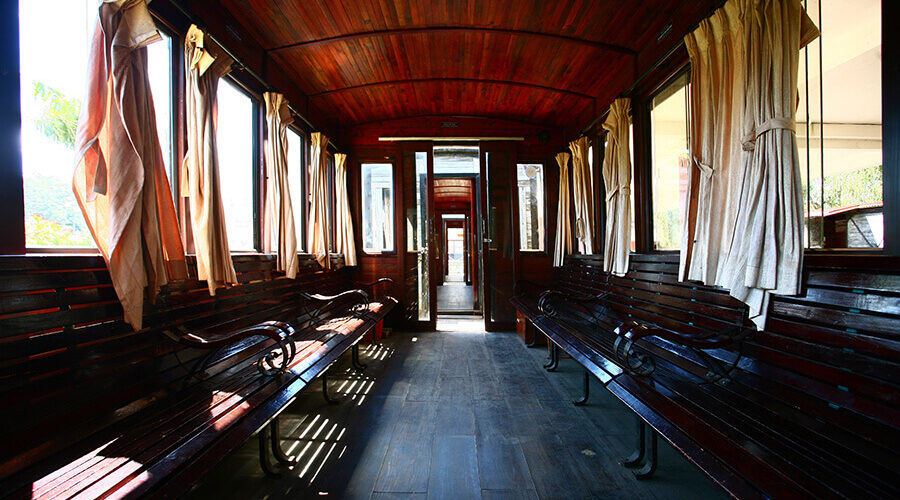
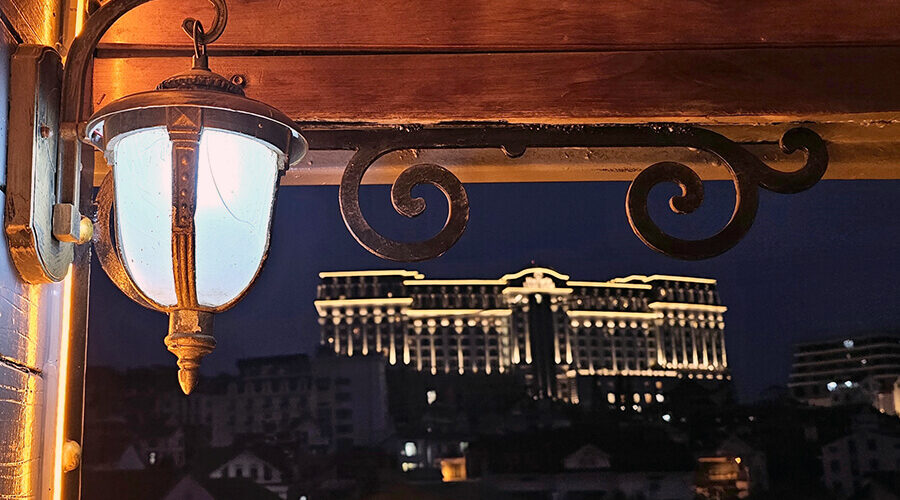
inside a cabin of the train in Da Lat
Along this route, visitors can admire the city’s romantic suburban scenery. At the final stop, Trai Mat Station, visitors can visit Linh Phuoc Pagoda (also known as Ve Chai Pagoda), a famous and distinctive pagoda. In addition, Da Lat station still sells connecting tickets on the Thong Nhat railway line, departing from Nha Trang station (Khanh Hoa), and provides shuttle bus services between Da Lat and Nha Trang.
Train and Ticket Information
Train services to and from Da Lat station are daily, serving only tourists on the short 7km route connecting Da Lat center and Trai Mat. Each trip takes 30 minutes.
Tickets range from 72,000 VND to 100,000 VND per trip. Round-trip tickets receive a 25% discount, and group tickets (10 or more people) receive a 15-40% discount. Trains offer free artichoke tea and free Wi-Fi.

Specific train schedules effective from April 2024:
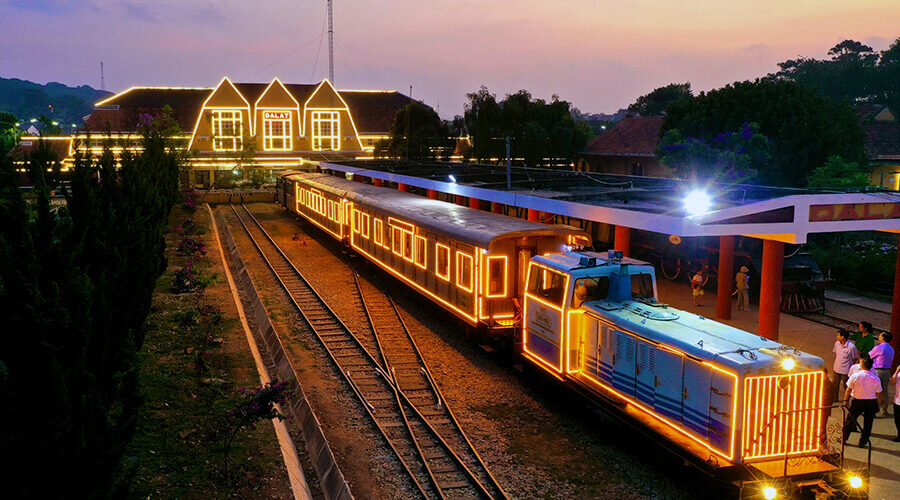
Trains DL3 and DL4 run daily; other trains operate upon customer request or when needed. Each train carries a minimum of 30 passengers and a maximum of 160 passengers. Two evening trains, DL11/12 and DL13/14, have been introduced since April to cater to tourists’ nighttime entertainment needs.
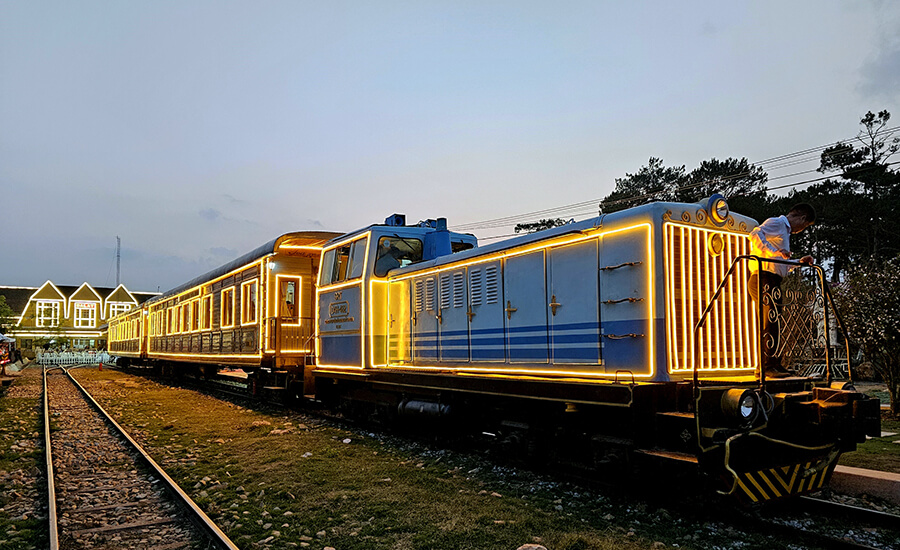
night train to explore Da Lat.
On the Da Lat-Trai Mat train, tourists can choose a one-way ticket. In Trai Mat, tourists are free to explore the surrounding area and return by train according to the schedule or other means of transportation. Taxis are easily available at both locations.
Unique architecture of Da Lat Station
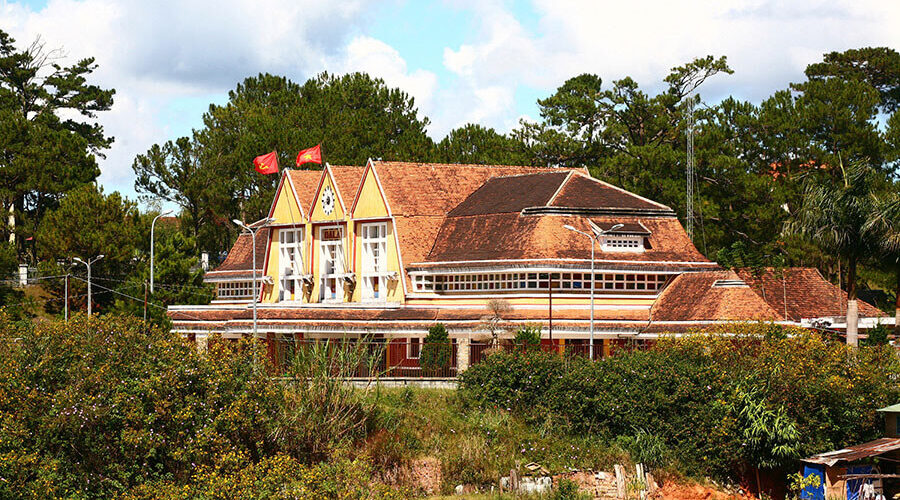
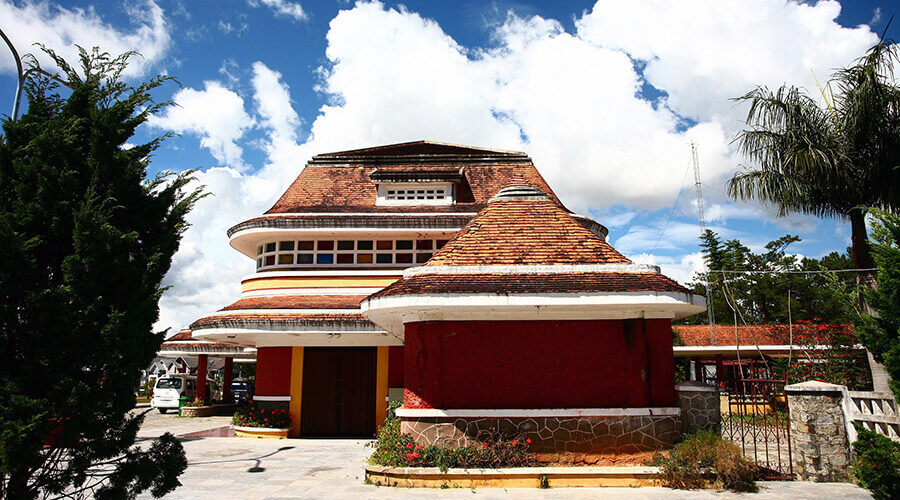
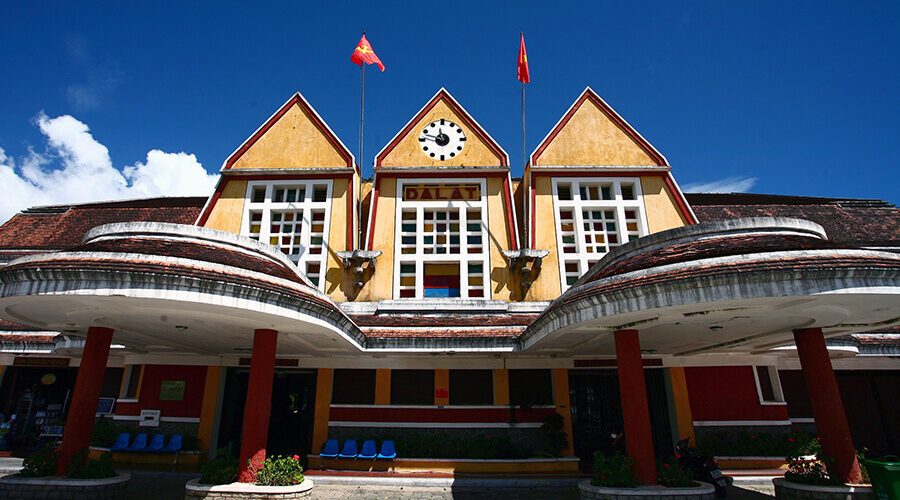
Da Lat station was designed by two French architects, Moncet and Revéron, with architecture strongly influenced by local culture. The structure is coherent and scientific, yet very refined in form. The building has a symmetrical layout, with the central architectural block mimicking the three peaks of Langbiang Mountain and the traditional longhouses of the Central Highlands; on either side are two elongated architectural blocks.
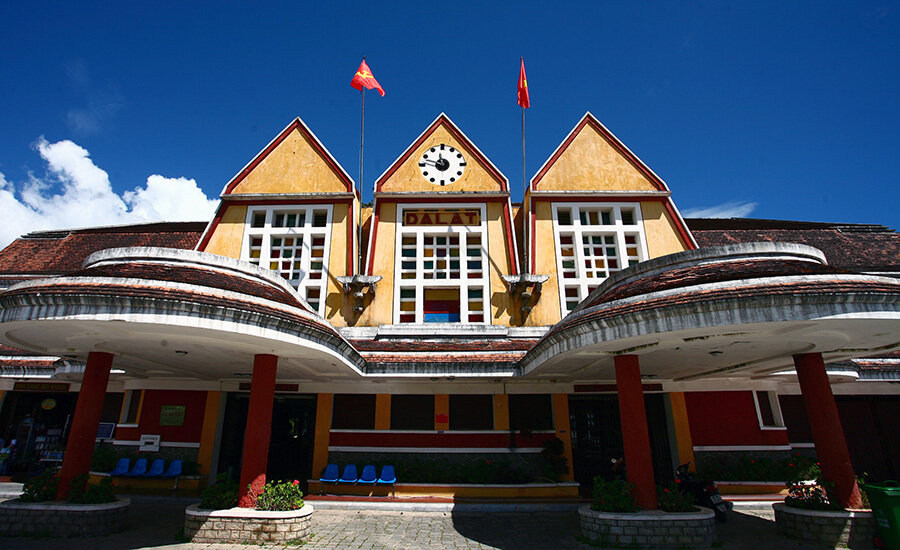
A front view of Da Lat station.
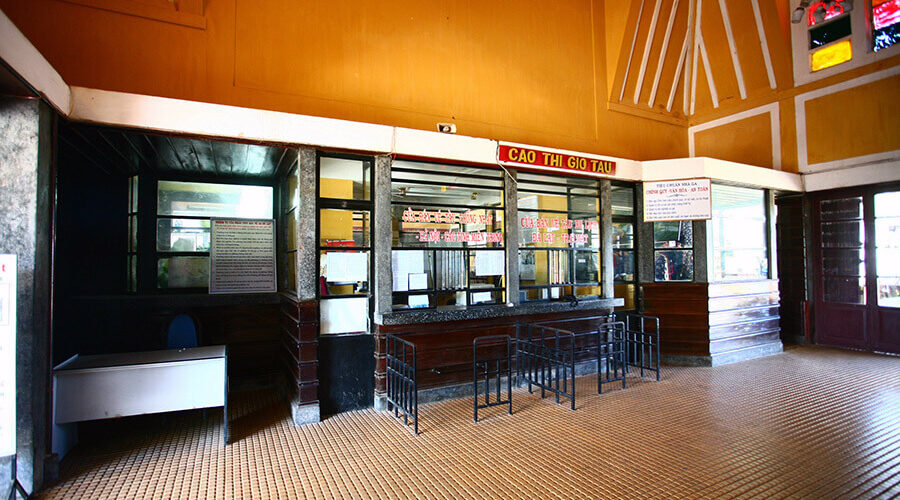
In the center of the building, outside under the roof, is a large clock that records the time when Dr. Alexandre Yersin discovered Da Lat. In the central block, the front features two halls, one for passengers and one for cargo. Between these two walkways is the train waiting area. This central building has a single floor, with a spacious interior and a high roof.
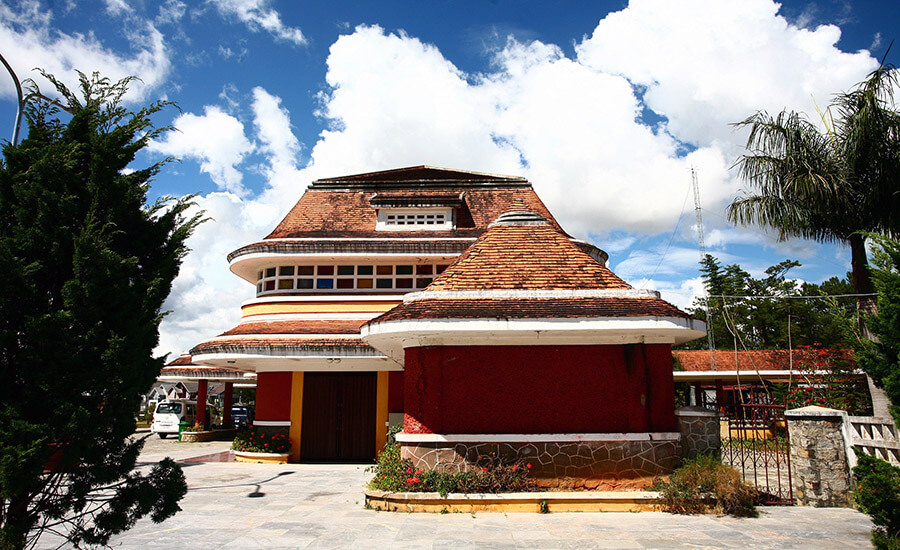
Overall, the architecture harmonizes with its natural surroundings and serves as a unique urban landmark. Da Lat Station was recognized as a National Historical and Cultural Monument in 2001.
Source: collected by An
Follow us for the best deals on Vietnam package tours and visa services!