
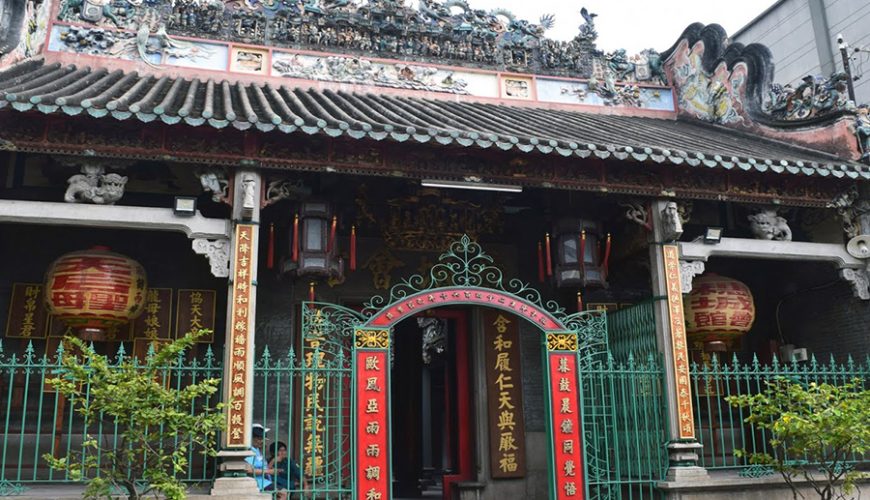
Thien Hau Temple (Vietnamese: Đền Thiên Hậu; Đền meaning Temple) plays an essential role in the religious life and traditional cultural activities of the Hoa people during their settlement in Saigon-Cholon. The temple, which worships Lady Thien Hau (Bà Thiên Hậu), attracts many Chinese-Vietnamese people and international tourists.
The myth and history of the Thien Hau temple
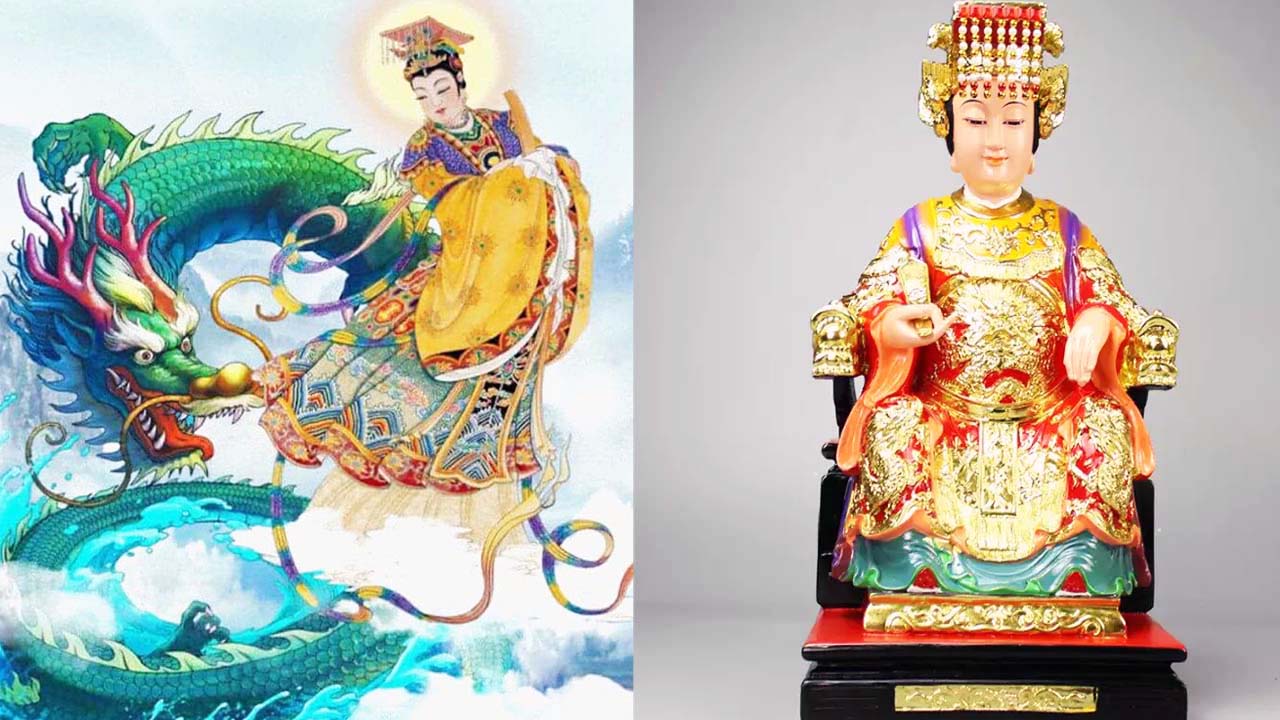
According to the old folk, Lady Thien Hau practiced Confucianism and Buddhism. She had an innate ability in astronomy, regularly watching the stars to predict the weather and help people, especially fishermen in the area.
Once, her father and two older brothers were on a boat carrying salt for trade when a big storm came up. At that time, she was weaving cloth at home with her mother, but she suddenly lost the will to go save her father and brothers. Unfortunately, she saved only two of her brothers, and the waves swept away her father as her mother called to her, forcing her to wake up. Since then, local people started worshiping her for their safety at sea, as they believed she could appear and help them when they were in distress at sea.
Since the late XVII century, when leaving China via the East Sea for Vietnam to settle in De Ngan (later called Cho Lon), the Hoa people have made this area their home to this day. In 1760, the Thien Hau temple was built in the typical Chinese style.
They believed that her miraculousness would help them overcome all obstacles and settle down. Therefore, this temple was built to express gratitude to her for helping them reach a new land safely and peacefully.
Where is the Thien Hau Temple?
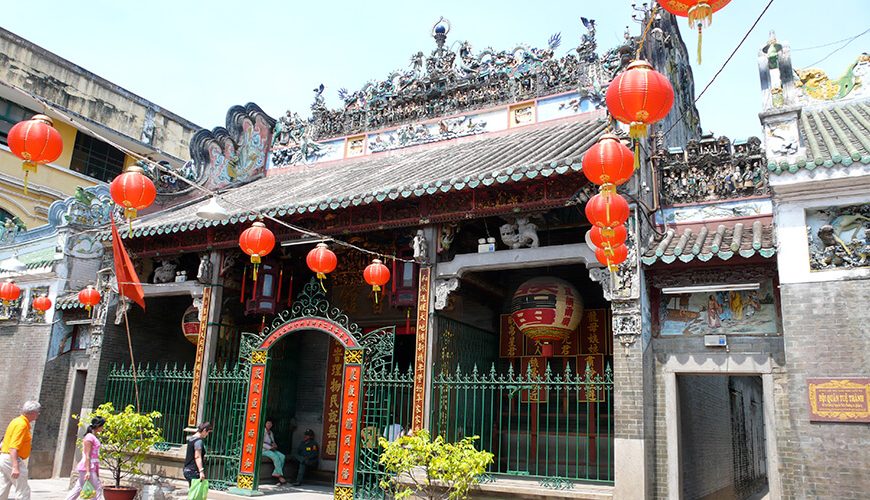
The temple is located at 710 Nguyen Trai Street, Cho Lon Ward, Ho Chi Minh City. There is a Tue Thanh Assembly Hall, a gathering place for the Hoa people in Guangdong, China, located right next to the pagoda.
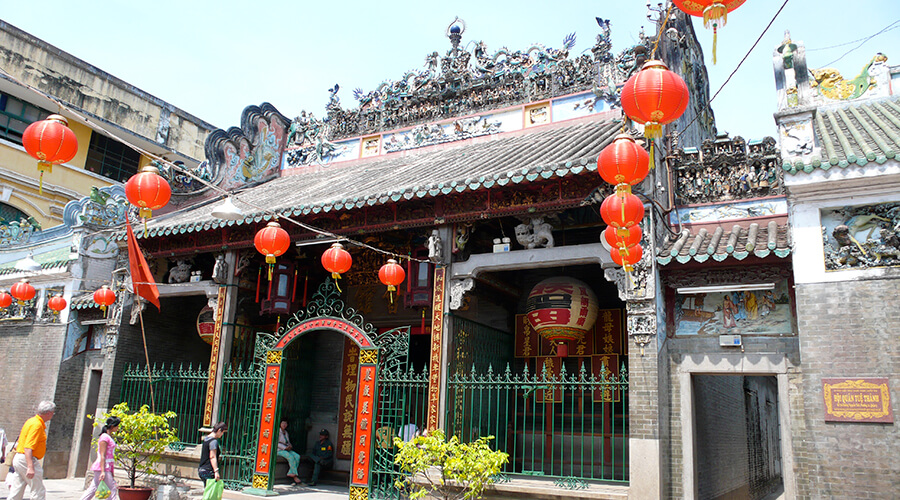
Opening hours: You can visit this temple every day from 8 am to 16:30, and there is no entrance fee.
Architecture of Thien Hau Temple
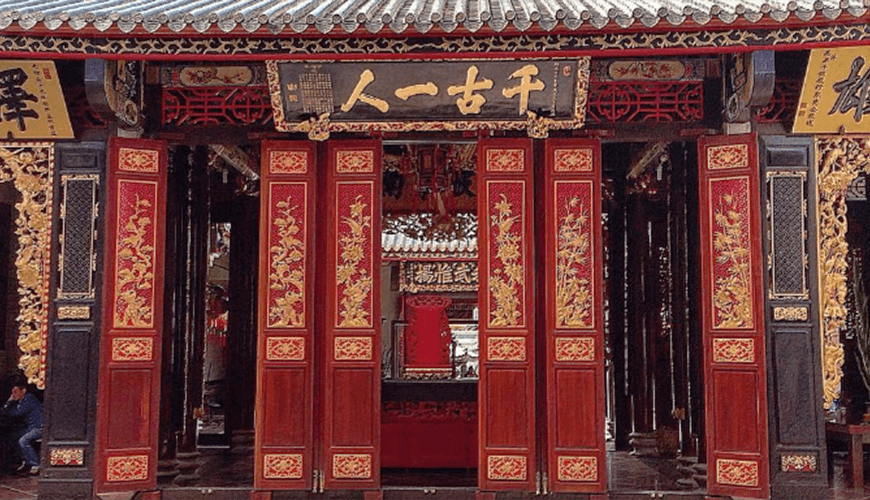
The temple is a perfect combination of several structures linked together, based on Chinese temples and pagodas.
A unique look at the exterior of the temple
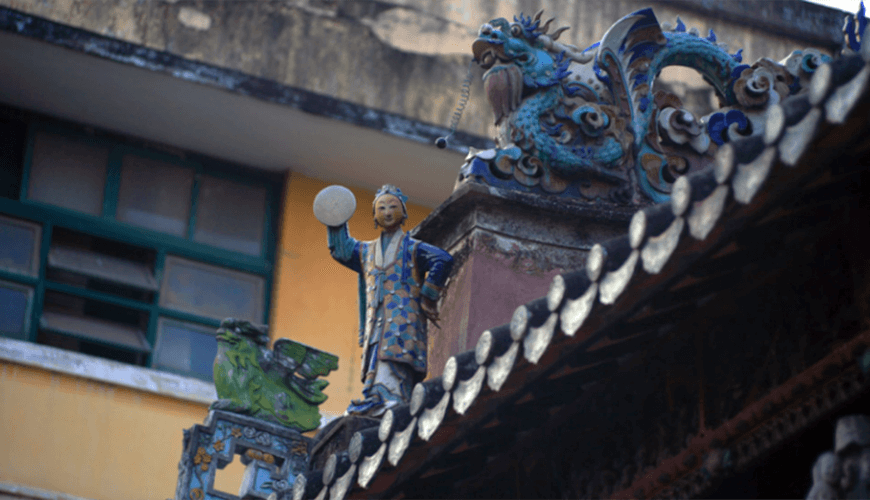
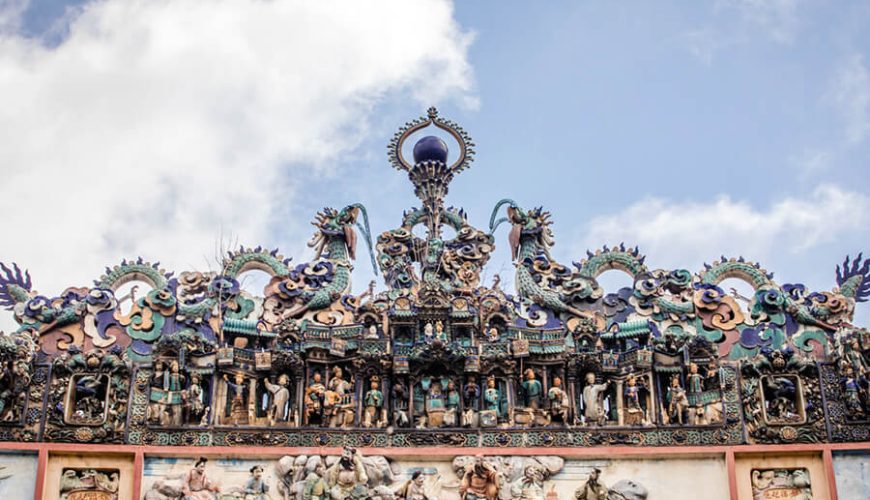
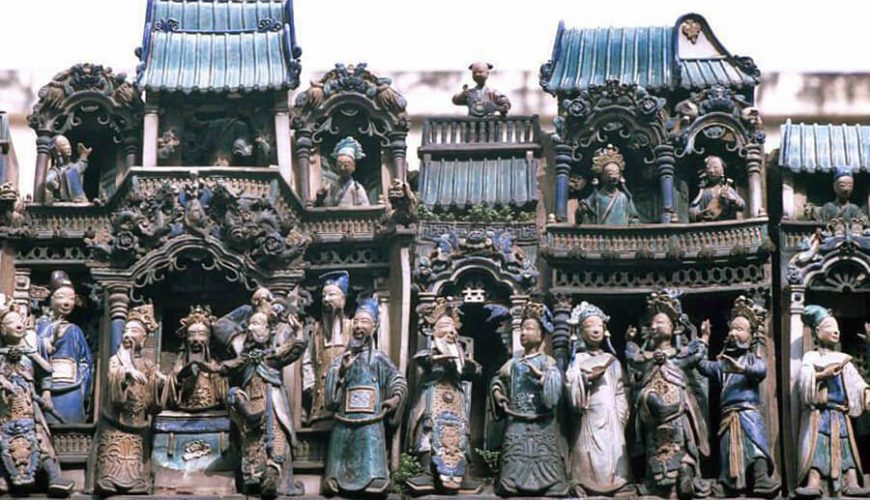
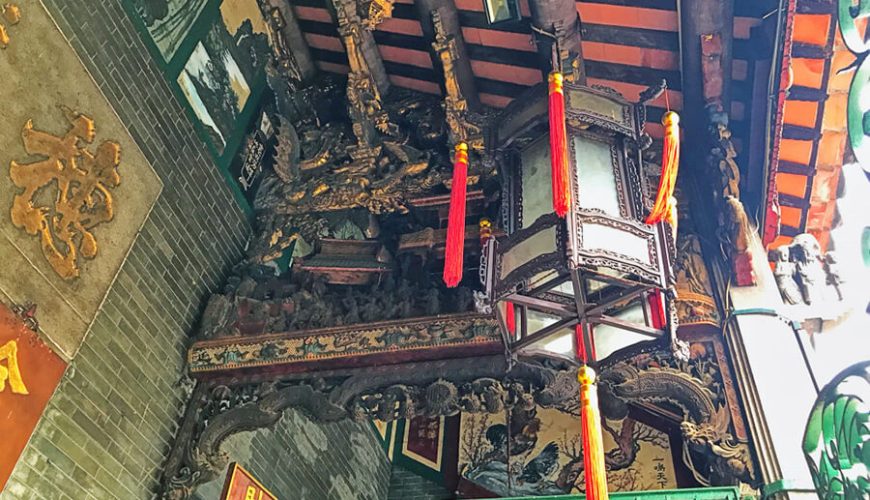
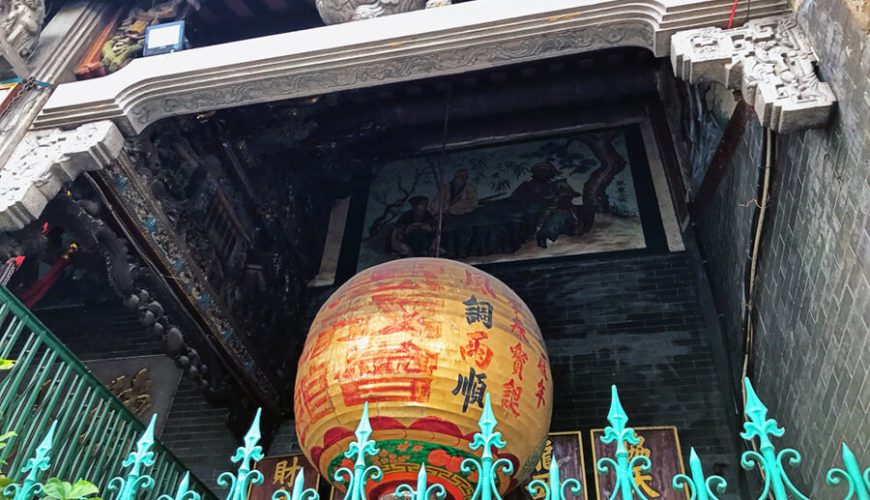
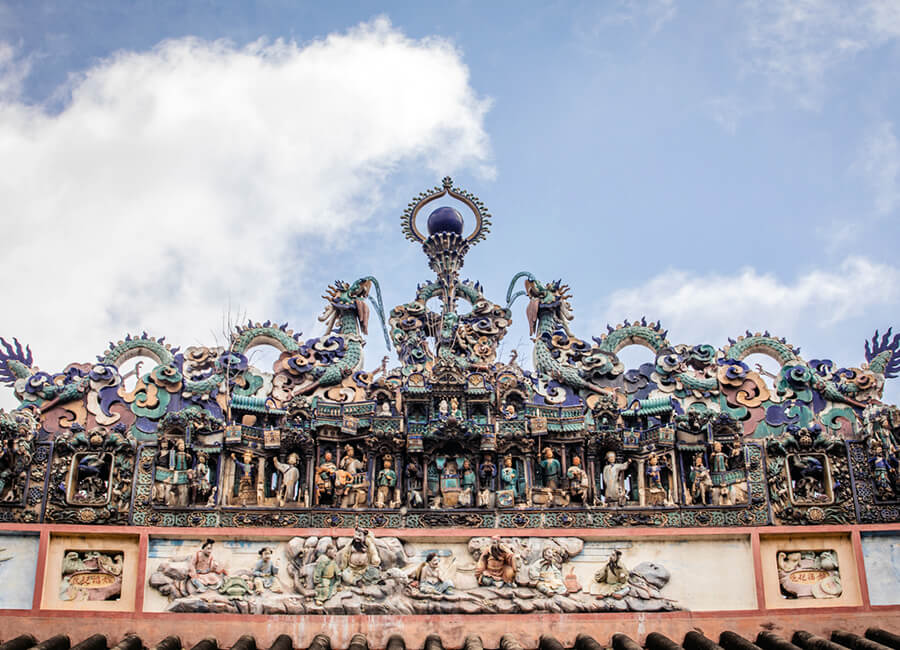
The temple’s roof is decorated with small, delicately crafted porcelain figurines depicting themes from Chinese religion and legend. It was built in 1908. At the top, the idols of two “dragons fighting over a flaming pearl” were placed. In the middle layer were the idols of Xuanzang and his fellow students, along with other Chinese legends. And at the bottom were placed the idols of the Eight Immortals in Chinese mythology.
What is inside the Thien Hau Temple?
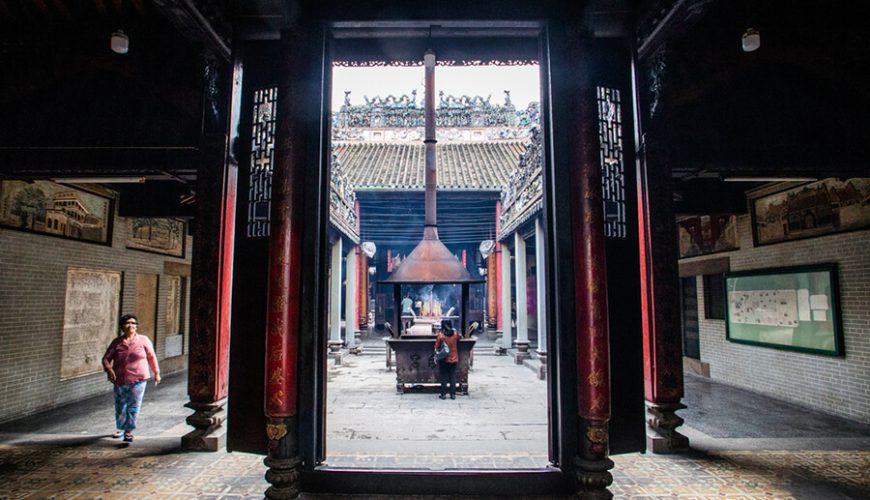
The temple was divided into three parts in Chinese architectural style: the front, the center, and the back.
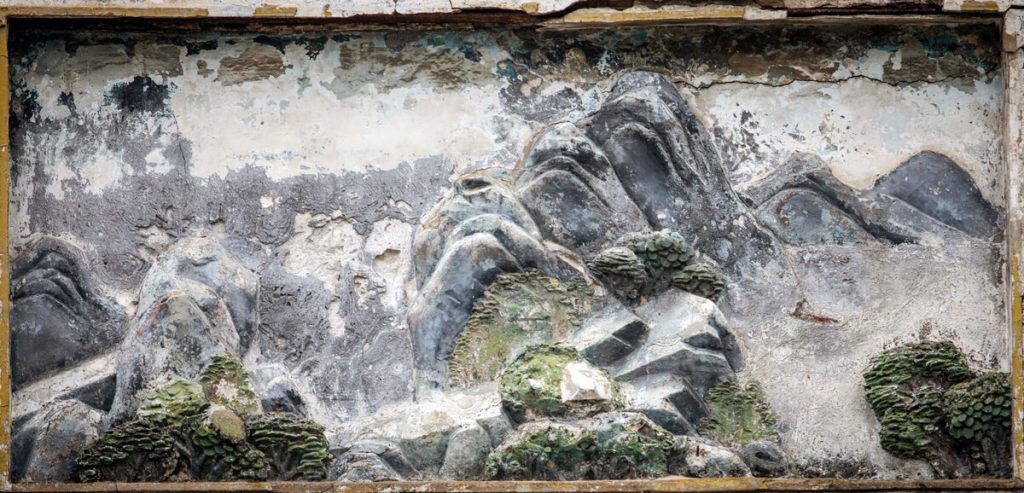
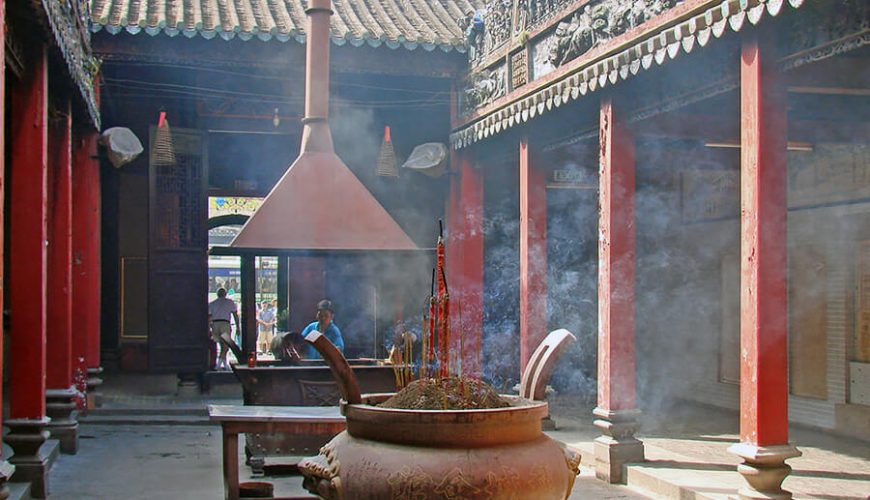
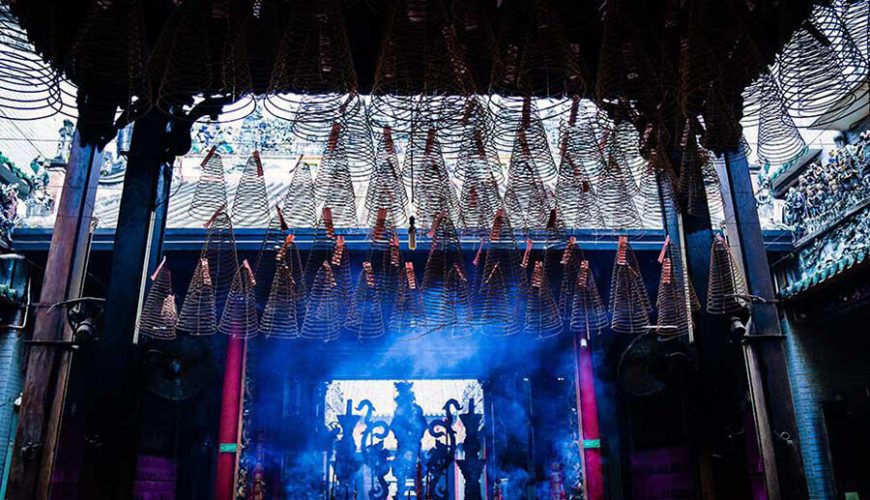
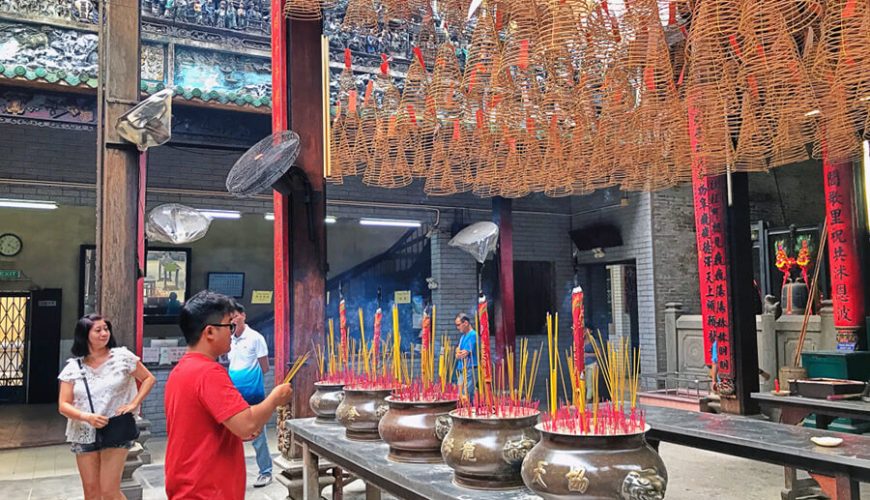
Between these blocks is a space called the Thien Tinh (sky well), which helps keep the pagoda airy and full of light, and allows it to escape incense smoke.
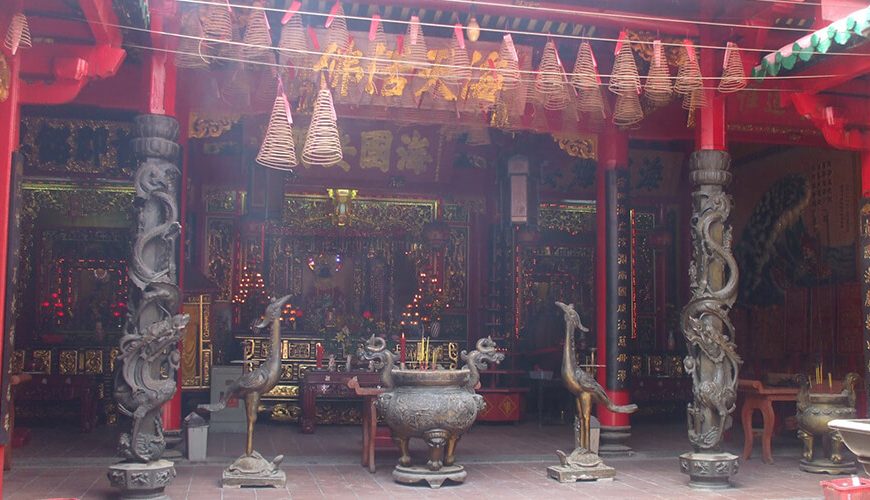
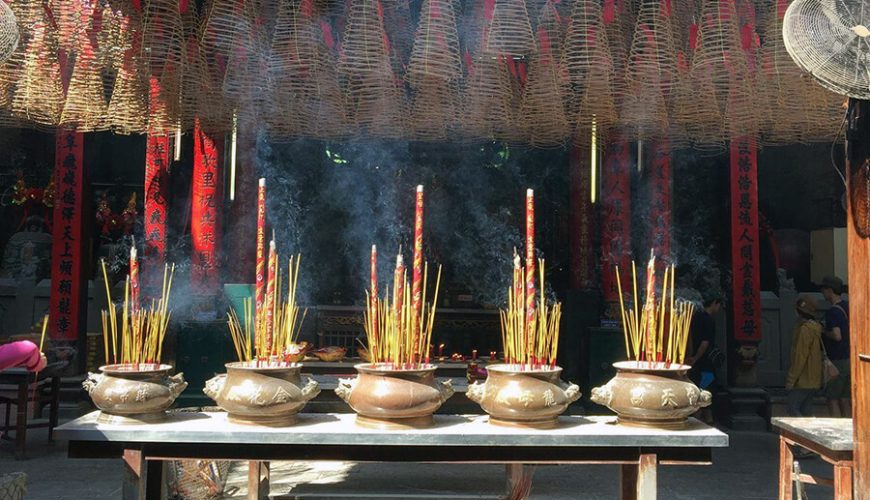
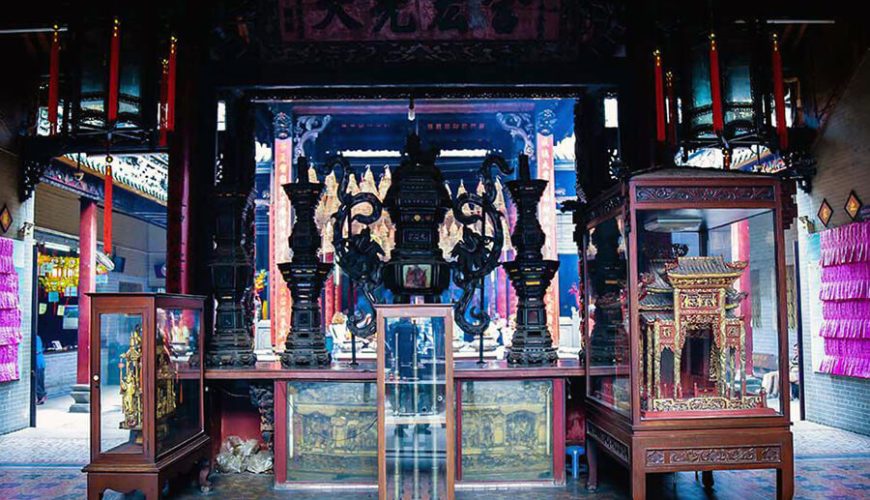
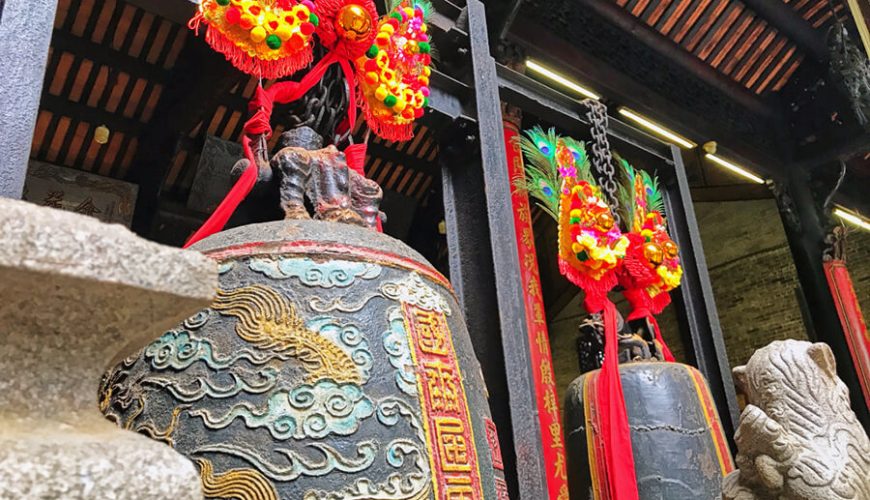
When you come through the front hall, you will see two altars dedicated to Tudigong and Menshen. The center area features a giant bronze censer, made in 1886 and shipped from China, along with many meticulous, sophisticated sculptures.
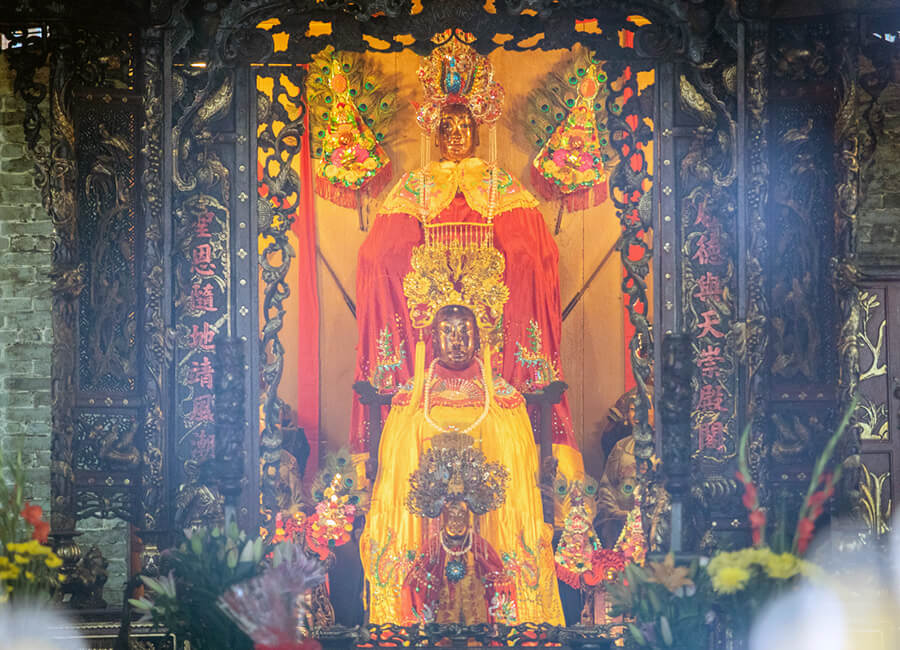
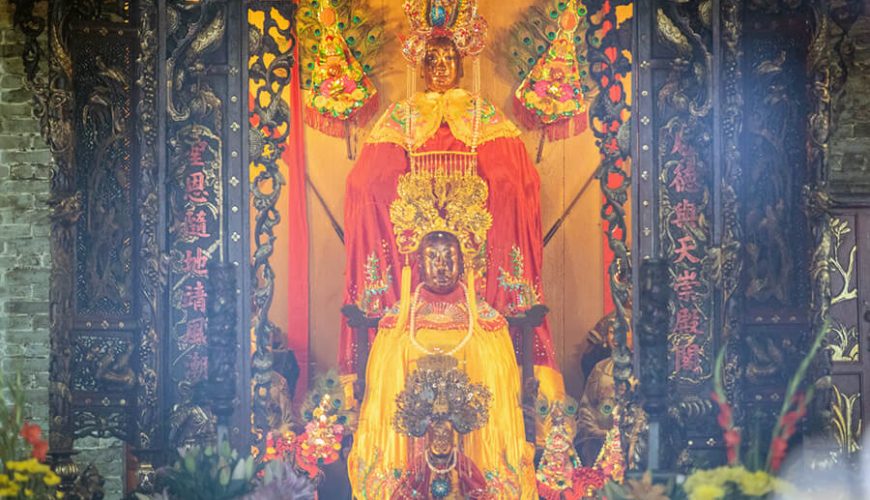
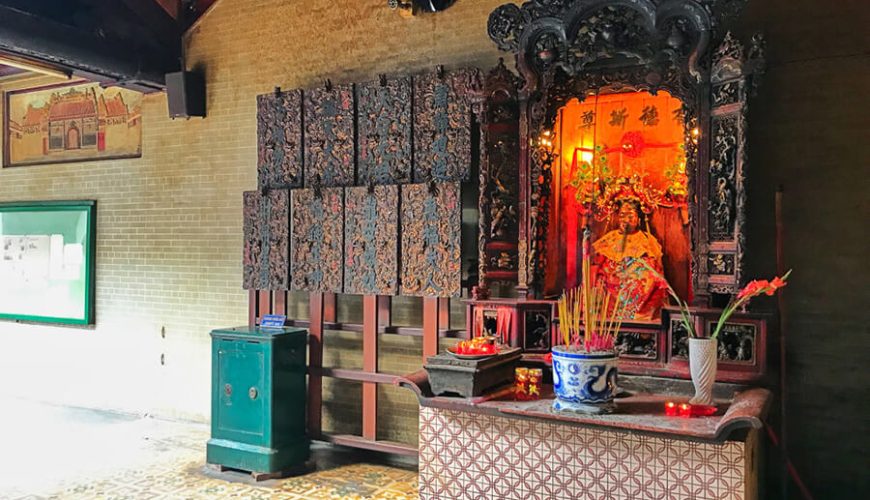
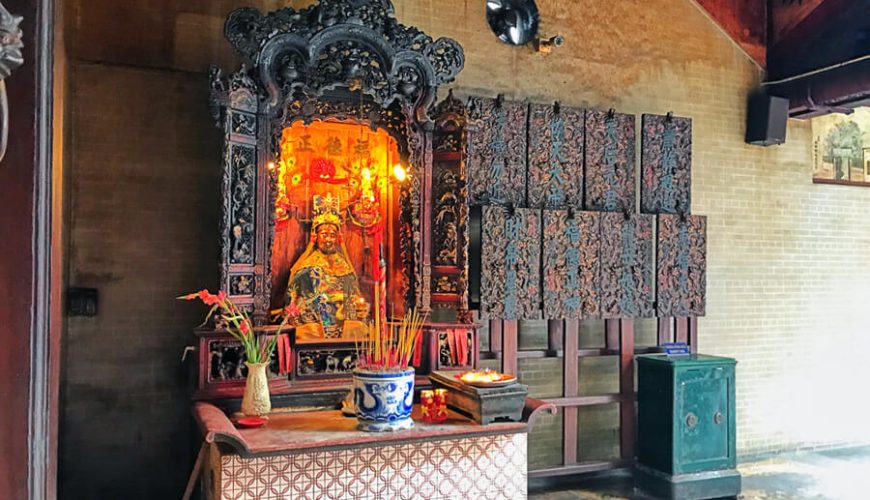
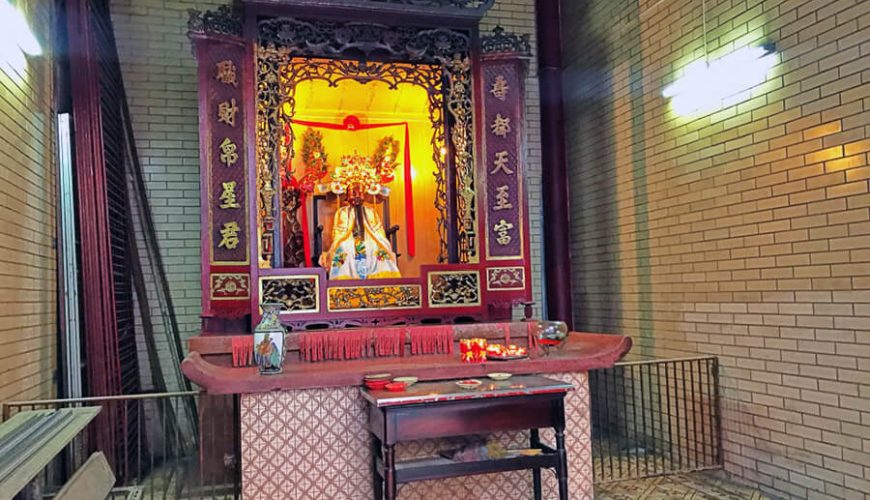
The main worshiped deity in the pagoda is Thien Hau Cung, located in the back hall. The statue of Lady Thien Hau is placed right here in the middle, carved from a 1-meter-high wooden block. It was worshiped initially in Bien Hoa, Dong Nai Province, before being moved here in 1836. Other Chinese deities worshipped in this area include the God of Earth and the God of Wealth.
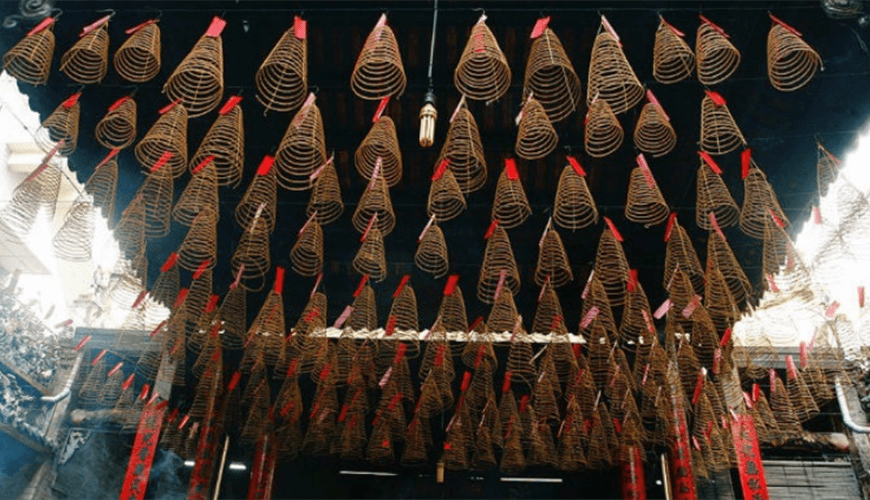
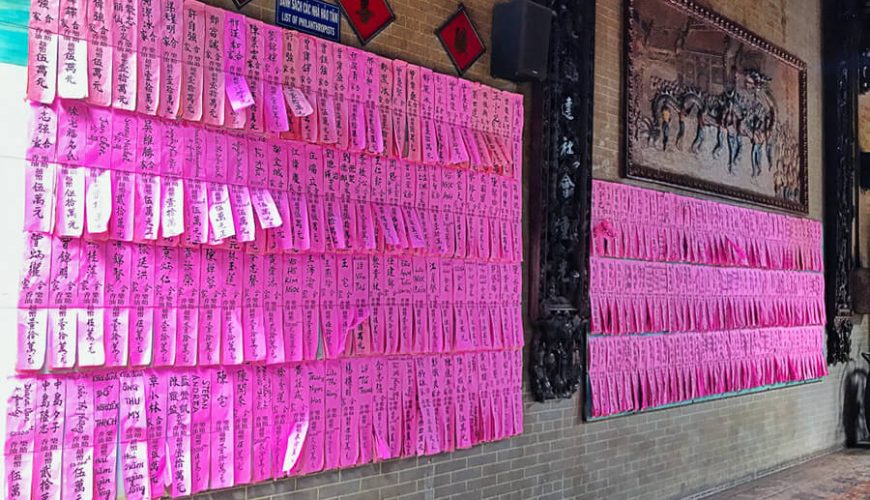
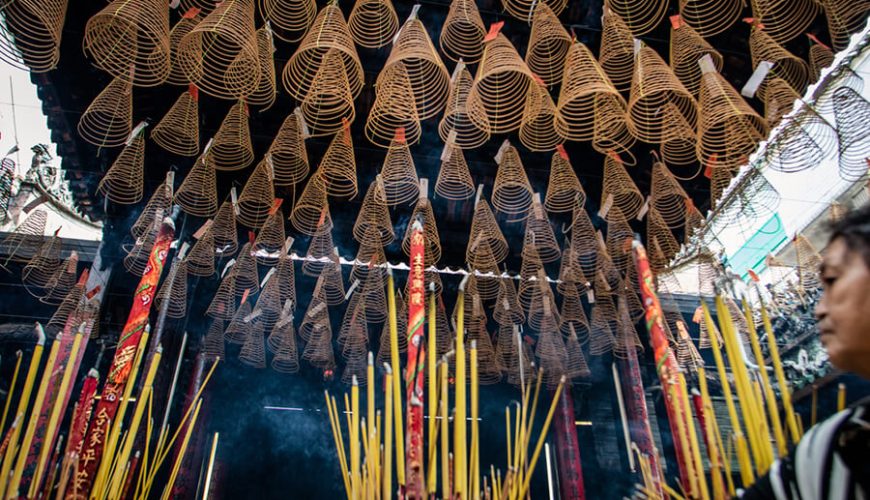
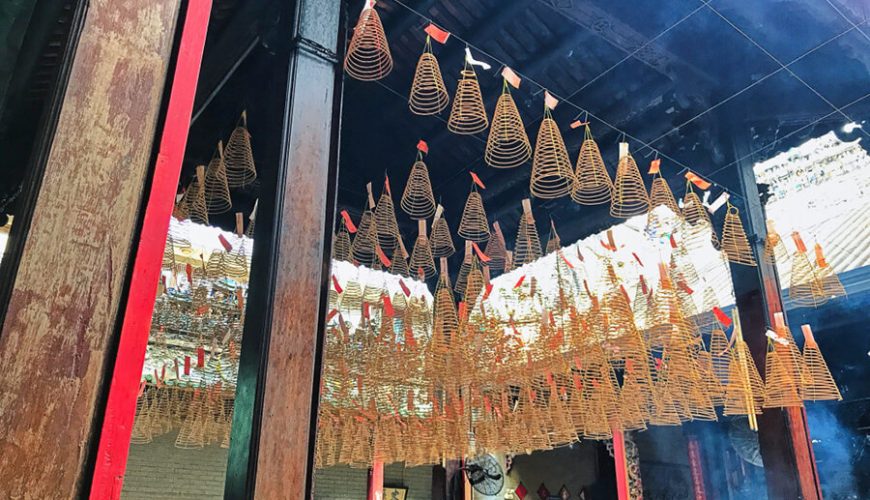
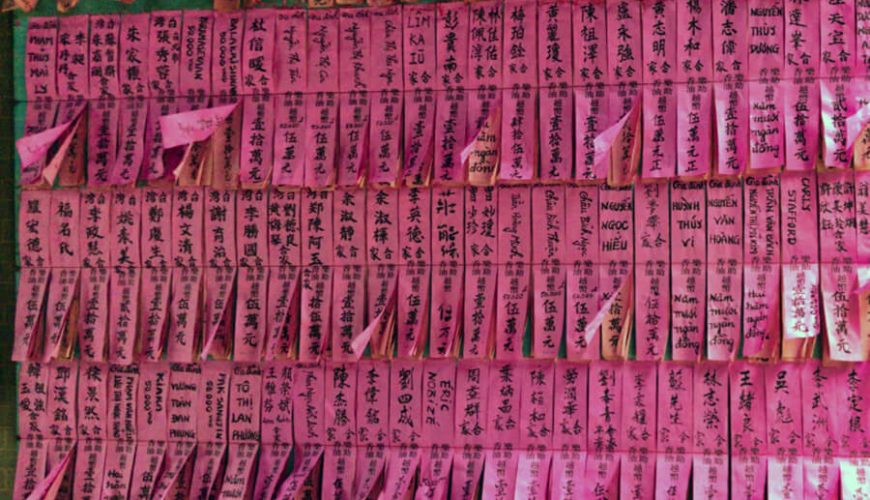
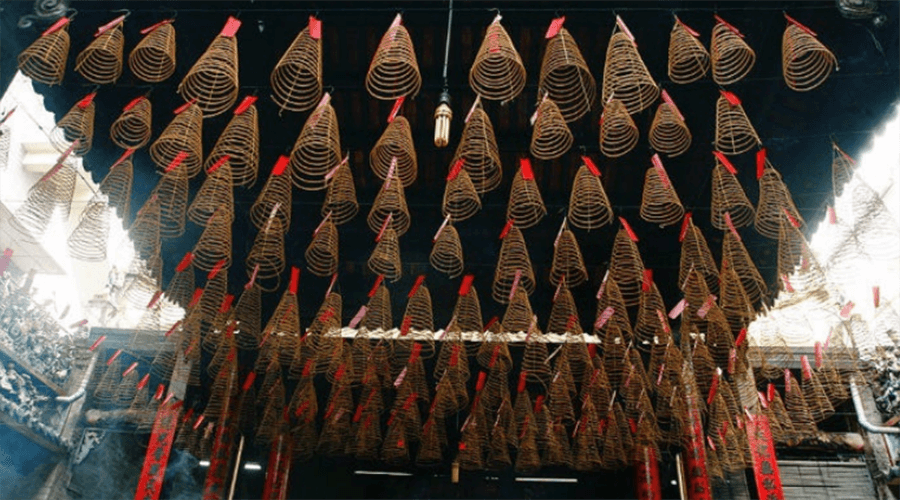
The highlight of the temple is the round incense hanging from above. Visitors can buy round incense and write down their wishes and hopes on paper. Then the managers will hang the incense high, as if offering prayers to the goddess.
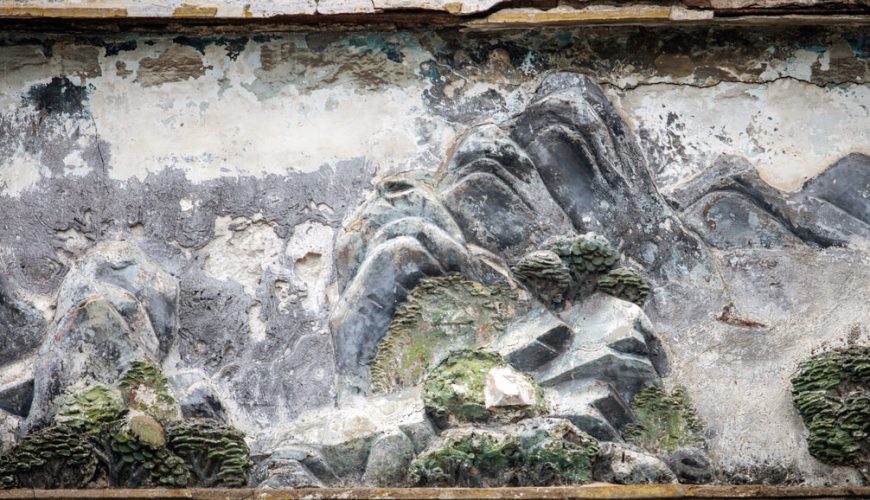
Another interesting thing is that the pagoda houses over 400 antiques, including seven statues of deities, six stone statues, nine stone steles, two small bells, four bronze incense burners, one stone incense burner, 10 diaphragms, and 23 opposite sentences. All these antiques are carefully and meticulously crafted with delicate lines.
Festival of Thien Hau Temple
When holidays such as Lunar New Year, the First Full Moon Festival, or the 1st and full-moon days of each month (Lunar Calendar) come up, many people come to Thien Hau Temple to pray for blessings of peace, prosperity, and safety.
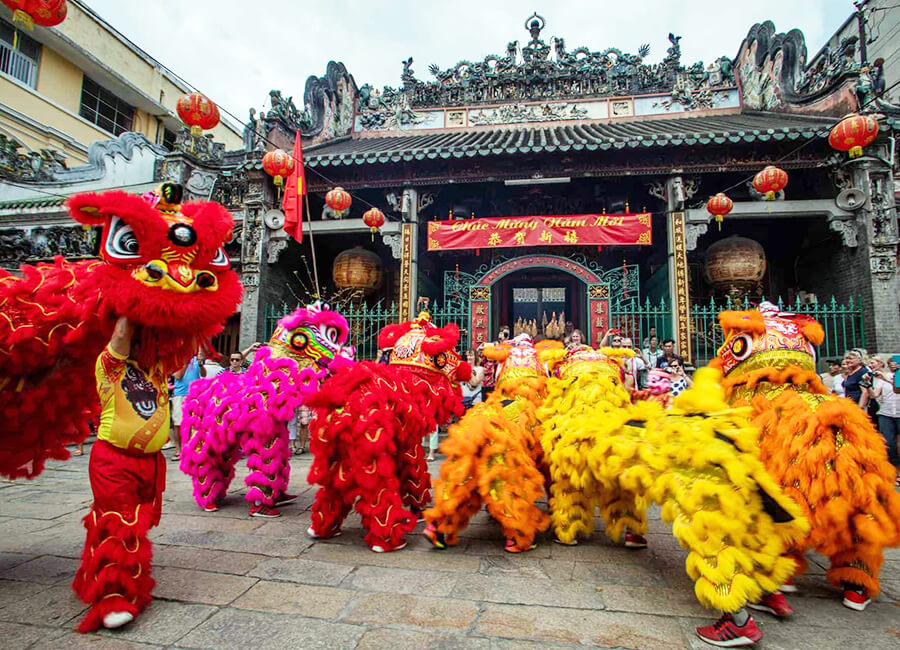
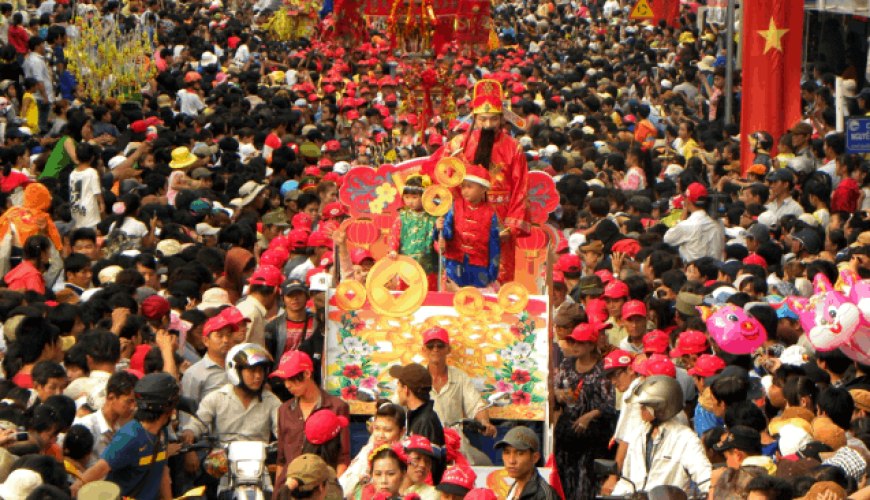
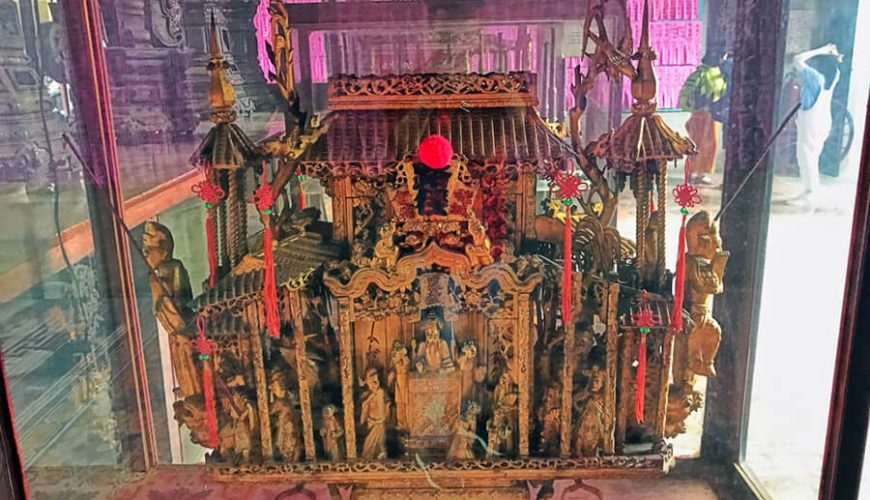
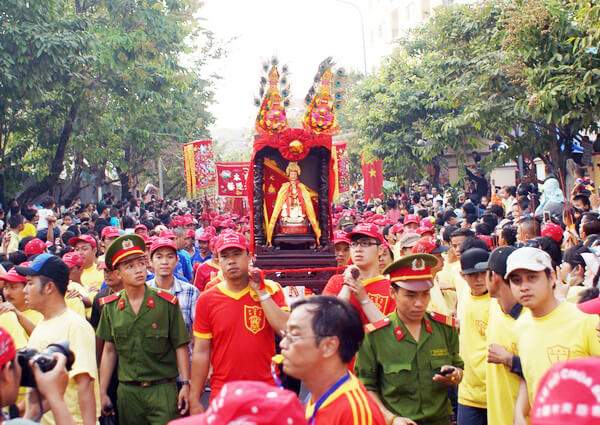
In particular, March 23 on the lunar calendar is considered the main festival of the pagoda. On that day, the statue of Lady Thien Hau will be placed on a palanquin carried by young men and women in beautiful attire and paraded around the temple. Many activities, such as lion and dragon dances and arts performances, create an incredibly vibrant festival atmosphere amid the bustle.
Summary of the Thien Hau Temple
- Not only is it the oldest Chinese temple in Saigon, but it is also considered a spiritual center that significantly influences the cultural life of the Hoa people.
- After over 250 years of existence, Thien Hau Temple still retains its unique and impressive architectural features. In 1993, it was recognized as a National-level Architectural Monument.
=> Check out our Ho Chi Minh city tour or private tour to explore Thien Hau Temple and other religious attractions on your Saigon trip.
Source: collected by An
Follow us for the best deals on Vietnam package tours and visa services!
Comment (0)