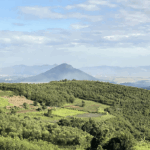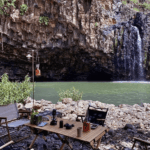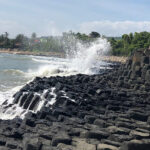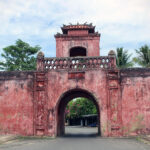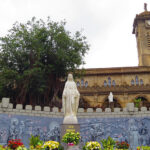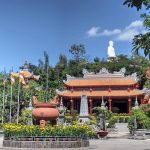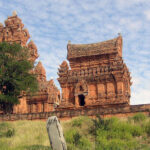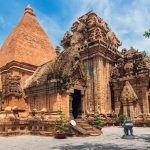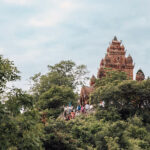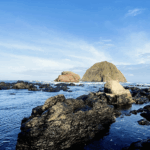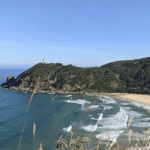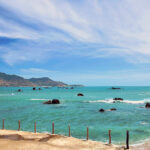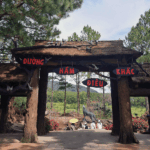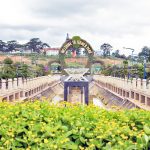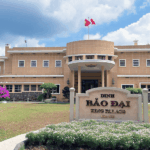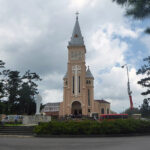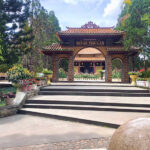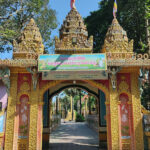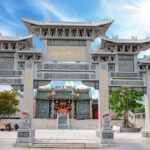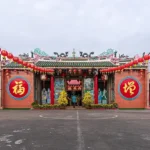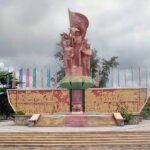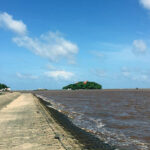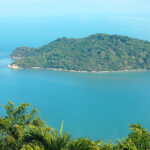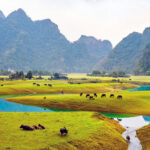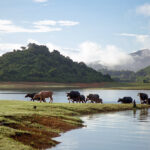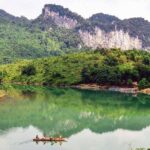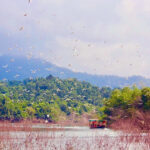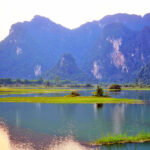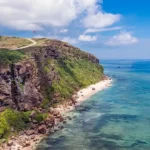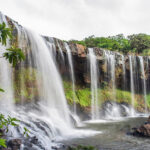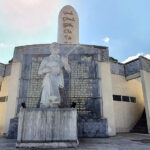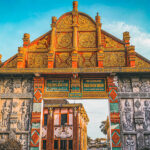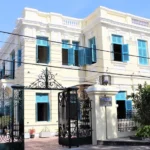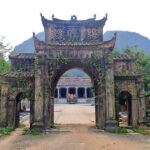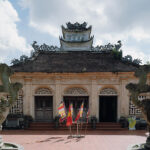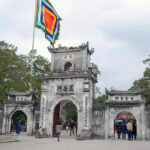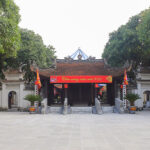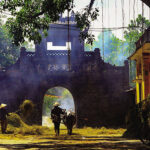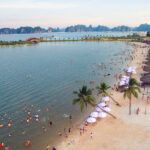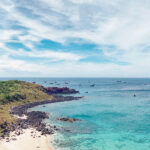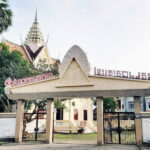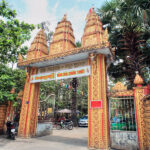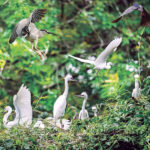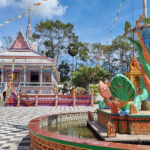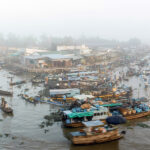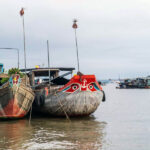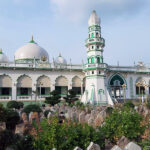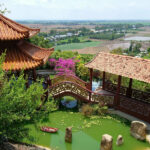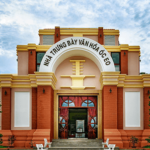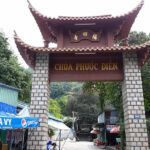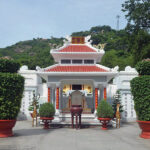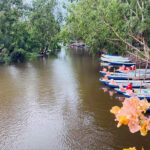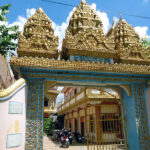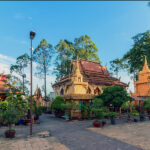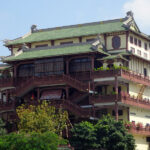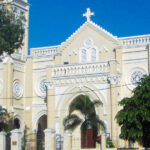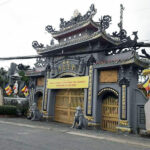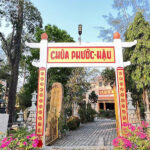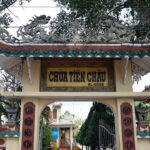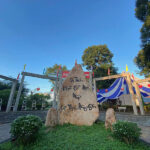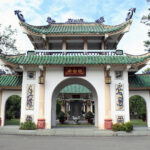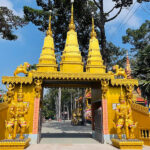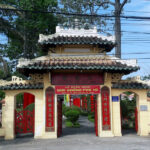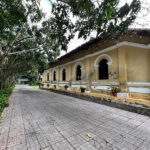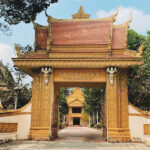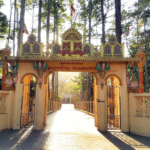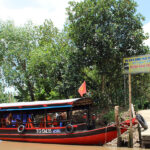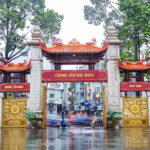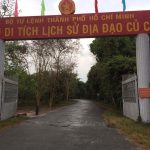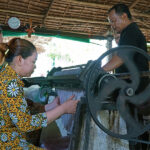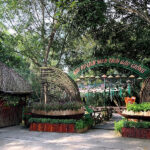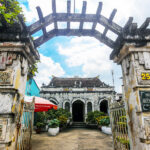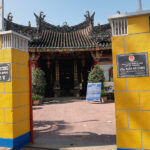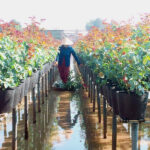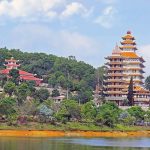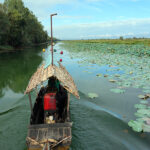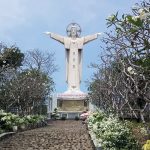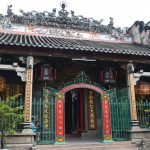
Tay Ninh is located in the Southeast region, bordering Dong Nai, Ho Chi Minh City, to the east and south, Dong Thap to the west, and Cambodia to the north, with a long border.
The location is a key economic zone and is the gateway connecting the Southeast with the Mekong Delta. Tay Ninh is also considered one of the provinces with rich and diverse tourism potential, offering visitors many memorable experiences.
Table of Contents
General information about Tay Ninh
Geographically, Tay Ninh is located where the Dong Vam Co River flows through before it converges with the Tay Vam Co River to form the Vam Co River.
Furthermore, Tay Ninh is strategically located, bordering Ho Chi Minh City and the Cambodian border. Following the 2025 merger of Tay Ninh and Long An, the new province covers more than 8,500 km² and has a population of more than 3.3 million.
What’s the best time to visit Tay Ninh?
Tay Ninh’s climate is divided into two distinct seasons. The dry season is from December to April of the following year. The dry season is sunny and convenient for sightseeing. Tay Ninh’s rainy season lasts from May to November.
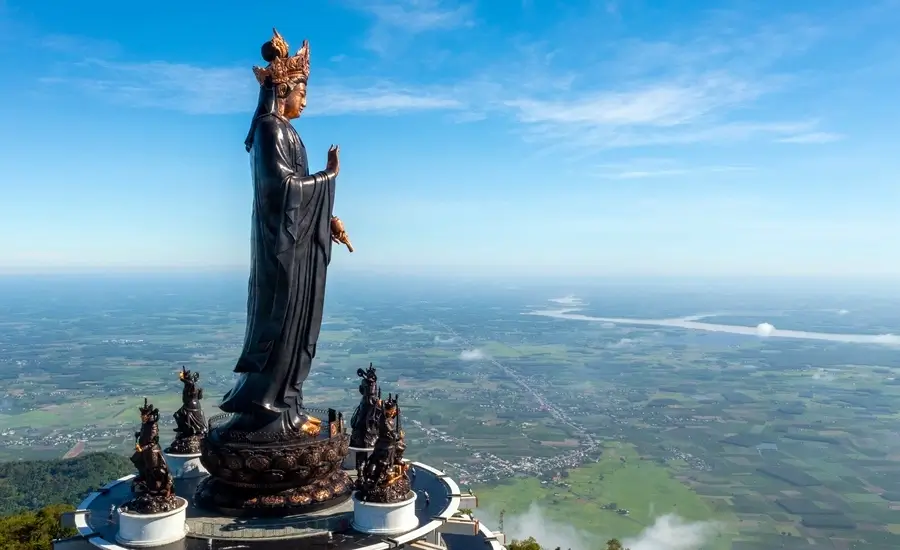
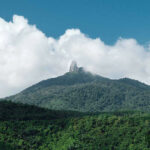
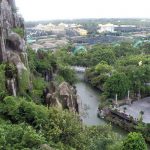
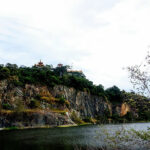
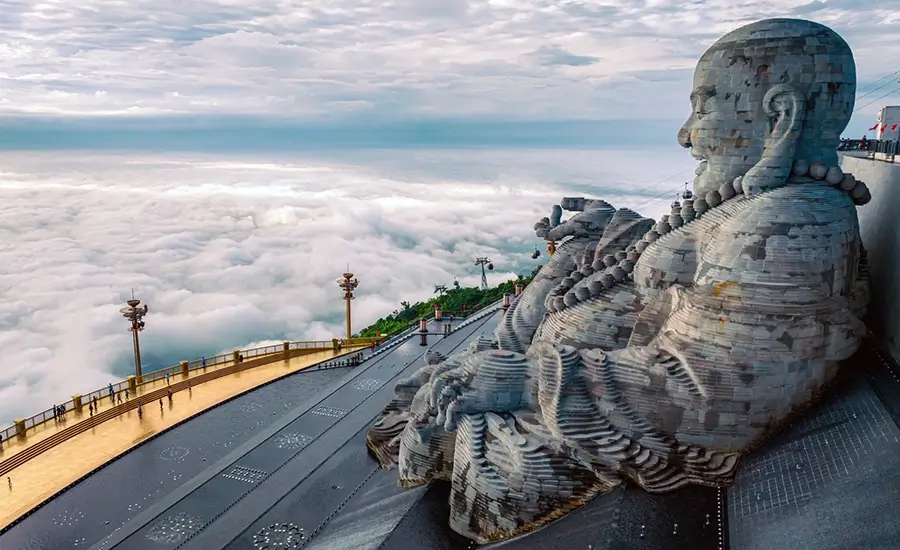
A magnificent view from Ba Den Mountain.
However, the rain does not last long, and there are still sunny days; visitors should follow the weather forecast to plan accordingly.
How to get here
Tay Ninh is about 100 km from Ho Chi Minh City, and travel time is 2-3 hours, depending on the mode of transport. From An Suong bus station or Tan Son Nhat Airport to Tay Ninh city center, one-way fares for popular passenger vans such as Dong Phuoc, Le Khanh, and Hue Nghia limousine range from 100,000 to 250,000 VND.
The old Long An is just about 60 km from Ho Chi Minh City. National highways from Ho Chi Minh City through Long An to other provinces in the region include QL1, 50, 61, N1, and N2. Travel time is from one and a half to two and a half hours, depending on traffic conditions, means of transport, and destination in the province.
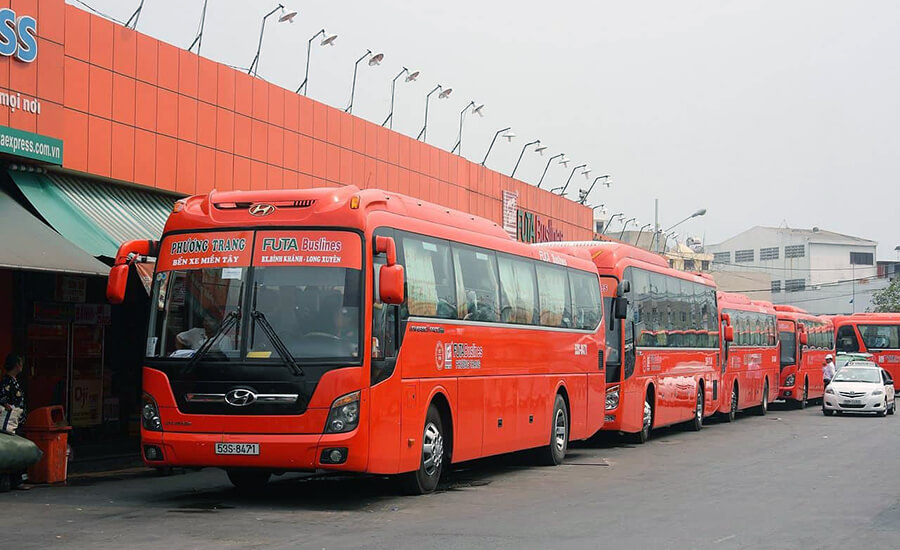
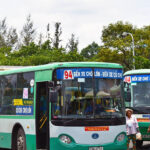
Phuong Trang is one of the popular bus companies to Tay Ninh.
In Tay Ninh, visitors can travel to tourist attractions by taxi or rent a motorbike for 100,000-180,000 VND per day. Personal cars and motorbikes are the most flexible means of transport.
There is no airport in Tay Ninh; the nearest is Tan Son Nhat International Airport in Ho Chi Minh City. Travel time is 1.5 to 2 hours, depending on traffic conditions. With a location near the center of Ho Chi Minh City, visitors have many options for transportation, including rental options.
Accommodation in Tay Ninh
Tay Ninh is located near Ho Chi Minh City, making it suitable for a day trip or a 2-3 day trip. If staying overnight in Long An, visitors should stay in eco-tourism areas. The accommodation area in Tan Lap floating village offers rooms priced from 450,000 VND to 1.1 million VND per night.
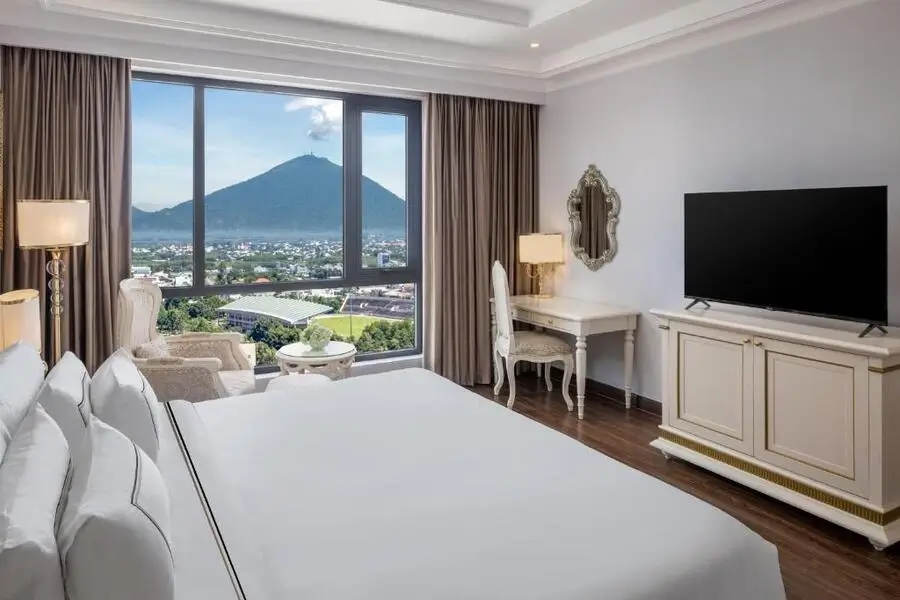
A view from Melia Vinpearl Tay Ninh.
In the center of Tan An, visitors can choose from 2-to 3-star hotels, priced from 200,000 VND to 600,000 VND per night.
Sightseeing in Tay Ninh
Scared temples and pagodas
Ba Den Mountain
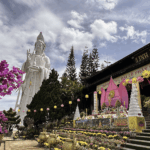
 Ba Den Mountain is located in the Ba Mountain relic complex in Binh Minh commune, 11 km northeast of Tay Ninh. Compared with the two remaining mountains in the group, Heo Mountain and Phung Mountain, Ba Den Mountain stands out at 986 m and is the highest mountain in Southeast Vietnam. The mountain has white clouds floating year-round atop it, as if it were wearing a thin silk cloth, so it is also called Van Son. From afar, Ba Den Mountain stands tall like an upside-down conical hat in the middle of the plain, attracting tourists to visit.
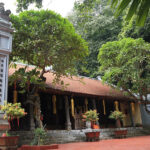
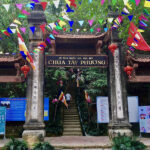
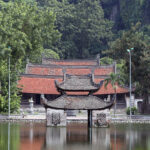
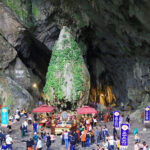
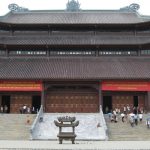
 If you visit all the pagodas on the mountain, you will pass by Ba Den Pagoda (Linh Son Tien Thach Tu), Hang Pagoda (Linh Son Long Chau), Linh Son Hoa Dong Pagoda, Linh Son Phuoc Trung Pagoda, and Quan Am Pagoda. Of which, Ba Den Pagoda, which is over 300 years old, is a pilgrimage destination exceptionally crowded at the beginning of the year, and the Ba festival is held annually in the 5th lunar month.
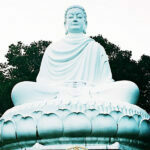
The Buddha Tay Bo Da Son statue sits on a bronze lotus platform, appearing and disappearing amid a sea of clouds, set against the natural scenery atop the mountain.
 Many major Buddhist festivals are regularly held at Ba Den Mountain, such as the Maitreya Buddha’s birthday in early January, Buddha’s birthday in the fourth lunar month, or Vu Lan festival in the seventh lunar month, the Bodhisattva Avalokiteshvara’s renunciation festival and the ninth lunar month, attracting a large number of tourists from all over the world.
To reach the mountain, most tourists take the cable car. The three cable car stations are Ba Den station, Chua Hang station, and Van Son station, which are not only places for passengers to transfer to tourist attractions on the mountain, but also places to see the scenery from above, as well as the entire plain at the foot of the mountain.
 The round-trip cable car ticket price is 250,000 VND for adults, 150,000 VND for children 1-1.4m tall. In addition, each visitor must purchase an additional entrance ticket for adults at 16,000 VND and for children 1-1.4m tall, people over 60 years old, and people with severe disabilities at 8,000 VND.
The Van Son cable car to the top of the mountain operates from 7:45 am to 16:00 pm on weekdays, 7:00 am to 17:00 pm on Saturdays and Sundays. The cable car from Hang Pagoda to Ba Pagoda operates from 7:00 am to 17:00 pm on weekdays, 6:00 am to 18:00 pm on Saturdays, and 6:00 am to 17:00 pm on Sundays.
Tay Ninh Holy See
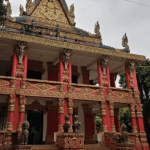
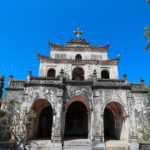
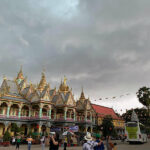
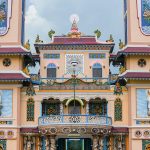
 Located in Long Hoa Ward, about 5 km southeast of old Tay Ninh city, the Tay Ninh Holy See stands out on its campus for its distinctive architecture, combining Eastern and Western philosophical perspectives and expressing the synthesis of many spiritual elements in one project. The Tay Ninh Holy See began construction in 1933 and was completed in 1947, but was not inaugurated until 1955.
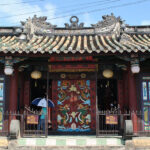
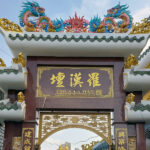
The Cao Dai religion was born in late 1926 in Tay Ninh. The religion’s symbol is Thien Nhan, an eye in a triangle that symbolizes God. In addition, the religion also worships Buddha Shakyamuni, Jesus, Confucius, Lao Tzu, and Guanyin. These images are displayed in many locations inside and outside the Holy See, particularly at the main entrance.

The two most significant festivals of the Holy See are the Great Festival of the Supreme Being, held on the 8th of January, and the Yaochi Palace, held on the 15th of the 8th lunar month every year. Visitors will admire the Holy See’s magical spaces and its large-scale, unique cultural activities.
At the Holy See, ceremonies are held 4 times a day at 0:00, 6:00, 12:00, and 18:00. This is the address for visitors to learn about Cao Dai’s religion and experience its cultural beliefs.
Note that when entering the Holy See, visitors must leave their shoes outside (with someone watching) and are not allowed to take pictures of people with the Holy Eye as the background, only take pictures of the scenery. Visitors may request permission to go upstairs to take panoramic photos of the Holy See.
Go Ken Pagoda
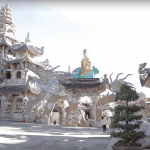
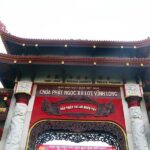
 8 km from the center of Tay Ninh, Go Ken Pagoda is located on National Highway 22B in Hoa Thanh Ward. The pagoda is over 100 years old and houses two giant Buddha statues: a 25-meter-high Bodhisattva Avalokiteshvara standing atop a 7-meter-high dragon body, and a 25-meter-long Buddha statue entering nirvana.
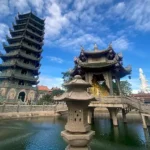
The Go Ken Pagoda complex blends traditional and modern architectural styles. The pagoda’s grounds offer visitors a sense of peace through the harmonious blend of quiet, ancient atmosphere. The pagoda features typical Buddhist structures, including a triple-gate, a Maitreya Buddha shrine, a Lumbini garden, Ngu Hanh Son Mountain, and the 9-storey Xa Loi Stupa.
Ton Thanh Pagoda
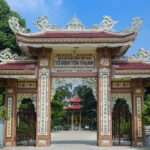
 Ton Thanh pagoda is located in the Thanh Ba quarter of My Loc Commune. Built in 1808 by northern emigrants, Ton Thanh Pagoda is the oldest pagoda in Tay Ninh. Several valuable ancient statues, dating to the 19th century, remain in the pagoda. In particular, the bronze statue of Bodhisattva Ksitigarbha, 110 cm high, sits on the back of a lion, his right hand in a mudra and his left hand across his chest, with a pearl in his palm.
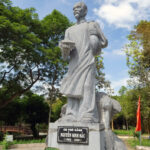
Ton Thanh Pagoda was also where Nguyen Dinh Chieu, a renowned Vietnamese poet, lived and wrote, including the poem “Eulogy for the Righteous People of Cần Giuộc” during 1859 – 1861. During that time, he also held an outdoor class, but inside, he led the resistance directly.
Ancient and unique architecture
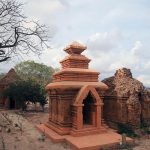
Binh Thanh Ancient Tower
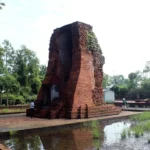
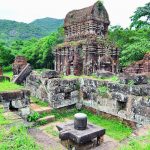
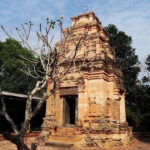
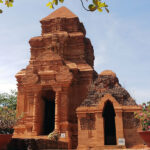
 The thousand-year-old tower was discovered in 1886, located in Phuoc Chi Commune. This is one of the few ancient towers that remain largely intact, representing the architecture of the Oc Eo culture of the South.
The Binh Thanh Ancient tower was built on a square foundation, each side 5 m long and 10 m high; the tower’s sides were built in the four directions, East, West, South, and North. The main door on the East side was built to project outward, 1 m wide and 2 m high, in front of which was a “square pond”. Above the main door was a large, rectangular stone slab measuring 0.8 x 2 m, embossed with stylized chrysanthemums.
The three sides, West, South, and North, all had fake doors, above which were embossed patterns and elaborate decorations. On July 23, 1993, Binh Thanh Tower was recognized as a historical and cultural relic.
Nguyen Tam Kien Ancient House
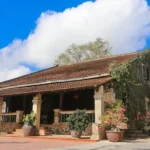
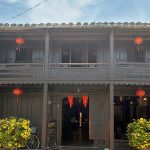
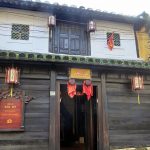
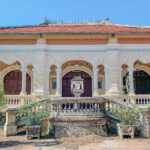
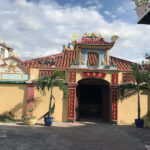
 The house at 39 Phan Chau Trinh Street, Tan Ninh Ward, was built in 1894 in the traditional Southern architectural style. The wooden structures and tiled roofs are preserved intact to this day. In 2017, the building was ranked as a provincial-level architectural and artistic relic.
The owner of the house is Mr. Nguyen Tam Kien, the Governor during the French colonial period. The house still has descendants living there and preserving many ancient objects. Visitors are welcome to visit and take photos free of charge.
Hundred Columns House
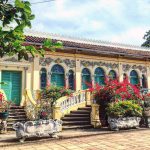
 An ancient house with Hue architecture, with 120 precious wooden pillars, has stood in Tay Ninh for more than 100 years. The Hundred Columns House is located on the bank of the Vam Co Dong River, in Long Huu Commune.
Bearing a clear mark of the Hue style but made to the owner’s specifications in the Southern region during the French colonial period, the house features many decorative changes, creating harmony between Central and Southern architecture. From the columns to the furniture, such as tables and chairs, altars, beds, and cabinets, are all meticulously carved with classic themes such as the ” Four Spirits (Dragon – Unicorn – Phoenix)”, the ” Four Elements (yellow Mai – orchid – chrysanthemum – bamboo)”.
Rach Cat Fort
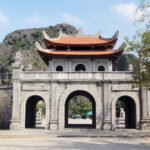
 Rach Cat Fort is one of the largest military fortresses in Vietnam, located in Long Ninh Hamlet, Long Huu Commune. This is a robust coastal fortress with distinctive architecture and a strategic position for both defense and attack.
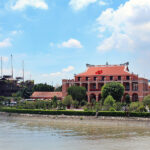
Rach Cat Fort was built by French colonial authorities in 1903. It was completed in 1914. The fortress was designed in an arc shape and built on an area of about 3 hectares. The cost of building the fortress was about 7 million francs at the time, 3.5 times the cost of the Hanoi Opera House. The fortress is 300 m long and 100 m wide, consisting of 5 floors (3 underground floors, two above-ground floors). The fortress walls are 60-80 cm thick, keeping the basements consistently cool. On the roof of the highest floor, there is a 105 mm heavy artillery gun. The relic has been ranked at the provincial level. This is considered the place that preserves the most magnificent French fortresses and fortifications in the South. Standing near the cannons on the roof, you will get a view of the beautiful landscapes of the Go Cong River Area.
Nature & wildlife areas
Dau Tieng Reservoir
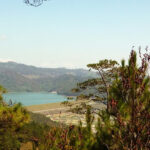
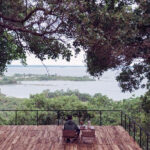
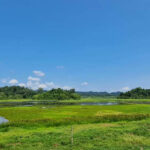
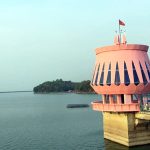
 From the city center, about 45 minutes by car, visitors will arrive at Dau Tieng Reservoir – the largest artificial lake in Vietnam. The lake covers 27,000 hectares and is also known as the Sea Lake of Tay Ninh.
During the flood season from August to November, the Dau Tieng reservoir is filled, creating a freshwater ecosystem with diverse shrimp and fish species.
During the dry season, the Dau Tieng reservoir is a popular camping spot for tourists, known for its green lawn and fresh air. Nhim Island, located in the middle of the lake, is also an attractive camping spot. To reach the island, visitors must rent a boat from local people. Around Dau Tieng reservoir, tourism services have been developed. In addition to camping, visitors can choose to paddle a SUP or play thrilling games.
Lo Go-Xa Mat National Park
 Lo Go-Xa Mat National Park, covering 19,000 hectares, is located about 30 km northwest of Tay Ninh. In 2019, the park was recognized as an ASEAN Heritage Park. After the stork flock appeared, the park management board implemented several protection plans and organized guided bird-watching tours for visitors. At the national park, visitors can immerse themselves in the peaceful, pristine beauty of the border by taking a motorboat trip on the Vam Co Dong River, where they can observe wildflowers and birds along both banks.
Lo Go Xa Mat is home to more than 200 species of rare water birds. This is also a stopover for red-crowned cranes migrating from the Mekong Delta to their breeding grounds in Cambodia. The garden terrain is flat and easy to navigate. Visitors can experience trekking through the forest to visit two ancient trees recognized as Vietnam’s heritage trees, including a 200-year-old tung tree and a ven ven tree over 200 years old.
MyQ Safari – My Quynh Zoo
Located in Hau Nghia Commune, My Quynh Safari spans a large area and is divided into several sub-areas, including a water park, a resort, a dining area, a koi pond, a bonsai garden, and a semi-wild and wild zoo.

In particular, My Quynh Safari has more than 30 hectares dedicated to building habitats for more than 100 wild animal species in Vietnam. Like many other zoos, My Quynh offers visitors a glimpse into the lives of large animals such as deer, tigers, lions, and hippos.
However, at My Quynh Safari, you do not interact with animals in cages; they are released freely throughout the zoo. For strong animals, visitors will take a bus around the zoo to see them, for more friendly animals, visitors will be encouraged to have direct contact, such as stroking tickets or feeding (depending on the species).
Ticket price: Adults: 100,000 VND; Children 1m – 1.4m: 60,000 VND; Children under 1m: Free
Dong Thap Muoi Eco-tourist site
The  Dong Thap Muoi Eco-tourist site spans Moc Hoa, Vinh Hung, Thanh Hoa, and Tan Thanh. This wetland area in the Mekong Delta covers over 6,000 hectares and attracts tourists with vast cajuput forests of over 800 hectares. The Dong Thap Muoi Ecotourism Area hosts nearly 120 bird and 150 animal species, including rare species such as herons, red-headed cranes, turtles, and snakes.
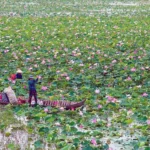
Upon arrival, visitors can see cajuput forests and lotus ponds. If you visit the tourist area during the flood season (from September to November every year), you will have the opportunity to see lotus flowers blooming.
Tan Lap Floating Village
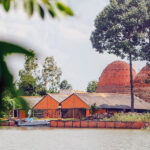
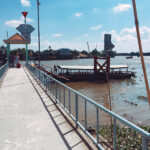
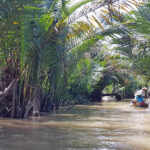
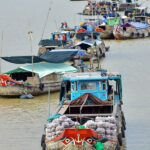
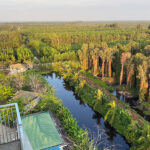
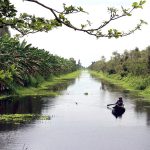
 Tan Lap Floating Village is located in Moc Hoa Commune, a destination with peaceful river scenery. Ancient cajuput forests, lotus ponds, water lily lakes, and hundreds of bird, fish, and amphibian species highlight the natural landscape. Visitors will sit on a boat in the middle of the forest. There is also an observation deck for visitors to enjoy the panoramic view. Visitors can also walk on the route to explore the cajuput forest.
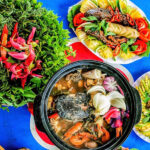
 In addition, visitors can enjoy specialties of the Mekong region, including chicken hotpot with giang leaves, sour hotpot with snakehead fish, crispy fried linh fish, braised fish in a clay pot, and stir-fried eel with turmeric. Residents’ cultural identity is reflected in traditional crafts such as wood carving, boat building, and listening to traditional music.
The tourist area is open from 7am to 17pm and charges an entrance fee of 70,000 VND. In addition, prices are available for other services, including rowing, electric cars, fishing, and cycling.
Cuisine
Not only known as a province with bustling development, the economic locomotive in the Mekong Delta, Tay Ninh, also has a very special culinary culture, which is a highlight that creates attraction for the tourism industry in general and the Southern region in general.
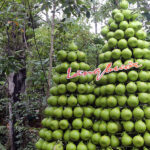
Tay Ninh is famous for its rice paper, Trang Bang rice noodles, young beef, nem rin grapefruit, shrimp salt, Ba mountain snails, sour fish sauce, mountain lizards, and vegetarian dishes of Cao Dai followers.
Trang Bang rice noodles
Along National Highway 22 from Ho Chi Minh City to Tay Ninh, there are many Trang Bang rice noodle shops. A bowl of rice noodles is characterized by pig’s feet, blood, and green onions, which is considered to be suitable for many people’s taste. Trang Bang rice noodles are characterized by the sweetness of bone broth, soft, sweet meat, and the aroma of fried onions, pepper, and green onions.

Customers can find rice noodle shops in Trang Bang town to enjoy, with prices ranging from 30,000 VND to 100,000 VND per bowl.
Dew-Soaked rice paper
Dew-soaked rice paper is a Trang Bang specialty, with an elaborate and sophisticated processing process. The cake is made from delicious rice, without mixing. When grinding rice, a small amount of salt is added to impart a salty flavor. The rice paper is processed twice, making it thicker than other types. The cake is steamed, dried in the sun, and then grilled over charcoal to achieve a fragrant, spongy texture. The final step is drying in the dew.

Dew-soaked rice paper is soft and chewy, often used to wrap meat, fish, raw vegetables, and dip in sweet and sour fish sauce or fermented fish sauce.
Tay Ninh veal
Tay Ninh veal is from naturally raised cows about 5 to 6 months old. The meat is firm, not too fatty, the skin is not too hard, and the ribs are soft and sweet. Beef is used in many dishes, including steamed veal with lemongrass, grilled veal with fish sauce, and hot pot.

Xiem Lo noodle soup
Originating from Cambodia, Xiem Lo noodle soup is popular in Moc Hoa and some neighboring localities. The original dish only has broth made from snakehead fish, vermicelli, and chili salt. People in the South have adapted it to local tastes, adding fish meat.

After processing, the snakehead fish head is simmered in the broth, and the meat is used to make fish cakes. Snakehead fish cakes can be shaped into squares or round balls. To achieve a beautiful color, the cook adds finely chopped turmeric and other spices, such as salt and fish sauce to taste.
Sour fish soup
The fish is a type of catfish; the largest reach about 1 kilogram and are found in local rivers and canals. The fish can be prepared in many ways, such as braised in a clay pot, braised with lemongrass and chili, fried with salt, or fried fresh, but the best is still sour soup.

Although the fish is small and has little meat, the meat is delicious, the bones are soft, and during the breeding season, there will be many eggs. Whether the sour fish soup is mainly tasty depends on the selection of young tamarind leaves and other ingredients, such as okra and tomatoes. Sour fish soup combines the sweet taste of tamarind leaves with the fish’s fatty flavor.
Can Duoc fresh sausage
Can Duoc sausage is associated with the place name Rach Kien, an ancient district of old Long An (now in Tay Ninh Province), where many Chinese people once lived. They learned from their ancestors how to stuff minced meat into pig intestines and let it ferment naturally.

The ingredients for making sausage are selected from high-quality cuts of meat, usually thigh meat without tendons. The second ingredient is thick, crispy pork fat that does not leak water. Meat and fat have their own ratio to ensure they are neither dry nor fatty. Can Duoc traditional fresh sausage is the only Long An representative included in the top dishes of 2022 selected by the Vietnam Culinary Culture Association.
Go Den rice wine
This is a rice wine, made from sticky rice according to the traditional method, produced in Go Den, Ben Luc commune. Go Den is a type of rice wine with a very high alcohol concentration, up to 50 degrees of alcohol, a specialty of the new Tay Ninh in particular and the Mekong Delta provinces in general.

Like many famous local wines worldwide, Go Den rice wine emphasizes the soil, so to ensure a delicious product, it must be brewed in the Go Den area.
Fish sauce hotpot
Tourists visiting Tay Ninh who have not tried the fish sauce hotpot are considered to have never been to this land. Fish sauce hotpot is a dish with a distinctive cultural flavor. A rich, fish-sauce-flavored broth, combined with spicy and sweet notes, creates a rustic hotpot that is highly appealing. After cooking, the hotpot is served with vegetables such as lotus, dien dien, banana flower, and other herbs.

There is nothing better than eating a little bit of hot, fragrant hotpot broth, which will definitely warm your heart and make you miss it forever.
Grilled snakehead fish
Grilled snakehead fish is a rustic dish familiar to locals. After being caught fresh, the snakehead fish will be processed and grilled directly on hot coals. The fish’s mouth will be inserted with a stick to hold it during grilling.

This is also why the dish is called grilled snakehead fish. From the moment you see the dish, you will be impressed by the fish’s natural aroma. When eating, you will taste the fish’s sweetness and richness. When combined with vermicelli, rice paper, raw vegetables, sour star fruit, and a little spicy-sour sauce, it will be hard for you to resist this dish.
Source: collected by An
Follow us for the best deals on Vietnam package tours and visa services!